
Showing posts with label tiyul. Show all posts
Showing posts with label tiyul. Show all posts
Apr 22, 2026
Yom Haatzmaut 78 tiyul to Shaaraim
Today is Yom Haatzmaut, Israel 78th Independence Day... Happy birthday Israel...


Traditionally Israelis go out on Yom Haatzmaut and hit the trails, see the sights, bask largely in nature. The weather is beautiful today.
We went out with friends to his on Gan Emek HaEla up to Shaaraim, an old archaeological site dated to King David and is thought to have been the location of one of his palaces... Because Israelis traditionally go out and hit the trails before having a bbq celebration, there is always lots of traffic on Yom Haatzmaut, and popular sites can fill up very quickly. We try to avoid the traffic by going out a little buit earlier, and doing things closer to home. Shaaraim is right outside Bet Shemesh, and you can even see RBS D from the archaeological site. We accomplished our goals and did not sit in traffic, had a lovely hike and saw some people, though it was not crowded when we were there.
Befitting the day, the trail marker for our tiyul was blue and white...

and on our way out to the tiyul, just as we were heading out of Bet Shemesh, we spotted an eagle doing the air force's regular Yom Haatzmaut and performing a flyover... The Air Force flyovers are canceled this year due to the situation with Iran, so the eagle made sure we did not miss out...

------------------------------------------------------
Reach thousands of readers with your ad by advertising on Life in Israel
Reach thousands of readers with your ad by advertising on Life in Israel
------------------------------------------------------
Aug 1, 2023
separate swimming pilot in nature begins next week
As announced a few months ago, Minister Idit Silman has decided to run a pilot arranging separate swimming hours at some springs around Israel, to be more accessible to the religious public, the religious hikers. I guess depending on the results of the pilot the program will either be expanded or cut...
Anyway, that pilot is starting next week after a couple months of planning.
Minister of Environmental Protection Idit Silman that as of next week two springs will be designated for separate swimming, but it will not affect the general public, as it will be after the official access hours have finished for the day.
The two springs where the pilot will be running are Ein Hanya, located in the Judean Hills outside of Jerusalem, and Einot Tzukim, located in the northwestern area of the Dead Sea.
I think we only have partial information, as far as I can find from the information publicized, but here is what we know so far as to how this will work.
These two springs have normal operating hours of 8am until 5pm, after which they officially close. So as not to affect the general public, those hours will continue to be open to the general public. Two days a week, after those hours, the springs will be open to the religious public with separate swimming.
On Thursdays Ein Hanya hours will be expanded for the general public until 7:30pm (during the month of August) and on Sundays and Wednesdays Ein Hanya will be open from 5-8pm only to separate swimming.
Einot Tzukim seems to have a different issue with the wildlife of the area enjoying the spring in the evening, so separate hours there will be available early in the morning instead. On Wednesday and Thursday mornings, during the month of August, the spring will be open for separate swimming between the hours of 6:30-8am.
What we dont know, or what I dont know, and dont see specified in the information provided, is how the separate swimming will work. Will half the time be allocated for men and half the time for women? Will it be one day for men and one day for women? Will it be enforced somehow with someone official there making sure people dont make trouble and women swim when it is set for women and men when set for men or will it be an honor system of sorts?
I have no problem with this if they can make it work without being a disturbance. As I said, I dont get how the separate swimming will work, and I dont see how a religious family out for a trip can benefit much from this. Of course if it is a group of just men or just women going out to enjoy the spring that will work, but a religious family out hiking and only the men or only the women being allowed to go in does not seem like much of a benefit or much of an attraction.
According to Israel Hayom, some organizations have already sent warning letters and are saying they will petition the Supreme Court over this...we'll see what happens with that as it progresses...
------------------------------------------------------
Reach thousands of readers with your ad by advertising on Life in Israel
Reach thousands of readers with your ad by advertising on Life in Israel
------------------------------------------------------
Jun 22, 2023
Tiyulim in Eretz Yisrael: Dead Sea Salt Pillars
We recently joined a tour led by Noam Bedein of the Dead Sea Revival Project to learn about the situation of the Dead Sea drying up. We got to see firsthand sights we have never seen before except in professional pictures.


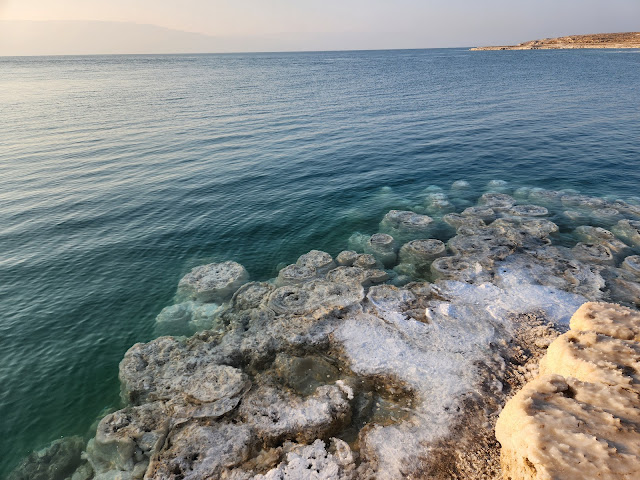


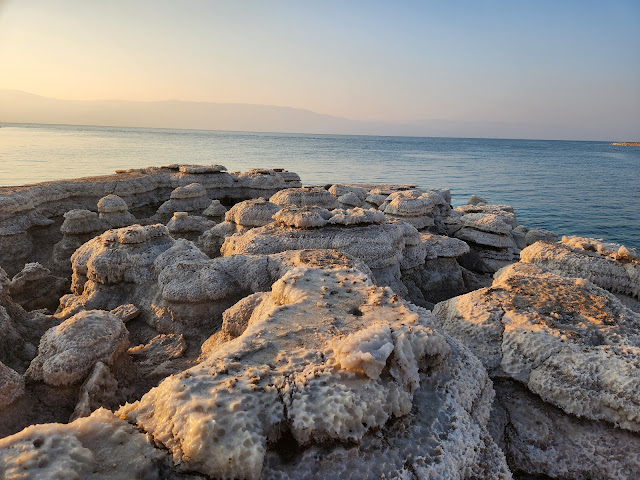


The Dead Sea is drying up. He says 600 Olympic pools worth of water disappear from the Dead Sea daily, without being replenished. The Dead Sea factories are one of the causes, but they are the minor players. The Jordan River no longer dumps into the Dead Sea in any significant way due to farmers (on both sides of the border) diverting the water for their own use, along with other problems. The northern section of the Dead Sea is closed off to the public due to dangers such as sinkholes, caused by the underground fresh water springs combined with the erosion of the area.
We went at sunrise (it gets too got to start any later). The group was not large, but it did include a German tv crew filming different interesting sites in Israel for some show they are working on to be shown in Germany. They normally film in Europe but in honor of Israel's 75th birthday/anniversary they have been shooting sites in Israel this year.
We met at Ovnat Junction and traveled to a site just a few minutes further south and hiked to the Dead Sea from the parking area. We were able to see tracks of wildlife in the sand and muddier areas while we hiked towards the sinkholes and sea.
The trip was fascinating. If you have an opportunity to go on a similar trip you should definitely do so.
Here are some of the pictures I took on the trip:
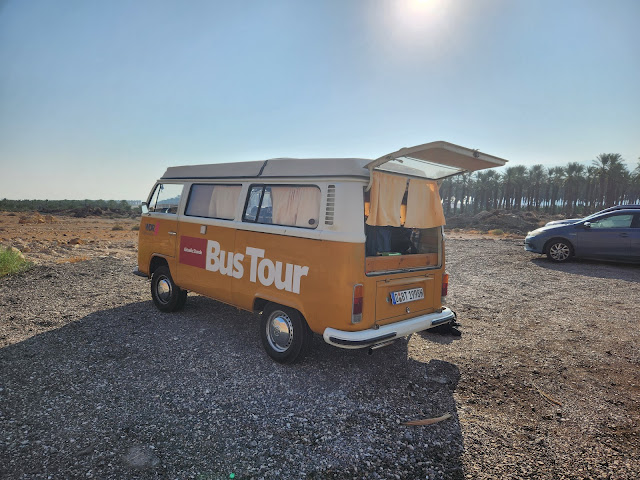 |
| this is the odd bus used by the German tv crew. you might see it around Israel. They usually travel with it around Europe. |


 |
| a "salt pillar forest" at the edge of the water |

 |
| you can see the salt pillars forming in the water, still under water level but soon will be exposed |


 |
| the mini stalactites forming from the salt and minerals |


------------------------------------------------------
Reach thousands of readers with your ad by advertising on Life in Israel
Reach thousands of readers with your ad by advertising on Life in Israel
------------------------------------------------------
Apr 10, 2023
separate swimming coming to a spring near you..
According to Kikar, announced shortly before Pesach, Minister of Environmental Protection Idit Silman has decided to run a pilot program this coming summer for mehadrin swimming at springs around Israel. The pilot program will include two natural springs - Han Hashlosha (Sachne) up north next to Bet Shean, and Ein Tzuki down south near the Dead Sea. Obviously if the pilot works well this will be expanded.
The pilot will have separate swimming in these springs from 6pm until 10pm (when the sites close for the day).
The article doesnt give more specifics of how this will work other than to say there will be these designated times for separate swimming. Will it be 6-8 men and 8-10 women? the opposite? Alternating every hour or 30 minutes? Will the springs be sectioned off so everyone can swim at the same time with men in one section and women in another?
It is a shame this didnt happen already on Pesach, with the masses out all over the country, but Pesach is just a day or two of tiyulim, so not a big deal. The summer is 2-3 months long so plenty of time for the masses to enjoy....
------------------------------------------------------
Reach thousands of readers with your ad by advertising on Life in Israel
Reach thousands of readers with your ad by advertising on Life in Israel
------------------------------------------------------
Jan 24, 2023
Proposed Law: gender-segregated tiyulim
MK Moshe Gafni (UTJ) has proposed, along with the other members of UTJ, a law that would set separate hours for male and female access to nature sites and natural springs of the Nature and Parks Authority.
According to the proposed law, 15% of the hours of permitted bathing should be designated for gender-segregated access.
The response to this proposal has been harsh, accusing Gafni and Netanyahu of pushing Israel to becoming a halachic state. I suspect Netanyahu will choose to tell Gafni to cool it and stop proposing all these religious laws. He doesnt like them and worse his voters mostly dont like them either. Gafni might have to wait until after Netanyahu leaves the political scene and the "full right" coalition becomes a full religious coalition.
According to Gafni, in the proposal, Israel has at least 20% of the population not going into the springs and rivers because of religious reasons, of all the various religions found in Israel. These populations are discriminated against, these are State-run sites, operating in a way that causes many people to be unable to benefit from them.
1. I wonder where he came up with 20%. It might be accurate, it might be low, it might be high. I have no idea. I wonder how he got to that number. When we go on tiyulim and to water hikes and stuff, we see plenty of religious and Haredi people enjoying the springs and rivers despite the lack of segregation. I am sure many avoid it, but how do you figure out how many?
2. I think we have to define discrimination. If someone chooses to not use a service because they dont like it (for whatever reason) are they being discriminated against? If I and 50,000 other people dont like the way Bituach Leumi offers a service so we dont take advantage of it, is that discrimination or is that my own problem? If we dont like the service open to the public as it is, is it discrimination? I am not so sure it always is. That being said, it is a shame that many religious people dont have a way to benefit form the springs and rivers around the country. Knowing how tiyulim work though, I am not sure how realistic it is to come upon a river while hikling and say right now only the men can go in, it will be open for women in two hours, and the women, or men, have to wait, and when they get their turn, then it takes longer for the tiyul to get on tis way... and vice versa. this just doesnt seem practical.
------------------------------------------------------
Reach thousands of readers with your ad by advertising on Life in Israel
Reach thousands of readers with your ad by advertising on Life in Israel
------------------------------------------------------
Dec 27, 2022
Touring Eretz Yisrael: North for Chanukah
Last week on Chanukah we went up north for a few days. Here is a synopsis of what we did while up north.
To introduce, we had decided in advance we would do basically two activities each day, one free and one paid. We broke the rule on the third day.
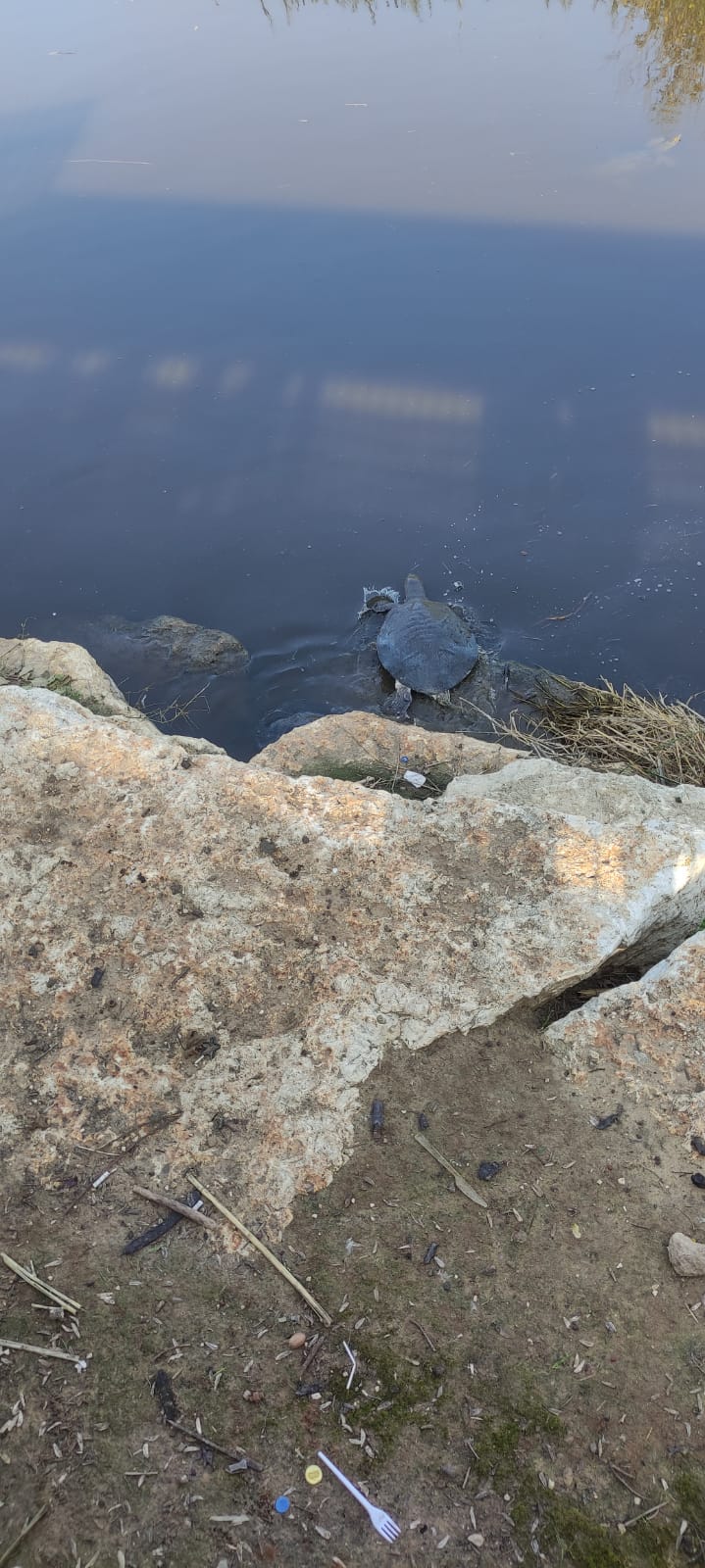
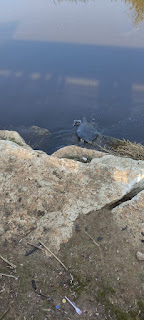 On the way up to Tiberias we stopped at one of our favorite spots in Israel - the Turtle Bridge of Nahal Alexander, where you can see the soft shell sea turtles population. This actually used to be a much better activity than it is today - it used to just be a river you could go right up to, even go into if you wanted, and throw food in and see the turtles. Several years ago they turned it into a national park, free entry, but they fenced off the river so you cant go down and it is illegal to feed the turtles (though some people do anyway). You now no longer see nearly as many turtles as you used to (though maybe that is seasonal as well), as the food used to draw them out of the water. It is a very calm and serene place and the turtles are great. There is a park and open grassy area, great place for a picnic lunch.

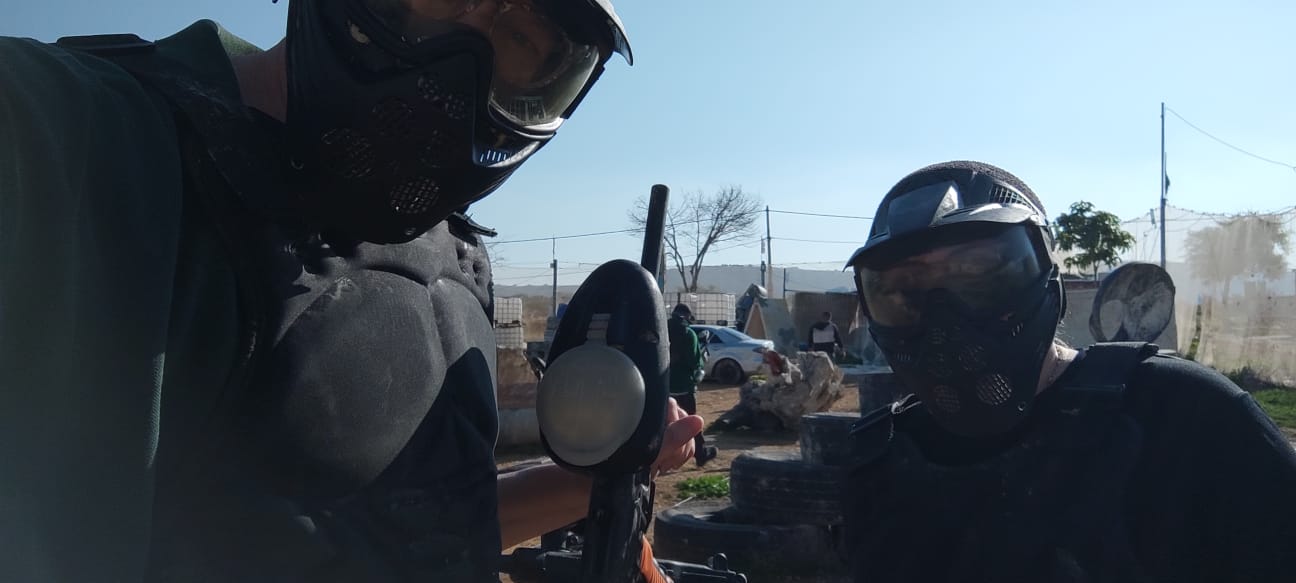
 From there we changed our plans and went to meet up with some friends who invited us at the last minute to join them for paintball. We drove out to Kalanit for that and had a lot of fun, and a little bit of pain, playing paintball.
.
We rented an apartment in Tiberias via AirBNB. That worked out great. The apartment was fine for what we needed, it was clean, fairly new, and it had an amazing view overlooking the Kinneret, and it was very close to the Kinneret as well.
From there we went to a horse ranch outside of Hadera, called (I think) the Cactus Ranch, or something like that. We went horseback riding along the Mediterranean with the water lapping up at our horses hooves. This was a lot of fun, the guides were very active and interacting with us and everyone had fun.
After dinner we went up to Tiberias, found our apartment, settled in, lit the Chanukah candles.

In the morning I went for a run along the Kinneret, including a section on the marathon route. After everyone else got up and did what they needed to do and all that we drove up to the Golan for the morning activities before the rain would hit. We headed out to a site near Merom Golan called מפקדת הכוחות הסורים - the Syrian Forces Headquarters (if you plan to go, that's what you would put into Waze). On the way up, just a few minutes before rriving we saw a nice lookout point that also had some sort of military memorial site so we stopped to take a look. It was called "Koach Nati" - Nati's Forces - and it was a memorial to a platoon that fought in that area in the Yom Kippur War and many died. It is a beautiful site with a great view. Each tree planted there has a name with a qr code so you can scan it and hear the story of that specific soldier. There is also a tank you can climb into (I didnt but kids did) and move the turret up and down.
Moving on from there we continued on our way and went to the Syrian forces headquarters. Waze was going a little crazy at that point between Koach Nati and the Syrian Forces Headquarters, I assume due to the volcanic rock in the area. Getting there a few minutes later you pull up to a massive shell of a building covered in graffiti. This is where the Syrian army headquarters for the area was before Israel recaptured the Golan Heights in 1967. Eli Cohen, the Israeli spy in Syria who reached high ranks in the Syrian government, had been in this building in 1965. The building is massive, though I said that already, with a fabulous spiral staircase in the middle. The spiral staircase is blown out at the 2nd floor. You can walk up it or via the stairs on each side of the wings of the building and go to each floor or to the roof. There are sort of escape room puzzles set up in some rooms. .jpeg)

.jpeg)

From there we went to Amuka - it has been many years since we were there and some of the kids have never been there. They did change it around a lot form what I remember including making it a full separation between men and women, and the women's side has a little marketplace to buy tchachkes and other stuff they scam you into buying for made up segulas. From there we went to Meron to visit Kever Rashbi, Rabbi Shimon Bar Yochai.
From Meron we went to Tzfat. We had arranged an activiity in the Puzzle Room there. We have been there before but they had a new puzzle customized for Chanukah so we went again and had a good time trying to solve that. We had some other plans for Tzfat but because of the rain and by then everyone was tired we decided to head back to Tiberias for shawarma, Chanukah lighting and the boardwalk.
Then back to Tiberias for shawarma, Chanukah candle-lighting and the boardwalk. It was already too late for the Chabad candle-lighting event on the boardwalk, which we have been to before and enjoy, but we walked around a little. It was pretty dead by then so we didnt hang out there much.
Day three we got up and packed up. We went down to the Kinneret and had some ice cream sitting by the water for a while. We then went in to Tiberias to visit the Donna Gracia Museum. This is in the lobby of the Donna Gracia Hotel and is a fascinating piece of history. We have been there before but wanted to take the kids to hear the story. Unfortunately there was no guided tour that day, so we took the self-guided tour using the app or website but it was not the same and not as good of an experience.
From there we headed back with a planned stop in Holon for the Israel Children's Museum to see the exhibit called "Dialogue in the Dark" where you experience what it would be like to be blind. Traffic was absolutely horrible but they were very forthcoming in letting us come late - many others were also late for their appointments. Some of us have been there before and some had not. It was an interesting and enlightening experience for all, and the kids asked some good questions at the end during the dialogue portion.
and then we went home to crash and get ready for Shabbos.
.
.
------------------------------------------------------
Reach thousands of readers with your ad by advertising on Life in Israel
Reach thousands of readers with your ad by advertising on Life in Israel
------------------------------------------------------
Mar 28, 2022
Drones save kids on tiyul
40-some kids got disconnected form their group on a class trip to Nahal Og and were lost. They were eventually located by security forces using drones to help in the search. Rescue teams are on the way to extract the kids.


I dont know how you lose 40+ kids. I get how a couple of kids can wander off and get disconnected and lost, but a group of 40 kids? However it happened, thankfully they were all found safe and sound.
It is cool they were able to use drones to search for the kids and find them. It would have been cooler if they could have used the drones to lift them each up and fly them right outta there.
I mean, if they can use drones to deliver pizza, they should be able to fly kids out of the mountains...
------------------------------------------------------
Reach thousands of readers with your ad by advertising on Life in Israel
Reach thousands of readers with your ad by advertising on Life in Israel
------------------------------------------------------
Jul 14, 2021
A Hidden Beach on the Sea of Galilee, Tabgha Pilgerhaus (video)
looks great. I have been to a spot right next to this but I think I will have to check this out..
------------------------------------------------------
Reach thousands of readers with your ad by advertising on Life in Israel
Reach thousands of readers with your ad by advertising on Life in Israel
------------------------------------------------------
Jul 12, 2021
government funded summer tiyulim coming to an end
Having grown up in a capitalist Western society, I sometimes just do not understand how things work in a socialist society, and even more how impassioned people can be about it.
Meaning, if I want to go to camp, or to send my kids to a camp, the process goes something like finding the relevant camp that fits our budget and signing up, or finding an alternative. If I want to go to an amusement park or a ballgame or a concert, I find the relevant event and decide whether or not to buy a ticket based on the various factors - date, ticket price, convenience, etc.
Aryeh Deri, formerly Minister of the Periphery, South and Galilee, turned the ministry (which was created for him) into a funnel of money to sponsor events in the Haredi communities around the country. According to Haredim10, for example, in 2019 the Ministry funded tiyulim for 46,000 yeshiva students. 86% of tiyulim sponsored and funded by the ministry were for the students in the Haredi yeshivas.
The new minister who has replaced Deri, Minister Oded Forer has decided to put an end to this. While he has not yet announced his plans he did say this will not continue and the entire budget of the ministry will undergo a revision and they will be used to effect a real change in the south, galilee and periphery, whatever that means.
Deri has responded that more yeshiva students got tiyulim but their tiyulim were shorter, and the general population also benefited from the funding with less students participating but for longer tiyulim. The article goes into some of the numbers, blah blah blah. How much they spent on this or that group is not of any interest to me. Additionally, if the entire program is coming to an end and it was distributed equally despite it being distributed differently (as Deri claims), then it is not anti-Haredi to stop the program because it is being stopped for everyone.
I do not understand why the government is paying for kids, of any type to go on tiyulim, to have kumzitz and for yeshivas to have camps in the summer, for bike rides and for concerts. And now they are anti-Haredi because the new people in charge are stopping it. It does not make any sense to me. My family recently went on a tiyul and we paid for it ourselves. I just don't get the need or demand for the government to pay for everything someone wants to do. I guess it is nice that they did until now but it doesnt bother me in the slightest that it is being stopped.
------------------------------------------------------
Reach thousands of readers with your ad by advertising on Life in Israel
Reach thousands of readers with your ad by advertising on Life in Israel
------------------------------------------------------
May 3, 2021
Mehadrin Tiyulim might be coming
Last year there was talk within the Nature and Parks Authority about creating a program to test the feasibility of operating different trails and springs around the country in a way appropriate for the religious public in some sort of "mehadrin" style, with separate times or days for swimming in the natural ponds and springs divided among male and female.

According to Israel Hayom, this issue is now back on the table. The Nature and Parks Authority legal counsel has decided that there is no legal problem with this plan, and it does not cause any damage to the sense of equality among genders.
The legal counsel has decided that the Authority does have the authority to perform this program and make this division of usage. Also, the law does allow separate frameworks of activities for mena nd for women, as long as the separation can be justified.
In this case, by creating a track of separate swimming times in the natural springs, those who do not go now because of the mixed swimming will be able to enjoy the natural resources. Legal Counsel points out that the hours designated for this would be significantly smaller relative to the normal functioning of the sites, and those who do not want the separate swimming will have alternatives available right there - so the damage to those who do not want it is negligible.
I want to see what plan they come up with and how this will work. Some springs are small, and probably cannot handle a separate and mixed swimming section, so maybe they will not be included in this. I am wondering how it will be worked out - if different days, then families out hiking together might not all be able to swim. We'll see what plan they put together. I have a hard time imaging how this will work. A swimming pool is easy - you make certain hours per day, but trails and springs have people passing them and jumping in the water at any time...
------------------------------------------------------
Reach thousands of readers with your ad by advertising on Life in Israel
Reach thousands of readers with your ad by advertising on Life in Israel
------------------------------------------------------
Apr 4, 2021
Tiyulim in Eretz Yisrael: the deep south west, Shivta and 10
We mostly took it easy this holiday. While it is wonderful that the infection rate has dropped tremendously (I would assume because of the high rate of vaccination and recovery rates) and people are able to get out, unlike the last few holidays, and travel the country, I personally hate standing in line and fighting with the crowds. So I love seeing the country filled with people having a good time, and I am happy to see that mostly from my home.
 Due to Corona, many sites and trails require advance booking. Those sites are almost all busy. Also, it is hard to get reservations, as Israelis love to book several sites and only later decide which one to visit. there is no charge to make a reservation, and no penalty for skipping, so that is what happens. It is what it is, but we found a way to not have to deal with that (after trying just a little bit).


We spent a couple of days getting together with family, along with a relative's simcha, and relaxing.
We joined the rest of Israel out touring one day of Chol Hamoed.
But even then, while most of the Israeli tourists were running around up north or all the way down in Eilat, we went out traveling in a part of the country we thought would be slightly less traveled.
And we were successful.
We went southwest. Deep southwest.
We started out driving down to Shivta National Park. Shivta is an old Byzantine town, now in ruins, from about 1500 years ago along the Spice Route. We got there and ate some lunch before touring the ruins. Another great thing about Shivta is that there was no need to make reservations to see the site (and it was free).

So we toured the ancient Shivta site, which is also a UNESCO World Heritage Site. There were other people there, but it was not crowded at all. We took our time and enjoyed climbing through the ruins.
From there we drove further southwest. There is a road called Highway 10 - not the well-known Road 10 on the edge of Bet Shemesh (which is really officially Road 3855), but Highway 10 that runs adjacent to the Israeli-Egyptian border. The road is normally closed to Israeli traffic for security reasons, but a few days a year they open it up, or at least most of it, to Israeli travelers.

The northwestern most edge of Highway 10 is at the very bottom of the Gaza Strip, just a bit northwest of the Israeli town called Kadesh Barnea. The road actually was only opened on the northern-most side from the junction of the town of Azuz, just a bit southeast of Kadesh Barnea, but it took us time to find that (that's what we get for not reading all the details). While we wasted some time looking for the opening of the road, it was pretty cool as we saw the closed borders and security stations. We eventually figured it out and as we got closer, there were also signs pointing us in the right direction.
Despite the road being officially open, it is still manned by Israeli soldiers securing the area, along with closed gates that they open for each car. They asked where we were going, and I said I heard the road was open and we just wanted to drive on it. The soldiers smiled, opened the gate and wished us an enjoyable and safe trip and we were on our way.
Obviously we were not going to drive all the way down to Eilat on this road, as we had no interest in going so far. Also it was late in the afternoon and they only keep the road open for some hours per day and then close it. So our time was limited, which was fine by us.
The border is secured by a high fence with barbed wire (and probably other forms of security), which I understand is relatively new and was installed to stop the infiltrators from Sudan and Eritrea who came through Egypt several years ago. The road adjacent to the fence is actually new and beautifully paved, and I assume is only used by the security forces. The road used by the public, when open, is just a tad away from the fence and is older and not quite as nicely paved.
After driving for a while, we stopped to ask a group of soldiers securing the road where a lookout point is. They directed us to just a bit further down the road. When we got there we pulled over and got out and walked around a bit. The ground in that area is full of iron ore rocks. We also found a lot of old bullet casings - maybe from the Yom Kippur War (or maybe not).
After checking things out there for a bit, we got back in the car and decided to drive a little bit further down the road. Someone told us there is "borot mayim" - water cisterns - in the area, and we decided to go a little further and look for them. As we got to the next group of soldiers, they directed us to the water, warning us that it won't be open much longer. We got there and the soldiers there told us we only have a little bit of time left. We parked the car and hiked out to the borot mayim. There were several other people there - some coming, some going.
The borot mayim were actually a little disappointing. It was one hole in the ground with a bit of water. A few people were climbing down to touch the water, but without actually being able to go in and swim and enjoy, I didn't see the point. The cistern had a ladder, but the cistern was only big enough for one person at a time, and it was not particularly deep. We enjoyed the area and beautiful views and hiked back to the car. When done we turned around and went back to get off the road. From there we went to Tel Nitzana to relax, eat, daven and get ready to drive home.


what interesting trips did you take or interesting things did you do and see?
------------------------------------------------------
Reach thousands of readers with your ad by advertising on Life in Israel
Reach thousands of readers with your ad by advertising on Life in Israel
------------------------------------------------------
Jun 21, 2020
Separate Hiking Days might be coming to a nature trail near you
What religious male traveler/hiker in Israel is not familiar with the experience of driving out and hiking on a hot day to a river or stream or natural pool of water in the middle of nature looking forward to jumping in to cool off for a bit and enjoy the cold water, only to get there and discover the pond or stream already being enjoyed by other people including women, often wearing bathing suits, if their presence alone isn't enough, and realizing they cant go in the water or hang out there to enjoy? And what religious female hiker isn't familiar with the same experience from the other side - getting to the stream or pond and finding men there splashing around in their swimming trunks and realizing that she cannot go in to enjoy the water?
Sometimes the hikers are able to find a natural solution of moving a bit upstream or downstream where it might be quieter, but sometimes that is not a solution, especially with a pond.
The organization B'Tzalmo, a human rights organization that fights for rights based on Jewish values (briefly, if I understood it correctly), has submitted a request to the Deputy Attorney General Dina Zilber that would, if accepted, reorganize popular nature hikes in Israel and offer separate schedules for women's and men's hours or days, depending on the trail.
According to Israel Hayom, the petition was submitted as a result of the petition to the Supreme Court regarding the ongoing case of the Kiryat Arba municipal swimming pool that is kept in operation only with separate hours for men and women but some want family time to be allocated for the pool as well that would have men and women together. The court has ruled in that case that the pool must offer family time as well if residents want it. The Mayor of Kiryat Arba shut the pool down rather than offer mixed swimming times. Now residents from both sides want it to be reopened - some requesting it be opened for separate swimming and others insisting that if reopened there should also be family time.
As a result of this, B'Tzalmo has petitioned the Deputy AG that some nature trails, such as Nahal Yehudiya in the Golan, require swimming in large pools as part of the trail - the pool cannot be avoided, should someone want to for personal reasons of tzniyus to avoid mixed swimming. Because of that, B'Tzalmo says, many religious people avoid trails such as these so as not to end up in a difficult situation.
The arrangement for separate hours or days, depending on the trail, could be designated for specific days of the year, while the rest of the year it could be open to all, according to the request. they compare it to the beaches where it was determined that separate beaches could be opened without being considered discrimination.
Interesting. let's see what happens. It doesn't really help family tiyulim, but it would help all-male and all-female groups of hikers...
Sometimes the hikers are able to find a natural solution of moving a bit upstream or downstream where it might be quieter, but sometimes that is not a solution, especially with a pond.
The organization B'Tzalmo, a human rights organization that fights for rights based on Jewish values (briefly, if I understood it correctly), has submitted a request to the Deputy Attorney General Dina Zilber that would, if accepted, reorganize popular nature hikes in Israel and offer separate schedules for women's and men's hours or days, depending on the trail.
According to Israel Hayom, the petition was submitted as a result of the petition to the Supreme Court regarding the ongoing case of the Kiryat Arba municipal swimming pool that is kept in operation only with separate hours for men and women but some want family time to be allocated for the pool as well that would have men and women together. The court has ruled in that case that the pool must offer family time as well if residents want it. The Mayor of Kiryat Arba shut the pool down rather than offer mixed swimming times. Now residents from both sides want it to be reopened - some requesting it be opened for separate swimming and others insisting that if reopened there should also be family time.
As a result of this, B'Tzalmo has petitioned the Deputy AG that some nature trails, such as Nahal Yehudiya in the Golan, require swimming in large pools as part of the trail - the pool cannot be avoided, should someone want to for personal reasons of tzniyus to avoid mixed swimming. Because of that, B'Tzalmo says, many religious people avoid trails such as these so as not to end up in a difficult situation.
The arrangement for separate hours or days, depending on the trail, could be designated for specific days of the year, while the rest of the year it could be open to all, according to the request. they compare it to the beaches where it was determined that separate beaches could be opened without being considered discrimination.
Interesting. let's see what happens. It doesn't really help family tiyulim, but it would help all-male and all-female groups of hikers...
------------------------------------------------------
Reach thousands of readers with your ad by advertising on Life in Israel
Reach thousands of readers with your ad by advertising on Life in Israel
------------------------------------------------------
Jun 4, 2020
Wifi SOS on your hiking trails in case of emergency
A Non-Profit Organization called Amutat Bein Hashitin, a group that works to educate people regarding nature in the Jordan Valley, is looking to solve a serious problem that could save lives.
People go on hikes in nature, on trails, through the mountains, and often there is no cellphone reception at all int eh area, but especially deep into the trail.
 People get into some sort of trouble, lost, off the trail, injured, short of water, heat stroke, flash floods, whatever, but have no way to call for help. They whip out their cellphone but cannot make a call to bring help, or even just to let people know they are ok but delayed, because they "can't get any bars" - no reception.
In the past, search parties would be deployed, rescue teams would go out searching the trails, helicopters flying low over the area with strong spotlights, trying to locate the lost and possibly injured adventurers.
Bein Hashitin has decided to install small wifi antennas called "Wifi SOS" on trails that have no reception.
the purpose of Wifi SOS is not to give hikers access to Instagram and Whatsapp. It is not intended to let you post your latest selfie to Facebook. This will offer a low level of connectivity just so that you can make an emergency phone call and bring help, let authorities know your location, if it should God forbid be necessary.

I have not seen a list of which trails these are already installed on, and on which it will be installed in the future, but wherever they are, in the Jordan Valley, keep your eyes out for them as one of the safety measures you prepare for, such as bringing adequate water, hats and sunscreen, maps, hiking shoes, and keep your eyes out for Wifi SOS signs.
Hopefully organizations in other parts of the country will install similar systems on trails around the country to increase the level of safety of hikers.
Good job Bein Hashitin!
And I am pretty sure that groups of hikers will end up taking their rest stops in the area right near these signs so that they can try to access, or hack, them for Internet access to post to "Instush".
(Update: I just saw a list posted in a hiking whatsapp group I am in: so far they are instaleld in 5 trails - 3 up north and 2 in the center area:
Nekik Hashachor, Nahal Amud and Nahal Tavor.
Nahal Og and Nahal Derga (Deragot). with the plan to increase that number)
People go on hikes in nature, on trails, through the mountains, and often there is no cellphone reception at all int eh area, but especially deep into the trail.
People get into some sort of trouble, lost, off the trail, injured, short of water, heat stroke, flash floods, whatever, but have no way to call for help. They whip out their cellphone but cannot make a call to bring help, or even just to let people know they are ok but delayed, because they "can't get any bars" - no reception.In the past, search parties would be deployed, rescue teams would go out searching the trails, helicopters flying low over the area with strong spotlights, trying to locate the lost and possibly injured adventurers.
Bein Hashitin has decided to install small wifi antennas called "Wifi SOS" on trails that have no reception.
the purpose of Wifi SOS is not to give hikers access to Instagram and Whatsapp. It is not intended to let you post your latest selfie to Facebook. This will offer a low level of connectivity just so that you can make an emergency phone call and bring help, let authorities know your location, if it should God forbid be necessary.
I have not seen a list of which trails these are already installed on, and on which it will be installed in the future, but wherever they are, in the Jordan Valley, keep your eyes out for them as one of the safety measures you prepare for, such as bringing adequate water, hats and sunscreen, maps, hiking shoes, and keep your eyes out for Wifi SOS signs.
Hopefully organizations in other parts of the country will install similar systems on trails around the country to increase the level of safety of hikers.
Good job Bein Hashitin!
And I am pretty sure that groups of hikers will end up taking their rest stops in the area right near these signs so that they can try to access, or hack, them for Internet access to post to "Instush".
(Update: I just saw a list posted in a hiking whatsapp group I am in: so far they are instaleld in 5 trails - 3 up north and 2 in the center area:
Nekik Hashachor, Nahal Amud and Nahal Tavor.
Nahal Og and Nahal Derga (Deragot). with the plan to increase that number)
------------------------------------------------------
Reach thousands of readers with your ad by advertising on Life in Israel
Reach thousands of readers with your ad by advertising on Life in Israel
------------------------------------------------------
Aug 17, 2015
Tiyulim in Eretz Yisrael. Tzafon 2015
As I posted on Facebook at the beginning of our recent camping trip in northern Israel, "And God said "go north, in August", and the people did as God said..."
Northern Israel was packed as the people of Israel went to enjoy a hot summer vacation up north, perhaps in part making up for last years "missed" vacation due to the war in Gaza, Operation Protective Edge...
We went, with some other people, up north for 3 days and 2 nights of camping. We stayed in the campgrounds of Dagei Dafna.
Dagei Dafna is a trout farm of sorts where people can go fishing or eat in a fish restaurant. They are located a few kilometers away from Kiryat Shmona, next to Shaar Yashuv and Kibbutz Dafna, and across the highway from Chorshat Tal, sometimes known as the Hilton of campgrounds.
Dagei Dafna has a campgrounds close by as well. The campgrounds is nice and clean, with bathrooms and showers. They do not provide electricity and also prohibit music. This is nice in the sense that campers do not have to deal with teens and young adults having late night parties, as happens on other campgrounds. They do provide phone charging stations and some other amenities one might find necessary. Dagei Dafna also has a pool they empty and fill daily (from the river), along with a section of river.
While normally we tiyul sort of on the fly deciding what to do as we go along, based on everybody's moods and abilities, even choosing activities far from our home base, this time we stayed in the immediate area for all our activities. Everything was decided on the fly, but we spent far less time in the car driving to far away hikes or activities.
So here is what we did:
Day 1 (really half a day as we spent the first half of the day driving up north and settling in):
We enjoyed the river at Dagei Dafna for a bit while eating lunch. After that we planned to go to Nahal Snir, which is 3 minutes away. Unfortunately we got there only to discover the place was absolutely jam packed and staff were warning people that it might not be worth paying the entrance fee.
We decided to turn around and find something else to do. We settled on something that we had no idea what it was - we figured we would check it out and see if it is something that would keep us busy or if we should do something else. We had seen people parking lines of cars up and down the road outside an area with a sign that said "Nabi Yehuda" - Judah the Prophet.

We went and found parking. Sure enough it was an extension of the same river and a beautiful water hike. We hiked in the river against the current. The water was not high - the highest we experienced was waist high in a few brief locations, but the current was relatively strong. The water was ncie and cold and provided great relief from the heat.
At the end of the enjoyable hike, against the current, we ended up on a pooled area called "Chorshat Hanoflim". The kids enjoyed sitting around there and swimming. In one corner there was a rope swing set up hanging from a tree and everyone enjoyed swinging and flying into the water.
 At some point some of us walked out to the road and decided to walk back, outside of the water, and go get the cars and those of us who had not wanted to hike all the way up. Some mistaken navigation had the walk taking longer than expected, but eventually we made it back with the cars. After some more relaxing and davening mincha, we made our way back towards Dagei Dafna, with a stop next door at the Helicopter Tragedy Memorial.
The memorial memorializes the 73 fallen soldiers in the helicopter disaster of 1997 in which two Yasur helicopters crashed on their way to Lebanon. The memorial is tasteful and interesting, with the names of the fallen displayed, and part of the memorial being designed from grass and trees and the flowing river in an abstract shape of the Yasur helicopter.
After the memorial we went back to the campgrounds for barbecue dinner and finishing off the day. The kids went splashing in the river while we prepared dinner, and finished off the day.
Day 2:
We started off the day going to Kfar Blum for "kayaking", which is really rafting. Kayaking is always fun, though I think we might forgo that activity in future trips and just bring our own inner tubes and have practically the same activity, for free, in other parts of the various rivers. This took a while, as some of us did the longer, more challenging and adventurous route.
After Kfar Blum came lunch, and then we had to decide on an activity for the rest of the day. We chose a tiyul someone had told us about. This was another river hike supposedly very similar to Nahal Snir, but also free like Nabi Yehuda.
We went to Nahal Hermon, in the section that flows near the village of Sde Nehemya. We went down to the river, and hiked, again against the current, upstream. Nahal Hermon, at least in this section was refreshing and with a pleasant current. It was also not high - most of the time ankle or mid-calf height, with the occasional waist high depth. We hiked upstream very calmly. Eventually we hit a spot with a great rope swing and everyone had a blast taking turns swinging over the water, getting splashed and jumping in.
Eventually we hiked back downstream and out of the water and went back to the campgrounds to finish the day.
One of the things we did differently this time was to not try to bring enough food for the entire trip, but mostly just for the first day. We planned on refreshing out supplies daily in nearby stores - in a supermarket in nearby Kiryat Shmona and nearby makolets. Wednesday night we drove into Kiryat Shmona and bought some food and drink for dinner and for breakfast and tiyulim the next day.
When we got back from shopping we prepared dinner, with the kids splashing around in the river. Eventually eating, showering and collapsing.
Day 3:
Thursday morning we went into Shaar Yashuv for morning services, due to the need of a Torah, rather than making a minyan in the campgrounds as we did on Wednesday. Shaar Yashiv has set up their shul during this period so that there can be multiple minyan of campers from all over the area, on the lawn outside the shul, and each minyan takes its turn going into the shul when it comes time to read the Torah.
 At the Shaar Yashuv shul, we saw many others from Bet Shemesh, in addition tot he many we saw in Dagei Dafna and on some of the hikes. After davening we took advantage and bought some fresh bread in the local makolet, also sort of saying thank you for use of the shul by spending some money locally.
After breakfast we decided to pack up as we would be tiyuling and then heading back to Bet Shemesh without returning to Dagei Dafna.
Nobody was int he mood for more water hikes, so we chose some easy and low-key activities.
 We started with driving to nearby Kibbutz Snir for geocaching in the old abandoned zoo called the slimy zoo. The zoo was dismantled about a dozen years ago, though there are still a couple of peacocks that hang out there and "refuse to leave" (in the words of one of the locals we stopped for directions). The spot is also the location of an old cave and grave that had been used by the Romans as a burial location.
 After Kibbutz Snir, we went to Kibbutz Dan to see the fish ponds they raise trout in. They allow the public to walk around, for free, and see the different ponds. We went from pond to pond and saw how each pond is filtered and the fish in each pond are a certain age and size and with each pond that increases to eventually pretty large fish.
After this, in the brutal heat, everyone was kind of tired and nobody really wanted to do anything else. We started to head for home with a detour to Tzfat for a pizza and ice cream lunch to close off the tiyul.
Northern Israel was packed as the people of Israel went to enjoy a hot summer vacation up north, perhaps in part making up for last years "missed" vacation due to the war in Gaza, Operation Protective Edge...
We went, with some other people, up north for 3 days and 2 nights of camping. We stayed in the campgrounds of Dagei Dafna.
Dagei Dafna is a trout farm of sorts where people can go fishing or eat in a fish restaurant. They are located a few kilometers away from Kiryat Shmona, next to Shaar Yashuv and Kibbutz Dafna, and across the highway from Chorshat Tal, sometimes known as the Hilton of campgrounds.
Dagei Dafna has a campgrounds close by as well. The campgrounds is nice and clean, with bathrooms and showers. They do not provide electricity and also prohibit music. This is nice in the sense that campers do not have to deal with teens and young adults having late night parties, as happens on other campgrounds. They do provide phone charging stations and some other amenities one might find necessary. Dagei Dafna also has a pool they empty and fill daily (from the river), along with a section of river.
While normally we tiyul sort of on the fly deciding what to do as we go along, based on everybody's moods and abilities, even choosing activities far from our home base, this time we stayed in the immediate area for all our activities. Everything was decided on the fly, but we spent far less time in the car driving to far away hikes or activities.
So here is what we did:
Day 1 (really half a day as we spent the first half of the day driving up north and settling in):
We enjoyed the river at Dagei Dafna for a bit while eating lunch. After that we planned to go to Nahal Snir, which is 3 minutes away. Unfortunately we got there only to discover the place was absolutely jam packed and staff were warning people that it might not be worth paying the entrance fee.
We decided to turn around and find something else to do. We settled on something that we had no idea what it was - we figured we would check it out and see if it is something that would keep us busy or if we should do something else. We had seen people parking lines of cars up and down the road outside an area with a sign that said "Nabi Yehuda" - Judah the Prophet.

We went and found parking. Sure enough it was an extension of the same river and a beautiful water hike. We hiked in the river against the current. The water was not high - the highest we experienced was waist high in a few brief locations, but the current was relatively strong. The water was ncie and cold and provided great relief from the heat.
At the end of the enjoyable hike, against the current, we ended up on a pooled area called "Chorshat Hanoflim". The kids enjoyed sitting around there and swimming. In one corner there was a rope swing set up hanging from a tree and everyone enjoyed swinging and flying into the water.
 At some point some of us walked out to the road and decided to walk back, outside of the water, and go get the cars and those of us who had not wanted to hike all the way up. Some mistaken navigation had the walk taking longer than expected, but eventually we made it back with the cars. After some more relaxing and davening mincha, we made our way back towards Dagei Dafna, with a stop next door at the Helicopter Tragedy Memorial.
The memorial memorializes the 73 fallen soldiers in the helicopter disaster of 1997 in which two Yasur helicopters crashed on their way to Lebanon. The memorial is tasteful and interesting, with the names of the fallen displayed, and part of the memorial being designed from grass and trees and the flowing river in an abstract shape of the Yasur helicopter.
After the memorial we went back to the campgrounds for barbecue dinner and finishing off the day. The kids went splashing in the river while we prepared dinner, and finished off the day.
Day 2:
We started off the day going to Kfar Blum for "kayaking", which is really rafting. Kayaking is always fun, though I think we might forgo that activity in future trips and just bring our own inner tubes and have practically the same activity, for free, in other parts of the various rivers. This took a while, as some of us did the longer, more challenging and adventurous route.
After Kfar Blum came lunch, and then we had to decide on an activity for the rest of the day. We chose a tiyul someone had told us about. This was another river hike supposedly very similar to Nahal Snir, but also free like Nabi Yehuda.
We went to Nahal Hermon, in the section that flows near the village of Sde Nehemya. We went down to the river, and hiked, again against the current, upstream. Nahal Hermon, at least in this section was refreshing and with a pleasant current. It was also not high - most of the time ankle or mid-calf height, with the occasional waist high depth. We hiked upstream very calmly. Eventually we hit a spot with a great rope swing and everyone had a blast taking turns swinging over the water, getting splashed and jumping in.
Eventually we hiked back downstream and out of the water and went back to the campgrounds to finish the day.
One of the things we did differently this time was to not try to bring enough food for the entire trip, but mostly just for the first day. We planned on refreshing out supplies daily in nearby stores - in a supermarket in nearby Kiryat Shmona and nearby makolets. Wednesday night we drove into Kiryat Shmona and bought some food and drink for dinner and for breakfast and tiyulim the next day.
When we got back from shopping we prepared dinner, with the kids splashing around in the river. Eventually eating, showering and collapsing.
Day 3:
Thursday morning we went into Shaar Yashuv for morning services, due to the need of a Torah, rather than making a minyan in the campgrounds as we did on Wednesday. Shaar Yashiv has set up their shul during this period so that there can be multiple minyan of campers from all over the area, on the lawn outside the shul, and each minyan takes its turn going into the shul when it comes time to read the Torah.
 At the Shaar Yashuv shul, we saw many others from Bet Shemesh, in addition tot he many we saw in Dagei Dafna and on some of the hikes. After davening we took advantage and bought some fresh bread in the local makolet, also sort of saying thank you for use of the shul by spending some money locally.
After breakfast we decided to pack up as we would be tiyuling and then heading back to Bet Shemesh without returning to Dagei Dafna.
Nobody was int he mood for more water hikes, so we chose some easy and low-key activities.
 We started with driving to nearby Kibbutz Snir for geocaching in the old abandoned zoo called the slimy zoo. The zoo was dismantled about a dozen years ago, though there are still a couple of peacocks that hang out there and "refuse to leave" (in the words of one of the locals we stopped for directions). The spot is also the location of an old cave and grave that had been used by the Romans as a burial location.
 After Kibbutz Snir, we went to Kibbutz Dan to see the fish ponds they raise trout in. They allow the public to walk around, for free, and see the different ponds. We went from pond to pond and saw how each pond is filtered and the fish in each pond are a certain age and size and with each pond that increases to eventually pretty large fish.
After this, in the brutal heat, everyone was kind of tired and nobody really wanted to do anything else. We started to head for home with a detour to Tzfat for a pizza and ice cream lunch to close off the tiyul.
------------------------------------------------------
Reach thousands of readers with your ad by advertising on Life in Israel
------------------------------------------------------
Subscribe to:
Posts (Atom)
Related Posts
