
Showing posts with label jewish state. Show all posts
Showing posts with label jewish state. Show all posts
Oct 14, 2015
The provocation of being Jewish
hmmmm
sometimes, in the eyes of some people or groups, it is bad to do things that might be considered provocative and upset the non-Jews and maybe even trigger them to violence. Other times one should adamantly insist on acting the right way, insisting on one's right and behave according to proper behavior, even if doing so might upset the non-Jews and trigger violence.
In concept, that some things are more important than other things, some ideals are greater than others, and whether to continue despite creating a provocation or to stop so as to avoid the provocation, makes sense. Some things are greater. Some things are more important than other things.
In practice though, it seems to get played out more in line with any given person's personal bias than using some sort of objective scale of what is important and what is not. What I feel is important I will say is something we should do even if it upsets the non-Jews, while somebody else will say that isn't important enough and it is prohibited to provoke the goyim. That same person might then hold something else of greater importance and say to do it, despite the fact that it too provokes the goyim.
What am I talking about?
The first issue I am referring to is Har Habayit. That is commonly spoken about in the context of what everyone else thinks about Har Habayit. Some of us say that Har Habayit is ours, it is our core, it is our soul, and even if it provokes the non-Jews that we control it and go there, it is important enough that we should do so.
I would even say that even if they completely ban Jews from Har Habayit, we should still control it, and even ban Arabs from there as well. Because it is ours. It is the heart and soul of the Jewish people, and despite a possible provocation, and we should hold on to it tightly, no matter what anyone else thinks.
Other people, and we hear from them often, say that Jews shouldn't go there, Jews should be banned, our association with Har Habayit provokes the Arabs.
ok.
I say, and 7 or 8 million other people, say that Jews should be in Eretz Yisrael, despite the fact that the Arabs, and many other non-Jews, don't want us here. Our presence here clearly provokes the goyim - we've been living here for 70 years in relatively unpeaceful conditions, yet we continue to live here.
Even the vast majority of people who say not to go to Har Habayit, relinquish control of Har Habayit to the Arabs, because of the inherent provocation of our association with it, do not say we should abandon Eretz Yisrael and leave it to the Arabs, just because our presence here provokes them. There are some people, not too many but some, who say that as well - Jews should not be in Eretz Yiisrael as it provokes the goyim (among other arguments).
And then we have an issue that seems on the surface to be much more mundane. Some might say it is an issue be of vital importance.
Mynet is reporting that Rav Shternbuch, of the Eida Hachareidis, has said that people should continue to dress like Haredi Jews, with beard, peyos, the traditional Jewish garb of black and white clothing, and not hide the fact that one is a frum Jew.
Why would one want to hide it?
Just like in many parts of Europe today, the visible presence of Jews seems to be provocative.
In Europe, our presence triggers the goyim to attack us. They somehow all lose their minds and culture and civility when they see Jews, and resort to violence to rid France, or wherever, of the Jews. To prevent acts of violence. many Jews in Europe do what they can to hide their presence. They dress more European, wear hats instead of kippot. Some will go bareheaded entirely. They'll trim or remove their beards and make their peyos less conspicuous.
It seems that some in Israel are similarly concerned. Dressing like a frum jew, easily visible, makes one a target for Arabs looking to harm jews. The question was posed that perhaps we should make ourselves less conspicuous - trim our peyos and beards, dress more generically, etc.
Rav Shternbuch said that his rebbe, during World War II, continued to dress in his rabbinic garb, and even grew his peyos extra long, so it would be completely obvious to everyone that he was a frum Jew. He called this a kiddush hashem.
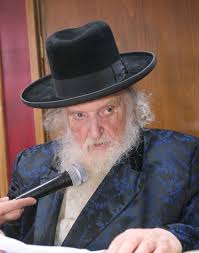 Rav Shternbuch said that dressing in public like a Jew, with beard and peyos, is a public declarationthe Haredi Jewry is still thriving and we are not embarrassed of being Jews but we are proud of it. He even took the opportunity to point out the Jews who go to Har Habayit and say they provoke the goyim to violence and one day will have to pay for that.
Jewish identity is important. We know that the Jews in Egypt did not change three things, three things that made them easily identifiable as Jews; their names, their language and their traditional Jewish garb. I happen to agree with him that we should not be ashamed of our identity and should continue to dress Jewish (though we might differ on which parts of our dress code are part of what is supremely important and which parts are less so). Everyone else should learn to deal with it.
Is a black jacket or an untrimmed beard more important than protecting the sanctity of Har Habayit, the heart of the Jewish Nation? Again, I am not even saying we need to go up on Har Habayit, but we should at least control it and prevent the access of non-Jews as much as possible, especially when they do not behave appropriately up there.
To Rav Shternbuch wearing black jacket and pants and having an untrimmed beard is more important as part of the Jewish identity than Har Habayit is, so Rav Shternbuch paskens that dressing Jewish is a great ideal and should be done even in the face of the threat of being the target of violence, while associating with Har Habayit is bad because of the provocation of violence.
To me Jewish identity is also of great import, but if necessary I do not see it as a big deal to wear a colored shirt and trim the beard a bit, to avoid violence, though I do not say one has to. I see no problem with having untrimmed beards while wearing black and white and making oneself a target (I do not really believe that makes a person a target), but if someone does feel that way, I see nothing wrong with trimming the beard a bit, brushing the peyos behind the ear, and wearing a colored shirt to avoid provoking violence.
To me, Har Habayit protected by Jews (again, without even talking about Jews going there to pray) is far more important to the Jewish nation than a white shirt or some loose beard hairs. Just like living in Eretz Yisrael is important enough that we do so despite the provocation it causes.
sometimes, in the eyes of some people or groups, it is bad to do things that might be considered provocative and upset the non-Jews and maybe even trigger them to violence. Other times one should adamantly insist on acting the right way, insisting on one's right and behave according to proper behavior, even if doing so might upset the non-Jews and trigger violence.
In concept, that some things are more important than other things, some ideals are greater than others, and whether to continue despite creating a provocation or to stop so as to avoid the provocation, makes sense. Some things are greater. Some things are more important than other things.
In practice though, it seems to get played out more in line with any given person's personal bias than using some sort of objective scale of what is important and what is not. What I feel is important I will say is something we should do even if it upsets the non-Jews, while somebody else will say that isn't important enough and it is prohibited to provoke the goyim. That same person might then hold something else of greater importance and say to do it, despite the fact that it too provokes the goyim.
What am I talking about?
The first issue I am referring to is Har Habayit. That is commonly spoken about in the context of what everyone else thinks about Har Habayit. Some of us say that Har Habayit is ours, it is our core, it is our soul, and even if it provokes the non-Jews that we control it and go there, it is important enough that we should do so.
I would even say that even if they completely ban Jews from Har Habayit, we should still control it, and even ban Arabs from there as well. Because it is ours. It is the heart and soul of the Jewish people, and despite a possible provocation, and we should hold on to it tightly, no matter what anyone else thinks.
Other people, and we hear from them often, say that Jews shouldn't go there, Jews should be banned, our association with Har Habayit provokes the Arabs.
ok.
I say, and 7 or 8 million other people, say that Jews should be in Eretz Yisrael, despite the fact that the Arabs, and many other non-Jews, don't want us here. Our presence here clearly provokes the goyim - we've been living here for 70 years in relatively unpeaceful conditions, yet we continue to live here.
Even the vast majority of people who say not to go to Har Habayit, relinquish control of Har Habayit to the Arabs, because of the inherent provocation of our association with it, do not say we should abandon Eretz Yisrael and leave it to the Arabs, just because our presence here provokes them. There are some people, not too many but some, who say that as well - Jews should not be in Eretz Yiisrael as it provokes the goyim (among other arguments).
And then we have an issue that seems on the surface to be much more mundane. Some might say it is an issue be of vital importance.
Mynet is reporting that Rav Shternbuch, of the Eida Hachareidis, has said that people should continue to dress like Haredi Jews, with beard, peyos, the traditional Jewish garb of black and white clothing, and not hide the fact that one is a frum Jew.
Why would one want to hide it?
Just like in many parts of Europe today, the visible presence of Jews seems to be provocative.
In Europe, our presence triggers the goyim to attack us. They somehow all lose their minds and culture and civility when they see Jews, and resort to violence to rid France, or wherever, of the Jews. To prevent acts of violence. many Jews in Europe do what they can to hide their presence. They dress more European, wear hats instead of kippot. Some will go bareheaded entirely. They'll trim or remove their beards and make their peyos less conspicuous.
It seems that some in Israel are similarly concerned. Dressing like a frum jew, easily visible, makes one a target for Arabs looking to harm jews. The question was posed that perhaps we should make ourselves less conspicuous - trim our peyos and beards, dress more generically, etc.
Rav Shternbuch said that his rebbe, during World War II, continued to dress in his rabbinic garb, and even grew his peyos extra long, so it would be completely obvious to everyone that he was a frum Jew. He called this a kiddush hashem.
Jewish identity is important. We know that the Jews in Egypt did not change three things, three things that made them easily identifiable as Jews; their names, their language and their traditional Jewish garb. I happen to agree with him that we should not be ashamed of our identity and should continue to dress Jewish (though we might differ on which parts of our dress code are part of what is supremely important and which parts are less so). Everyone else should learn to deal with it.
Is a black jacket or an untrimmed beard more important than protecting the sanctity of Har Habayit, the heart of the Jewish Nation? Again, I am not even saying we need to go up on Har Habayit, but we should at least control it and prevent the access of non-Jews as much as possible, especially when they do not behave appropriately up there.
To Rav Shternbuch wearing black jacket and pants and having an untrimmed beard is more important as part of the Jewish identity than Har Habayit is, so Rav Shternbuch paskens that dressing Jewish is a great ideal and should be done even in the face of the threat of being the target of violence, while associating with Har Habayit is bad because of the provocation of violence.
To me Jewish identity is also of great import, but if necessary I do not see it as a big deal to wear a colored shirt and trim the beard a bit, to avoid violence, though I do not say one has to. I see no problem with having untrimmed beards while wearing black and white and making oneself a target (I do not really believe that makes a person a target), but if someone does feel that way, I see nothing wrong with trimming the beard a bit, brushing the peyos behind the ear, and wearing a colored shirt to avoid provoking violence.
To me, Har Habayit protected by Jews (again, without even talking about Jews going there to pray) is far more important to the Jewish nation than a white shirt or some loose beard hairs. Just like living in Eretz Yisrael is important enough that we do so despite the provocation it causes.
------------------------------------------------------
Reach thousands of readers with your ad by advertising on Life in Israel
------------------------------------------------------
May 19, 2015
Chief Rabbinate angling to get more involved in affairs of State
The Rabbanut seems to want to expand its role, while the government has been trying recently to limit the Rabbanut's role and responsibilities.
Chief Rabbi Lau has created some waves, and made some people nervous, when he called on Justice Minister Ayelet Shaked to propose a law that would require the government to consult with the Chief Rabbinate on all legislation that is being considered for passage in Knesset.
Under Rabbi Lau's proposal, the government would be required to get an opinion from the Chief Rabbinate on any and every piece of legislation, just like it currently gets an opinion from the relevant ministry or authority. The Chief Rabbinate consultant would not be a single person, i.e. Rabbi Lau himself, but would be made up of some advisory board that would discuss the matter and come to an opinion from the perspective of Judaism. Rabbi Lau explains that Israel is a Jewish and democratic state, and while the democratic part is taken care of, The Jewish part also has what to say about all matters of legislation and should at least be involved and considered as part of the process.
Some people are taking Rabbi Lau's suggestion as a form of pushing the Rabbanut into affairs it does not belong in, which will ultimately lead to religious coercion when the Rabbanut will insist on its opinion being the influential one.
Personally, I like the idea. I don't know what the "Jewish opinion" is on many matters of State, and I would bet that most people do not, including many rabbis and halachic authorities. The Bostoner Rebbe himself recently expressed that he is grateful the religious are not yet a majority and therefore do not have to form opinions on how the state can possibly function within halachic parameters. So, I think it would be a great learning experience to have a body debating the Jewish approach to the great variety of issues the State has to deal with and formulating opinions.
Obviously, for now, the proposal does not include an insistence that the State accept the opinion, but at least such an opinion should be formed and heard, and ultimately considered..
The one thing that scares me about it is how biased or unbiased this body would be. We all know how many opinions there are on any given matter. Wouild such a consulting body be taken over by a group of people with interests? Would it become a body that is overwhelmingly machmir or meikil on every nuance, or would it be balanced?
Chief Rabbi Lau has created some waves, and made some people nervous, when he called on Justice Minister Ayelet Shaked to propose a law that would require the government to consult with the Chief Rabbinate on all legislation that is being considered for passage in Knesset.
Under Rabbi Lau's proposal, the government would be required to get an opinion from the Chief Rabbinate on any and every piece of legislation, just like it currently gets an opinion from the relevant ministry or authority. The Chief Rabbinate consultant would not be a single person, i.e. Rabbi Lau himself, but would be made up of some advisory board that would discuss the matter and come to an opinion from the perspective of Judaism. Rabbi Lau explains that Israel is a Jewish and democratic state, and while the democratic part is taken care of, The Jewish part also has what to say about all matters of legislation and should at least be involved and considered as part of the process.
Some people are taking Rabbi Lau's suggestion as a form of pushing the Rabbanut into affairs it does not belong in, which will ultimately lead to religious coercion when the Rabbanut will insist on its opinion being the influential one.
Personally, I like the idea. I don't know what the "Jewish opinion" is on many matters of State, and I would bet that most people do not, including many rabbis and halachic authorities. The Bostoner Rebbe himself recently expressed that he is grateful the religious are not yet a majority and therefore do not have to form opinions on how the state can possibly function within halachic parameters. So, I think it would be a great learning experience to have a body debating the Jewish approach to the great variety of issues the State has to deal with and formulating opinions.
Obviously, for now, the proposal does not include an insistence that the State accept the opinion, but at least such an opinion should be formed and heard, and ultimately considered..
The one thing that scares me about it is how biased or unbiased this body would be. We all know how many opinions there are on any given matter. Wouild such a consulting body be taken over by a group of people with interests? Would it become a body that is overwhelmingly machmir or meikil on every nuance, or would it be balanced?
------------------------------------------------------
Reach thousands of readers with your ad by advertising on Life in Israel
------------------------------------------------------
Apr 13, 2015
Arab chametz confiscated at hospital
Israel being a Jewish State can cause problems for people, especially (though not limited to) those who are not members of the Jewish faith.
By its very nature and definition, the qualification of Israel as a Jewish State is discriminatory in nature, to some extent, as those who are not Jewish or do not want to function according to Jewish guidelines (not sure defined by whom) will have their needs placed at a lower level of importance than the needs of the broader Jewish community. Often there is no conflict, and everybody can get what they need and be treated properly, but occasionally there is a conflict and someone is going to have his needs prioritized lower.
Israel is a democracy, and everyone is guaranteed their basic human rights, but as a Jewish State sometimes the "Jewish" takes priority in conflicts of needs.
An example of this is the Arab who was checked at the door of a hospital and his chametz taken away (on Pesach), so as to prevent the chametz from being brought into the hospital in Afula.
source: Walla News
Yes, an Arab is allowed to eat chametz on pesach, and there is no law against it. The hospital is concerned about having chametz on its premises, and therefore banned it during Pesach, even for non-Jews.
The Arab, Said Mehamid, has requested from the Ministry of Health and Ministry of Interior to abolish such rules about no chametz in hospitals on Pesach... and has said that if the ministries do not respond favorably to his demand he will petition the Supreme Court.
How should this be dealt with? I don't know. He has a right to eat chametz. The hospital has a right to not want chametz on its premises, potentially messing things up for the majority of patients and visitors.
Do I have the right to walk into a dairy restaurant with a hamburger in my pocket that I plan to eat there, just because I am lactose intolerant or have an allergy to gluten found in the pasta dishes?
His right to eat chametz is protected, and in his Arab towns it can even be sold, as the law rohibiting the sale of chametz does not apply to towns with a non-Jewish majority. But can he exercise that right everywhere, regardless of his surroundings? I see this as a conflict of his democratic rights with the rules of a Jewish state. He can eat his chametz in his own house or in open areas or in any building where the administrators do not care and allow him to, but a hospital that worked hard to clean for Pesach and wants the premises to be chametz-free for the benefit of the majority of its patients and visitors, it seems the Jewish issue should take priority. I wonder what the Supreme Court will say, if it makes it that far. The dilemma does not seem to be an easily solvable one.
Maybe he should have told the guard that the bread was kitniyot bread, rather than admitting to it being chametz...
By its very nature and definition, the qualification of Israel as a Jewish State is discriminatory in nature, to some extent, as those who are not Jewish or do not want to function according to Jewish guidelines (not sure defined by whom) will have their needs placed at a lower level of importance than the needs of the broader Jewish community. Often there is no conflict, and everybody can get what they need and be treated properly, but occasionally there is a conflict and someone is going to have his needs prioritized lower.
Israel is a democracy, and everyone is guaranteed their basic human rights, but as a Jewish State sometimes the "Jewish" takes priority in conflicts of needs.
An example of this is the Arab who was checked at the door of a hospital and his chametz taken away (on Pesach), so as to prevent the chametz from being brought into the hospital in Afula.
source: Walla News
Yes, an Arab is allowed to eat chametz on pesach, and there is no law against it. The hospital is concerned about having chametz on its premises, and therefore banned it during Pesach, even for non-Jews.
The Arab, Said Mehamid, has requested from the Ministry of Health and Ministry of Interior to abolish such rules about no chametz in hospitals on Pesach... and has said that if the ministries do not respond favorably to his demand he will petition the Supreme Court.
How should this be dealt with? I don't know. He has a right to eat chametz. The hospital has a right to not want chametz on its premises, potentially messing things up for the majority of patients and visitors.
Do I have the right to walk into a dairy restaurant with a hamburger in my pocket that I plan to eat there, just because I am lactose intolerant or have an allergy to gluten found in the pasta dishes?
His right to eat chametz is protected, and in his Arab towns it can even be sold, as the law rohibiting the sale of chametz does not apply to towns with a non-Jewish majority. But can he exercise that right everywhere, regardless of his surroundings? I see this as a conflict of his democratic rights with the rules of a Jewish state. He can eat his chametz in his own house or in open areas or in any building where the administrators do not care and allow him to, but a hospital that worked hard to clean for Pesach and wants the premises to be chametz-free for the benefit of the majority of its patients and visitors, it seems the Jewish issue should take priority. I wonder what the Supreme Court will say, if it makes it that far. The dilemma does not seem to be an easily solvable one.
Maybe he should have told the guard that the bread was kitniyot bread, rather than admitting to it being chametz...
------------------------------------------------------
Reach thousands of readers with your ad by advertising on Life in Israel
------------------------------------------------------
Nov 27, 2014
The Jewish State or State of all its Citizens?
Disclaimer: I don't have a strong opinion about the Jewish State bill. Overall I am in favor of it, but I don't understand it enough to have a strong opinion. It is not clear to me what it does. I am not sure why it is needed now. I am not sure what changes because of it (seemingly very little).
Hiowever, based on the opposition I hear about it making Arabs second class citizens, and I am not sure hat is true, I would say Israel is not meant to be another United States of America. Israel is meant ot be a homeland for the Jewish people. The form of governance is democracy, but it is meant to be a Jewish State, not a State of all its peoples.
Obviously (or maybe not so obviously), all people living in Israel should have their rights protected and have full freedoms, but this is meant to be a Jewish State, not a State for all. If that turns some minorities into "second class citizens", whatever that means, so be it, as long as their rights are safeguarded.
The Vatican is a Catholic State. 22 Arabs countries are Arab or Islamic States. Many other countries are ethnically or religiously categorized, and Israel should be allowed to categorize itself as well.
Hiowever, based on the opposition I hear about it making Arabs second class citizens, and I am not sure hat is true, I would say Israel is not meant to be another United States of America. Israel is meant ot be a homeland for the Jewish people. The form of governance is democracy, but it is meant to be a Jewish State, not a State of all its peoples.
Obviously (or maybe not so obviously), all people living in Israel should have their rights protected and have full freedoms, but this is meant to be a Jewish State, not a State for all. If that turns some minorities into "second class citizens", whatever that means, so be it, as long as their rights are safeguarded.
The Vatican is a Catholic State. 22 Arabs countries are Arab or Islamic States. Many other countries are ethnically or religiously categorized, and Israel should be allowed to categorize itself as well.
------------------------------------------------------
Reach thousands of readers with your ad by advertising on Life in Israel
------------------------------------------------------
Jul 6, 2014
The State of Israel was founded for the purpose of "areivut"
I was driving home from Jerusalem last night and heard on the radio a brief interview with a commander in a military rabbinate unit of the IDF. They were talking about how for the first (so they said), the military rabbinate fully participated in the recent operation of the IDF in the Hebron area looking for Eyal, Gilad, and Naftali.
The participation of the military rabbinate was in the form of being out with the soldiers in the field, giving them motivational talks, describing to them how important a job they are doing, and generally keeping their spirits high.
It was not said explicitly in the interview, but it sounded like they were fulfilling the ancient role of the "Kohein Mashuach Milachama" - the priest that was appointed to escort the army out to battle and to speak to them with motivational messages.
One interesting thing said by this commander was that on his way to joining the soldiers one day, he was called by his father in an old age home. His father told him that the residents of the old-age home had put together packages for the soldiers and he wanted his son to come pick them up and take them to soldiers involved in the search. Our military rabbi said he was on the way to the area to join soldiers so would gladly pick up the packages right away and bring them with him to the soldiers.
The rabbi quoted one line from the letter that was attached to the packages. He described who the packages were from - these are elderly Jews, who were involved in so many historic operations themselves, such as the foundation of the State, one 90+ year old woman who was part of the Warsaw Ghetto Uprising, another old man who fought in the Palmach, etc. - and this is what they wrote to the soldiers (I am paraphrasing) .. we who laid the foundations of the State and the army want to thank you, for this sense of shared destiny, Jewish "gaurantorship", concern for the welfare of other Jews, this is precisely what we were trying to establish, and that is what you are involved in.
And the rabbi explained that all the issues of the State are important, but the State was not founded so that we could have a good economy, live comfortable lives, etc. The State was founded for a sense of "areivut", and that is exactly what we saw in the recent operation.
I thought that was a beautiful message, and wanted to share it, that gives a great perspective on the State of Israel.
The participation of the military rabbinate was in the form of being out with the soldiers in the field, giving them motivational talks, describing to them how important a job they are doing, and generally keeping their spirits high.
It was not said explicitly in the interview, but it sounded like they were fulfilling the ancient role of the "Kohein Mashuach Milachama" - the priest that was appointed to escort the army out to battle and to speak to them with motivational messages.
One interesting thing said by this commander was that on his way to joining the soldiers one day, he was called by his father in an old age home. His father told him that the residents of the old-age home had put together packages for the soldiers and he wanted his son to come pick them up and take them to soldiers involved in the search. Our military rabbi said he was on the way to the area to join soldiers so would gladly pick up the packages right away and bring them with him to the soldiers.
The rabbi quoted one line from the letter that was attached to the packages. He described who the packages were from - these are elderly Jews, who were involved in so many historic operations themselves, such as the foundation of the State, one 90+ year old woman who was part of the Warsaw Ghetto Uprising, another old man who fought in the Palmach, etc. - and this is what they wrote to the soldiers (I am paraphrasing) .. we who laid the foundations of the State and the army want to thank you, for this sense of shared destiny, Jewish "gaurantorship", concern for the welfare of other Jews, this is precisely what we were trying to establish, and that is what you are involved in.
And the rabbi explained that all the issues of the State are important, but the State was not founded so that we could have a good economy, live comfortable lives, etc. The State was founded for a sense of "areivut", and that is exactly what we saw in the recent operation.
I thought that was a beautiful message, and wanted to share it, that gives a great perspective on the State of Israel.
------------------------------------------------------
Reach thousands of readers with your ad by advertising on Life in Israel
------------------------------------------------------
Jun 18, 2014
Proposed law: Hebrew dates on driver's license
a new law has been proposed, and has already passed its first reading in Knesset.
The new law will add a person's Hebrew birthday to his driver's license, rather than it just bearing the "English date"..
MK Elazar Stern (Hatnua) has proposed this law because recent studies have shown that over 50% of people in Israel do not know the Hebrew dates or even their Hebrew birthday.
This law is intended to strengthen that status of the Hebrew calendar, as an integral part of Israel being a Jewish state. Stern said that he believes Israel must remain both Jewish and democratic in character, but not at the expense of minorities.. the Hebrew date is an important part of this, but anybody who does not want it to appear on his or her license, for whatever reason, will be allowed to say so and the Hebrew date will not be added to that license..
source: Ladaat
and while the Haredi community, and even parts of the DL community, is more often than not at odds with MK Stern, due to some of his other legislation and opinions, MK Yisroel Eichler (UTJ) even praised Stern for this law proposal. Eichler said that the Hebrew calendar is one of the things that unite the nation as one of the integral parts of our history and tradition, and the Hebrew date should be marked in many places and on official documents so every child in Israel will also know the Hebrew calendar.
source: Kooker
By the way, learning the details of and using the Hebrew calendar is included in the mitzvah of "Hachodesh Haeh Lachem.."
The new law will add a person's Hebrew birthday to his driver's license, rather than it just bearing the "English date"..
MK Elazar Stern (Hatnua) has proposed this law because recent studies have shown that over 50% of people in Israel do not know the Hebrew dates or even their Hebrew birthday.
This law is intended to strengthen that status of the Hebrew calendar, as an integral part of Israel being a Jewish state. Stern said that he believes Israel must remain both Jewish and democratic in character, but not at the expense of minorities.. the Hebrew date is an important part of this, but anybody who does not want it to appear on his or her license, for whatever reason, will be allowed to say so and the Hebrew date will not be added to that license..
source: Ladaat
and while the Haredi community, and even parts of the DL community, is more often than not at odds with MK Stern, due to some of his other legislation and opinions, MK Yisroel Eichler (UTJ) even praised Stern for this law proposal. Eichler said that the Hebrew calendar is one of the things that unite the nation as one of the integral parts of our history and tradition, and the Hebrew date should be marked in many places and on official documents so every child in Israel will also know the Hebrew calendar.
source: Kooker
By the way, learning the details of and using the Hebrew calendar is included in the mitzvah of "Hachodesh Haeh Lachem.."
------------------------------------------------------
Reach thousands of readers with your ad by advertising on Life in Israel
------------------------------------------------------
May 4, 2014
Will Jewish State lead to a halachic state?
One of the big news items exciting the media is the prime minister's announcement that he will submit a law to include the Jewish nature of the State in the law books. Israel will officially be a Jewish State by law, assuming he submits it and garners enough votes to pass it.
Some are in favor, some are against. all the regular blabber all over the radio about Judaism, halachic state, democracy, etc.
I am in favor, because Israel was established not just to be a democracy but also to be Jewish - to have some sort of unique charcter connected to Judaism.
The problem is that while the law might say, if it passes, that Israel is a Jewish State, there will not be any definition of what that means in the law. Will halacha rule? Will mishpat ivri be in effect?
Such a law should really require more than just a general statement of "Jewish State", but it should delineate how the laws will be affected to reflect the jewishness of the State. Without that, the law is just a farce, only for show, and maybe to upset some people (whether on the Left, on the Palestinian side, or maybe even further out).
And for all those afraid that such a law would be a slippery slope towards a halachic state, I am pretty sure that even most religious people are not interested in a halachic state. We have flourished and grown up in democracies. I doubt too many people want to give up our democracy and turn it into a halachic state. At most a few laws would be adjusted a bit, but the nature of our State would not really change all that much.
Some are in favor, some are against. all the regular blabber all over the radio about Judaism, halachic state, democracy, etc.
I am in favor, because Israel was established not just to be a democracy but also to be Jewish - to have some sort of unique charcter connected to Judaism.
The problem is that while the law might say, if it passes, that Israel is a Jewish State, there will not be any definition of what that means in the law. Will halacha rule? Will mishpat ivri be in effect?
Such a law should really require more than just a general statement of "Jewish State", but it should delineate how the laws will be affected to reflect the jewishness of the State. Without that, the law is just a farce, only for show, and maybe to upset some people (whether on the Left, on the Palestinian side, or maybe even further out).
And for all those afraid that such a law would be a slippery slope towards a halachic state, I am pretty sure that even most religious people are not interested in a halachic state. We have flourished and grown up in democracies. I doubt too many people want to give up our democracy and turn it into a halachic state. At most a few laws would be adjusted a bit, but the nature of our State would not really change all that much.
------------------------------------------------------
Reach thousands of readers with your ad by advertising on Life in Israel
------------------------------------------------------
Apr 28, 2014
Egged misses a day counting Omer because it is too Jewish
Egged made a nice gesture. They often do. All on their own. No obligation, not required by the State or by the details of their contract..
Around holiday time Egged often puts nice messages on their bus displays wishing the public happy Pesach, a good week, a happy Sukkot, etc.

This year they came up with a new one. They were displaying on [some of] their buses the daily count of the Omer.
Very nice. A nice small touch that gives a Jewish atmosphere in the public sphere. It is also a nice reminder for someone who might have forgotten to count, but mostly it is just a nice touch.
After an article appeared on News1 criticizing Egged for the sefirat haomer display, Egged has decided to pull it.
Idan Yosef wrote "Yosef wrote that Egged needed to avoid presenting “irrelevant information” on its digital signs. “Public transportation cannot be allowed to present information that ignores entire populations,” he wrote. “Including a message that says 'Happy Holiday'” is problematic, “but it can be accepted, as long as it appears on Israel Independence Day and is shown on buses in hareidi population centers."
source: INN
It is a shame that:
a. one stinking article can generate enough noise to make Egged decide to withdraw the program.
b. that some people are so against anything that appears too Jewish in the public sphere.
If a specific community does not want the signs, they can approach egged and have it stopped in their areas. There is no religious coercion involved.
In the meantime, you can write to Egged, if you are so inclined, on their contact page. And, someone started a Facebook page calling on Egged to bring back the Omer count on the buses.
The only question left open, perhaps for rabbinic consideration, is if they decide to restart the Omer display, can they do so with a bracha or only without because they missed a couple of days?
Around holiday time Egged often puts nice messages on their bus displays wishing the public happy Pesach, a good week, a happy Sukkot, etc.
This year they came up with a new one. They were displaying on [some of] their buses the daily count of the Omer.
Very nice. A nice small touch that gives a Jewish atmosphere in the public sphere. It is also a nice reminder for someone who might have forgotten to count, but mostly it is just a nice touch.
After an article appeared on News1 criticizing Egged for the sefirat haomer display, Egged has decided to pull it.
Idan Yosef wrote "Yosef wrote that Egged needed to avoid presenting “irrelevant information” on its digital signs. “Public transportation cannot be allowed to present information that ignores entire populations,” he wrote. “Including a message that says 'Happy Holiday'” is problematic, “but it can be accepted, as long as it appears on Israel Independence Day and is shown on buses in hareidi population centers."
source: INN
It is a shame that:
a. one stinking article can generate enough noise to make Egged decide to withdraw the program.
b. that some people are so against anything that appears too Jewish in the public sphere.
If a specific community does not want the signs, they can approach egged and have it stopped in their areas. There is no religious coercion involved.
In the meantime, you can write to Egged, if you are so inclined, on their contact page. And, someone started a Facebook page calling on Egged to bring back the Omer count on the buses.
The only question left open, perhaps for rabbinic consideration, is if they decide to restart the Omer display, can they do so with a bracha or only without because they missed a couple of days?
------------------------------------------------------
Reach thousands of readers with your ad by advertising on Life in Israel
------------------------------------------------------
Feb 11, 2014
From 1 to 2 to 3 to 4 and back now to 1 [State solution]
We have gone from considering as a solution to the conflict[s] - one state, two states, three states, and even four states. And now we are back down to one state.
MK Zevulun Calfa (habayit Hayehudi) is working on proposing a law promoting a One State Solution.
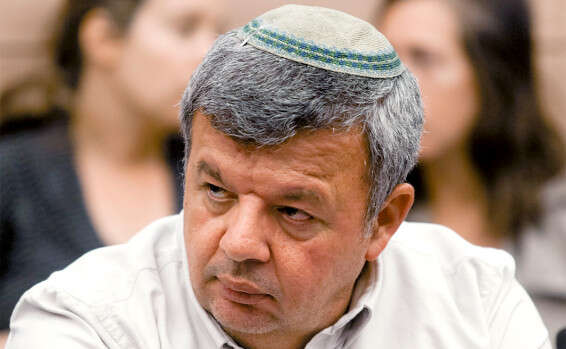
Calfa's One State solution law would give complete equal rights to everybody living within the borders of Israel between the Jordan River and the Mediterranean Sea. Calfa's law would give equal voting rights for Knesset, equal investment in infrastructure, equal investment in developing towns and villages.. The complaint of Israel being an apartheid state or racist, would be dropped, because all residents would become equal citizens with equal rights.
Calfa is not worried about the demographic issue that is regularly raised, especially in relation to the idea of making all the Palestinians into Israeli citizens. Calfa says that the Jews will remain a majority in the State of Israel.
source: Israel Hayom
Unfortunately Calfa does not explain how that is so and how the demographics claim is either wrong or how it will be dealt with. I don't know if his say so is enough to go on. It sound smore like the classic Israeli "yehiye bseder" - it will be ok. Sometimes that works out, and sometimes it doesn't.
MK Zevulun Calfa (habayit Hayehudi) is working on proposing a law promoting a One State Solution.
Calfa's One State solution law would give complete equal rights to everybody living within the borders of Israel between the Jordan River and the Mediterranean Sea. Calfa's law would give equal voting rights for Knesset, equal investment in infrastructure, equal investment in developing towns and villages.. The complaint of Israel being an apartheid state or racist, would be dropped, because all residents would become equal citizens with equal rights.
Calfa is not worried about the demographic issue that is regularly raised, especially in relation to the idea of making all the Palestinians into Israeli citizens. Calfa says that the Jews will remain a majority in the State of Israel.
source: Israel Hayom
Unfortunately Calfa does not explain how that is so and how the demographics claim is either wrong or how it will be dealt with. I don't know if his say so is enough to go on. It sound smore like the classic Israeli "yehiye bseder" - it will be ok. Sometimes that works out, and sometimes it doesn't.
------------------------------------------------------
Reach thousands of readers with your ad by advertising on Life in Israel
------------------------------------------------------
Jan 21, 2014
Why the Palestinians won't accept Israel as a Jewish State
Ever wonder why the Palestinians have refused to recognize Israel as a Jewish State? I have. I wonder what's the big deal in recognizing the reality, even if you wish it were not true. Why let everything fall over what should really be such a minor point - negotiations wont get them, ever, pre-67 Israel, so, assuming peace with Israel is the real goal (which might not be true), they must be resigned, somewhat, to living alongside Israel. So why not just recognize Israel as the Jewish State it is?

Asharq Al-Awsat now provides the answer to the question.. (Asharq Al-Awsat is a pan-Arab daily newspaper). In this interview with "Palestinian Foreign Minister" Riyad Al-Maliki he reveals what the problem is.
From the interview:
Two states living peacefully side by side might be possible in a physical sense, but not in a historical sense.
Asharq Al-Awsat now provides the answer to the question.. (Asharq Al-Awsat is a pan-Arab daily newspaper). In this interview with "Palestinian Foreign Minister" Riyad Al-Maliki he reveals what the problem is.
From the interview:
Q: You said that there are a number of contentious issues. Which is the most intractable?This is the issue of recognizing the Jewish nature of the Israeli state. This is a sharply contentious issue. It would be dangerous to recognize this because this would mean our acceptance of the dissolution of our own history and ties and our historic right to Palestine. This is something that we will never accept under any circumstances. Acceptance of this would also raise fears about the fate of the 1.8 million Palestinians living in Israel. They are already second-class citizens, so how will they be affected by the Judaization of the state? This also raises questions about the [Palestinian] refugees and the right of return. So this is something that we absolutely cannot acceptIf they would recognize Israel it would mean admitting that their own history is contrived and fake. The two cannot really live together - not in a physical sense of two states side by side, but the two peoples historical claims are so in opposition to each other that one or the other is an obvious lie when placed next to the other.
Two states living peacefully side by side might be possible in a physical sense, but not in a historical sense.
------------------------------------------------------
Reach thousands of readers with your ad by advertising on Life in Israel
------------------------------------------------------
Dec 19, 2013
The Jewyness of Israel
I was in the airport yesterday and saw a pleasantly surprising display in the arrivals lounge..

that's right. a model of the Second Temple, in the airport arrivals lounge. And it was not put these by Chabad, Aish, Temple Institute or some other Jewish organization. It was put there by the Israel Museum. It's a Jewish country, even in the most secular parts of it, the moment you step into it..

that's right. a model of the Second Temple, in the airport arrivals lounge. And it was not put these by Chabad, Aish, Temple Institute or some other Jewish organization. It was put there by the Israel Museum. It's a Jewish country, even in the most secular parts of it, the moment you step into it..
------------------------------------------------------
Reach thousands of readers with your ad by advertising on Life in Israel
------------------------------------------------------
Aug 12, 2012
How Much Did Israel Really Suffer From Kochi V'Otzem Yadi Syndrome?
One of the criticisms regularly leveled at the IDF, and at the political echelons that direct the IDF, by the Haredi public is that they are infused with a sense of kochi v'otzem yadi. They forget God's part in their success and assign credit for success solely to the superior training and fighting ability. If you hear a rav speak about how such a great army in 1967 could suffer such a serious blow in 1973, for example, you will hear about how the sense of kochi v'otzem yadi was so prevalent, so they were knocked down to size.
No doubt there is a sense of kochi v'otzem yadi in the army. I don't doubt that. The IDF is, or was. a largely secular institution, and it is natural that they would take such credit for their fighting ability, for the strategy, and tactics, though from a Jewish perspective it would be nice to hear them not totally leave God out of the picture.
Having heard this regularly over the years, I was a bit surprised when reading something that paints a different picture. I still have no doubt that there is a certain sense of kochi pervasive in the army and political echelons, that is fairly natural, but I now question how pervasive it really is (or was) and if perhaps God has been brought into the picture more than has been thought.
 I am in the middle of reading an amazing book called "The Prime Ministers", written by Yehuda Avner. Avner worked under four different prime ministers (Levi Eshkol, Golda Meir, Yitzchak Rabin and Menachem Begin) in various positions, from speech writer to note taking to diplomatic positions, and this book is basically his memoirs. Avner relates stories, incidents and conversations that he was witness to, and the book is a wealth of historical background and a behind the scenes look at Israel's formative years. The book is fascinating and anybody interested in Israel's history should read it.
I just read the portion on the Six Day War and everything that led PM Levi Eshkol to make the decision to go to war, and how they decided to attempt to capture the Old City of Jerusalem and the reactions to the success. While the politicians of those days of Israel were largely secular, they were very "Jewish", and I think they were far more "Jewish" than we give them credit for nowadays.
For example, after the first day of the Six Day War, Avner relates an incident in which menachem Begin went to the Prime Minister's Tel Aviv Bureau "where they found an exuberant Levi eshkol in animated conversation with half-a-dozen equally elated ministers. "Mir dafen machen shecheyanu - we have to recite a thanksgiving blessing" called Eshkol to Begin, and he made him privy to the single most spectacular piece of news he had ever heard in his life. In a surprise attack that morning, the Israeli Air Force had virtually wiped out the Egyptian Air Force...... "Baruch Hashem!" exclaimed Begin...."
the first reaction was to make a shecheyanu. to say baruch hashem.
Avner continues relating more, and it gets to a point where the ministers are debating whether to move to take the rest of Jerusalem or not. When the decision was finally made to capture Jerusalem, the army did so with immediate success. Soldiers were pouring into the Kotel area and Menachem Begin went down to the Kotel as well. The soldiers were dancing and singing "Zeh Hayom Asa Hashem".. "As Begin touched the Wall, they ceased their song, and utter silence reigned when he laid his head upon one of its weathered stones. he spread out his arms in embrace, and then solemnly drew from his pocket a sheet of paper on which he had written a prayer. he had composed it himself for this very moment -a supplication suffused with scriptural and liturgical allusions to the Jewish people's rendezvous with their most sanctified of places..." and he goes on to relate the entire prayer, a few paragraphs long.
The book is peppered with such incidents and anecdotes and I had not even really noticed it until I was shocked by Eshkol's initial response to the first day's success - we must make a shecheyanu.
Were they secular? No doubt. Did they suffer from the "kochi v'otzem yadi"? No doubt. Were they very Jewish despite being secular and thank God for their success? Yes they did. It was not pure kochi v'otzem yadi as they are generally accused of. the State of Israel might be a secular state, but it is, and always was, very Jewish.
------------------------------------------------------
Reach thousands of readers with your ad by advertising on Life in Israel
------------------------------------------------------
No doubt there is a sense of kochi v'otzem yadi in the army. I don't doubt that. The IDF is, or was. a largely secular institution, and it is natural that they would take such credit for their fighting ability, for the strategy, and tactics, though from a Jewish perspective it would be nice to hear them not totally leave God out of the picture.
Having heard this regularly over the years, I was a bit surprised when reading something that paints a different picture. I still have no doubt that there is a certain sense of kochi pervasive in the army and political echelons, that is fairly natural, but I now question how pervasive it really is (or was) and if perhaps God has been brought into the picture more than has been thought.
I am in the middle of reading an amazing book called "The Prime Ministers", written by Yehuda Avner. Avner worked under four different prime ministers (Levi Eshkol, Golda Meir, Yitzchak Rabin and Menachem Begin) in various positions, from speech writer to note taking to diplomatic positions, and this book is basically his memoirs. Avner relates stories, incidents and conversations that he was witness to, and the book is a wealth of historical background and a behind the scenes look at Israel's formative years. The book is fascinating and anybody interested in Israel's history should read it.I just read the portion on the Six Day War and everything that led PM Levi Eshkol to make the decision to go to war, and how they decided to attempt to capture the Old City of Jerusalem and the reactions to the success. While the politicians of those days of Israel were largely secular, they were very "Jewish", and I think they were far more "Jewish" than we give them credit for nowadays.
For example, after the first day of the Six Day War, Avner relates an incident in which menachem Begin went to the Prime Minister's Tel Aviv Bureau "where they found an exuberant Levi eshkol in animated conversation with half-a-dozen equally elated ministers. "Mir dafen machen shecheyanu - we have to recite a thanksgiving blessing" called Eshkol to Begin, and he made him privy to the single most spectacular piece of news he had ever heard in his life. In a surprise attack that morning, the Israeli Air Force had virtually wiped out the Egyptian Air Force...... "Baruch Hashem!" exclaimed Begin...."
the first reaction was to make a shecheyanu. to say baruch hashem.
Avner continues relating more, and it gets to a point where the ministers are debating whether to move to take the rest of Jerusalem or not. When the decision was finally made to capture Jerusalem, the army did so with immediate success. Soldiers were pouring into the Kotel area and Menachem Begin went down to the Kotel as well. The soldiers were dancing and singing "Zeh Hayom Asa Hashem".. "As Begin touched the Wall, they ceased their song, and utter silence reigned when he laid his head upon one of its weathered stones. he spread out his arms in embrace, and then solemnly drew from his pocket a sheet of paper on which he had written a prayer. he had composed it himself for this very moment -a supplication suffused with scriptural and liturgical allusions to the Jewish people's rendezvous with their most sanctified of places..." and he goes on to relate the entire prayer, a few paragraphs long.
The book is peppered with such incidents and anecdotes and I had not even really noticed it until I was shocked by Eshkol's initial response to the first day's success - we must make a shecheyanu.
Were they secular? No doubt. Did they suffer from the "kochi v'otzem yadi"? No doubt. Were they very Jewish despite being secular and thank God for their success? Yes they did. It was not pure kochi v'otzem yadi as they are generally accused of. the State of Israel might be a secular state, but it is, and always was, very Jewish.
------------------------------------------------------
Reach thousands of readers with your ad by advertising on Life in Israel
------------------------------------------------------
Sep 27, 2011
Separation Of Shul And State
An old debate was recently again brought forward. The other day Rav Yoshiyahu Pinto mentioned he thinks it is necessary to separate religion from the State. Then yesterday a professor of Mishpat Ivri (a legal system based on the Judaic system), who is supposedly close with Rav Elyashiv, said on the radio that he knows that if the issue were to be raised for serious discussion Rav Elyashiv would support the separation of shul and State.
The issue of Separation of Shul And State has been debated for years, with logical arguments being presented by both sides. In the past the haredi MKs have never supported it.
I would suggest that such a proposal, if it were to ever be seriously raised as an agenda to be considered, would never win the support of the haredi community. Despite the benefits to Judaism in general, the haredi community would be the hardest hit of such a proposal, mostly in the economic sphere. Suddenly, the government would not be allowed to fund religious education, the government would not allocate plots of land for shuls, mikvas, schools and other religious institutions. The government would not fund kollels and yeshivas. I assume there would not be any state controlled kashrut organizations.
Because of all that, suddenly all the religious schools would suddenly become completely private, requiring expensive tuition and building funds. Shul membership would increase, as the communities would have to buy plots of land and cover other expenses that currently are covered by the government. Jobs would be lost in the sense of no more masgichim or chief rabbis as employees of the State, along with a whole slew of other clerks and positions involved in religious affairs offices.
Haredi support, really all religious support but I think it is more of a problem by haredi, for such a proposal of separation of Shul and State would be like biting your own tail. I also am not sure how, in what way, our flavor of being a Jewish State would be defined or in what way it would manifest itself, if the State could not be involved at all in religion.
But it would do so much good for Judaism in general...
The issue of Separation of Shul And State has been debated for years, with logical arguments being presented by both sides. In the past the haredi MKs have never supported it.
I would suggest that such a proposal, if it were to ever be seriously raised as an agenda to be considered, would never win the support of the haredi community. Despite the benefits to Judaism in general, the haredi community would be the hardest hit of such a proposal, mostly in the economic sphere. Suddenly, the government would not be allowed to fund religious education, the government would not allocate plots of land for shuls, mikvas, schools and other religious institutions. The government would not fund kollels and yeshivas. I assume there would not be any state controlled kashrut organizations.
Because of all that, suddenly all the religious schools would suddenly become completely private, requiring expensive tuition and building funds. Shul membership would increase, as the communities would have to buy plots of land and cover other expenses that currently are covered by the government. Jobs would be lost in the sense of no more masgichim or chief rabbis as employees of the State, along with a whole slew of other clerks and positions involved in religious affairs offices.
Haredi support, really all religious support but I think it is more of a problem by haredi, for such a proposal of separation of Shul and State would be like biting your own tail. I also am not sure how, in what way, our flavor of being a Jewish State would be defined or in what way it would manifest itself, if the State could not be involved at all in religion.
But it would do so much good for Judaism in general...
Mar 22, 2011
The Kotel HaKotton Is Not Holy
If the traffic committee can't decide which traffic laws are important, who can? If Jewish law can't determine what sites are considered holy, than who can? You can argue about who, which rabbi using which books as sources, has the right to determine and define the Jewish law when there are ramifications to the public, but the Jewish law should have that ultimate power - just applying it might be the part under question.
Under dispute was the Kotel HaKotton. The Kotel HaKotton is a section of the wall of the Kotel that extends further down. Over the years, the wall of the Kotel (I know the redundancy of using the word like that, but I am using "the Kotel" as an identifier of what wall I am talking about and not meaning "the wall", hence, the wall of the Kotel. All for lack of a better way of saying it) became used by people building their homes there. Why build four walls if you could build just three and use the existing wall as the fourth! So many built their homes adjacent to the Kotel, as it was not holy to them. Much of the wall extends further down, and is covered up by homes and sections of the Arab shuk. The Kotel HaKotton is a section of the wall that is further down in the shuk, much closer to the point of the Holy of Holies, making it perhaps holier than the section we all know and love that has come to be called "The Kotel".
Because of its location, you have to go through the Arab shuk to get there, it never has gotten much publicity or foot traffic. There are some people, even many perhaps, who try to daven there regularly, but the numbers are small. It never really developed, as the authorities did not let any attempts to turn it into a place to daven take hold. Groups of people that went to daven there were ad hoc, as the police would not allow chairs or shtenders to be placed there.
A group of people who davened there on Rosh HaShana a few years ago were arrested when they blew the shofar. Sounds reminiscent of when the British held control of the area and the shofar was blown clandestinely.
They are suing the State and they are arguing over whether the site of the Kotel HaKotton is a holy site or not. the State's argument is that the site is not a holy site, but simply part of a courtyard of houses. The State, in court, rejected the power of the Jewish law to determine the site's sanctity. (source: INN)
Under dispute was the Kotel HaKotton. The Kotel HaKotton is a section of the wall of the Kotel that extends further down. Over the years, the wall of the Kotel (I know the redundancy of using the word like that, but I am using "the Kotel" as an identifier of what wall I am talking about and not meaning "the wall", hence, the wall of the Kotel. All for lack of a better way of saying it) became used by people building their homes there. Why build four walls if you could build just three and use the existing wall as the fourth! So many built their homes adjacent to the Kotel, as it was not holy to them. Much of the wall extends further down, and is covered up by homes and sections of the Arab shuk. The Kotel HaKotton is a section of the wall that is further down in the shuk, much closer to the point of the Holy of Holies, making it perhaps holier than the section we all know and love that has come to be called "The Kotel".
Because of its location, you have to go through the Arab shuk to get there, it never has gotten much publicity or foot traffic. There are some people, even many perhaps, who try to daven there regularly, but the numbers are small. It never really developed, as the authorities did not let any attempts to turn it into a place to daven take hold. Groups of people that went to daven there were ad hoc, as the police would not allow chairs or shtenders to be placed there.
A group of people who davened there on Rosh HaShana a few years ago were arrested when they blew the shofar. Sounds reminiscent of when the British held control of the area and the shofar was blown clandestinely.
They are suing the State and they are arguing over whether the site of the Kotel HaKotton is a holy site or not. the State's argument is that the site is not a holy site, but simply part of a courtyard of houses. The State, in court, rejected the power of the Jewish law to determine the site's sanctity. (source: INN)
Jul 11, 2007
living like a Jew
We are now deep into the period knows as "The Three Weeks". A full week has passed. This period of time is meant to be one of mourning over the destruction of the Temples, and also of the various Jewish communities throughout history. It is a time of introspection and self-analysis.
It is difficult to arouse such feelings, in today's day and age. We, for the most part, have little understanding of what life was like with the Temples, and therefore it is difficult to arouse the appropriate levels of "mourning" and consideration. It was a long time ago, we never experienced it, it is very difficult to honestly mourn.
That is why, I think, that the mourning is barely visible on most people. Sure, we keep the customs associated with the time period - we do not listen to music, no weddings, no buying new clothes, etc.. but the actual mourning is missing.
There is one aspect that one will now begin to notice while walking the streets of Israel. That would be: no haircuts or shaving.
All of the sudden, everyone here looks like Bruce Willis. Everyone has the 5 o' clock shadow. Soon everyone will have the short, messy beards. One of the customs of the Three Weeks is no haircuts and shaving.
From what I remember in the US, most people use the excuse of "parnassah" to allow themselves to shave and get haircuts (it is a valid excuse and I am not criticizing it). Meaning, it is detrimental to their earning a livelihood, as it is inappropriate to show up to work, among the non-jews, looking "disheveled" because of not shaving. It is not acceptable, and many shave for that reason.
In Israel, a Jew can live like a Jew is supposed to, if he so desires, and the parnassah excuse is used much less frequently. One can work in the most secular of offices in Israel and does not have to shave. He can follow the Jewish customs and not be concerned about such repercussions.
Just walk down the street and see how suddenly everyone is sporting short beards, which will soon be longer. It is considered acceptable and legitimate to keep your religious practices, and one need not fear any external forces.
Only in Israel. Another reason to live in Israel - a person can live like a Jew.
It is difficult to arouse such feelings, in today's day and age. We, for the most part, have little understanding of what life was like with the Temples, and therefore it is difficult to arouse the appropriate levels of "mourning" and consideration. It was a long time ago, we never experienced it, it is very difficult to honestly mourn.
That is why, I think, that the mourning is barely visible on most people. Sure, we keep the customs associated with the time period - we do not listen to music, no weddings, no buying new clothes, etc.. but the actual mourning is missing.
There is one aspect that one will now begin to notice while walking the streets of Israel. That would be: no haircuts or shaving.
All of the sudden, everyone here looks like Bruce Willis. Everyone has the 5 o' clock shadow. Soon everyone will have the short, messy beards. One of the customs of the Three Weeks is no haircuts and shaving.
From what I remember in the US, most people use the excuse of "parnassah" to allow themselves to shave and get haircuts (it is a valid excuse and I am not criticizing it). Meaning, it is detrimental to their earning a livelihood, as it is inappropriate to show up to work, among the non-jews, looking "disheveled" because of not shaving. It is not acceptable, and many shave for that reason.
In Israel, a Jew can live like a Jew is supposed to, if he so desires, and the parnassah excuse is used much less frequently. One can work in the most secular of offices in Israel and does not have to shave. He can follow the Jewish customs and not be concerned about such repercussions.
Just walk down the street and see how suddenly everyone is sporting short beards, which will soon be longer. It is considered acceptable and legitimate to keep your religious practices, and one need not fear any external forces.
Only in Israel. Another reason to live in Israel - a person can live like a Jew.
Jun 12, 2007
Only in Israel
This morning at 6:23 am on my way to shul, I had the radio on to Kol Israel - the state run radio station. They were just concluding one of the morning news programs.
As they finish the discussion about if Shimon Peres would win the presidency who would replace him in the government, they were about to break for commercials. The host of the program then announced a request. This is one I do not remember hearing on the radio ever before.
The host of the program announced, "We ask everyone to daven for the child Bilhaa bat Rivka to be healed from her illness." (they did not say what was wrong with her).
I do not know who this girl is. Maybe she is the daughter of the station master. Maybe she is the daughter of a supporter of the station. Maybe she is just a random child who is very sick and her parents sent a letter to the station asking them to make such an announcement. I do not know.
But it shows me how Jewish of a country Israel is, even with all the politics and fighting and religion wars and whatnot. When it comes down to it, Israel is a Jewish state. The state-run radio station asks people to daven for a sick child.
As they finish the discussion about if Shimon Peres would win the presidency who would replace him in the government, they were about to break for commercials. The host of the program then announced a request. This is one I do not remember hearing on the radio ever before.
The host of the program announced, "We ask everyone to daven for the child Bilhaa bat Rivka to be healed from her illness." (they did not say what was wrong with her).
I do not know who this girl is. Maybe she is the daughter of the station master. Maybe she is the daughter of a supporter of the station. Maybe she is just a random child who is very sick and her parents sent a letter to the station asking them to make such an announcement. I do not know.
But it shows me how Jewish of a country Israel is, even with all the politics and fighting and religion wars and whatnot. When it comes down to it, Israel is a Jewish state. The state-run radio station asks people to daven for a sick child.
Subscribe to:
Posts (Atom)
Related Posts
