
Showing posts with label mitzvah. Show all posts
Showing posts with label mitzvah. Show all posts
Apr 18, 2021
money but no ring in the couch
Cool story.
The shliach Chabad in one of the neighborhoods of Beer Sheva lost an earing. The daughter was playing with the earing and stuffed it into the couch.
When the parents, Rabbi Mendy and Gitty Yitzchaki, were looking for the earing among the cushions they instead found a bunch of enveloped stuffed with money.
They were gifted the couch by the previous resident, the owner of the apartment when she left for the old age home. She was an older Russian woman who only spoke Russian and Yiddish.
So they found these envelopes stuffed into the couch - enveloped filled with dollars and euro to the tune of 100,000nis.
They tried to talk to the woman in the old age home to tell her about the money they found and return it to here, but she had no idea what they wanted from her. She didn't remember anything about the money. So they contacted her son, a doctor, instead. After telling him what happened,, he came to pick up the money, leaving a $300 donation to the Chabad house, and agreeing to put on tefillin.
They never even found the missing earring.
halachically I wonder if they even needed to return it. While found cash does not normally need to be returned, this is cash in envelopes stuffed into a couch, so it would be as the way it was hidden is considered a siman. However, the person they think who it belongs to has no memory of it and did not claim it. They gave it to the son who had no prior knowledge of it. Maybe the woman got the couch from someone before her and the money was not hers either!
Whether they needed to or not, they made a nice kiddush hashem by giving up what they could have kept without telling anyone. As they said, we were gifted a couch, not envelopes of money, so it isn't ours.
------------------------------------------------------
Reach thousands of readers with your ad by advertising on Life in Israel
Reach thousands of readers with your ad by advertising on Life in Israel
------------------------------------------------------
Mar 23, 2021
so many mitzvas in Israel
There is a benefit to having elections so frequently. At least for some people.
If you are Haredi and vote for a Haredi party, you get so many more opportunities for fulfilling the mitzva of doing what the rabbis instruct you. If you are a Religious Zionist, no matter who you vote for it is an opportunity to get the mitzva of voting for the government of the State of Israel, being part of the mitzva of yishuv haaretz.
The dysfunctional government of the past couple of years has been very good for the religious public. Very supportive of creating opportunities for mitzvas.
------------------------------------------------------
Reach thousands of readers with your ad by advertising on Life in Israel
Reach thousands of readers with your ad by advertising on Life in Israel
------------------------------------------------------
May 28, 2019
shiluach hakan becomes a case of animal abuse in Lakewood
The mitzva of "shiluach hakan", sending away a mother bird and taking the chick or eggs, is an unusual one, not frequently performed. It is also not well understood as it instructs what seems to be a certain amount of cruelty yet brings with it a promise of longevity. It is also almost always done with a level of uncertainty - nowadays, as most of us in the Jewish community are not farmers or ranchers, we rarely know definitely if the bird we are looking at in a nest is the right bird for the mitzva - the female rather than the male, a kosher bird, if the nest is high in a tree we might not even be sure there are eggs in the nest... yet when the occasion befalls us, we rush to perform this "rare" mitzva to the best of our ability.
A shiluach hakan situation in Lakewood was pretty funny and weird when it became a public spectacle.
According to NJ 101.5, a report was filed with the Division of Fish and Wildlife about a family that came daily, over a period of a number of days, to beat and harass a goose in her nest near a pond - "perhaps to steal the eggs".

The article knows nothing about shiluach hakan and thus makes no mention of it. It is thought by the authorities and the witnesses that this family and the relevant children simply like to abuse geese, and maybe like goose eggs and need to steal them from a live nest.
The witness, a woman who wants to remain anonymous out of fear of retribution form the community, sits in an office overlooking the pond with the nesting geese. She witnessed a bunch of kids screaming at the geese and clapping and advancing towards the geese. Thinking nothing of it at the time, she later saw more kids coming, this time swinging sticks around the geese. She witnessed similar scenes on several consecutive days. She even witnessed them actually hit the goose with sticks and knocking it off its nest and into the water. Thankfully when authorities came the goose was examined and found to not be hurt.
Shiluach Hakan can look really strange to the public that knows nothing about it!
A shiluach hakan situation in Lakewood was pretty funny and weird when it became a public spectacle.
According to NJ 101.5, a report was filed with the Division of Fish and Wildlife about a family that came daily, over a period of a number of days, to beat and harass a goose in her nest near a pond - "perhaps to steal the eggs".
The article knows nothing about shiluach hakan and thus makes no mention of it. It is thought by the authorities and the witnesses that this family and the relevant children simply like to abuse geese, and maybe like goose eggs and need to steal them from a live nest.
The witness, a woman who wants to remain anonymous out of fear of retribution form the community, sits in an office overlooking the pond with the nesting geese. She witnessed a bunch of kids screaming at the geese and clapping and advancing towards the geese. Thinking nothing of it at the time, she later saw more kids coming, this time swinging sticks around the geese. She witnessed similar scenes on several consecutive days. She even witnessed them actually hit the goose with sticks and knocking it off its nest and into the water. Thankfully when authorities came the goose was examined and found to not be hurt.
Shiluach Hakan can look really strange to the public that knows nothing about it!
------------------------------------------------------
Reach thousands of readers with your ad by advertising on Life in Israel
Reach thousands of readers with your ad by advertising on Life in Israel
------------------------------------------------------
Jun 25, 2015
Tzitzit with no corners
this is just too weird! Tzitzit in a snap!
 an online store selling tzitzit corners - tzitzit hanging from leather snaps for the belt. I can't tell if it is satire or serious. They think the normal tzitzit are connected to the belt loops, so this is a solution for the complications of using the belt loop. They have a beautiful leather crafted corner snap with the tzitzit attached.
I wonder if the blue strings are made from one of the various tchelet options, or if they are just dyed blue.
In the list of benefits, they say it is good for teens, women and executives.
they say they have seen many begn to keep the mitzva as a result of these tzitzit. funnily enough, they are not keeping the mitzva by wearing these!
Besides for a variety of these tzitzit corners, the only other product on the website seems to be an attache case.
an online store selling tzitzit corners - tzitzit hanging from leather snaps for the belt. I can't tell if it is satire or serious. They think the normal tzitzit are connected to the belt loops, so this is a solution for the complications of using the belt loop. They have a beautiful leather crafted corner snap with the tzitzit attached.I wonder if the blue strings are made from one of the various tchelet options, or if they are just dyed blue.
In the list of benefits, they say it is good for teens, women and executives.
they say they have seen many begn to keep the mitzva as a result of these tzitzit. funnily enough, they are not keeping the mitzva by wearing these!
Besides for a variety of these tzitzit corners, the only other product on the website seems to be an attache case.
------------------------------------------------------
Reach thousands of readers with your ad by advertising on Life in Israel
------------------------------------------------------
Jun 18, 2015
Pidyon Petter Chamor in RBS A
I went today for a few minutes of the Pidyon Petter Chamor in Park Ayalon of RBS A today, when picking up kids from school.
I only stayed a few minutes, as once they began the ceremony the crowds in the immediate area in front of the ceremony closed in so nobody else could see anything, and the microphone wasn't loud enough to actually hear anything, so I got a few pictures and then left.
It was nice to see the crowds of people who were interested in seeing this rare mitzva.
When better pictures and perhaps video will be publicized, I'll try to post them here (if they show anythign more interesting than my pictures below)


I only stayed a few minutes, as once they began the ceremony the crowds in the immediate area in front of the ceremony closed in so nobody else could see anything, and the microphone wasn't loud enough to actually hear anything, so I got a few pictures and then left.
It was nice to see the crowds of people who were interested in seeing this rare mitzva.
When better pictures and perhaps video will be publicized, I'll try to post them here (if they show anythign more interesting than my pictures below)


------------------------------------------------------
Reach thousands of readers with your ad by advertising on Life in Israel
------------------------------------------------------
Jan 21, 2013
How different rabbonim consider voting in Israeli elections to be a mitzva for different reasons
The ability to vote in a free election and thereby to be a part of shaping our society into one that is the best possible, is a tremendous opportunity. it is an opportunity we take for granted nowadays, even though in just recent history many did not bear such a right or were unable to take advantage of it. And still today many around the world don't have such a right. It is a right, it is a blessing, and it is even a responsibility.
And voting is also a mitzva and a religious experience. You might think I am crazy, and I don't think I ever thought of it that way before, but I am not making it up myself. Many rabbonim consider it a mitzva to vote, even a mitzva that one must prioritize for the day of elections. Different rabbonim give different reasons for the basis of calling it a mitzva, and perhaps the reason given is indicative of their approach to the State of Israel, but it remains a mitzva nonetheless.
For example, NRG has a piece on a Rav Moshe Yekusiel Alpert. Rav Alpert lived from 1895 until 1955, and he grew up in the Old City of Jerusalem and studied in the famous Eitz Chaim school under Rav Shmuel Salant, and he later taught there while he and his family lived in the Beis Yisroel neighborhood of Jerusalem.
In 1938 Rav Alpert was appointed as the Mukhtar of the Beis Yisroel neighborhood. Mukhtar was a position holding great power, and it means he was basically leader of the area, and everything went through him, especially any communication between the community and the British authorities (or the Turks before them). Alpert kept a diary of his activities, a diary that is being turned into a book, dealing with various perspectives such as political issues that arose, security, economics, national, and issues related to the coming Independence War.
 An interesting tidbit found in the diary is regarding the first national elections that took place on January 25, 1949. Rav Alpert wrote in his diary that he and his wife, along with his son, his brother and brother in law, got up that day at 5:35 AM. After having coffee, they got dressed in their Shabbos finest in honor of the great and holy day, "for this day is the day Hashem has made, we will rejoice and be happy on it". After 2000 or more years of exile, one can say that from the time of the 6 days of creation until today we have never merited a day like this, that we can go to vote in a Jewish country, and he made the blessing of Shehechiyanu.
He continues to write that they went at 5:50 AM to the voting station and the entire way it was like Simchas Torah, because "I had the identity packet of the State of Israel in my hands. There was no limit to the happy and fortune that I felt.". Voting was meant to start at 6 AM, and they were the first to arrive. At 5:54 the people manning the voting station arrived and at 6:02 the head of the voting committee arrived. Alpert says he complained because by law the station should have been opened at 6.
It seems like nothing has changed with the bureaucracy...
To continue, the director apologized and asked him to witness the procedure of opening the voting station. They showed him the voting box, that was empty, and he sealed it and tied it with a rope, and then sealed it with wax, and wrote all the details on it. He then said to Rav Alpert "because you are the oldest one of all the people here, you will be the first to vote".
Alpert writes "with trembling of holiness and awe of holiness I gave to him my identity packet, and he read out my name. The assistant wrote my name on paper and gave me a slip with the number 1, an envelope and I then went into the second room that contained all the voting slips of the various parties. With a trembling hand and emotions of holiness I took the slip with the letter ב, which was for the united religious party, I put it in the envelope.. I went back to the room of the voting station and I showed everyone that I only was holding one envelope. The holiest moment of my life had arrived, the moment that neither my father, nor my grandfather had merited to. Just me, in my time, in my life, merited to this moment of holiness. How fortunate am I and is my lot! I recited the blessing of Shehechiyanu and placed the envelope in the box. I shook hands with the director, the assistant and everyone else there and left. At 6:28 we returned home, and I went to daven, a day of great holiday."
That is a fascinating account of what happened, of how a rav and leader of the Beis Yisroel neighborhood looked at the opportunity to vote. Of course times were different back then. They had just gone through a miraculous war, and before that was the refugees form Europe sneaking into Israel, and prior to that the devastation of the Holocaust. Since then much has changed, and the attitude of the haredi rabbonim to the State has also changed. Yet even today, with all the changes, many of the haredi rabbonim still consider it a mitzva to vote, even if for very different reasons.
For example, as Kikar reports, somebody getting married on Tuesday night, after the elections (or technically while elections are still going on) went to Rav Shteinman to ask if he must make time during the day to vote, as he will surely be busy with wedding preparations.
Rav Shteinman responded that there is no question and he should of course go to vote on election day. It became a discussion among the others in the room, whether a groom on the day of his wedding really must bother himself and take the time to vote and perhaps one could be lenient for the chosson and not make him go vote.
Rav Shteinman asked how much time it takes to go vote, waiting in line and whatever else it entails. When he was told that it takes on average about 15 minutes, Rav Shteinman said with a smile that a chosson on his wedding day can surely dedicate 15 minutes to fulfilling the mitzva of "k'chol asher yorucha" - following the instructions of the rabbonim.
So, Rav Shteinman too considers voting a mitzva, albeit with a different source and perspective.
Further, the Belzer Rebbe also considers it a mitzva to vote, because he considers it a battle that has the status of "milchemet mitzva" and everyone must participate, even a groom under the chuppa, such as the Rebbe's gabbai who recently married off his son, and the elections fall out during the period of sheva brachos. Yet, despite being in sheva brachos, the young couple will still go out to vote, in order to fulfill the mitzva of listening to the chachomim. The Rebbe added to the gabbai that when those who hate religion are ganging up on the haredi community, the election is a true milchemet mitzva and even a groom from his room and a bride from the chuppa must participate.
I don't think this mitzva requires a blessing, specifically of Shehechiyanu, like Rav Alpert's experience above. Perhaps if it gives any given person tremendous joy to vote and fulfill the mitzva, whatever mitzva he might consider it, then he should make a bracha. But it is a mitzva.
And voting is also a mitzva and a religious experience. You might think I am crazy, and I don't think I ever thought of it that way before, but I am not making it up myself. Many rabbonim consider it a mitzva to vote, even a mitzva that one must prioritize for the day of elections. Different rabbonim give different reasons for the basis of calling it a mitzva, and perhaps the reason given is indicative of their approach to the State of Israel, but it remains a mitzva nonetheless.
For example, NRG has a piece on a Rav Moshe Yekusiel Alpert. Rav Alpert lived from 1895 until 1955, and he grew up in the Old City of Jerusalem and studied in the famous Eitz Chaim school under Rav Shmuel Salant, and he later taught there while he and his family lived in the Beis Yisroel neighborhood of Jerusalem.
In 1938 Rav Alpert was appointed as the Mukhtar of the Beis Yisroel neighborhood. Mukhtar was a position holding great power, and it means he was basically leader of the area, and everything went through him, especially any communication between the community and the British authorities (or the Turks before them). Alpert kept a diary of his activities, a diary that is being turned into a book, dealing with various perspectives such as political issues that arose, security, economics, national, and issues related to the coming Independence War.
He continues to write that they went at 5:50 AM to the voting station and the entire way it was like Simchas Torah, because "I had the identity packet of the State of Israel in my hands. There was no limit to the happy and fortune that I felt.". Voting was meant to start at 6 AM, and they were the first to arrive. At 5:54 the people manning the voting station arrived and at 6:02 the head of the voting committee arrived. Alpert says he complained because by law the station should have been opened at 6.
It seems like nothing has changed with the bureaucracy...
To continue, the director apologized and asked him to witness the procedure of opening the voting station. They showed him the voting box, that was empty, and he sealed it and tied it with a rope, and then sealed it with wax, and wrote all the details on it. He then said to Rav Alpert "because you are the oldest one of all the people here, you will be the first to vote".
Alpert writes "with trembling of holiness and awe of holiness I gave to him my identity packet, and he read out my name. The assistant wrote my name on paper and gave me a slip with the number 1, an envelope and I then went into the second room that contained all the voting slips of the various parties. With a trembling hand and emotions of holiness I took the slip with the letter ב, which was for the united religious party, I put it in the envelope.. I went back to the room of the voting station and I showed everyone that I only was holding one envelope. The holiest moment of my life had arrived, the moment that neither my father, nor my grandfather had merited to. Just me, in my time, in my life, merited to this moment of holiness. How fortunate am I and is my lot! I recited the blessing of Shehechiyanu and placed the envelope in the box. I shook hands with the director, the assistant and everyone else there and left. At 6:28 we returned home, and I went to daven, a day of great holiday."
That is a fascinating account of what happened, of how a rav and leader of the Beis Yisroel neighborhood looked at the opportunity to vote. Of course times were different back then. They had just gone through a miraculous war, and before that was the refugees form Europe sneaking into Israel, and prior to that the devastation of the Holocaust. Since then much has changed, and the attitude of the haredi rabbonim to the State has also changed. Yet even today, with all the changes, many of the haredi rabbonim still consider it a mitzva to vote, even if for very different reasons.
For example, as Kikar reports, somebody getting married on Tuesday night, after the elections (or technically while elections are still going on) went to Rav Shteinman to ask if he must make time during the day to vote, as he will surely be busy with wedding preparations.
Rav Shteinman responded that there is no question and he should of course go to vote on election day. It became a discussion among the others in the room, whether a groom on the day of his wedding really must bother himself and take the time to vote and perhaps one could be lenient for the chosson and not make him go vote.
Rav Shteinman asked how much time it takes to go vote, waiting in line and whatever else it entails. When he was told that it takes on average about 15 minutes, Rav Shteinman said with a smile that a chosson on his wedding day can surely dedicate 15 minutes to fulfilling the mitzva of "k'chol asher yorucha" - following the instructions of the rabbonim.
So, Rav Shteinman too considers voting a mitzva, albeit with a different source and perspective.
Further, the Belzer Rebbe also considers it a mitzva to vote, because he considers it a battle that has the status of "milchemet mitzva" and everyone must participate, even a groom under the chuppa, such as the Rebbe's gabbai who recently married off his son, and the elections fall out during the period of sheva brachos. Yet, despite being in sheva brachos, the young couple will still go out to vote, in order to fulfill the mitzva of listening to the chachomim. The Rebbe added to the gabbai that when those who hate religion are ganging up on the haredi community, the election is a true milchemet mitzva and even a groom from his room and a bride from the chuppa must participate.
I don't think this mitzva requires a blessing, specifically of Shehechiyanu, like Rav Alpert's experience above. Perhaps if it gives any given person tremendous joy to vote and fulfill the mitzva, whatever mitzva he might consider it, then he should make a bracha. But it is a mitzva.
------------------------------------------------------
Reach thousands of readers with your ad by advertising on Life in Israel
------------------------------------------------------
Jun 4, 2012
Arguing With The Caterer
Jonathan Rosenblum related a very nice story in a side-box to his article this past week in the Mishpacha magazine (Hebrew). The story happened, he said, in his own neighborhood (that would be Har Nof). I am just going to relate the story as he told it (from memory though).
Reuven was making a simcha, and hired a caterer for the affair named Shimon. Reuven ordered 300 portions of food for the affair. The day of the affair arrived, and Shimon sent his employee to the hall to begin setting up for the event and to heat up the food.
At some point, a girl came to the door and asked if there was any food to spare as her family had nothing to eat. They caterer packaged up 10 portions of food and gave the package to the girl to take home, to her family.
At the end of the affair, Reuven sat down with Shimon to review, and pay for, the catering. Shimon charged Reuven for only 290 portions. Reuven asked why, as he had ordered 300 portions. Shimon explained what had happened, that he had given 10 portions to a needy family who had nothing at home to eat.
Reuven argued that he wanted to pay for 300 as he had ordered the food and the mitzva of giving the food to the family should be his, as it was his food. Shimon argued that he had not yet given the food to Reuven, and it remained his food until he put the food on the tables at the event. Shimon therefore claimed that it was his own food he had given to the family and the mitzva of tezedaka was his, thus charging Reuven for only 290 portions.
After arguing about it for a bit and not coming to an agreement, they agreed to go to a local beis din to resolve the dispute.
The story ends there. Unfortunately Rosenblum did not continue and describe the resolution beis din arrived at. For the story, for the inspiration, a story of 2 people who fought over a mitzva, the resolution is not really important. I still would have liked to know how it was resolved.
------------------------------------------------------
Reach thousands of readers with your ad by advertising on Life in Israel
------------------------------------------------------
Reuven was making a simcha, and hired a caterer for the affair named Shimon. Reuven ordered 300 portions of food for the affair. The day of the affair arrived, and Shimon sent his employee to the hall to begin setting up for the event and to heat up the food.
At some point, a girl came to the door and asked if there was any food to spare as her family had nothing to eat. They caterer packaged up 10 portions of food and gave the package to the girl to take home, to her family.
At the end of the affair, Reuven sat down with Shimon to review, and pay for, the catering. Shimon charged Reuven for only 290 portions. Reuven asked why, as he had ordered 300 portions. Shimon explained what had happened, that he had given 10 portions to a needy family who had nothing at home to eat.
Reuven argued that he wanted to pay for 300 as he had ordered the food and the mitzva of giving the food to the family should be his, as it was his food. Shimon argued that he had not yet given the food to Reuven, and it remained his food until he put the food on the tables at the event. Shimon therefore claimed that it was his own food he had given to the family and the mitzva of tezedaka was his, thus charging Reuven for only 290 portions.
After arguing about it for a bit and not coming to an agreement, they agreed to go to a local beis din to resolve the dispute.
The story ends there. Unfortunately Rosenblum did not continue and describe the resolution beis din arrived at. For the story, for the inspiration, a story of 2 people who fought over a mitzva, the resolution is not really important. I still would have liked to know how it was resolved.
------------------------------------------------------
Reach thousands of readers with your ad by advertising on Life in Israel
------------------------------------------------------
Nov 30, 2010
Chanukah Lighting Statistics And Thoughts
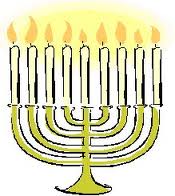 According to a new study just published, 93% of Israelis light a Chanukah menora during the holiday. 86% of them light it every day of the holiday, while some light it on the first night only, and others light it any night they have family getting together.
Of those who do not light a menora, 85% say the reason is because of their poor financial situation, as they cannot afford the menora, the candles and the need for hosting guests with refreshments.
I see it as very positive that such a high percentage of Jews in Israel are lighting menora. I wonder if a law was established making menora lighting mandatory, if the percentage of lighters would drop.
Another point, I find it interesting that those who don't light say that cannot afford to light because of the costs involved, including the cost of refreshments for guests. They don't seem to even consider the option of spending about 40 NIS on a cheap menora with candles and simply not have over guests they would have to feed. The pirsumei nissa aspect is so ingrained in the mitzva that these people would prefer to not light at all rather than lighting with no guests.
Jun 29, 2010
Tzitzit Distribution for Pollard and Shalit
As individuals today there is really not much we can do to help either Gilad Shalit or Jonathan Pollard. The most we can do is pray for them, and try to pressure the government in one way or another to work towards their respective releases (and we all know how much that has helped until now).
The Tztitzit Foundation, whatever that is, is starting a tzitzit campaign on behalf of Pollard and Shalit, to try to merit their releases.
The Tztitzit Foundation, whatever that is, is starting a tzitzit campaign on behalf of Pollard and Shalit, to try to merit their releases.
Please read the short explanation for the connection between Tzitzit and Redemption for Gilad and Jonathan.---The Midrash Agadah comments on Numbers 15:39 that the command of Tzitzit is related to Redemption."God gave the command of Tzitzit in order that Israel would remember the good that He did for them, when he took them out of Egypt and requited their enemies"---Rabbi Shlomo Yitzhaki, great Biblical commentator, explained that the Mitzvah (Command) of Tzitzit is related strongly to redemption.1. The 4 cornered garment on which the fringes are placed reminds us of the 4 biblical s of redemption. "I will bring you out"; "I will save you"; "I will redeem you"; "I will take you" (Exodus 6:6-7)2. The 8 strings on each corner of the garment remind us of the 8 days from the beginning of the Exodus until the crossing of the Red Sea!When each one of us wears the Tzitziot (fringes) we are evoking the merit of our forefathers, who themselves merited redemption. May that merit pass on to Gilad and Jonathan!
If this is something you can participate in, ashrecha. And halevai it should bring more merit and help.
Jun 24, 2009
Dikduk B'Mitzvos
And while we are on the topic of dikduk b'mitzvos, here is another nice hashavas aveida story I was just told firsthand that happened a couple of weeks ago:
"Ploni" was outside a building in Jerusalem and saw 2 young girls looking around the area, concerned, as if they had lost something.
Ploni asked them what is the matter.
They answered that they had found a screwdriver a few days ago. They put up a sign in the building and attached the screwdriver to it, so the owner would see it and take it. Every day they were removing the sign from the building lobby and moving it to the lobby of the next building. That way eventually the owner would likely see it (assuming he lived or frequented one of the buildings in the vicinity) and be re-united with his screwdriver.
Today they had gone to move the sign and screwdriver to the next building and it was no longer there. They were concerned it had maybe fallen down and were looking for it. After a bit they decided that they must have fulfilled the mitzva of hashavas aveida as the owner had probably taken it.
{both stories, this and the story in the previous post happened with haredi children - not to say this would not happen with other communities, but the haredi community gets knocked often enough that they deserve credit also, so I felt it important to mention. The education towards dikduk b'mitzvos in the haredi community is something special}
"Ploni" was outside a building in Jerusalem and saw 2 young girls looking around the area, concerned, as if they had lost something.
Ploni asked them what is the matter.
They answered that they had found a screwdriver a few days ago. They put up a sign in the building and attached the screwdriver to it, so the owner would see it and take it. Every day they were removing the sign from the building lobby and moving it to the lobby of the next building. That way eventually the owner would likely see it (assuming he lived or frequented one of the buildings in the vicinity) and be re-united with his screwdriver.
Today they had gone to move the sign and screwdriver to the next building and it was no longer there. They were concerned it had maybe fallen down and were looking for it. After a bit they decided that they must have fulfilled the mitzva of hashavas aveida as the owner had probably taken it.
{both stories, this and the story in the previous post happened with haredi children - not to say this would not happen with other communities, but the haredi community gets knocked often enough that they deserve credit also, so I felt it important to mention. The education towards dikduk b'mitzvos in the haredi community is something special}
Good People
Last week I lost something very expensive. I looked all over and could not find it. I went back a few times to where it was lost to see if maybe I missed looking somewhere - under a bush, under a bench, etc.
Last night a teenage boy calls me up and tells me he found it. He heard from somebody that I had lost the item and was looking for it, so he looked up my number and called.
He saved me a very big expense I would have had to replace it, yet he refused a reward.
Tizke Le'Mitzvos! People are inherently good.
Last night a teenage boy calls me up and tells me he found it. He heard from somebody that I had lost the item and was looking for it, so he looked up my number and called.
He saved me a very big expense I would have had to replace it, yet he refused a reward.
Tizke Le'Mitzvos! People are inherently good.
Jul 10, 2008
falafel for a mitzva

Last night we hosted a Sheva Brachos dinner in our house for a cousin who just got married the night before (my speech, sans post drasha blessings to the couples).
During the dinner, one of my boys found, floating in the toilet, a 200NIS bill. He took it out and wanted to keep it. My wife asked the various people there who it might have fallen from, and eventually found the owner.
My son did not want to return it. Being that he is an eleven year old talmid chacham learning in a cheder, he came up with some good svara why he can keep it. He compared it to a case the mishna and gemara discuss in which somebody retrieves something from the mouth of a lion. he can keep it in that case because the owner would otherwise have lost it completely anyway. He said this would have been lost - flushed down the toilet, so he should be alowed to keep it.
I thought he should return, even if just for chinuch reasons. I thought it wrong to keep something that was lost at a party in our house, when we know who lost it. Also I suggested that he clearly had found it before the owner had given up hope of finding it (yi'ush) - as the owner of the money only realized it had fallen after we asked about it. Being that he found it before yi'ush, he would have to return it.
He was very upset because he really wanted to keep the money.
The one who lost the money agreed that it would be good for him to know we asked a Rav the shailoh, and whatever the Rav decides is how we would proceed.
So I asked my Rav the shailoh. The Rav answered that there are a numbers of reasons that for chinuch he should have to return it. And while the logic he used was good (comparing it to the case of the item in the lion's mouth), it is not definite that it would have been lost from the loser and from all people (maybe it would have floated and not been flushed down? maybe somebody else would have gone to use the toilet and found it?), and therefore not comparable to the case of the lion.
As a motivational celebration, we went out for dinner to falafel, as per his preference, and celebrated his big mitzva of hashavas aveida.
Subscribe to:
Posts (Atom)
Related Posts
