
Feb 18, 2013
Is the Eida squeezing its food producers a political or business issue?
Kashrut today is extremely complex.
From the perspective of the kashrut certifying agency, there is the aspect of food production being so complicated, with the increase in food technology and the amount of chemical combinations being used in food production, along with the level of mass production, that make it complicated to give a hechsher.
From the consumer's perspective it is complicated to know which hechsher promises what, and which hechsher is reliable or not, which enforces what it claims to enforce and which does not - there is little transparency, from the consumers perspective.
And then there is the food manufacturer's perspective. It seemed pretty simple. The manufacturer, or grower, has to produce his food. If he wants kashrut certification, he has to adhere to certain rules dictated by whichever agency he chooses for certification, perhaps alter his process a bit, pay some money, open his doors or gate or factory to the mashgichim of said agency, and then sell his product on the market.
It turns out that even from the producers perspective it is not so simple. It seems there is a lot of frustration in dealing with the kashrut agencies.
Netzer Shamir, a farmer for over 30 years in southern Israel, lashed out the other day at the certifying agency for the kashrut of his produce - the Eida HaChareidis. Shamir expressed his frustration, and his anger, saying that each orchard is required to have 3 kashrut supervisors, which he has to pay out of his own pocket, and, Shamir says, all they do is sit in their air conditioned cars and at some point stamp the picked fruit with the stamp of the Eida.
 Shamir claims there is no need for so many supervisors. He says the Eida squeezes the farmers and makes them pay unnecessary money, and flexes a lot of muscle... Shamir gives the example of his lemon crop that he says he planted more than 3 years ago, and he bears a certificate from the Rabbanut attesting to that fact and that the fruit are kosher and no longer orlah. Yet, with a wave of the hand the Eida declared it all orlah and caused 10 ton of lemon to be wasted.
He says the mashgichim act with brazenness and chutzpah in the name of God, while the farmers have no choice but to comply. Somehow he connects this to politics by saying that it gets worse as the years go on, as the Prime Minister "chooses them and not me". I am not sure what that means, but that's what he said. Soon, Shamir continues, there will be supervisors over every neighborhood, on every kibbutz and moshav, and in every kindergarten, school and youth club. He says from his point of view they don't even need to go to the army, but they must go to work so that maybe they will understand what it means to bring food forth from the land. "they should go support their families instead of supervising me. I know how to produce fruit without them".
The response to this is that nobody is forcing Shamir or any other farmer or food manufacturer to use any specific hechsher. If the hechsher of the Eida is too expensive or their rules are too difficult to follow, employ a different supervising agency. Clearly, Shamir or other growers, felt that employing the Eida exposes their produce to markets they would otherwise not have access to.
The entire ruckus raised by Netzer Shamir began with a letter he sent to yair Lapid demanding Lapid's attention to the matter, and has since ballooned to the national media.
(source: Kikar and Bechadrei)
You can agree with the Eida's requirements or not, but if you choose the Eida, don't complain about the cost or the process - they were chosen specifically because of that. The people who trust and eat Eida over others, are proud of the fact that the food costs more, because it comforts them in knowing that the process of the production was clearly more intense and reliable, from a kashrut perspective. Agree or not with the Eida, the only reason to pay for the Eida's hechsher is to have access to all those thousands of people who prefer to see the Eida stamp on the package of food.
Shamir, and other growers, could just as well take the Rabbanut hechsher, that they already have, and go to market with that. They will expose their produce to an estimated 80% of the country. I do not know why that is not enough for Shamir, but he wants exposure to close to 100% so he pays the Eida to give him certification. but, it turns out, Shamir wants the exposure to the Eida's clientele without paying the cost.
it is not a political issue. It is a business issue.
Kashrut certifying agencies should not be abusive. Perhaps some of their processes need to be changed. But, if you want access to the Eida's customers, pay the price and do so happily. If you don't consider it worthwhile, stop paying the Eida fee and go with a different agency.
From the perspective of the kashrut certifying agency, there is the aspect of food production being so complicated, with the increase in food technology and the amount of chemical combinations being used in food production, along with the level of mass production, that make it complicated to give a hechsher.
From the consumer's perspective it is complicated to know which hechsher promises what, and which hechsher is reliable or not, which enforces what it claims to enforce and which does not - there is little transparency, from the consumers perspective.
And then there is the food manufacturer's perspective. It seemed pretty simple. The manufacturer, or grower, has to produce his food. If he wants kashrut certification, he has to adhere to certain rules dictated by whichever agency he chooses for certification, perhaps alter his process a bit, pay some money, open his doors or gate or factory to the mashgichim of said agency, and then sell his product on the market.
It turns out that even from the producers perspective it is not so simple. It seems there is a lot of frustration in dealing with the kashrut agencies.
Netzer Shamir, a farmer for over 30 years in southern Israel, lashed out the other day at the certifying agency for the kashrut of his produce - the Eida HaChareidis. Shamir expressed his frustration, and his anger, saying that each orchard is required to have 3 kashrut supervisors, which he has to pay out of his own pocket, and, Shamir says, all they do is sit in their air conditioned cars and at some point stamp the picked fruit with the stamp of the Eida.
He says the mashgichim act with brazenness and chutzpah in the name of God, while the farmers have no choice but to comply. Somehow he connects this to politics by saying that it gets worse as the years go on, as the Prime Minister "chooses them and not me". I am not sure what that means, but that's what he said. Soon, Shamir continues, there will be supervisors over every neighborhood, on every kibbutz and moshav, and in every kindergarten, school and youth club. He says from his point of view they don't even need to go to the army, but they must go to work so that maybe they will understand what it means to bring food forth from the land. "they should go support their families instead of supervising me. I know how to produce fruit without them".
The response to this is that nobody is forcing Shamir or any other farmer or food manufacturer to use any specific hechsher. If the hechsher of the Eida is too expensive or their rules are too difficult to follow, employ a different supervising agency. Clearly, Shamir or other growers, felt that employing the Eida exposes their produce to markets they would otherwise not have access to.
The entire ruckus raised by Netzer Shamir began with a letter he sent to yair Lapid demanding Lapid's attention to the matter, and has since ballooned to the national media.
(source: Kikar and Bechadrei)
You can agree with the Eida's requirements or not, but if you choose the Eida, don't complain about the cost or the process - they were chosen specifically because of that. The people who trust and eat Eida over others, are proud of the fact that the food costs more, because it comforts them in knowing that the process of the production was clearly more intense and reliable, from a kashrut perspective. Agree or not with the Eida, the only reason to pay for the Eida's hechsher is to have access to all those thousands of people who prefer to see the Eida stamp on the package of food.
Shamir, and other growers, could just as well take the Rabbanut hechsher, that they already have, and go to market with that. They will expose their produce to an estimated 80% of the country. I do not know why that is not enough for Shamir, but he wants exposure to close to 100% so he pays the Eida to give him certification. but, it turns out, Shamir wants the exposure to the Eida's clientele without paying the cost.
it is not a political issue. It is a business issue.
Kashrut certifying agencies should not be abusive. Perhaps some of their processes need to be changed. But, if you want access to the Eida's customers, pay the price and do so happily. If you don't consider it worthwhile, stop paying the Eida fee and go with a different agency.
------------------------------------------------------
Reach thousands of readers with your ad by advertising on Life in Israel
------------------------------------------------------
Nature and archaeology or housing in Modiin
I don't know my opinion on the following matter. I understand the concern - it is a shame to lose an historic site, a spot of nature, for some more housing. On the other hand, we have a housing shortage, people need places to live. Where many of us live, be it in Modiin or in bet Shemesh or in Jerusalem or in many other places around the country, hilltops had to be razed, nature had to be destroyed, so that there would be housing for us to buy. If there is an alternative to the Givat HaTitorah location, it should definitely be considered. if there is not, I don't know which should have higher priority - the nature and archaeology or the housing - so, read below the argument of Rimonah Traub.
Guest Post by Rimonah Traub
Guest Post by Rimonah Traub
Givat Hatitora is very important to the people of Modiin and should be of national importance.
On the 18th of February the Regional Housing Committee will be meeting to finally decide if 750 housing units will be built on Titora. This has been a long and protracted struggle and is now an imminent threat, as the building contractors usually win.
The Givah is the most incredible piece of real estate; the hilltop holds so much evidence of our heritage. Archaeologically all periods of history are represented, amounting to 6000 years of material. Botanically the hilltop is a rarity, during the spring, it is literally covered in over 80 different types of wildflowers. There are also many animals, reptiles and birds that inhabit Titora.
For a fuller history and description of Titora please see my blog posting; http://israelcamerafocus.
We are addressing the petition and e-mails to the mayor, in show of support for a muncipal plan to make Titora into a protected reserve. We feel that we need to use the petition in order to make sure that the mayor acts on his word, as this is the third mayor of Modiin who have paid lip service to this issue, but has shown no concrete action.
The petition has received support from the Society of Protection of Nature in Israel - Modiin and The Society for Preservation of Sites and Landscape in Modi’in.
The petition was started on Sunday evening, 10 February, to date we have
1,814 signatures.
The link to the petition is;
------------------------------------------------------
Reach thousands of readers with your ad by advertising on Life in Israel
------------------------------------------------------
Can the haredi draft lead to civil war?
I am not quite sure where all this talk of possible civil war is coming from. I keep hearing on the radio and seeing in the news threats that if the government will try to draft the haredim by force or pass a far-reaching law that will have a serious impact on haredim learning in yeshiva, it could lead to civil war. It was discussed from the Knesset podium, by those threatening it as well as by those dismissing it, and it has been discussed in the media.
I don't get how the idea of civil war is even relevant as an option. I can see them saying "we won't be forced into the army, and will prefer to sit in jail - come arrest ten thousand of us." or something similar. But civil war?
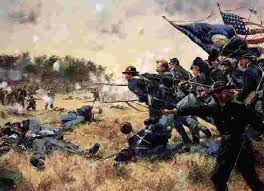 Civil war? Where will the haredim get the rifles and anti-tank missiles to fight against the army n the other side? Civil disobedience is not civil war, getting guns and shooting at the Israeli army and police is civil war. but where will they get the weapons from?
And if the haredi community is about 10% or 15% of the public, and add to that a certain percentage of sympathizers, how do 15% of the people expect to fight successfully against 85% - and the 85% having a well-trained army and police force against citizens with no military training, with no, or just a small amount of, weapons?
It just makes no sense. Threatening and arguing about civil war is ridiculous. It won't come to that because it cannot come to that. Jail, yes. Civil disobedience, yes. Even minor levels of "terror", perhaps. Civil war - I just don't see it. And it just bothers me so much every time I hear it mentioned so flippantly on the radio or in the press.
I don't get how the idea of civil war is even relevant as an option. I can see them saying "we won't be forced into the army, and will prefer to sit in jail - come arrest ten thousand of us." or something similar. But civil war?
And if the haredi community is about 10% or 15% of the public, and add to that a certain percentage of sympathizers, how do 15% of the people expect to fight successfully against 85% - and the 85% having a well-trained army and police force against citizens with no military training, with no, or just a small amount of, weapons?
It just makes no sense. Threatening and arguing about civil war is ridiculous. It won't come to that because it cannot come to that. Jail, yes. Civil disobedience, yes. Even minor levels of "terror", perhaps. Civil war - I just don't see it. And it just bothers me so much every time I hear it mentioned so flippantly on the radio or in the press.
------------------------------------------------------
Reach thousands of readers with your ad by advertising on Life in Israel
------------------------------------------------------
Picture of the Day
 |
| Throwing out the ceremonial first ball at tonight's IFL flag football championship at Kraft Stadium in Jerusalem. |
------------------------------------------------------
Reach thousands of readers with your ad by advertising on Life in Israel
------------------------------------------------------
Quote of the Day
Humanitarian assistance is a very important value, but Israel is not and cannot be a refuge for every person in the Middle East who is suffering... Before we find ourselves dealing with tens of thousands of refugees from the Syrian border, the Committee of Foreign Affairs and Defense must discuss the issue and form a clear policy..
-- MK Yoni Chetboun (HaBayit HaYehudi), upon the news of 7 Syrian soldiers being treated in an Israeli hospital after being injured in clashes in the civil war near the border with Israel.
-- MK Yoni Chetboun (HaBayit HaYehudi), upon the news of 7 Syrian soldiers being treated in an Israeli hospital after being injured in clashes in the civil war near the border with Israel.
------------------------------------------------------
Reach thousands of readers with your ad by advertising on Life in Israel
------------------------------------------------------
The leadership of Moshe (video)
------------------------------------------------------
Reach thousands of readers with your ad by advertising on Life in Israel
------------------------------------------------------
on the way to Purim (video)
------------------------------------------------------
Reach thousands of readers with your ad by advertising on Life in Israel
------------------------------------------------------
Chazzanus (video)
------------------------------------------------------
Reach thousands of readers with your ad by advertising on Life in Israel
------------------------------------------------------
Feb 17, 2013
Interesting Posts #459
1. R. Shimon Shkop, and Orthodox Handshakes - this post is a few months old but it is a great story that I just became aware of by it being posted to the comments on this blog the other day..
2. Ein Kobi
3. Purim with Warren Buffet
4. a flood that almost destroyed Tiberias
5. a beggar in Vilna who begged for others
6. showing respect for old holy books
7. an intro to Jewish A Capella music
8. Jewish community hit by meteor
9. Feldheim has a Purim Blowout Sale - up to 80% off of over 100 titles..
10. The promotions - old joke, but in light of the Pope's recent resignation, timely
11. Did I blink and miss something? - regarding the Pope's resignation
12. the top 10 POSSIBLE reasons the Pope resigned
13. Ruth Calderon's clarion call
14. Its not your mothers Knesset
2. Ein Kobi
3. Purim with Warren Buffet
4. a flood that almost destroyed Tiberias
5. a beggar in Vilna who begged for others
6. showing respect for old holy books
7. an intro to Jewish A Capella music
8. Jewish community hit by meteor
9. Feldheim has a Purim Blowout Sale - up to 80% off of over 100 titles..
10. The promotions - old joke, but in light of the Pope's recent resignation, timely
11. Did I blink and miss something? - regarding the Pope's resignation
12. the top 10 POSSIBLE reasons the Pope resigned
13. Ruth Calderon's clarion call
14. Its not your mothers Knesset
------------------------------------------------------
Reach thousands of readers with your ad by advertising on Life in Israel
------------------------------------------------------
Interview with MK Rabbi Dov Lipman
Congratulations on the tremendous success of Yesh Atid in the elections, and to you specifically for winning a Knesset seat. Thank you for taking the time out of what I am sure is definitely a busy schedule to be interviewed and share with us some of your thoughts and reflections.
 MKRDL: It is my pleasure. It is important for your readers to have these important questions answered.
1. So, have things calmed down? How was your first day, and first week, in the Knesset? Is it down to the nitty gritty work now or is it still very emotional?
MKRDL: Things actually get busier and busier. My first day was focused on getting my office in order and learning the basics about the computer system, the phone system, when the minyanim are, etc. The next day we got right to work with meetings and planning our agenda. It continues to be emotional every time we turn the corner and I see the building which is where I work, but then you walk in and the nitty gritty work begins right away and that last all day. As you pass the guards on the way out and wish them a good night you feel the emotion again.
2. In the past you have worked very hard at a local level in Bet Shemesh. How do you see your relationship with local work continuing once you are in the Knesset?
MKRDL: I view myself as the MK for Bet Shemesh. Let's remember, I am the first MK in the history of the city and the city's residents expect me to serve them - regardless of whether people voted for me or not. I have given the last few years of my life to trying to make things better in Bet Shemesh and this won't change. I have been in touch with city leaders about how I can help the city and will be at all important city events.
3. How do you see your future in the Knesset as a venue for helping Bet Shemesh with its needs?
MKRDL: I already spoke about the needs of Bet Shemesh during my inaugural speech from the Knesset podium. There are issues related to highway 38, future neighborhoods being constructed, absorption, and schools in which I can be of help - aside from being available to help people with their personal needs.
4. Can you give us any hint as to what is going on behind the scenes with the intriguing coalition negotiations that have begun? Do you have any indication what the results might be in regards to what type of coalition will most likely be formed?
MKRDL: I can say with clarity that Yesh Atid is prepared to lead the opposition if the Prime Minister decides not to accept our plan regarding equality in national service. The government that he will form without us is not likely to last long and we believe we will come roaring back with more mandates after the next elections which would come soon. There is an historic opportunity to make real and necessary changes, especially with Naftali Bennet agreeing with Yesh Atid regarding some of these core issues. There is no discussion regarding portfolios and Yesh Atid is looking for a government which will enable it to follow through on its promises to its voters.
5. Will you be earmarked by Yair Lapid, perhaps because of the extraordinary effort you put forth in the campaign season, to have a special role or appointment in the upcoming Knesset session?
MKRDL: Serving as an MK is already a special role. There is so much that can be done in this role and I am not looking for more. There are certain committees in which I would be a natural fit and can do the most and I hope that materializes.
6. How will you, or perhaps yesh Atid, get involved in the municipal election season that is soon going to begin in Bet Shemesh?
MKRDL: Yesh Atid is running candidates in municipal elections throughout the country but I don't see that happening in Bet Shemesh. I am working very hard to make sure there is one candidate in the general population (moderate ultra-Orthodox through secular) and then I will do whatever I can to help that candidate get elected.

7. Will Yesh Atid begin forming municipal alliances throughout the country and running candidates for municipal positions and mayorships or is Yesh Atid concentrating only on the national scene for now?
MKRDL: There is a person whose full time position relates to municipal elections and MK Meir Cohen (former mayor of Dimona) is overseeing this as well.
8. can you elaborate about where you (Yesh Atid) stand on the big issues - conversion, peace negotiations, and the "shivyon b'netel"
a. conversions - do you see a solution that will be acceptable to all, considering the orthodox will most likely never accept conservative and reform conversions. do you see them compromising on that when they never before have?
MKRDL: I believe that we can work together to create a universal conversion policy which would mean relying on more lenient but legitimate opinions on the Orthodox side, and this would mean that not all conversions are accepted on the non-Orthodox side. The first issue which must be addressed is zera yisrael which is a huge percentage of them.
b peace - you have been quoted as being supportive of land concessions is that a pragmatic position? why do you support it? do you think the Palestinians are finally ready to sit down and accept a peace agreement?
MKRDL: I don't "support" giving up land in Eretz Yisrael. There is a reality on the ground called the Palestinians. We cannot ignore it. Throwing up our hands and saying "there is no solution" means we are looking at our children in the eyes and saying "here, the problem is yours. You deal with it but with millions of more Palestinians." We may never come to an agreement but we have to try and it will take time - not for a happy marriage with the Palestinians but a necessary divorce. If, and I emphasize if, we reach a point where we have an internationally backed agreement which they will sign (not like Gush Katif which was unilateral) which includes our terms including an undivided Yerushalayim, then I believe we would have to accept it even though that that means the painful giving up of Jewish homes and land.
c. how can the haredi parties come down off their position and compromise to your position of accepting a 5 year exemption and then starting to send their boys to the army? why do you think you (yesh atid) have the power to persuade them to compromise on something they were never before willing to?
MKRDL: Our plan does not say that everyone has to serve in the army. The chareidi political leadership is distorting our plan and creating fear in the chareidi community. First of all, those who do serve in the army will be able to do so in special programs that are created over the next five years which enable them to combine Torah learning and service. Second, those who don't serve in the army will be able to enter Torah learning programs which include a period of time with joint Torah learning and national service - even within the chareidi community. Third, the really talented learners will receive a blanket exemption and will focus on learning alone. This notion that the only ones who are truly learning are those who do nothing else but learn is a complete distortion of who we have been throughout our history. Since when is the person who combines Torah learning with other pursuits not learning? I did that when I was in Ner Yisrael and there was plenty of Torah learning and the yeshiva produces Talmidei Chachamim of the highest caliber.
9. how do you see Yesh Atid being different than all the other "centrist" parties that have formed over the years, sometimes successfully in their initial attempts, and then disappeared fairly quickly? Do you see yesh Atid learning from the mistakes of those other parties and becoming a long-term player in Israeli politics? What did all those other parties do wrong, that yesh Atid is going to avoid doing?
MKRDL: Yes, I see Yesh Atid lasting for a long time. This is not a party of former MK's from other parties who jumped ship to find another political home and prolong their careers. This is a party which was put together very carefully with a process of turning the list into a family. We have tremendous unity of purpose and all left other careers in order to make real changes and bring new politics. Just look at who is sitting in the Knesset chamber when it is in session and you will already see the difference - Yesh Atid is the only party in which all MK's show up with minor exceptions here and there because of other Knesset business.
10. How busy is a person working in the Knesset? Do you still have time to teach or did you have to give that up? Are you always there or is much of your work outside the walls of the Knesset? Can you describe the "typical" day in the life of Knesset Member?
MKRDL: It has been non-stop for me. Between meetings, interviews, planning sessions, answering e-mails and Knesset sessions it is more than a full time job. I am in the Knesset almost every day and people can actually monitor our attendance from the Knesset web site. As we walk in the doors, guards put it into the computer that we are in the building and they mark it when we leave. A typical week for me looks as follows:
- Sunday - morning we have constituent meetings. People can contact my office to arrange a meeting
- I then meet with my staff regarding the follow up steps to those meetings
- in the afternoon I host groups and Jewish leaders
- Monday - morning is the committee meetings, early afternoon is our party meeting, 4pm the Knesset meets in the chamber, this can last into the night hours
- Tuesday - morning is planning legislative agenda with my staff, midday meetings with the focus groups (shdulot) I am part of or started
4pm the Knesset meets in the chamber - this can last into the nighttime hours
- Wednesday - Knesset meets at 11 in the chamber - beforehand we have prep because many votes are brought during this session
- afternoon meetings with outside groups, visiting leaders, and other MK's
- Thursday - this is generally the day for MK's to be out in the field visiting site, learning about legislation, assisting constituents
I will fill these days with meetings and tours to learn more, I will also be in the Knesset
- Friday - mornings there are usually events to attend throughout the country
Mincha every day at the Knesset is at 12:30p.m. or 1:30p.m.
Evenings throughout the week are also filled with many events
11. Why do so few MKs actually show up to the Knesset? Do you plan on being there for the votes that are famously empty or will much of your work take you outside of the Knesset?
MKRDL: It is certainly troubling and I view it as my job and will be there whenever I don't have something Knesset related outside the building. I plan on being in the chamber for every session and to be there for every vote.
12. After hearing Yair Lapid yesterday talk about pushing Reform Judaism in Israel and civil marriage, what are your thoughts on the issue? Will it not create a further rift and drive the orthodox to establish a "sefer yuchsin" as they have considered in the past, and only marry according to the listings in the registry? Will you, as an Orthodox (or Haredi) Rabbi, support pushing growth of Reform Judaism?
MKRDL: While I am passionate about my Orthodoxy and have written books about it, we cannot force people to do what we believe. We have pushed people further and further away from Judaism. If the country decides that it won't support any religious services then that is fine. But I see no justification for supporting the services of some and not others in a democracy. Regarding marriages, I actually believe that forcing people into Kiddusin and Nesuin when they don't want it actually causes worse halachic problems when they leave those marriages without a halachic process. At the same time that we do this, we should change the Rabbanut to be far more embracing, loving, caring, and user friendly and this will without a doubt draw people to make use of the rabbanut. I meet secular people throughout the country who say, "I hate Judaism and I hate that I hate Judaism." It is time for us to begin the process of creating a strong and proud Judaism in Israel and taking these bold steps will begin that process.
One last word: Yair Lapid, a secular icon (who believes in G-d and appreciates the richness and value of Torah), stood up and said to the religious world, "Let's work together." I believe that din v'cheshbon will have to be given by all who mock that call and turn away from it. Every source about geulah says that one thing will bring it - unity. And it is right there in front of our eyes. We have to grab it. It is time to stop looking at things as "us versus them" since most on the secular side don't see it that way anymore. In the last two days, more words of Torah have been shared in the Knesset chamber than in any two day period in its history - and it came from Yesh Atid MK's - both religious and secular. When we had a get together with our spouses at Yair Lapid's house, we all stood in a circle and sang Adon Olam and Shir Hamaalos. Something special is happening and I hope people open their eyes to see it, join it, applaud it, and daven for it to succeed.
------------------------------------------------------
Reach thousands of readers with your ad by advertising on Life in Israel
------------------------------------------------------
Ministry of Health in Sectorial or National hands
Yoel Hasson, a former MK from Kadima who switched to The Tzippi Livni Party (a.k.a. Hatnua) but did not make it into the Knesset, is handling the coalition negotiations for Hatnua. Hasson told Yediot Achronot in an interview for the Friday newspaper that Hatnua wants some positions besides for the stated senior ministry being involved in the diplomatic efforts for peace.
Hasson said that Hatnua is eyeing the Ministry of Health - he said, "the time has come that the Health Ministry will be in the right hands.. It seems illogical, but the time has come that the Health system will be in the hands of someone who sees the general picture and does not just work in this field in a sectorial fashion."
It does not matter to me who gets the Ministry of Health, but Hasson's implied accusation against Deputy Health Minister Yaakov Litzman is ridiculous. As you surely know, Litzman ran the Health Ministry as a Deputy Minister, due to UTJ's reluctance to accept full ministerial positions. PM Benjamin Netanyahu was officially the Health Minister, but he gave Litzman full power as a minister despite being only deputy minister.

Litzman, by all accounts, ran a good ministry. He took a ministry that was considered mostly dead weight, a minor portfolio by the best accounts, and activated it in a way that it hasn't been in decades. He turned things around, he freshened things up, he made changes, and Litzman turned the Ministry of Health into a desirable portfolio. Implying that Litzman acted in a sectorial fashion is ridiculous and unfounded. Hasson has the right to demand the Health Ministry - it does not belong to Litzman or UTJ automatically, but there is no need to imply that Litzman did not act in good faith while in that position.
In addition to that, I was curious and did some research. I was curious to see for how long the Ministry of Health has been in "sectorial hands" that it is suddenly time for someone with a broader perspective to run the ministry. My research was not exactly intensive - it entailed finding the Wikipedia page for the Ministry of Health and perusing the chart of all the Ministers of Health throughout Israel's history.
There have been 31 Ministers of Health since Israel's inception. Let's only look at 30, not including the last MoH - Benjamin Netanyahu who let his deputy minister, Yaakov Litzman, run the ministry. Of the remaining 30 ministers:
- the previous 4 ministers, going backwards to 2006, were a minister from the Pensioners party, two from Kadima (Hasson's own party), and then one from the Likud. Not quite overwhelmingly sectorial. And, by the way, one of those from Kadima was Ehud Olmert.
- of the 30, 7 were from the Likud (add 1 more from the General Zionists Party which much later was one of the parties to merge and form the Likud), 7 were from Labor (and 2 more were from Mapai and Mapam, who both later merged with the Labor Party), 4 were from the Zionist party under different names of Mafdal, United Religious List (made up by the religious zionists and the aguda and Poalei Agudas Yisrael), and Hapoel Mizrachi, and 3 times it was held by Shas. Twice more the Ministry of Health was held by ministers associated with the Labor Party, though the two ministers were not MKs at the time. And once it was held by the short-lived party call "Mifleget HaMerkaz".
This list of who held the ministry in the past does not seem to indicate that the ministry has been long-held by sectorial hands and it is about time for it to be controlled by someone with a broader perspective. Most of the time through Israel's history the health ministry was held by national rather than sectorial parties. - Technically, Litzman, if UTJ should join the coalition, and if they again will only be willing to take deputy minister positions, could theoretically remain deputy minister of health, and work under whomever is appointed the Minister of Health the same way he worked with Netanyahu as the full minister. Obviously the position might be less attractive, as he would not hold overall responsibility under a real minister the way he did under Netanyahu, and he also would not have the freedom to work in full capacity, but would really only be the deputy the title gives him instead of just being a deputy in title with full ministerial responsibilities.
To sum up, I am saying Litzman did a very respectable job in the Ministry of Health. While Hasson might want that ministry for Hatnua, there is no need to demand it on the basis of Litzman acting sectorial in his position. That is demeaning and accusing Litzman of working in a way that just did not happen. Hasson can demand the position just like any party can demand reallocation of ministries despite them being successfully run in the past under previous management. That is how coalition negotiations and forming new governments with new coalition partners, work.
------------------------------------------------------
Reach thousands of readers with your ad by advertising on Life in Israel
------------------------------------------------------
Headline of the Day
Shlomo Maoz: Life expectancy is going up, and that is a problem. People here are refusing to die
-- GlobesShlomo Maoz, an economist who ran for a spot in the Likud primaries, said the above during a discussion about budget cuts, the budget deficit, and rising expenses and was talking about the increased expenses as a result of living longer, having to care for parents, children living at home longer, etc. Obviously and deservedly it caused quite a stir.
We should be proud that we have been able to increase life expectancy, by having better health care, by caring better for the environment in the form of less pollution, cleaner water sources and healthier foods with less waste that is not bio-degradable (or at least more of an awareness of the issues), more exercise, etc.
------------------------------------------------------
Reach thousands of readers with your ad by advertising on Life in Israel
------------------------------------------------------
Ariel Fishman gives thanks to the 70 blood donors who saved his life (video)
------------------------------------------------------
Reach thousands of readers with your ad by advertising on Life in Israel
------------------------------------------------------
SINAI Schools: HEROES (video)
------------------------------------------------------
Reach thousands of readers with your ad by advertising on Life in Israel
------------------------------------------------------
Nanach Is In Your Veins (video)
not quite sure what this is about...
------------------------------------------------------
Reach thousands of readers with your ad by advertising on Life in Israel
------------------------------------------------------
Alei Katan - Ishay Lapidot (video)
------------------------------------------------------
Reach thousands of readers with your ad by advertising on Life in Israel
------------------------------------------------------
Subscribe to:
Posts (Atom)
Related Posts
