
Showing posts with label grave sites of Eretz Yisrael. Show all posts
Showing posts with label grave sites of Eretz Yisrael. Show all posts
Aug 14, 2013
Photo-blog of the Grave protests
One of my kids goes to a school near the Goloventzitz site, where the protests have been taking place claiming the construction is being done on a site that contains ancient Jewish graves.
As I came within about 2 blocks of the site, on my way to pick my kid up from school, I could already hear the chanting of the protesters. I decided to go, with the kids that had come along with me, to see what was going on.
It was a fairly small amount of protesters - maybe 30 or 40, and probably an equal number of bystanders, many of whom were teenagers and kids. When I got there, a large group were slowly moving away from the site, but not really leaving. As well, there was also a group I could see at the entrance to the site - we did not get that close.
We kind of hung around and watched what was going on.. it was actually kind of boring. I asked some passing photographers/journalists if anything exciting had happened there and they said nothing exciting had happened.
Every now and often there would be a wave of chanting and screaming, and then running, but we did not see any violence as the cause of it.
Eventually we saw a police car drive down toward the site. A group of protesters surrounded the police car and were screaming "NAZI!!" over and over again. After a few minutes the police car backed out and we did not see it again. A few minutes after that Shmuel Pappenheim drove up in his MDA ambulance and they screamed "Sheigetz!" at him as he drove by...


Eventually some of the protesters started a fire in the brush on the mountainside across the street from where we were standing. As soon as I saw it go up I called the fire station. In the meantime, the fire was picking up speed quickly in the dry brush, but it then caused a nearby water pipe to split open. The pipe doused the area with a heavy spray of water. That seemed to keep the fire fairly small and under control, giving the firetruck time to get there and put it out without causing much damage or danger.. In the meantime we had to move around a bit as the wind kept changing and we kept needing to find better spots with less smoke..


It was my baby's first hafganah, so to celebrate we bought artikim, ice pops, on the way home...
As I came within about 2 blocks of the site, on my way to pick my kid up from school, I could already hear the chanting of the protesters. I decided to go, with the kids that had come along with me, to see what was going on.
It was a fairly small amount of protesters - maybe 30 or 40, and probably an equal number of bystanders, many of whom were teenagers and kids. When I got there, a large group were slowly moving away from the site, but not really leaving. As well, there was also a group I could see at the entrance to the site - we did not get that close.
We kind of hung around and watched what was going on.. it was actually kind of boring. I asked some passing photographers/journalists if anything exciting had happened there and they said nothing exciting had happened.
Every now and often there would be a wave of chanting and screaming, and then running, but we did not see any violence as the cause of it.
Eventually we saw a police car drive down toward the site. A group of protesters surrounded the police car and were screaming "NAZI!!" over and over again. After a few minutes the police car backed out and we did not see it again. A few minutes after that Shmuel Pappenheim drove up in his MDA ambulance and they screamed "Sheigetz!" at him as he drove by...


 |
| surrounding the police car, screaming "Nazi!" |


Eventually some of the protesters started a fire in the brush on the mountainside across the street from where we were standing. As soon as I saw it go up I called the fire station. In the meantime, the fire was picking up speed quickly in the dry brush, but it then caused a nearby water pipe to split open. The pipe doused the area with a heavy spray of water. That seemed to keep the fire fairly small and under control, giving the firetruck time to get there and put it out without causing much damage or danger.. In the meantime we had to move around a bit as the wind kept changing and we kept needing to find better spots with less smoke..


 |
| you can see the split pipe dousing the fire with water |
 |
| and then the firetruck arrived |
 |
| it got pretty smokey |
 |
| this guy came down from the construction site looking like he was an active protester |

 |
| this meat delivery truck drove down near the area. I told him he can leave the meat right there and we will make our BBQ right away |

 |
| the charred mountainside from the fires the day before |
It was my baby's first hafganah, so to celebrate we bought artikim, ice pops, on the way home...
------------------------------------------------------
Reach thousands of readers with your ad by advertising on Life in Israel
------------------------------------------------------
Aug 13, 2013
The interesting part of the violent protests at the Goloventzitz construction site in Bet Shemesh
There is not anything really new or interesting about the rioting on the construction site in RBS yesterday in which 20 or 30 extremist-haredim associated with the Asra Kadisha were arrested.
It is part of a fight over whether or not there are ancient Jewish graves under the construction site or not. Rav Weiss and the Asra say there are, and construction is against halacha without making changes (changes that the Asra must be paid a lot of money to implement). Rav Shterbuch and Ertz Hachaim say that there are no ancient Jewish graves on the site and construction can begin, under supervision (for which Eretz Hachaim must be paid).
The owners, buyers and contractors are fed up with all the delays, and decided to authorize the Ertz Hachaim organization to make the final decision, thus leading to the start of construction. Asra supporters, upset at the decision, rioted and protests, sometimes violently.
Nothing new, and nothing all that interesting.
What does make the story interesting is a side incident.
Despite the people involved in the protests and opposition to construction all being anti-Zionists, that does not stop them from trying to use the Zionist institutions against the Zionists.
Moshe Friedman, a member of the Eida, filed a petition with the Supreme Court yesterday to try to get an injunction to stop work on the Goloventzitz construction site. According to Bechadrei, the appeal to the Supreme Court was filed by attorney Itamar Ben-Gvir.
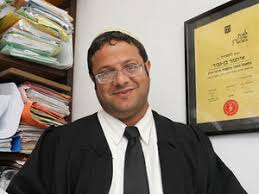 In the appeal, Ben-Gvir claimed that there are a number of halachic solutions available to minimize or avoid damage to graves while allowing construction to continue. Israeli law requires everything possible to be done to avoid or minimize damage to graves.
So:
1. they are trying to use the Supreme Court in their favor, despite not recognizing the authority of the State or of the its courts an legal system
2. they hired attorney Itamar Ben-Gvir to do the work on their behalf. The Anti-Zionists using a far right wing Zionist (unless you believe the conspiracy theorists who claim he is really a Shabak agent) to use State resources.
That is interesting.
It is part of a fight over whether or not there are ancient Jewish graves under the construction site or not. Rav Weiss and the Asra say there are, and construction is against halacha without making changes (changes that the Asra must be paid a lot of money to implement). Rav Shterbuch and Ertz Hachaim say that there are no ancient Jewish graves on the site and construction can begin, under supervision (for which Eretz Hachaim must be paid).
The owners, buyers and contractors are fed up with all the delays, and decided to authorize the Ertz Hachaim organization to make the final decision, thus leading to the start of construction. Asra supporters, upset at the decision, rioted and protests, sometimes violently.
Nothing new, and nothing all that interesting.
What does make the story interesting is a side incident.
Despite the people involved in the protests and opposition to construction all being anti-Zionists, that does not stop them from trying to use the Zionist institutions against the Zionists.
Moshe Friedman, a member of the Eida, filed a petition with the Supreme Court yesterday to try to get an injunction to stop work on the Goloventzitz construction site. According to Bechadrei, the appeal to the Supreme Court was filed by attorney Itamar Ben-Gvir.
So:
1. they are trying to use the Supreme Court in their favor, despite not recognizing the authority of the State or of the its courts an legal system
2. they hired attorney Itamar Ben-Gvir to do the work on their behalf. The Anti-Zionists using a far right wing Zionist (unless you believe the conspiracy theorists who claim he is really a Shabak agent) to use State resources.
That is interesting.
------------------------------------------------------
Reach thousands of readers with your ad by advertising on Life in Israel
------------------------------------------------------
Jul 30, 2013
Protests against archaeological digging at Shaar Ga'Gai (video)
during road works by the Shar Ha'Gai interchange, supposedly a couple of graves were found. While, from what I have read, it is not yet known if they are Jewish or not (it seems other graves found in the past in the area have been determined to be Muslim), the Asra Kadisha wants to control the situation and a few of its people went down to protest and to try to stop the work..
I was impressed how the thing that scared off the protesters the most was the female police officer. I was impressed that she kept her distance and did not grab him when she was able to, just stayed in front of him to keep him back...
------------------------------------------------------
Reach thousands of readers with your ad by advertising on Life in Israel
------------------------------------------------------
Jul 8, 2012
Visiting The Grave Of Aharon HaKohein
Have you ever been to the grave of Aharon HaKohein in Jordan? His yahrtzeit is coming up and there is an opportunity to go visit his grave...

------------------------------------------------------
Reach thousands of readers with your ad by advertising on Life in Israel
------------------------------------------------------
------------------------------------------------------
Reach thousands of readers with your ad by advertising on Life in Israel
------------------------------------------------------
Feb 12, 2012
The Grave of Yisro
I was not previously aware of a place called "Kever Yisro" located in Israel. With the weekly parsha of Yisro upon us, shortly before Shabbos I was reading something and saw a reference to kever yisro in the Galilee region of Israel. I had no idea what it was about, so I did some research (i.e. I turned to Google).
It turns out the Yisro is considered the top prophet of the Druze.In the Koran Yisro is referred to by the name "Shouib" (sp?), and his grave site is known as the grave of Navi Shouib. The grave can be located at the bottom of Kfar Hittin, near Tiberias.
View Larger Map
The location of this grave and it being connected to Yisro is only based on the Druze tradition. In Jewish tradition we don't know what happened to Yisro. There is a debate whether Yisro stayed with the Israelites or if he returned back to Midian eventually. It seems some people go to daven at the grave of Navi Shouib, or at least to check it out, based on the Druze tradition.
The Druze, obviously, consider it a holy site, and care for its upkeep. The Druze traditionally go to visit the grave beginning on April 24th over a period of 4 days. Entrance to the site requires removal of one's shoes. They even seem to have a rock there that they claim has embedded the footprint of Yisro.
Next time I am up in the area maybe I will check it out...
It turns out the Yisro is considered the top prophet of the Druze.In the Koran Yisro is referred to by the name "Shouib" (sp?), and his grave site is known as the grave of Navi Shouib. The grave can be located at the bottom of Kfar Hittin, near Tiberias.
View Larger Map
| Kever Navi Shouib aka Yisro |
The Druze, obviously, consider it a holy site, and care for its upkeep. The Druze traditionally go to visit the grave beginning on April 24th over a period of 4 days. Entrance to the site requires removal of one's shoes. They even seem to have a rock there that they claim has embedded the footprint of Yisro.
Next time I am up in the area maybe I will check it out...
Jan 30, 2012
Eidah Threatens Mekorot Over Suspected Graves Near Highway 38
And while on the topic of Israeli highways, Highway 38 - from Shaar HaGuy junction (officially spelled Shaar HaGay for unknown reasons) until Bet Shemesh has become famous for the traffic jams that one can get stuck in at almost any time of the day. Leaving Bet Shemesh, coming into Bet Shemesh, morning, evening - you name it, the highway is just not designed to bear the size of the city with the natural traffic resulting.
Traffic is about to get worse.
In the area of the Eshtaol junction there is road work going on to improve the road at that point and laying new water lines. According to reports on Kikar and Bechadrei the Eida says there are known graves in the area dating back to the time of the Temple Era. They do not want Mekorot to do any digging, as such digging would result in the disturbing those ancient graves.
The Eida has sent a letter warning Mekorot saying "As Mekorot is installing a new water pipe, near Moshav Eshtaol in a place where there are burial caves dating from the time of the Temple, and there is reason to suspect this will cause harm to the graves, and currently they are working without any supervision, therefore the Badat"z is issuing a warning to not perform any work without supervision by someone appointed by the Badatz. The public is called upon to be ready at a moments notice if called upon to protect the integrity and the honor of the yesheinei afar (sleepers of the dust) wherever they might be".
According to Bechadrei the announcement of the letter by the Badatz is suspect as the work in the area of the graves has already been completed and Mekorot is now working in a different, albeit nearby, area. Mekorot also says they dont understand what the Badatz's problem is as they have no intention to disturb graves and they have not ordered any such work of digging in that area where the graves are located.
Perhaps the Badatz is looking to get back some of the respect they have recently lost in the haredi street with all the violence and fighting. Protecting graves was almost always an issue in which the haredi public has stood behind the Badatz, and perhaps they are trying to make an issue, even where one might not exist, in order to get back some of that support. Of course there is also the issue of the power struggle and money, as both Bechadrei and Kikar describe the internal fighting between the different organizations that want to control the situation, but I suspect the main issue is retaking some of the lost support by renewing a generally popular issue.
Traffic is about to get worse.
In the area of the Eshtaol junction there is road work going on to improve the road at that point and laying new water lines. According to reports on Kikar and Bechadrei the Eida says there are known graves in the area dating back to the time of the Temple Era. They do not want Mekorot to do any digging, as such digging would result in the disturbing those ancient graves.
The Eida has sent a letter warning Mekorot saying "As Mekorot is installing a new water pipe, near Moshav Eshtaol in a place where there are burial caves dating from the time of the Temple, and there is reason to suspect this will cause harm to the graves, and currently they are working without any supervision, therefore the Badat"z is issuing a warning to not perform any work without supervision by someone appointed by the Badatz. The public is called upon to be ready at a moments notice if called upon to protect the integrity and the honor of the yesheinei afar (sleepers of the dust) wherever they might be".
According to Bechadrei the announcement of the letter by the Badatz is suspect as the work in the area of the graves has already been completed and Mekorot is now working in a different, albeit nearby, area. Mekorot also says they dont understand what the Badatz's problem is as they have no intention to disturb graves and they have not ordered any such work of digging in that area where the graves are located.
Perhaps the Badatz is looking to get back some of the respect they have recently lost in the haredi street with all the violence and fighting. Protecting graves was almost always an issue in which the haredi public has stood behind the Badatz, and perhaps they are trying to make an issue, even where one might not exist, in order to get back some of that support. Of course there is also the issue of the power struggle and money, as both Bechadrei and Kikar describe the internal fighting between the different organizations that want to control the situation, but I suspect the main issue is retaking some of the lost support by renewing a generally popular issue.
Nov 24, 2011
Woman To Be Exhumed From Someone Else's Grave
About 5 months ago it was reported that a woman in Kiryat Malachi had gone to visit her husband's grave and discovered that in the plot she had purchased adjacent to her husbands grave was buried a different women! She sued, demanding the dead body be exhumed, and that the religious council pay 50,000 NIS in damages. The judge gave time for Chief Rabbi Amar to investigate and decide whether the body could be exhumed or not.
According to Kikar, a decision has finally been arrived at. In an unusual decision, Rabbi Amar said that the buried woman should be exhumed and moved to a different grave.
After attempts to reach a compromise, offering alternate plots, moving the husband's body to a different section and giving her an adjacent grave (in the original section the plots are next to each other, from head to foot, but not adjacent side by side) were unsuccessful, Rav Amar decided the only option was to remove the body and rebury her in a different plot. She was buried in a plot that belonged to someone else, and she must be moved.
The body has not been moved yet, as this was Rav Amar's decision, but the court still has to give its final decision on the case before it.
According to Kikar, a decision has finally been arrived at. In an unusual decision, Rabbi Amar said that the buried woman should be exhumed and moved to a different grave.
After attempts to reach a compromise, offering alternate plots, moving the husband's body to a different section and giving her an adjacent grave (in the original section the plots are next to each other, from head to foot, but not adjacent side by side) were unsuccessful, Rav Amar decided the only option was to remove the body and rebury her in a different plot. She was buried in a plot that belonged to someone else, and she must be moved.
The body has not been moved yet, as this was Rav Amar's decision, but the court still has to give its final decision on the case before it.
Aug 8, 2011
Interesting Psak: Damaging Graves
A series of acts of vandalism of graves on Har HaZeisim, Mount of Olives, has led to an unusual psak. Actually, the psak itself is not all that unusual or interesting. The source of it is what is interesting.
Some Gerrer hassidim complained about the repeated vandalism to councilpeople in the City of Jerusalem, who let the Mufti know about the displeasure regarding the vandalism of graves.
The Mufti went ahead and publicized an announcement that graves should not be vandalized. Any graves. He asked in return that a rav make a similar announcement, as some Arab graves around the Old City had also recently been vandalized.
In response to the Mufti's request, Rav Eliyahu Shlezinger, rav of the Gilo neighborhood, announced his psak that it is prohibited to damage any grave, any cemetery, no matter where it is and no matter what religion it is affiliated with. Rav Shlezinger said, throughout the generations the jewish nation kept with great reverance the holiness of Jewish cemeteries, and was always careful to not cause damage to to the cemeteries of all other religions.
The Mufti's psak is going to be read aloud in Mosques around Jerusalem this week. (source: Bechadrei)
So, it is not all that unusual or interesting of a psak, on it's own, but it is considering how it is being declared, and by whom. A joint rabbinic and muftaic (I made that up - is it really a word?) psak is highly unusual. Maybe finally seeing eye to eye on something, anything, could possibly be the harbinger of greater things to come...
Some Gerrer hassidim complained about the repeated vandalism to councilpeople in the City of Jerusalem, who let the Mufti know about the displeasure regarding the vandalism of graves.
The Mufti went ahead and publicized an announcement that graves should not be vandalized. Any graves. He asked in return that a rav make a similar announcement, as some Arab graves around the Old City had also recently been vandalized.
In response to the Mufti's request, Rav Eliyahu Shlezinger, rav of the Gilo neighborhood, announced his psak that it is prohibited to damage any grave, any cemetery, no matter where it is and no matter what religion it is affiliated with. Rav Shlezinger said, throughout the generations the jewish nation kept with great reverance the holiness of Jewish cemeteries, and was always careful to not cause damage to to the cemeteries of all other religions.
The Mufti's psak is going to be read aloud in Mosques around Jerusalem this week. (source: Bechadrei)
So, it is not all that unusual or interesting of a psak, on it's own, but it is considering how it is being declared, and by whom. A joint rabbinic and muftaic (I made that up - is it really a word?) psak is highly unusual. Maybe finally seeing eye to eye on something, anything, could possibly be the harbinger of greater things to come...
Apr 27, 2011
PSA: Kever Yehoshua Open Thursday Night
the Shechem 1 organization, that promotes and organizes approved entry into holy sites in the Shomron, sent me the following notice of an approved entry this Thursday night to the kvarim of Yehoshua bin Nun and Caleb ben Yefuneh, and Nun father of Yehoshua. They are buried in an Arab village called Kafr Harsa, known to us as Timnat Heres.
The village is right across the street from the entrance to Ariel. You can park at the entrance to Ariel, cross over and walk in or take shuttles from the entrance to the kvarim. It will be open from 10pm until 4am. Women are welcome as well.
The village is right across the street from the entrance to Ariel. You can park at the entrance to Ariel, cross over and walk in or take shuttles from the entrance to the kvarim. It will be open from 10pm until 4am. Women are welcome as well.
בעזרת ה'
מועצה אזורית שומרון - מועצה דתית שומרון
אגודת 'שכם-אחד' - המקומות הקדושים בשומרון
הילולת יהושע בן נון זיע"א
ביום ההילולא נעלה ונבוא למקום מנוחתו כבוד
בתמנת חרס (מול אריאל) בשומרון
לעורר רחמים ולהתפלל אצל ציוני
יהושע בן נון,נון אביו וכלב בן יפונה זתע"א
אשר עמדו בנאמנותם לה' יתברך ולארץ חמדתו בקריאתם
"טובה הארץ מאוד מאוד"
"עלה נעלה וירשנו אותה כי יכול נוכל לה"
ביום חמישי בלילה
אור לכ"ה ניסן התשע"א
יתקיימו כניסות מצומת אריאל כל הלילה
החל מ 22:00 ועד 04:00 לפנות בוקר
מידי כל שעה עגולה אמירת תפילת "עלינו לשבח" ברוב עם.
הסעות יצאו בתאום עם רכזות הקהילה
לפרטים נוספים: 02-5482128
האירוע בתיאום ואבטחה * ניתן להגיע עד צומת אריאל ברכבים פרטיים
הכניסה רגלית או ברכבי הסעות מיוחדים *מקומות מוסדרים לתפילת נשים
"תלמידי החכמים מירושלים תובב"א הולכין אחר הפסח עם עולי הרגלים ולומדים על קבר יהושע בן נון את ספר הזוהר שנים ימים" (מתוך הספר 'יחוסא דצדיקיא')
Jan 9, 2011
Entry Into Avarta - 70 Zekeinim
Tonight, the 5th of Shvat, is the date recorded as being when the "elders" died during the days of Yehoshua bin Nun. Their burial site is recorded as being Givat Pinchas, which is identified in the modern day Arab village of Avarta in the Shomron, opposite the Jewish village of Itamar, named after Itamar the son of Aharon HaKohen, who is buried as well in Avarta.
The Shchem Echad organization has organized entry into Avarta to celebrate the hilula of the 70 elders buried there, along with a visit to the grave sites of Elazar and Itamar, the sons of Aharon who are buried there. Refreshments (generally cholent and yerushalmi kugel, along with some drinks and rogelach) will be served.
Entry will be via bus leaving from the Horon junction at 23:30, and if necessary there will be another bus leaving Horon at 2 AM. The bus into the village will cost money.Tonight, the 5th of Shvat, is the date recorded as being when the "elders" died during the days of Yehoshua bin Nun. Their burial site is recorded as being Givat Pinchas, which is identified in the modern day Arab village of Avarta in the Shomron, opposite the Jewish village of Itamar, named after Itamar the son of Aharon HaKohen, who is buried as well in Avarta.
The Shchem Echad organization has organized entry into Avarta to celebrate the hilula of the 70 elders buried there, along with a visit to the grave sites of Elazar and Itamar, the sons of Aharon who are buried there. Refreshments (generally cholent and yerushalmi kugel, along with some drinks and rogelach) will be served.
Entry will be via bus leaving from the Horon junction at 23:30, and if necessary there will be another bus leaving Horon at 2 AM. The bus into the village will cost money. The army will be securing the entry. For more information, call 02-5482128
I have no furthe rinformation, nor do I have any connection to the organizers. I have gone to Avarta a couple times in previous years on 5 Shvat, and have found the experience to be interesting and inspiring.
The Shchem Echad organization has organized entry into Avarta to celebrate the hilula of the 70 elders buried there, along with a visit to the grave sites of Elazar and Itamar, the sons of Aharon who are buried there. Refreshments (generally cholent and yerushalmi kugel, along with some drinks and rogelach) will be served.
Entry will be via bus leaving from the Horon junction at 23:30, and if necessary there will be another bus leaving Horon at 2 AM. The bus into the village will cost money.Tonight, the 5th of Shvat, is the date recorded as being when the "elders" died during the days of Yehoshua bin Nun. Their burial site is recorded as being Givat Pinchas, which is identified in the modern day Arab village of Avarta in the Shomron, opposite the Jewish village of Itamar, named after Itamar the son of Aharon HaKohen, who is buried as well in Avarta.
The Shchem Echad organization has organized entry into Avarta to celebrate the hilula of the 70 elders buried there, along with a visit to the grave sites of Elazar and Itamar, the sons of Aharon who are buried there. Refreshments (generally cholent and yerushalmi kugel, along with some drinks and rogelach) will be served.
Entry will be via bus leaving from the Horon junction at 23:30, and if necessary there will be another bus leaving Horon at 2 AM. The bus into the village will cost money. The army will be securing the entry. For more information, call 02-5482128
I have no furthe rinformation, nor do I have any connection to the organizers. I have gone to Avarta a couple times in previous years on 5 Shvat, and have found the experience to be interesting and inspiring.
Dec 16, 2010
Interesting Psak: Kohanim and The Carmel Tunnels
Ancient graves have been discovered in the southern entrance to the Carmel Tunnels (the tunnels are part of a toll road that crosses the Carmel are and Haifa).
The Asra Kadisha brought the information to Rav Nissim Karelitz, Rav Wosner and Rav Elyashiv who have supposedly signed a letter, not yet for public consumption, stating unequivocally that the site in question is a real problem and it is an issur d'oraisa for kohanim to travel on this road in the tunnels.
According to Kikar, this letter is not yet for public consumption, but is another one of these letters that is being kept in a safe and is being used as a threat to be taken out in the future if they refuse to comply with the demands.
If it is so serious that they even called it an issur d'oraisa, I am not sure why they are leaving it as not yet for public consumption. How are kohanim going to know not to drive there, if it is such a serious issur?
According to Kikar, the Asra Kadisha is assuming, or maybe hoping, that because the road is a toll road and managed by a private company, they will be more prone to threats and will be willing to cooperate and make the necessary changes.
According to Kikar, the managing company has responded that when they first built the road and invited the Asra Kadisha to check things out, when it would have been reasonably cheap to implement any halachic solution required, the Asra Kadisha was not interested. now that the costs are going to be enormous they are putting pressure on with threats of publicizing issurim and hafganot.
The Asra Kadisha denies this claim and adds that even now the solution will not be so expensive to implement.
The Asra Kadisha brought the information to Rav Nissim Karelitz, Rav Wosner and Rav Elyashiv who have supposedly signed a letter, not yet for public consumption, stating unequivocally that the site in question is a real problem and it is an issur d'oraisa for kohanim to travel on this road in the tunnels.
According to Kikar, this letter is not yet for public consumption, but is another one of these letters that is being kept in a safe and is being used as a threat to be taken out in the future if they refuse to comply with the demands.
If it is so serious that they even called it an issur d'oraisa, I am not sure why they are leaving it as not yet for public consumption. How are kohanim going to know not to drive there, if it is such a serious issur?
According to Kikar, the Asra Kadisha is assuming, or maybe hoping, that because the road is a toll road and managed by a private company, they will be more prone to threats and will be willing to cooperate and make the necessary changes.
According to Kikar, the managing company has responded that when they first built the road and invited the Asra Kadisha to check things out, when it would have been reasonably cheap to implement any halachic solution required, the Asra Kadisha was not interested. now that the costs are going to be enormous they are putting pressure on with threats of publicizing issurim and hafganot.
The Asra Kadisha denies this claim and adds that even now the solution will not be so expensive to implement.
Aug 19, 2010
Yaktar resigns from leadership of fight against grave digging (video)
Bechadrei interviewed Aharele Yaktar - the fellow who for the past few months has run the fight against the digging of graves in Yaffo.
In the interview he explains why he resigned, and describes the faulty way decisions are made, how the leaders don't get involved and just send people out to protest and get pounded on by the police, how they refused to coordinate the visit of various admorim, including the Admor of Rachmastrivka, with the police for the sole purpose of not allowing the police to know who was coming so they would pound on these admorim as well which would generate sympathy for the haredim and hatred against the police, how the askanim decide things on their own and dont ask the gedolim, etc.
May 20, 2010
Are the bones of Jews or Pagans?
Shmuel Pappenheim expressed in the name of the Eida and those opposing the exhumation and removal of the bones in Ashkelon a "tainoh" that raises important questions in the reliability of the opinions expressed by the archeaologists. he asked how can it possibly be that every time bones are found, wherever they are - Jaffa, Mamilla, Ashkelon, Jerusalem, Tzippori and anywhere else - the archeaologists always claim that the bones are of non-Jews? Where are all the Jews that lived in Eretz Yisrael throughout history buried?
On the other hand, not dealing with the bones of other locations but sticking to Ashkelon, the Eida has yet to produce any shred of even circumstantial evidence that these bones are of Jews. Not only that, but news reports, including the haredi media, have been saying that the re-burial of the bones have been delayed because nobody can agree where to bury them - no chevra kadisha has been willing to bury them in a Jewish cemetery because they are very likely non-Jewish remains.
Add to this that according to Ladaat, a pagan temple was just uncovered during the excavations and removal of the bones, and the likelihood that the archaeologists are telling the truth in this situation, even if they do not in other incidents (I am not saying they don't, but even if you want to say they lie because they have an agenda and have no "neemanus"), seems to be definite.
On the other hand, not dealing with the bones of other locations but sticking to Ashkelon, the Eida has yet to produce any shred of even circumstantial evidence that these bones are of Jews. Not only that, but news reports, including the haredi media, have been saying that the re-burial of the bones have been delayed because nobody can agree where to bury them - no chevra kadisha has been willing to bury them in a Jewish cemetery because they are very likely non-Jewish remains.
Add to this that according to Ladaat, a pagan temple was just uncovered during the excavations and removal of the bones, and the likelihood that the archaeologists are telling the truth in this situation, even if they do not in other incidents (I am not saying they don't, but even if you want to say they lie because they have an agenda and have no "neemanus"), seems to be definite.
May 17, 2010
Rav Eliyahu against the Asra Kadisha
Rav Shmuel Eliyahu came down heavy duty against R' Shmidel and the Asra Kadisha and their protests...
"In my opinion it is a mitzva to move these graves. So it is brought in the gemara, so in the Shulchan Aruch, so did Rav Shimon bar Yochai..the gemara says Rashbi moved bones that were a disturbance to the public. When an old man protested, Rashbi set his eyes upon him and turned him to a pile of bones."
"Shmidel is known as a troublemaker, he is not a rav, and many great rabbonim said it is a mitzva to remove the bones -so paskened the rav of the city, so paskened Rav Roza who is an expert on these matters, so paskened the Chief Rabbis, and so paskened the Religious Council of the Rabbinate. Who is this Shmidel? Why does anybody have to listen to him? Whoever follows him is a fool... For what do we need the chilul hashem caused between religious and non-religious? This is superfluous, it is not halacha but foolishness."
"Don't say the rabbonim signed. I know how it works, the person comes to the rabbonim and tells them all sorts of stories that never happened. So the signatures of rabbis doesnt impress me. If the great Rav ELyashiv would come and tell us this is the halacha after he saw what the reality is, we would bow our heads and submit to him, but I dont believe Rav Elyashiv said not to move the graves because it can't be - there is the halacha, and Rav Elyashiv is a man of halacha, not politics. Whatever they say in his name is a lie and deceitful."
"In my opinion it is a mitzva to move these graves. So it is brought in the gemara, so in the Shulchan Aruch, so did Rav Shimon bar Yochai..the gemara says Rashbi moved bones that were a disturbance to the public. When an old man protested, Rashbi set his eyes upon him and turned him to a pile of bones."
"Shmidel is known as a troublemaker, he is not a rav, and many great rabbonim said it is a mitzva to remove the bones -so paskened the rav of the city, so paskened Rav Roza who is an expert on these matters, so paskened the Chief Rabbis, and so paskened the Religious Council of the Rabbinate. Who is this Shmidel? Why does anybody have to listen to him? Whoever follows him is a fool... For what do we need the chilul hashem caused between religious and non-religious? This is superfluous, it is not halacha but foolishness."
"Don't say the rabbonim signed. I know how it works, the person comes to the rabbonim and tells them all sorts of stories that never happened. So the signatures of rabbis doesnt impress me. If the great Rav ELyashiv would come and tell us this is the halacha after he saw what the reality is, we would bow our heads and submit to him, but I dont believe Rav Elyashiv said not to move the graves because it can't be - there is the halacha, and Rav Elyashiv is a man of halacha, not politics. Whatever they say in his name is a lie and deceitful."
May 13, 2010
The graves next to that of the Shlah HaKadosh
Today, erev Rosh Chodesh Sivan, is the day the Shlah HaKadosh said is especially powerful for saying a prayer he composed for the spiritual welfare of one's children. Every day it, and other prayers, can (and should) be said, but today is especially powerful. I don't know why, but perhaps it is because we are about to enter the month, Sivan, in which we commemorate our having received the Torah, and we sort of refresh our dedication to the Torah and living our lives by its dictates, so it is especially powerful to daven for our childrens spiritual safety at the beginning of this month. I made that uop, but it sounds good to me. If anyone knows the real reason, feel free to leave it in the comments.
Anyways, a relative really wanted to go up north to the grave of the Shlah today in Tiberias to be able to recite the prayer at the grave side of the Shlah, and the group planning to go up was canceled. I agreed to go. The Shlah is buried in Tiberias right next to the Rambam, and a bunch of tannaim and amoraim such as Rav Yochanan ben Zakai, Rav Eliezer ben Horkanus, Rav Ami, Rav Asi, Rav Elazar ben Aroch and others. It has been many years, very many, since I last went to visit these graves, even though I have been to Tiberias many times, so I figured it was a good opportunity,
So off we went to Tiberias and the beautiful Northern Israel.
The site of the graves in Tiberias was busy, but not packed. Nothing like Meron on Lag B'Omer. It was a bit disheartening to see how the entrance way has been turned into a small shuk with peddlers offering their wares and people collecting tzedaka. It is a shame that a holy site, the graves of holy rabbonim of our history, has been made into a tourist trap (both the peddling and the tzedaka aspects) rather than treated with a certain sense of respect and decorum.
Regardless, going in, via the new (new to me at least) separated entrances for men and women (maybe they only separate the entrance on busy days like today), coming in on the mens side leads you first to the tent with the graves of the Shlah and all the tannaim and amoraim. The Rambam is just a bit higher up. Coming through the main entrance, as used to be the way in, one would walk up the steps to the Rambam and the other graves were along the side. Now they have been sectioned off and the Rambam complex has been partitioned with an ugly partition.
While understandable because today is the prayer of the Shlah so people were there to concentrate on that, it still did seem a bit strange that people were almost completely concentrating their prayers by the side of the Shlah when two feet away are the graves of holy tannaim and amoraim, which I think would be that much more powerful. Sure, some people also stopped to daven for a moment by the other graves, but most people did not and even those of us who did only gave the others a moment or two.
Despite that, it was a beautiful day, a beautiful drive and a beautiful experience. People were calm, friendly and considerate. No pushing and shoving and all that.


Anyways, a relative really wanted to go up north to the grave of the Shlah today in Tiberias to be able to recite the prayer at the grave side of the Shlah, and the group planning to go up was canceled. I agreed to go. The Shlah is buried in Tiberias right next to the Rambam, and a bunch of tannaim and amoraim such as Rav Yochanan ben Zakai, Rav Eliezer ben Horkanus, Rav Ami, Rav Asi, Rav Elazar ben Aroch and others. It has been many years, very many, since I last went to visit these graves, even though I have been to Tiberias many times, so I figured it was a good opportunity,
So off we went to Tiberias and the beautiful Northern Israel.
The site of the graves in Tiberias was busy, but not packed. Nothing like Meron on Lag B'Omer. It was a bit disheartening to see how the entrance way has been turned into a small shuk with peddlers offering their wares and people collecting tzedaka. It is a shame that a holy site, the graves of holy rabbonim of our history, has been made into a tourist trap (both the peddling and the tzedaka aspects) rather than treated with a certain sense of respect and decorum.
Regardless, going in, via the new (new to me at least) separated entrances for men and women (maybe they only separate the entrance on busy days like today), coming in on the mens side leads you first to the tent with the graves of the Shlah and all the tannaim and amoraim. The Rambam is just a bit higher up. Coming through the main entrance, as used to be the way in, one would walk up the steps to the Rambam and the other graves were along the side. Now they have been sectioned off and the Rambam complex has been partitioned with an ugly partition.
While understandable because today is the prayer of the Shlah so people were there to concentrate on that, it still did seem a bit strange that people were almost completely concentrating their prayers by the side of the Shlah when two feet away are the graves of holy tannaim and amoraim, which I think would be that much more powerful. Sure, some people also stopped to daven for a moment by the other graves, but most people did not and even those of us who did only gave the others a moment or two.
Despite that, it was a beautiful day, a beautiful drive and a beautiful experience. People were calm, friendly and considerate. No pushing and shoving and all that.


Apr 14, 2010
Developments in the Ashkelon graves issue
Developments since the Prime Minister's decision to build the Barzilai Emergency Room in its original location rather than the alternate location:
- Graves in a Kibbutz were vandalized and damaged by Arabs from a neighboring village. The Chief Rabbis of Israel requested forgiveness of the dead, and also called upon Arab leaders to condemn the attacks and dishonor. As well, they openly questioned where those who fought for the honor of the dead in Ashkelon (Barzilai) are now that these graves have been harmed and called upon them to do what they can to protect the graves and the dead of Merhavia. (source: Srugim)
- The Eida Haredis has announced their plans to send people out en masse to protest against the desecration of the graves in Ashkelon. They published a pashkevil to that effect. In addition, Ynet reports that the Eida committee met in Bet Shemesh (it seems the Eida's most violent and active members are the ones based in Bet Shemesh) to come up with a working plan for protesting and bringing out the people.
- The "Haredi website" Kikar Shabbos has an editorial questioning the real motives of Yaakov Litzman and the Asra Kadisha. He asks if they are all so concerned about "kavod ha'meis" and that is all that is motivating them in Ashkelon, where were they when the graves of definite Jews in Gush Katif were uprooted and they didn't make a tiny sound of protest?
Apr 7, 2010
The fall of Yaakov Litzman
So after all that, after saying how the graves are definitely jewish and how halachically there is no way out of it and there is no way to move the graves, and if the government decision would be to move the graves he (Deputy Health Minister Litzman) would have to resign, after all that it turns out it was all just a power play.
Litzman backed down. Very unusual for him - he has made a political career around creating his own image as being strong-minded and one who sticks to his values. he has been able to threaten resignation in the past based on following halacha, and has generally been able to use the threats to get his political way. For what might be the first time, his image is now cracked. he stood up and threatened to resign because of how serious the grave situation in Ashkelon is according to halacha. And now he backed down.
Netanyahu told Litzman that he had to take the recommendations of the committee, and build the emergency room in its original location, moving the graves - respectfully of course. The backlash was at an unexpected level and he cannot ignore it.
Litzman said he understood the position Netanyahu was in, and if that is the decision he will go back to UTJ and see how they will proceed.
MK Gafni quickly announced that UTJ will not pull out of the coalition over this issue.
Litzman was sidelined. He could still personally resign. This overall would help or hurt nobody else, but it would allow him to keep his image.
Instead, Litzman said he will reconsult with a group of rabbonim. Sure enough, he came back saying that it could be done and he would not resign.
And here we have it folks - the fall of Yaakov Litzman. This will be the case that will be remembered as the one in which Yaakov Litzman lost his ability to threaten and manipulate the system. It will be the one in which Litzman lost his power and image. It will be the one that was shown that UTJ, or some people in UTJ, are not really basing everything they do on halacha and Torah ethics, but power plays and politics.
Litzman backed down. Very unusual for him - he has made a political career around creating his own image as being strong-minded and one who sticks to his values. he has been able to threaten resignation in the past based on following halacha, and has generally been able to use the threats to get his political way. For what might be the first time, his image is now cracked. he stood up and threatened to resign because of how serious the grave situation in Ashkelon is according to halacha. And now he backed down.
Netanyahu told Litzman that he had to take the recommendations of the committee, and build the emergency room in its original location, moving the graves - respectfully of course. The backlash was at an unexpected level and he cannot ignore it.
Litzman said he understood the position Netanyahu was in, and if that is the decision he will go back to UTJ and see how they will proceed.
MK Gafni quickly announced that UTJ will not pull out of the coalition over this issue.
Litzman was sidelined. He could still personally resign. This overall would help or hurt nobody else, but it would allow him to keep his image.
Instead, Litzman said he will reconsult with a group of rabbonim. Sure enough, he came back saying that it could be done and he would not resign.
And here we have it folks - the fall of Yaakov Litzman. This will be the case that will be remembered as the one in which Yaakov Litzman lost his ability to threaten and manipulate the system. It will be the one in which Litzman lost his power and image. It will be the one that was shown that UTJ, or some people in UTJ, are not really basing everything they do on halacha and Torah ethics, but power plays and politics.
Mar 28, 2010
The positive side of the hospital fight
I don't have a strong opinion on the issue of the graves in Ashkelon and the building of the hospital. While the alternative solution is very expensive, that might be a cost worth paying. Also, the delay is hardly Litzman's fault - this has been an issue for over three years already.
Articles and news items I discussed on the topic were out of interest only, not because I ascribe to any particular side in the debate.
I do find it a bit disheartening how this has come about. The State has a mechanism in place for deciding halachic issues. The State has the Chief Rabbinate and the Rabbanut that is meant to make such halachic decisions and the State is meant to follow them. It is wrong for the State to start making its decisions base don private rabbis piskei halacha. I would have no problem if the Rabbanut consulted with a private rabbi and allowed that rabbi to influence their decision, and then the State follow that. But in this case, the Rabbanut issued a ruling, and the State ignored it and followed a conflicting opinion of a private rabbi.
It is unhealthy, in terms of the State, for the State to ignore its own bodies and institutions created for various functions and processes and to prefer alternates.
And then there is the very bright aspect of the debate - the whole country is debating halacha right now. The secular papers are non-stop bringing quotes form various rabbis and discussing which aspect of the halacha should override the other aspects.
It is not just fighting over money, though there is that too. It is not just fighting over power or a hospital or efficiency or anything else, though there is some of all that. The main focus of the debate has been regarding whether or not it is allowed, or what is allowed or not allowed, according to halacha.
I find that to be a nice aspect of the nationwide debate.
Articles and news items I discussed on the topic were out of interest only, not because I ascribe to any particular side in the debate.
I do find it a bit disheartening how this has come about. The State has a mechanism in place for deciding halachic issues. The State has the Chief Rabbinate and the Rabbanut that is meant to make such halachic decisions and the State is meant to follow them. It is wrong for the State to start making its decisions base don private rabbis piskei halacha. I would have no problem if the Rabbanut consulted with a private rabbi and allowed that rabbi to influence their decision, and then the State follow that. But in this case, the Rabbanut issued a ruling, and the State ignored it and followed a conflicting opinion of a private rabbi.
It is unhealthy, in terms of the State, for the State to ignore its own bodies and institutions created for various functions and processes and to prefer alternates.
And then there is the very bright aspect of the debate - the whole country is debating halacha right now. The secular papers are non-stop bringing quotes form various rabbis and discussing which aspect of the halacha should override the other aspects.
It is not just fighting over money, though there is that too. It is not just fighting over power or a hospital or efficiency or anything else, though there is some of all that. The main focus of the debate has been regarding whether or not it is allowed, or what is allowed or not allowed, according to halacha.
I find that to be a nice aspect of the nationwide debate.
Mar 25, 2010
Another dissenting rabbinic opinion on Barzilai hospital
Rav Amsalem from Shas has written a booklet, and received the approval and agreement from Rav Meir Mazuz, explaining why he believes it is allowed to remove the graves from the plot of Barzilai Hospital in Ashkelon and build the emergency room according to the original plans.
Rav Amsalem argues based on a number of points.
Rav Mazuz in his approval, said that this is true, and the concern that the non-Jews will see Jews moving bodies and will learn to treat the dead without respect is unfounded, as everyone understands that Ashkelon has been coming under rocket fire and the situation is one of pikuach nefesh and the hospital is in dire need of this emergency room. Plus, the bones would be moved to Jerusalem [which is a situation that always allows the re-interment of bones].
(source: Kikar)
This issue is a big one. The voices are starting to make themselves heard..
Rav Amsalem argues based on a number of points.
- The issue of the re-interment of grave sites - many governments have done this when there is a need to build a road or to nationalize the area of a cemetery, and the like, and it was done with the approval of rabbonim and gedolim (he quotes sources from the halacha seforim)
- Since the experts say these are definitely graves of non-Jews, as Ashkelon was always inhabited by non-Jews, usually Pagans, re-interment is allowed, as the non-Jews generally allow re-interment anyway.
- Adding to that is the saving of lives as what would be built is a hospital...
- Any changing of the plans will cause great delays, and a tremendous outlay of expenses, the graves are considered to be damaging to the public. When graves are damaging to the public, they are always allowed to be re-interred.
- The gedolim have written in the past not to cause great expense to the public, especially when the public cannot afford it, especially when we are not even talking about Jewish graves and at most it is only a possibility they are jewish graves, and it is more likely they are non-Jewish, and even for Jewish graves it is only rabbinically prohibited to move graves
- Therefore, causing such a great expense on the public is definitely considered damaging to the public, which should not be done. Especially as it is for a hospital.
Rav Mazuz in his approval, said that this is true, and the concern that the non-Jews will see Jews moving bodies and will learn to treat the dead without respect is unfounded, as everyone understands that Ashkelon has been coming under rocket fire and the situation is one of pikuach nefesh and the hospital is in dire need of this emergency room. Plus, the bones would be moved to Jerusalem [which is a situation that always allows the re-interment of bones].
(source: Kikar)
This issue is a big one. The voices are starting to make themselves heard..
Mar 24, 2010
Paskening against Rav ELyashiv
Is the hegemonious leadership in the haredi world finally cracking?
Generally, when Rav Elyashiv says something, or is at least quoted, no other haredi rav will generally speak up with a differing opinion. Rabbonim who pasken otherwise will still do so, sometimes, privately, but none will have the "gall" to argue on the gadol hador, posek of the generation, publicly.
Until now.
Rav Eliezer Brand of Emmanuel, he famous for encouraging the avreichim to set up a "hilltop settlement" outside of Kiryat Sefer a few months ago, has publicly spoken out with a psak arguing against the psak of Rav Elyashiv. (source: Kikar)
Rav Elyashiv has supposedly come out in favor of Yaakov Litzman's opinion that the Barzilai emergency room must be moved and constructed on the other side of the hospital rather than where it was planned to be built because of the graves beneath.
The Rabbanut has taken the position of the archaeologists that the graves are those of non-Jews, and can therefore be respectfully moved. For some reason, politics obviously, the State is ignoring the official halachic opinion of the halachic body authorized to decide halacha for it.
The rabbonim of Tzohar have come out with a psak saying that the graves can be moved even if they are Jewish. The graves are in harms way - they are a nuisance and danger to the public and can therefore, respectfully, be moved, even if they are Jewish graves.
Rav Brand has given a public shiur in which he said that the graves should be moved even if they are Jewish graves, just like Tzohar paskened, because they cause damage to the public. The hospital is inside a city and therefore there is even more room to be lenient on this in favor of the public.
The psak is interesting, though irrelevant as far as Litzman is concerned as he is only interested in the most stringent psak, not the more lenient psak. The more interesting aspect is the fact that he publicly paskened against Rav Elyashiv's opinion.
Nobody of any significance is going to listen to this differing opinion, as Rav Brand has already been painted as a bit of a nutcase and more zionistic than the haredi community (because of his hilltop settlement), and because he is paskening against Rav Elyashiv. Yet it is still significant that a public psak on the national level is being publicly disputed by somebody within the community.
Generally, when Rav Elyashiv says something, or is at least quoted, no other haredi rav will generally speak up with a differing opinion. Rabbonim who pasken otherwise will still do so, sometimes, privately, but none will have the "gall" to argue on the gadol hador, posek of the generation, publicly.
Until now.
Rav Eliezer Brand of Emmanuel, he famous for encouraging the avreichim to set up a "hilltop settlement" outside of Kiryat Sefer a few months ago, has publicly spoken out with a psak arguing against the psak of Rav Elyashiv. (source: Kikar)
Rav Elyashiv has supposedly come out in favor of Yaakov Litzman's opinion that the Barzilai emergency room must be moved and constructed on the other side of the hospital rather than where it was planned to be built because of the graves beneath.
The Rabbanut has taken the position of the archaeologists that the graves are those of non-Jews, and can therefore be respectfully moved. For some reason, politics obviously, the State is ignoring the official halachic opinion of the halachic body authorized to decide halacha for it.
The rabbonim of Tzohar have come out with a psak saying that the graves can be moved even if they are Jewish. The graves are in harms way - they are a nuisance and danger to the public and can therefore, respectfully, be moved, even if they are Jewish graves.
Rav Brand has given a public shiur in which he said that the graves should be moved even if they are Jewish graves, just like Tzohar paskened, because they cause damage to the public. The hospital is inside a city and therefore there is even more room to be lenient on this in favor of the public.
The psak is interesting, though irrelevant as far as Litzman is concerned as he is only interested in the most stringent psak, not the more lenient psak. The more interesting aspect is the fact that he publicly paskened against Rav Elyashiv's opinion.
Nobody of any significance is going to listen to this differing opinion, as Rav Brand has already been painted as a bit of a nutcase and more zionistic than the haredi community (because of his hilltop settlement), and because he is paskening against Rav Elyashiv. Yet it is still significant that a public psak on the national level is being publicly disputed by somebody within the community.
Subscribe to:
Posts (Atom)
Related Posts
