
Dec 26, 2019
stats, stats and more stats
Actualic brings some statistics from the Israel Institute for Democracy that show that the number of Haredi men joining the workforce has decreased in recent years and sits at just 51% relative to 87% of men in the rest of Israeli, non-Haredi, society. On the other hand, the number of Haredi women in the workforce has increased to 76%, and that is relative to 83% in the general Israeli, non-Haredi, female population.
The other side of that coin is the increase of men learning in kollel to 86,000 and another 37,000 yeshiva students. These are increases by 30% and 21% from 2015 alone. In 2018 alone these numbers increased by 6%, despite the Haredi community only growing by 4% in the same time period.
The average household salary in the Haredi community is 15,015nis, which isn't all that bad but it is significantly lower than the average household income in the general population being 22190nis.
More Haredim are going to study in institutions of higher education, with the increase during the past decade being by a factor of 2.5, with an increase of 9% among the men and 12% among the women in just the last two years alone. There are about 12000 Haredi students in the academies of Israel.
MehadriNews of Bet Shemesh bring more statistics, more relevant to Bet Shemesh specifically, from the Israeli Bureau of Statistics. These statistics were taken from a comparison of the 16 largest cities in Israel, Bet Shemesh being among them.
According to these stats, Bet Shemesh and Rishon Letzion lead the list of cities with 76% of their residents being homeowners living in their own homes. Bet Shemesh also leads the list in population density with 1.3 people per room. Another point Bet Shemesh leads in is the number of people paying off mortgages with 73.6% of all homeowners in the city paying a mortgage. Bet Shemesh also leads the list in percentage of households with a clothes dryer, being 62.1%, and that is despite the strong sun and wamr temperatures we enjoy here in Bet Shemesh.
An unusual and interesting statistic Bet Shemesh also leads in is the number of people who carry two mobile phones, one being kosher and one being a regular smartphone - 87.3% of Bet Shemesh residents own two or more mobile phones. This sounds too high to me but that is what they discovered.
Reach thousands of readers with your ad by advertising on Life in Israel
Dec 17, 2019
Bet Shemesh fastest growing city in Israel
According to the numbers, from 2008 to 2018, Bet Shemesh has grown by 62.3% - from 72,700 in 2008 to 118,676 by the end of 2018.
The other cities in the list are all larger than Bet Shemesh, but with less growth. Bet Shemesh is not just growing faster, by growing faster by a lot, leaving the rest in its dust. Second in the list is Bnei Braq, growing in the same period by 31.2%. After that comes Ashkelon, Rehovot, Petach Tikva and Jerusalem.
sources: Globes
With such tremendous growth comes tremendous challenges, such as preparing and maintaining the infrastructure at this accelerated pace, social issues, and the like. Overall Bet Shemesh seems to have done pretty well. Hopefully it will be even better in the next ten years, as growth does not appear to be slowing down...
Reach thousands of readers with your ad by advertising on Life in Israel
Sep 26, 2019
End-Of-Year Population Statistics: Ken Yirbu
This year, 5779, Israel saw population growth of 184,000 people, 2.1% - in line with growth of previous years. This population growth is made up of 196,000 babies born during the year, 50000 people who died during the year and 38,000 immigrants who moved to Israel during the year. This year Israel broke the 9 million mark with currently 9,092,000 residents.
(I am amazed that they counted on the day the population had exactly an even number ending in 000. Had they waited another day, more babies would be born and other people would have died and the number would not be even. just joking)
The 9.092 million breakdown is made up of:
6.744 million Jews
1.907 million Arabs (Muslim and Christian)
441,000 others
not counted in this number are another 164,000 foreign residents
further, 43.2% of Jews consider themselves secular (chiloni), 22.1% traditional and not so religious, 12.8% traditional religious, 11.3% religious and 10.1% Haredi
The average Israeli male has a lifespan of 80.9 years and the average Israeli woman has a lifespan of 84.9 years.
Ken Yirbu!
more stats on various aspects of life in Israel can be obtained in the Ynet article
Reach thousands of readers with your ad by advertising on Life in Israel
May 6, 2019
Jews in Israel
Israel's population has recently surpassed the 9 million mark! To be specific, Israel has 9.021 million residents, of which 74% are Jewish. That means there are 6,675,540 Jews residing in Israel..
so many Jews!
Life expectancy in Israel is 80.7 for men and 84.6 for women.
Ken Yirbu!
Reach thousands of readers with your ad by advertising on Life in Israel
Nov 27, 2013
Interesting stats on the Haredi community
Some of the interesting statistics in the Taub report:
- of all Haredim who hold an academic degree, 71% are actually working
- of all Haredim who do NOT hold an academic degree, 34% are working
- average monthly salary for Haredi with academic degree: 13,656 NIS
- average monthly salary for Haredi without academic degree: 7,580 NIS
- among 80% of married Haredi couples, neither spouse holds a degree
- in 5% of Haredi households both of the spouses hold a degree
- about 50% of male Haredim have completed only elementary school or less. This number has increased from 30% a decade ago.
- of Haredim above the age of 75, 56% had learned in Yeshivot Gedolot, while among Haredi males between 25 and 34 years of age, 90% have learned in yeshivot gedolot.
- of Haredi females i the workplace, about 50% hold an academic degree
- the average salary of Haredi women working with an academic degree has increased and now stands at 8844 NIS per month
Nov 30, 2010
Chanukah Lighting Statistics And Thoughts
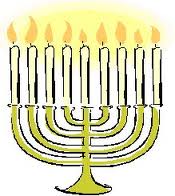 According to a new study just published, 93% of Israelis light a Chanukah menora during the holiday. 86% of them light it every day of the holiday, while some light it on the first night only, and others light it any night they have family getting together.
Of those who do not light a menora, 85% say the reason is because of their poor financial situation, as they cannot afford the menora, the candles and the need for hosting guests with refreshments.
I see it as very positive that such a high percentage of Jews in Israel are lighting menora. I wonder if a law was established making menora lighting mandatory, if the percentage of lighters would drop.
Another point, I find it interesting that those who don't light say that cannot afford to light because of the costs involved, including the cost of refreshments for guests. They don't seem to even consider the option of spending about 40 NIS on a cheap menora with candles and simply not have over guests they would have to feed. The pirsumei nissa aspect is so ingrained in the mitzva that these people would prefer to not light at all rather than lighting with no guests.
Jan 11, 2007
interesting statistics
Anyway, a couple of the more interesting stats that the media has been headlining:
- 85% of Israelis think there is a lot of corruption in the current government.
That makes me go hmmmm.. What do the other 15% think? After all, The Prime Minister is under investigation for 3 separate criminal probes, including bribery, tender fixing, and fraud, among others. The Finance Minister is now under investigation for obstruction of justice and embezzling funds upwards of 5.5 million shekels. The Justice Minister is on trial for sexual harassment and indecency. The President is under investigation and nearly under indictment for sexual harassment and possibly rape, along with illegal wiretapping and obstruction of Justice. The head of the Defense Committee is under indictment for job fixing. The Minister of Strategic Affairs is under investigation for various things such as fraud, bribery and other things. Those are just the investigations that I remember off the top of my head.
Aside from that there is the fact that the people in the main positions in government are inexperienced and more adept at political spin than at running a government... That includes today's appointment of the latest minister - the Minister of Science and Technology. The inexperienced Defense Minister appointed to a this position a man (MK Raleb Majadele) who is a high school dropout. The appointment is being explained by the pundits as an attempt to draw support from the Arab community (Raleb Majadele is the first ever Muslim Arab to be appointed minister in an Israeli government) in anticipation of the upcoming Labor primaries. So the inexperienced Defense Minister appointed an inexperienced Science Minister for personal and political reasons, rather than for professional reasons.
So I am not sure why 15% of Israelis do not think the government is overloaded with corruption..
- 1% of Israelis think that PM Olmert is doing a "very good" job.
This, too, makes me go hmmm. Who is this one percent? Ehud Olmert's immediate family? Nah, can't be. Most of them do not live in Israel. Maybe it is the people who are members of his coalition and government. I do not know why anybody would think he is doing a "very good" job. Maybe 1% would think he has not done horribly, but "very good"? I do not get it. What can be attributed to Olmert that rates his job as being well done? by any standards?
- This one is my favorite, but it is really a poll and not a stat (though the stats come from polls, so maybe they are all equally poll and statistic): If elections were held today, Kadima would sink to 12 seats.
I am actually surprised they would get so many seats, but 12 seats is also a good sign. The analysts are saying that 12 seats in the polls indicate that the Kadima party is on its way to oblivion, following in the trail blazed by The Shinui party and the Merkaz party...
Related Posts
