
Showing posts with label meat. Show all posts
Showing posts with label meat. Show all posts
Jan 18, 2023
Interesting Psak: Cultured Meat
Chief Rabbi Rav Dovid Lau has been investigating the manufacture and processing of cultured "meats" and has now issued an official psak about its halachic status.
Rav Lau has paskened that cultured meat is pareve but. "Pareve but" meaning, it is pareve, but....
Stressing that this only applies to the type of cultured meat he investigated and others that use other methods might be different, Rabbi Lau paskened this type of cultured meat is pareve, with some conditions and qualifications largely about the maris ayin aspect of it:
1. as long as there is supervision that the cells were taken from the embryo and all other parts and ingredients used in the process are supervised, this will be kosher and pareve
2. if it will be marketed as meat or as a meaty product, and if it is made to look like meat and taste and smell like meat, there would be room to be strict and consider it kosher but not pareve as far as eating/cooking it with milk
3. it should not be advertised alongside dairy products as doing so might cause people to be lax about milk and meat.
source: INN
bon apetit
------------------------------------------------------
Reach thousands of readers with your ad by advertising on Life in Israel
Reach thousands of readers with your ad by advertising on Life in Israel
------------------------------------------------------
Feb 7, 2019
Chalak or Glatt in Bnei Braq?
someone sent me a letter written by Rav Moshe Yehuda Leib Landau, head of the Landau hechsher in Bnei Braq. It was also published on Yudel Shain's blog, though I do not know where it was originally published, but I will translate it here.
Rav Moshe Yehuda Leib Landau
Regarding beef "Kosher-Glatt" sold in stores in our city..
In advance of Pesach, meat will begin to be sold in our town marked as "kosher glatt". This meat is appropriate for Ashkenazim following the opinion of the Rama. In order for people to understand what this is about and to prevent confusion, I will explain the main points of the issue.
It is well known that the Mechaber and the Rama argue in Shulchan Aruch about the checking fo lesions on the lung of an animal. The Mechaber does nto allow any checking of any lesions at all. The Rama says that some allow checking lesions by rubbing and pressing them and he says that even though it is a big leniency, it has been the custom in our countries to do so. All Ashkenazic communities have accepted this custom.
Despite that, throughout the generation there were always some individuals who were stringent and careful to not eat meat that had lesions, even lesions that underwent the process of feeling and pressing. As time went on such meat became called "chalak" and meat that underwent pressing and feeling of possible lesions was called "kosher". However, even with such meat that undergoes the feeling and pressing, there are different levels - there are some lesions that come off easily without any effort and there are other lesions that are difficult to remove and need a lot of rubbing and pressing and even forcibly peeling it off. Being that animals without lesions are an uncommon minority everywhere, many communities have become accustomed to allowing lesions removed by rubbing and even lesions removed by peeling, based on the Rama. There were even places that out of necessity were accustomed to calling such meat "chalak" as long as there were no more than 3 lesions peeled off.
Thank God our generation is worthy and God Fearing, and if 50 years ago most people ate "kosher" meat and those stringent about "chalak" were just individuals, today most Haredim are careful about eating only "chalak" meat. So much so that good hechshers today only supply chalak meat. However, the high demand for chalak meat has forced them to bring down the level of chalak and include within it even meat that has some types of lesions and up to 3 actual lesions.
However, my father was very stringent, despite the difficulty, to not change an iota from the opinion of the Beis Yosef and would always say "Chalak is like a newborn calf, without any issues" and that is what we did all the years, with chalak under our certification being real chalak with no negative issues. In recent years, after merchants from abroad have already become accustomed by the different kashrus organizations to attain very high percentages of chalak they do not want to deal with us any longer due to lower profit margins so there has become a shortage of meat. With no alternative, and so as not to deviate from the custom of the stringent, I have decided that we can market in stores meat that is appropriate for those following the Rama called "kosher glatt". Meaning, "Chalak" will remain actual chalak as it always has been, and meat that his the minor lesions that required no major effort to remove will be marketed under the name "kkosher glatt". This meat can be eaten by those accustomed like the Rama and as Ashkenazic communities have followed throughout the generations. In all the other hechshers, this meat is included under the name "chalak". If someone tries to find the "chalak" according to the custom of the Beis Yosef, he will have to work very hard to find it.
So that this will be easily identifiable, and as a sign for understanding: meat called "kosher glatt" in Yiddish will be designated for Ashkenazim only eating in line with the custom of the Rama, while meat called "chalak" - in lashon hakodesh, will be appropriate also for Sefardim who follow the opinion of the Beis Yosef.
Therefore, the Ashkenazim following the Rama can buy from the kosher glatt and eat and enjoy.
In wedding halls and restaurants only chalak meat will be allowed as has been the case until today and this is appropriate for Sefardim following the Beis Yosef as well with no concern.
the original:
Rav Moshe Yehuda Leib Landau
Regarding beef "Kosher-Glatt" sold in stores in our city..
In advance of Pesach, meat will begin to be sold in our town marked as "kosher glatt". This meat is appropriate for Ashkenazim following the opinion of the Rama. In order for people to understand what this is about and to prevent confusion, I will explain the main points of the issue.
It is well known that the Mechaber and the Rama argue in Shulchan Aruch about the checking fo lesions on the lung of an animal. The Mechaber does nto allow any checking of any lesions at all. The Rama says that some allow checking lesions by rubbing and pressing them and he says that even though it is a big leniency, it has been the custom in our countries to do so. All Ashkenazic communities have accepted this custom.
Despite that, throughout the generation there were always some individuals who were stringent and careful to not eat meat that had lesions, even lesions that underwent the process of feeling and pressing. As time went on such meat became called "chalak" and meat that underwent pressing and feeling of possible lesions was called "kosher". However, even with such meat that undergoes the feeling and pressing, there are different levels - there are some lesions that come off easily without any effort and there are other lesions that are difficult to remove and need a lot of rubbing and pressing and even forcibly peeling it off. Being that animals without lesions are an uncommon minority everywhere, many communities have become accustomed to allowing lesions removed by rubbing and even lesions removed by peeling, based on the Rama. There were even places that out of necessity were accustomed to calling such meat "chalak" as long as there were no more than 3 lesions peeled off.
Thank God our generation is worthy and God Fearing, and if 50 years ago most people ate "kosher" meat and those stringent about "chalak" were just individuals, today most Haredim are careful about eating only "chalak" meat. So much so that good hechshers today only supply chalak meat. However, the high demand for chalak meat has forced them to bring down the level of chalak and include within it even meat that has some types of lesions and up to 3 actual lesions.
However, my father was very stringent, despite the difficulty, to not change an iota from the opinion of the Beis Yosef and would always say "Chalak is like a newborn calf, without any issues" and that is what we did all the years, with chalak under our certification being real chalak with no negative issues. In recent years, after merchants from abroad have already become accustomed by the different kashrus organizations to attain very high percentages of chalak they do not want to deal with us any longer due to lower profit margins so there has become a shortage of meat. With no alternative, and so as not to deviate from the custom of the stringent, I have decided that we can market in stores meat that is appropriate for those following the Rama called "kosher glatt". Meaning, "Chalak" will remain actual chalak as it always has been, and meat that his the minor lesions that required no major effort to remove will be marketed under the name "kkosher glatt". This meat can be eaten by those accustomed like the Rama and as Ashkenazic communities have followed throughout the generations. In all the other hechshers, this meat is included under the name "chalak". If someone tries to find the "chalak" according to the custom of the Beis Yosef, he will have to work very hard to find it.
So that this will be easily identifiable, and as a sign for understanding: meat called "kosher glatt" in Yiddish will be designated for Ashkenazim only eating in line with the custom of the Rama, while meat called "chalak" - in lashon hakodesh, will be appropriate also for Sefardim who follow the opinion of the Beis Yosef.
Therefore, the Ashkenazim following the Rama can buy from the kosher glatt and eat and enjoy.
In wedding halls and restaurants only chalak meat will be allowed as has been the case until today and this is appropriate for Sefardim following the Beis Yosef as well with no concern.
the original:
הרב משה יהודה ליב לנדאghjghj
אודות בשר בהמה "כשר-גלאט" המשווק החנויות בעירנו.
לקראת חג הפסח, יתחילו לשווק בעירנו בשר שיסומן בשם "כשר-גלאט", בשר זה מתאים לאשכנזים הנוהגים כהרמ"א. בכדי שהציבור יבין במה המדובר וכדי למנוע מבוכה ובלבול, אבאר את עיקרי הדברים:
ידוע ומפורסם, שהמחבר והרמ"א נחלקו בשו"ע אודות בדיקת סרכות הריאות בבקר, שהמחבר אינו מתיר בדיקת הסרכות כלל וכלל. והרמ"א הביא שיש מתירים כל סכרא שעוברת ע"י מיעוך ומשמוש, וכתב. "ויש מתירין למשמש בסרכות ולמעך בהם.. ע"פ שהוא קולא גדולה כבר נהגו כל בני מדינות אלו..". ובמנהג זה החזיקו בכל קהילות אשכנז.
אם זאת, בכל הדורות, היו יחידים שהחמירו שלא לאכול מבהמה שהיו בה סרכות. ואפילו סרכות שעברו ע"י מיעוך ומשמוש, במשך הזמן אף נקראו בשמות – בשר שלא היו בו סרכות כלל נקרא "חלק", ובשר שהוכשר ע"י מיעוך ומשמוש נקרא "כשר". אולם, גם בסרכות שעוברות ע"י מיעוך ומשמוש יש דרגות שונות זו למעלה מזו, יש סרכות שיורדות בנקל ללא כח של הבודק כלל וישנן סרכות שבכדי להסירם צריך למעך ולמשמש הרבה, ועד כדי קליפה בכח. והיות שבהמות ללא סרכות הם מיעוט שאינו מצוי בכל מקום, הנהיגו בהרבה קהילות להכשיר את כל הסרכות העוברות ע"י מיעוך, ואף התירו סרכות שיורדות ע"י קליפה, וזאת על יסוד דברי הרמ"א הנ"ל. היו גם מקומות כאלו, שמתוך הדחק הנהיגו להחשיב כ"חלק" עד ג' סרכות שנקלפות.
ב"ה אכשור דרא, ואם לפני יובל שנים היה רוב הציבור אוכל בשר "כשר" והמקפידים על בשר "חלק" היו יחידים ממש. כהיום, רוב החרדים לדבר ה' מקפידים על בשר "חלק". עד כדי שהשגחות מיוחסות מספקות בשר "חלק" בלבד. אולם, הדרישה המרובה לבשר "חלק" הכריחה אותם לרדת ברמת החלק ולהכליל בהגדרת "חלק" גם סרכות לפי סוגים שונים. ועד ג' סרכות ממש.
אולם אבי הגה"ח זללה"ה הקפיד מאד, למרות הקושי, שלא לשנות מדעת ה"בית יוסף", והיה אומר תמיד: "חלק הוא כמו שהעגל נולד, בלי שום ריעותא", וכך אנו נוהגים כל השנים, כאשר החלק שתחת השגחתי הוא "חלק" ממש, לא שום ריעותא. בשנים האחרונות, לאחר שהסוחרים בחו"ל הורגלו ע"י גופי כשרות שונים להגיע לאחוזים גבוהים של "חלק", הם אינם רוצים עוד לעסוק עמנו מחמת מניעת הרווח, וממילא נוצר מחסור בבשר בקר.בלית ברירה, ובכדי שלא לשנות ח"ו ממנהג המחמירים, החלטתי לאפשר לשווק בחנויות גם בשר המתאים רק לנוהגים ע"פ הרמ"א, שיקרא "כשר-גלאט". כלומר, ה"חלק" יישאר "חלק" כמו שהיה כל השנים. והבשר שהיתה בהם סרכה קלה ממש, שלא היה צריך כח הבודק כלל בהסרתם, (שאצל רבים הם מוגדרות כ"רירים"), ישווקו תחת השם "כשר-גלאט". בשר זה מתאים לנוהגים ע"פ מנהג הרמ"א, וכמו שנהגו בקהילות אשכנז בכל הדורות. ובכל ההכשרים הנפוצים בשר זה הוא בכלל "חלק" גמור. מי שינסה לחפש שם "חלק" ממש כפי שיטת ה"בית יוסף", יצטרך להרבות בחיפושים, וכולי האי ואולי.
כדי שההיכר יהיה ברור ולסימנא מילתא: הבשר הקרוי "כשר-גלאט" – באידיש, מיועד לאשכנזים בלבד הנוהגים כמנהג הרמ"א, ואילו הבשר שנקרא "חלק" – בלשון הקודש, מתאים גם לספרדים ההולכים בשיטת ה"בית יוסף".
ולכן, האשכנזים הנוהגים כהרמ"א יכולים לקנות גם מן ה"כשר-גלאט" ויאכלו ענוים וישבעו.
באולמות ובמסעדות יכנס רק בשר "חלק" כמו שהיה עד היום, ומתאים גם לנוהגים כחומרות ה"בית יוסף" ללא חשש.
------------------------------------------------------
Reach thousands of readers with your ad by advertising on Life in Israel
Reach thousands of readers with your ad by advertising on Life in Israel
------------------------------------------------------
Jul 18, 2018
the road to hell is paved with good intentions
some politician in Austria has proposed a plan to limit the availability of kosher meat to Jews who register and declare such a need as an observant Jew.
The requirement to register and declare oneself as Jewish with a list being kept for legal purposes is reminiscent of certain behaviors of Nazi Germany, and a number of organizations critical of this proposal have made these references in their arguments.
source: TOI
I am not sure if it is worse to try to ban shechita entirely, as some European countries are trying to do, or if it is worse to require Jews to register and declare themselves observant in order to get a dispensation for kosher meat.
I get that the purpose of the proposal is to limit what they consider a cruel method of killing animals for food while at the same time not saying Jews who need such meat can't get it. Even though the proposal is probably being done with good intentions, as the proverb goes, the road to hell is paved with good intentions. I don't expect the proposal to pass, as it is too offensive to normal democratic thought and behavior and will likely be shot down by the more normal politicians in Austria.
The requirement to register and declare oneself as Jewish with a list being kept for legal purposes is reminiscent of certain behaviors of Nazi Germany, and a number of organizations critical of this proposal have made these references in their arguments.
source: TOI
I am not sure if it is worse to try to ban shechita entirely, as some European countries are trying to do, or if it is worse to require Jews to register and declare themselves observant in order to get a dispensation for kosher meat.
I get that the purpose of the proposal is to limit what they consider a cruel method of killing animals for food while at the same time not saying Jews who need such meat can't get it. Even though the proposal is probably being done with good intentions, as the proverb goes, the road to hell is paved with good intentions. I don't expect the proposal to pass, as it is too offensive to normal democratic thought and behavior and will likely be shot down by the more normal politicians in Austria.
------------------------------------------------------
Reach thousands of readers with your ad by advertising on Life in Israel
Reach thousands of readers with your ad by advertising on Life in Israel
------------------------------------------------------
Feb 11, 2016
Pastrami and Corned beef on their way to Israel?
Most meat in Israel is imported from South America, with some coming from Europe a little bit from local Israeli sources. No meat is imported from the USA.
That is about to change.
Breitbart is reporting that Israel has lifted the ban on American beef that has been in effect since 2003. The ban was was implemented as a result of the discovery of a case of mad cow disease.
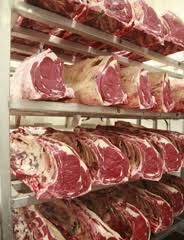
The first shipment of American beef is alreayd on its way, coming from WR Reserve in Nebraska.
The owner, Fishel Ziggelheim, commented on his enthusiasm in supplying the State of Israel with the highest level of beef in both quality and kashrut.
I do wonder if American beef will be reasonably priced and comparable to beef from Sotuh America, or if "highest quality and highest kashrut" is also a code word for highest price.
I don't know if the ban was only on raw beef or if it included deli meats as well, but I am hoping that we will see the beginning of imports of American deli meats.
That is about to change.
Breitbart is reporting that Israel has lifted the ban on American beef that has been in effect since 2003. The ban was was implemented as a result of the discovery of a case of mad cow disease.
The first shipment of American beef is alreayd on its way, coming from WR Reserve in Nebraska.
The owner, Fishel Ziggelheim, commented on his enthusiasm in supplying the State of Israel with the highest level of beef in both quality and kashrut.
I do wonder if American beef will be reasonably priced and comparable to beef from Sotuh America, or if "highest quality and highest kashrut" is also a code word for highest price.
I don't know if the ban was only on raw beef or if it included deli meats as well, but I am hoping that we will see the beginning of imports of American deli meats.
------------------------------------------------------
Reach thousands of readers with your ad by advertising on Life in Israel
------------------------------------------------------
May 21, 2013
Tnuva admits shechita is not painless
Shechita is commonly referred to, by Jews at least, as the most humane way to slaughter an animal. Not just that, but I have heard many times, and it seems at least most people I know are under the same impression regarding shechita, that shechita is considered to be painless. The reasons I have heard are - the knife is so sharp, the cut is so quick, the cutting of the arteries makes it instantaneous, and maybe some other reasons that don't come to mind right now.
Ever since I learned shechita and shechted animals - chickens, duck, goose, turkey, sheep, and cows - I have questioned the original assumption. From my experience, both in witnessing shechita done by others and by my own performance of shechita, it looks to me to be anything but painless.
Granted, I have no idea what the animal actually feels at what point. I am not a biologist or a scientist, I do not talk to animals - or at least I do not understand when they talk to me, and I have no scientific studies to back me up. But it does not look to be painless.
True, halacha declares the animal to be dead immediately upon the cutting of the trachea and/or esophagus, so halachically the animal is immediately dead. And perhaps the animal feels nothing of what it experiences after the simanim have been cut. And perhaps out of all the possible methods this is still the most humane method and perhaps it is the method that gives it the last amount of pain possible. it just, to me, never looks to be painless.
Mind you, I do not have a problem with pain in shechita. It is not tzaar baalei chaim as it is for a purpose and for a benefit. We have to minimize the pain and distress as much as possible - but some pain, however much is necessary at minimum, is acceptable in halacha and therefore to me. As long as the process is not excessive in the pain it causes and does not cause unnecessary pain, it is acceptable.
Last year there was an expose on Tnuva's slaughterhouse (Adom Adom). What looked like tremendous cruelty to the cattle was exposed to the public in the expose. After the expose, haredi activist Ruth Colian sued Tnuva for cruelty to animals, rendering the animals possibly even not kosher in some situations and at least not mehadrin after such cruelty.
With the suit soon coming to court, Tnuva has issued a response. They do not deny the allegations of cruelty, but their defense is to confirm the cruelty. Tnuva says that shechita does cause pain to animals. "in order to slaughter the animals, they have to be gathered into a trap box, totally conscious and sometimes groaning in fear. In this box they are grabbed and pressed with force against the body and head. After that they are flipped over 180 degrees and then slaughtered - the neck is sliced through and they are left to bleed to unconsciousness. Even though the behavior shown in the video is completely legal and standard, it would definitely cause shock and pain to most unsuspecting viewers."
Furthermore, Tnuva rejects the claim that they should have informed the public of the process and of the pain the animal goes through. Tnuva says that the consumer never knows the process of production of the products they consume. They do not know the process of how sports shoes are made, how cornflakes are made, or toilet paper. The same, they say, with meat production - this information is what the consumer specifically does not want to know. They want to be able to enjoy their meat while pushing away the thought of the pain caused to the animal in the process.
Tnuva basically confirmed what I learned from being involved in shechita.
That is not to say that what Tnuva was doing, what was exposed in the video, was perfectly ok. It must be analyzed and judged to see if they were using excessive force and unusual cruelty. Tnuva claims that they looked into the incidents recorded and say it was an exception to their normal practice, and they have taken steps to rectify it. The factory manager was fired, the contract workers who were abusing the animals were let go, procedures were changed and rules were tightened, there were changes to the actual physical implements and structures in the factory, video camera surveillance was installed, electric shockers have been banned form the premises, etc. Tnuva regrets what happened and is working to ensure it won't happen again.
(source: Kikar)
So, no. Shechita is not painless, but excessive cruelty and causing unnecessary pain is unacceptable.
Ever since I learned shechita and shechted animals - chickens, duck, goose, turkey, sheep, and cows - I have questioned the original assumption. From my experience, both in witnessing shechita done by others and by my own performance of shechita, it looks to me to be anything but painless.
Granted, I have no idea what the animal actually feels at what point. I am not a biologist or a scientist, I do not talk to animals - or at least I do not understand when they talk to me, and I have no scientific studies to back me up. But it does not look to be painless.
True, halacha declares the animal to be dead immediately upon the cutting of the trachea and/or esophagus, so halachically the animal is immediately dead. And perhaps the animal feels nothing of what it experiences after the simanim have been cut. And perhaps out of all the possible methods this is still the most humane method and perhaps it is the method that gives it the last amount of pain possible. it just, to me, never looks to be painless.
Mind you, I do not have a problem with pain in shechita. It is not tzaar baalei chaim as it is for a purpose and for a benefit. We have to minimize the pain and distress as much as possible - but some pain, however much is necessary at minimum, is acceptable in halacha and therefore to me. As long as the process is not excessive in the pain it causes and does not cause unnecessary pain, it is acceptable.
Last year there was an expose on Tnuva's slaughterhouse (Adom Adom). What looked like tremendous cruelty to the cattle was exposed to the public in the expose. After the expose, haredi activist Ruth Colian sued Tnuva for cruelty to animals, rendering the animals possibly even not kosher in some situations and at least not mehadrin after such cruelty.
With the suit soon coming to court, Tnuva has issued a response. They do not deny the allegations of cruelty, but their defense is to confirm the cruelty. Tnuva says that shechita does cause pain to animals. "in order to slaughter the animals, they have to be gathered into a trap box, totally conscious and sometimes groaning in fear. In this box they are grabbed and pressed with force against the body and head. After that they are flipped over 180 degrees and then slaughtered - the neck is sliced through and they are left to bleed to unconsciousness. Even though the behavior shown in the video is completely legal and standard, it would definitely cause shock and pain to most unsuspecting viewers."
Furthermore, Tnuva rejects the claim that they should have informed the public of the process and of the pain the animal goes through. Tnuva says that the consumer never knows the process of production of the products they consume. They do not know the process of how sports shoes are made, how cornflakes are made, or toilet paper. The same, they say, with meat production - this information is what the consumer specifically does not want to know. They want to be able to enjoy their meat while pushing away the thought of the pain caused to the animal in the process.
Tnuva basically confirmed what I learned from being involved in shechita.
That is not to say that what Tnuva was doing, what was exposed in the video, was perfectly ok. It must be analyzed and judged to see if they were using excessive force and unusual cruelty. Tnuva claims that they looked into the incidents recorded and say it was an exception to their normal practice, and they have taken steps to rectify it. The factory manager was fired, the contract workers who were abusing the animals were let go, procedures were changed and rules were tightened, there were changes to the actual physical implements and structures in the factory, video camera surveillance was installed, electric shockers have been banned form the premises, etc. Tnuva regrets what happened and is working to ensure it won't happen again.
(source: Kikar)
So, no. Shechita is not painless, but excessive cruelty and causing unnecessary pain is unacceptable.
------------------------------------------------------
Reach thousands of readers with your ad by advertising on Life in Israel
------------------------------------------------------
Dec 9, 2012
Cruelty to animals Expose in Israel Raises Kashrut Question
A television expose show conducted an investigation into the slaughterhouse of Adom Adom - the meat department of Tnuva. As a result of the expose, the Ministry of Health said they would be opening an investigation of their own. The expose revealed serious instances of cruelty to animals.
A class action suit, to the tune of 100 million NIS, has now been filed against Tnuva, as a result of the expose. A haredi woman is leading the suit, claiming she has been a customer of Adom Adom meat for a long time claiming deception of the cruelty and of the slaughterhouse conditions, along with the cruelty itself.
That actually interests me less. The lawsuit is a lawsuit and will be determined in court. The Health Ministry will have to investigate and make a determination as to what actually happens, who is at fault and all the ramifications.
One point mentioned by the woman leading the lawsuit, Ruth Kolian, intrigued me. When discussing her lawsuit she said there are also halachic issues with what has been revealed - she said that if the rabbonim would have known what was actually going on, they would definitely not have given the strict level of kashrut certification that they did. Therefore, there is serious damage to the customers, and to the religious customers as well.
(source: The Marker)
If the mehadrin hechsher is working properly, why, or how, did they not know what was going on? Don't they have mashgichim in the slaughterhouse supervising the entire process? Isn't that especially one of the responsibilities of the certifying agency - to know what is going on? Don't they claim to be better than the regular kashrut agencies for specifically being present at all stages of the process, for retaining complete control to access of the meat production process - holding the only sets of keys, for example, constant supervision, etc.
How is it possible, as is being claimed, that "if the rabbonim would have known what was going on", that they did not know what was going on? If the answer is that they did know and they determined that from a halachic perspective there was nothing wrong with the process, that would be fine by me - perhaps the process must be reviewed regarding cruelty to animals, but the issue of halacha would not have been brought up. However, saying the rabbis were in the dark about what was happening means the strict level of supervision is basically a fraud.
A class action suit, to the tune of 100 million NIS, has now been filed against Tnuva, as a result of the expose. A haredi woman is leading the suit, claiming she has been a customer of Adom Adom meat for a long time claiming deception of the cruelty and of the slaughterhouse conditions, along with the cruelty itself.
That actually interests me less. The lawsuit is a lawsuit and will be determined in court. The Health Ministry will have to investigate and make a determination as to what actually happens, who is at fault and all the ramifications.
One point mentioned by the woman leading the lawsuit, Ruth Kolian, intrigued me. When discussing her lawsuit she said there are also halachic issues with what has been revealed - she said that if the rabbonim would have known what was actually going on, they would definitely not have given the strict level of kashrut certification that they did. Therefore, there is serious damage to the customers, and to the religious customers as well.
(source: The Marker)
If the mehadrin hechsher is working properly, why, or how, did they not know what was going on? Don't they have mashgichim in the slaughterhouse supervising the entire process? Isn't that especially one of the responsibilities of the certifying agency - to know what is going on? Don't they claim to be better than the regular kashrut agencies for specifically being present at all stages of the process, for retaining complete control to access of the meat production process - holding the only sets of keys, for example, constant supervision, etc.
How is it possible, as is being claimed, that "if the rabbonim would have known what was going on", that they did not know what was going on? If the answer is that they did know and they determined that from a halachic perspective there was nothing wrong with the process, that would be fine by me - perhaps the process must be reviewed regarding cruelty to animals, but the issue of halacha would not have been brought up. However, saying the rabbis were in the dark about what was happening means the strict level of supervision is basically a fraud.
------------------------------------------------------
Reach thousands of readers with your ad by advertising on Life in Israel
------------------------------------------------------
Feb 22, 2012
Lab-Grown Steak On The Way!
According to this Fox News report, it looks like "test tube meat" is not so far off. We'll soon be consuming lab-grown hamburgers and steaks.
When this comes to be, it will create an entirely new series of debate and responsa about the halachic issues regarding consuming such meat.
The first ever “test tube” meat could be hitting menus in the not-so-distant future. Dutch scientist Mark Post announced at a symposium on Sunday titled “The Next Agricultural Revolution” that he has come up with a method to grow meat entirely out of cow stem cells. Post said his team aims to have a couple of thousands of small tissues to assemble into an entire hamburger as early as this fall.I would assume that this would not affect the bracha on meat, as meat is she'hakol anyway. I do wonder if such lab-grown meat would be considered pareve or fleishige. I guess coming from the stem cells this would be pareve, but I don't really know. Like almond milk is considered pareve but one should keep almonds nearby so as not confuse other people, perhaps this meat will be considered pareve but one should keep a petri dish or test tube on the table.
The ultimate goal: Entirely replace the meat-animal industry.
The project was made possible by a donation of 250,000 euros, or close to $330,000, from an anonymous investor with a “care for the environment…and interest in life-changing technologies.”
Post, professor and head of the physiology department at the University of Maastricht in the Netherlands, spoke with FoxNews.com before the major announcement. He said that his team is very focused on making the process efficient and cost effective. However, Post said the method is still in the “laboratory phase.”
"We are just focusing on a proof of concept," Post told FoxNews.com in January . "That yes, it can be done in a laboratory, just to show the world that it can be done."
While lab-grown meat may seem incredible, it ultimately begs the question - would you eat it? Or maybe a better question would be, should you eat it?
“Right now the verdict is out,” said Dr. Fred Vagnini, medical director for Heart, Diabetes & Weight Loss Centers of New York. “But it’s a novel idea that could play into a very positive thing. This is genetically engineered food, so it could be made to be more bio-active, could be made to be less fatty. There’s a lot of control over the muscle.”
Vagnini said that this could potentially lessen the negative aspects associated with eating red meat. Many studies have shown red meat to be linked with a higher risk of cardiovascular disease, higher cholesterol, and certain types of cancer.
“The point is this could be a healthier meat,” Vagnini said. “All of the studies show that red meat is not good for you. But it does have a few benefits for many people. It has a lot of vitamin B12 and carnitine, an amino acid which is important for heart energy and cellular metabolism.”
The fat in red meat is what is typically linked to higher risks for most cardiovascular issues. But fat is what gives red meat its delicious flavor. So Vagnini said the real mystery would be how this meat would taste.
“Test tube” meat could provide potential health benefits, but with any new dietary procedure, they always run the risk of negative outcomes.
“A downside could be that because it’s genetically engineered, there could be changes in the protein DNA that could make it carcinogenic,” Vagnini said. “That’s a that main negative component when it comes to GMOs, or genetically modified organisms.”
But GMOs may be the world’s last resort when it comes to animal foods. The global demand for meat is expected to rise by 60 percent by 2050, said American scientist Nicholas Genovese, who organized the symposium at which Post spoke. But with most of the pastured lands already in use, livestock producers would have to further expand into nature.’
According to Genovese, this would cause the destruction of biodiversity, an increase in greenhouse gases and an increase in many diseases.
And for those reluctant to turn to vegetable substitutes, Vagnini said that it’s methods like these that will help meet the growing demand for meat while helping to save the planet.
“Sooner or later we can’t continue to feed the world,” Vagnini said. “Eventually we’ll have to go to these alternative foods, and I personally think they can be made more safely.”
When this comes to be, it will create an entirely new series of debate and responsa about the halachic issues regarding consuming such meat.
Mar 17, 2010
The mitzva to not be a vegetarian
I'll take any excuse to eat meat, though I do not feel the need to justify it.
Rav Dov Lior has written an article about why it is wrong to be vegetarian in today's world. I would assume he is not referring to someone who wants or needs to be vegetarian for health reasons, but he is referring to vegetarians who do so out of sympathy to animals.
Rav Lior says that the time for mercy on animals as a reason for vegetarianism has not yet been reached. Right now we should first be concerned with being merciful to humankind. Only when the world is "raised" and reaches a higher level will we strive for the level of mercy to animals and promote vegetarianism.
We are meant to take the physical and imbue it with holiness. When a person eats, if he does it for holy purposes and in a holy way, he imbues the food with holiness. (source: ynet)
As I said, any excuse to eat more meat is good by me...
Rav Dov Lior has written an article about why it is wrong to be vegetarian in today's world. I would assume he is not referring to someone who wants or needs to be vegetarian for health reasons, but he is referring to vegetarians who do so out of sympathy to animals.
Rav Lior says that the time for mercy on animals as a reason for vegetarianism has not yet been reached. Right now we should first be concerned with being merciful to humankind. Only when the world is "raised" and reaches a higher level will we strive for the level of mercy to animals and promote vegetarianism.
We are meant to take the physical and imbue it with holiness. When a person eats, if he does it for holy purposes and in a holy way, he imbues the food with holiness. (source: ynet)
As I said, any excuse to eat more meat is good by me...
Jun 4, 2008
Meat is very bad for you
Usually when people say meat is bad for you, they mean that eating too much of it will kill you via high cholesterol and a heart attack (chas v'shalom).
This poor guy got killed by meat in a different way, bring all new meaning to the concept....

This poor guy got killed by meat in a different way, bring all new meaning to the concept....

Sep 20, 2007
wrapping your arm in a chunk of cattle
This article, actually just some excerpts from it, make me all warm and fuzzy inside...
especially this paragraph: Just think how many heads of cows had to roll to make enough parchment for one sefer torah - and though a mezzuzah uses only a sliver, multiply that by millions of doors in Jewish homes around the world. And whoever puts on tefillin (phylacteries) every morning, is literally wrapping around his arm a nice big chunk of cow.
especially this paragraph: Just think how many heads of cows had to roll to make enough parchment for one sefer torah - and though a mezzuzah uses only a sliver, multiply that by millions of doors in Jewish homes around the world. And whoever puts on tefillin (phylacteries) every morning, is literally wrapping around his arm a nice big chunk of cow.
May 28, 2007
is one hechsher better than the next?
Yesterday I wrote about an interesting discussion written about in Mishpacha, a popular chareidi magazine/newspaper. There was a second article in this past weeks Mishpacha that was similarly enlightening.
The Mishpacha staff went to investigate the status of kosher and glatt kosher meat. They did this because of some recent problems that have come to light in the world of meat kashrut, including one recent event in Israel in which non-kosher meat was found being packaged with kosher meat.
They make some fascinating statements early in the report.
That is, I call them fascinating because I have never seen a chareidi publication, or heard from a chareidi rav, any such statement before.
Here is an article in a serious chareidi publication explaining the positions of the Rabbanut. Not only do they not make any claims that chareidi hechsher organizations are any better at the business, but they clearly say the "best" chareidi hechsherim are plagued by the exact same problems, with the additional feature of their ability to cover it all up and keep it secret.
Not only that, but the article goes into the various systems and methods the Rabbanut has put into place, and changes they will keep making in order to meet the demands and deal with the problems that will crop up in the future.
So why are we, the frum public, the chareidi public, the chardal public, the ultra dati leumi public, whatever other group you consider yourself part of, so beholden to the "better" hechsherim? Why do we only eat Badat"z or She'airis? Why do we only eat Rubin or Landau? Do we really know that these hechsherim are better than the Rabbanut?
The Rabbanut at least comes clean and tells us what the problems are and what they do to correct them. According to the article in Mishpacha, the "better" hechsherim refuse to respond to such queries. Are they really better or are we victims of manipulations and PR and good marketing? Do we really believe, with no basis, that they are better or is there something to it? Do we just not want to be caught eating from a "lesser" hechsher because it will ruin our childrens shidduchim and acceptance into certain schools and social groups?
I do not have the answers. I do not know that they are better or not. I do know that one of the most serious, and definitely the most popular, chareidi publication just published a serious article that pretty much forces one to ask these questions.
I understand if one wishes to be machmir on himself (an Ashkenazi - for a Sefardi Jew this is basic law, not a chumrah), and only eat glatt meat. It is also fine by me, and is perfectly kosher in my mind, if one (again, an Ashkenazi Jew) follows the Rama rather than the chumrah of the Mechaber, and chooses to eat non-glatt meat as well.
There were recently some very interesting posts by Am Kshe Oref and DovBear on the topic of how society has come to totally reject eating non-glatt meat and how difficult it is for someone who wants to eat non-glatt (to cut down on costs for example). At least in Israel one has the choice - the Rabbanut offers a hechsher that includes non-glatt meat. However in the US it seems it has become difficult to find non-glatt meat. The chumrah of glatt has been imposed on society to the exception of the Rama.
But let's say that is not you. Let's say you choose to be machmir and eat only glatt meat. Ask yourself this - how do you know the "better" hechsherim are really better? Why do you only rely on some and consider others b'dieved kosher at best?
I am sure there must be some differences, at least in the non-meat category. Maybe how often a mashgiach shows up. Maybe whether or not they use bug-free produce, sifting the flour and rice, maybe other things. I don't know, but at least regarding the meat situation the picture just got fuddled...
The Mishpacha staff went to investigate the status of kosher and glatt kosher meat. They did this because of some recent problems that have come to light in the world of meat kashrut, including one recent event in Israel in which non-kosher meat was found being packaged with kosher meat.
They make some fascinating statements early in the report.
- They say that the reason the regular Rabbanut hechsher is looked upon as a "b'dieved" hechsher is not because of the quality of the hechsher, but because they maintain two different levels of hechsher under the name Rabbanut (not including mehadrin). They run a hechsher for regular, non-glatt meat, and they also certify meat under the hechsher "chalak" which certifies glatt meat under the authority of the Rabbanut. The fact that the same organization runs two levels of kashrut under the same name, leaves it open (in poeple's minds) to problems.
- They clearly state that the problems discussed in the article are just as likely to happen in any of the mehadrin and badat"z hechsherim. The only reason the article discusses solely the Rabbanut is because the Rabbanut is an organization with oversight. When problems arise, they are publicized. With the private hechshers, everything is kept as secret as possible and they do not publicize when they find problems. So the impression is created that they have fewer problems, if at all, which is not true. they just don't talk about their problems, while the Rabbanut does (or has to).
- The private hechshers (a.k.a. non-Rabbanut - meaning all the various badatz and mehadrin hechshers) refuse to talk about these things. They would not answer questions about why they consider themselves as better hechshers, nor about what differentiates them from other hechshers.
That is, I call them fascinating because I have never seen a chareidi publication, or heard from a chareidi rav, any such statement before.
Here is an article in a serious chareidi publication explaining the positions of the Rabbanut. Not only do they not make any claims that chareidi hechsher organizations are any better at the business, but they clearly say the "best" chareidi hechsherim are plagued by the exact same problems, with the additional feature of their ability to cover it all up and keep it secret.
Not only that, but the article goes into the various systems and methods the Rabbanut has put into place, and changes they will keep making in order to meet the demands and deal with the problems that will crop up in the future.
So why are we, the frum public, the chareidi public, the chardal public, the ultra dati leumi public, whatever other group you consider yourself part of, so beholden to the "better" hechsherim? Why do we only eat Badat"z or She'airis? Why do we only eat Rubin or Landau? Do we really know that these hechsherim are better than the Rabbanut?
The Rabbanut at least comes clean and tells us what the problems are and what they do to correct them. According to the article in Mishpacha, the "better" hechsherim refuse to respond to such queries. Are they really better or are we victims of manipulations and PR and good marketing? Do we really believe, with no basis, that they are better or is there something to it? Do we just not want to be caught eating from a "lesser" hechsher because it will ruin our childrens shidduchim and acceptance into certain schools and social groups?
I do not have the answers. I do not know that they are better or not. I do know that one of the most serious, and definitely the most popular, chareidi publication just published a serious article that pretty much forces one to ask these questions.
I understand if one wishes to be machmir on himself (an Ashkenazi - for a Sefardi Jew this is basic law, not a chumrah), and only eat glatt meat. It is also fine by me, and is perfectly kosher in my mind, if one (again, an Ashkenazi Jew) follows the Rama rather than the chumrah of the Mechaber, and chooses to eat non-glatt meat as well.
There were recently some very interesting posts by Am Kshe Oref and DovBear on the topic of how society has come to totally reject eating non-glatt meat and how difficult it is for someone who wants to eat non-glatt (to cut down on costs for example). At least in Israel one has the choice - the Rabbanut offers a hechsher that includes non-glatt meat. However in the US it seems it has become difficult to find non-glatt meat. The chumrah of glatt has been imposed on society to the exception of the Rama.
But let's say that is not you. Let's say you choose to be machmir and eat only glatt meat. Ask yourself this - how do you know the "better" hechsherim are really better? Why do you only rely on some and consider others b'dieved kosher at best?
I am sure there must be some differences, at least in the non-meat category. Maybe how often a mashgiach shows up. Maybe whether or not they use bug-free produce, sifting the flour and rice, maybe other things. I don't know, but at least regarding the meat situation the picture just got fuddled...
Subscribe to:
Posts (Atom)
Related Posts
