
Showing posts with label hechsher. Show all posts
Showing posts with label hechsher. Show all posts
Jul 19, 2021
punishing Unilever
MK Moshe Arbel (Shas) has put out a statement in light of the Ben & Jerry's recent announcement to not renew the license of the current manufacturer in Israel and to stop selling in the Occupied Territories.
Arbel is calling on the various mehadrin kashrut certifiers to withdraw certification from all Unilever products, the parent company of Ben & Jerry's, sold in Israel.
This would be a big blow to Unilever, but why stop at mehadrin certifications? Why not call on the Rabbanut to withdraw certification as well?
I also want to know if Unilever is going to stop selling all their products in the "Occupied Territories" or just Ben & Jerry's? And if just B&J, why is that product different than all the others they sell?
------------------------------------------------------
Reach thousands of readers with your ad by advertising on Life in Israel
Reach thousands of readers with your ad by advertising on Life in Israel
------------------------------------------------------
Feb 25, 2021
Interesting Psak: mishloach manot with the wrong hechsher
Kikar is reporting on an interesting Purim-related psak given by Rav Avraham Yosef Scwartz. I don't know who this rabbi is or anything about him, but the issue he discusses is interesting.
The question posed to Rabbi Schwartz was if people preparing mishloach manot to send to others on Purim should be with food items that bear whatever hechsher is acceptable to the specific recipient or can you not worry about that and just send whatever you want, as long as it is kosher? The presumption that you have to take into account the acceptable list of hechshers of the recipient could make things complicated as you could have to potentially buy or prepare different products and different ingredients for different people.
Rav Schwartz answered explaining that mishloach manot is meant to accomplish two objectives:
1. ensuring the recipient has food for his Purim meal
2. to increase love, friendship and comradery among people
So, Rav Schwartz says, if you were to send food to someone with a hechsher that the recipient doesn't accept, you haven't accomplished the first goal of providing food for his meal, as he won't eat it, but you have accomplished the increasing friendship as the "giving" aspect is more important for this. While it would be better to send food that the recipient will eat but nowadays with so many hechshers on the market it isnt always possible to know what each person relies on and which he does not.
So, Rav Schwartz says, you should buy products that bear good kashrut certifications and send them. And especially on Purim when the goal is to increase love and friendship among people, we should receive any mishloach manot given to us happily and gratefully, while at the same time instructing household members to check carefully before eating anything received to make sure what was given is acceptable in your house.
------------------------------------------------------
Reach thousands of readers with your ad by advertising on Life in Israel
Reach thousands of readers with your ad by advertising on Life in Israel
------------------------------------------------------
Feb 23, 2021
Kashrut Alert: Fuse Tea from Georgian Coca Cola plant
The following kashrut alert seems important.


We've discussed numerous times the reliability of Coca Cola (and related products) imported form countries without a hechsher. There are different opinions on this. And not too long ago the factory of Coca Cola in Ukraine started to be certified by the kashrut of Machzikei Hadas, Belz kashrut - and regarding this too some say it is reliable and some say it is not.
The current kashrut alert is regarding a Coca Cola product, not Coca Cola itself, manufactured in Georgia.
Funnily enough, the main Coca Cola headquarters is in Georgia, but in the State of Georgia in the United States of America. That plant and headquarters is perfectly fine and certified kosher. The problem, or the alert, is with the Coca Cola plant in the country of Georgia.
The specific product in the alert is peach flavored Fuse Tea. The import label of this product bears the hechsher of Belz, Machzikei Hadas, along with the confirmation of the Chief Rabbinate of Israel.

Machzikei Hadas put out an alert stating that the Coca Cola of Georgia (the country) factory is not under their supervision and certification and they do not certify any drinks produced there. The label on that product is fraudulent..

The problem is on the import label, which is not uncommon. The import labels are printed by the importer, and the importer can put whatever he wants on it. There is no oversight or supervision on the import label.
Be aware.
------------------------------------------------------
Reach thousands of readers with your ad by advertising on Life in Israel
Reach thousands of readers with your ad by advertising on Life in Israel
------------------------------------------------------
Feb 3, 2021
Pesach warning
Warning
It is just about 7 weeks until Pesach!
We haven't started our Pesach cleaning yet, but we have started our Pesach shopping!

I'm just not sure yet if I rely on this hechsher for Pesach or not...
------------------------------------------------------
Reach thousands of readers with your ad by advertising on Life in Israel
Reach thousands of readers with your ad by advertising on Life in Israel
------------------------------------------------------
Sep 10, 2020
Ukranian Coca Cola reawakens kashrut debate
The saga of [Ukranian-produced] Coca Cola, with or without a hechsher, continues. It has become the gift that keeps on giving.
The most recent announcement of Badatz Machzikei Hadaas being allowed into the Ukranian factory to supervise and certify the Coca Cola as kosher has caused shock waves through the kashrut industry and has re-opened the never-ending debate as to the status of Coca Cola.
According to Kikar, the debate is now raging, once again, with some claiming that only Rav Landau and the OU know the "secret ingredient" of Coca Cola and therefore only they can certify it as kosher, and any Cola without a hechsher can't be kosher, and anybody else certifying Coca Cola as kosher is doing a poor job and is unreliable because he does not know the ingredients.
Opposite that is the claim that the ingredients are not secret, but the amounts of each ingredient is what is secret, so anyone authorized by Coca Cola to enter a factory and certify is able to with no need to know the amount of each specific ingredient. These kashrut experts claim that the claim that only the OU and Rav Landau know and can authorize is not true but is simply meant as a way for them to keep their monopoly and control over the market.
The anonymous kashrut expert quoted in the article says that even without permanent full time supervision in the Ukranian factory, one can drink the Coca Cola produced there, just as haredim across Europe drink Coca Cola from this factory with no kashrut certification. And now Machzikei Hadas is even supervising this factory that used to have no certification at all but was still producing Cola consumed by haredim all over Europe.
Anonther anonymosu kashrut expert is quoted as saying one cannot accuse Rav Landau of saying not to drink uncertified Cola just to protect his monopoly. As proof, he points out, Rav Landau said one can drink Sprite anywhere int he world without a hechsher, yet he gives the hechsher on that too in Israel, so why would he not want to protect that monopoly and say not to drink without? Clearly that is not the reason, but only the kashrut issue is the reason. And, he says, there is an official statement from Coca Cola that only Rav Landau and the OU know the ingredients.
I can get the debate regarding Coca cola without a hechsher. I know plenty of people who say that without a hechsher it cannot be relied upon, and I know plenty, ncluding reliabel kashrut organizations, that say Coca Cola can be drunk throughout Europe without a hechsher, and others that say Coca Cola is kosher everywhere even without a hechsher. If there is no hechsher I can understand the debate, no matter which side you take in it. But now there is a hechsher ont his Ukranian factory. That is a whole different ballgame. You dont rely on Machzikei Hadas, don't drink it. But it has a hechsher and anyone who relies on Machzikei Hadas can drink Coca Cola from the Ukraine. It has supervision and it has a hechsher. Maybe the statement form Coca Cola about Rav Landau and the OU is old and maybe now Machzikei Hadas knows it as well, or maybe they were given a list of ingredients without knowing exactly which ones are used, but the entire list is kosher, or however they worked it out - if the Badatz Machzikei Hadas is a reliable hechsher for you, bottom's up.
------------------------------------------------------
Reach thousands of readers with your ad by advertising on Life in Israel
Reach thousands of readers with your ad by advertising on Life in Israel
------------------------------------------------------
May 5, 2020
new mehadrin hechsher
In case you thought the mehadrin hechsher market in Israel was a bit crowded, a new, and a potentially big, player today announced it is joining the field.
It is also big news, and somewhat surprising, as he seems to be direct competition for his own family.
 Rav Dovid Yosef, one of the sons of Rav Ovadia Yosef and member of the [Shas] Council of Sages, has announced that he is opening a new kashrut certifying organization under the name Yechave Daas. Rav Dovid Yosef explained that there is a noticeable shortage and lack of kashrut organizations that follow the rulings of Rav Ovadia Yosef, using his chumras and his many hiddurim..
That is very strange, as the Badatz Beit Yosef hechsher, which is very popular, was started by the Yosef family. So, not only is Yechave Daas competing directly with the Beit Yosef hechsher of his own family, but he is saying that the Beit Yosef hechsher, founded and operated by the Yosef family does not follow the rulings of the father, Rav Ovadia Yosef.
The new hechsher will begin operating in the meat and chicken industries with the intention of expanding into the food production and restaurant markets at a later stage.
In addition to the chumras and things to be careful about in the areas of checking the leg sinews, splitting the wings, checking the lungs, and others, Yechave Daas will concentrate on Rav Ovadia's stringencies and care regarding the checking of knives and the quality of the shochtim, both in their expertise and in ensuring they are God fearing Jews.
source: Kikar
If you thought we already have so many hechshers that each tries to be a little more machmir than the other, Yechave Daas is joining the fray, all because the others aren't using the right chumras.
Competition is good. It makes everyone better, in pricing and in quality of what they offer.
It is also big news, and somewhat surprising, as he seems to be direct competition for his own family.
 Rav Dovid Yosef, one of the sons of Rav Ovadia Yosef and member of the [Shas] Council of Sages, has announced that he is opening a new kashrut certifying organization under the name Yechave Daas. Rav Dovid Yosef explained that there is a noticeable shortage and lack of kashrut organizations that follow the rulings of Rav Ovadia Yosef, using his chumras and his many hiddurim..
That is very strange, as the Badatz Beit Yosef hechsher, which is very popular, was started by the Yosef family. So, not only is Yechave Daas competing directly with the Beit Yosef hechsher of his own family, but he is saying that the Beit Yosef hechsher, founded and operated by the Yosef family does not follow the rulings of the father, Rav Ovadia Yosef.
The new hechsher will begin operating in the meat and chicken industries with the intention of expanding into the food production and restaurant markets at a later stage.
In addition to the chumras and things to be careful about in the areas of checking the leg sinews, splitting the wings, checking the lungs, and others, Yechave Daas will concentrate on Rav Ovadia's stringencies and care regarding the checking of knives and the quality of the shochtim, both in their expertise and in ensuring they are God fearing Jews.
source: Kikar
If you thought we already have so many hechshers that each tries to be a little more machmir than the other, Yechave Daas is joining the fray, all because the others aren't using the right chumras.
Competition is good. It makes everyone better, in pricing and in quality of what they offer.
------------------------------------------------------
Reach thousands of readers with your ad by advertising on Life in Israel
Reach thousands of readers with your ad by advertising on Life in Israel
------------------------------------------------------
Feb 24, 2020
Triangle K in Israel vs Triangle K in the USA
Nothing definitive here has been stated, but kashrus issues, especially regarding hechsherim, are very interesting to me and I try to stay up on news and developments in this area, and inform the public when I think it is interesting or relevant enough.
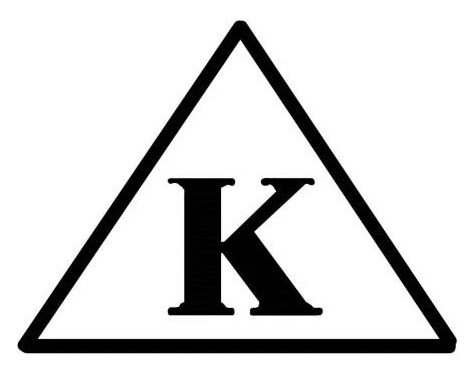
The issue of the reliability of the Triangle-K (aka "Ralbag", named for the founding Rabbi) hechsher has always been interesting. For reasons not necessarily well-known, the Triangle K has not been considered generally reliable in the Ultra-Orthodox community, and many kashrut agencies do not recommend it (while some say it is generally not recommended but some products of theirs an be used and should be determined on a case by case basis).
Why this is so, is a good question. One of the reasons, as far as I know, is because they certify meat as kosher even when it is not glatt. I do not want to use the word "minhag" but the frum community in the USA has largely eschewed non-glatt meat from its tables despite the fact that it is perfectly kosher. As a result, Triangle K is rejected, and that also hurts their reputation on other products, as they are thought of as certifying products that really should not be eaten. Additionally, some research tells me they rely on kulas in other products as well, such as on a lesser-accepted kula of Rav Moshe Feinstein regarding the temperature of pasteurization of grape juice to consider it mevushal, claims of extremely infrequent mashgiach visits to plants under their supervision, among other examples.
What makes this even more interesting is that as obtuse as the Rabbanut can sometimes be about many different things, and as much as Rabbanut policy can be relatively strict (especially for what is often considered to be a generally meikil hechsher), the Rabbanut allows the import of foods bearing the hechsher of the Triangle K. Many people find themselves eating Triangle K in Israel, because of the Rabbanut approval, despite not eating it in the USA, and when thinking about it often wonder why they could not (or would not) in the USA but do in Israel.
On that note, the topic recently came up in the recently revived Jerusalem Kosher News email list, led by R' Yechiel Spira.
One person asked, basically the question and dilemma described above...
Rabbi E Ralbag then posted to the list (via the JKN moderator) a response saying:
The question remains why so many people who might not eat Triangle K certified products in the USA do eat them in Israel
(Disclaimer: I am not saying one cannot rely on the Triangle K. I have no personal information about the quality of the hechsher, and whether to eat or not is for each person to decide for himself/herself. I am just commenting on a situation that to me has always seemed unusual)
The issue of the reliability of the Triangle-K (aka "Ralbag", named for the founding Rabbi) hechsher has always been interesting. For reasons not necessarily well-known, the Triangle K has not been considered generally reliable in the Ultra-Orthodox community, and many kashrut agencies do not recommend it (while some say it is generally not recommended but some products of theirs an be used and should be determined on a case by case basis).
Why this is so, is a good question. One of the reasons, as far as I know, is because they certify meat as kosher even when it is not glatt. I do not want to use the word "minhag" but the frum community in the USA has largely eschewed non-glatt meat from its tables despite the fact that it is perfectly kosher. As a result, Triangle K is rejected, and that also hurts their reputation on other products, as they are thought of as certifying products that really should not be eaten. Additionally, some research tells me they rely on kulas in other products as well, such as on a lesser-accepted kula of Rav Moshe Feinstein regarding the temperature of pasteurization of grape juice to consider it mevushal, claims of extremely infrequent mashgiach visits to plants under their supervision, among other examples.
What makes this even more interesting is that as obtuse as the Rabbanut can sometimes be about many different things, and as much as Rabbanut policy can be relatively strict (especially for what is often considered to be a generally meikil hechsher), the Rabbanut allows the import of foods bearing the hechsher of the Triangle K. Many people find themselves eating Triangle K in Israel, because of the Rabbanut approval, despite not eating it in the USA, and when thinking about it often wonder why they could not (or would not) in the USA but do in Israel.
On that note, the topic recently came up in the recently revived Jerusalem Kosher News email list, led by R' Yechiel Spira.
One person asked, basically the question and dilemma described above...
One of the ramifications of leniences in kashrut is with regards to when one is eating by a religiously observant friend or neighbor, whose standard on some aspects might be lower than what one maintains at home. This was the subject of a couple of the articles by Rav Eliezer Melamed in the b'sheva newspaper that I mentioned in my posting a few days ago. Since this has a wide readership and influence, I feel it is warranted in continue relating to this. (It is understood that much of the chareidi public, who in any case generally do not rely on the Israeli Rabbanut, also do not follow Rav Melamed, so this discussion would probably not be relevant to that sector.)
1) Why "Stating Triangle K is "not a mehadrin hechsher" would be an understatement" ?
2) In what way do I answer my own question in my next paragraph?
If Rav Melamed felt that there were certain rabbanut hechsherim that were unreliable to such an extent one would avoid such foods if invited to a friend, he would have said so publicly in his articles like he talks about those who only eat chalak as a proper ingrained custom (and not as a stringency). He said that we can trust all rabbanut hechsherim and endorsements for standard kashrut requirements. Has anyone discussed Triangle K with him at length, because I understand that he does not know of (or maybe does not recognize) the rumors concerning this organization?
So does any one know specifically the triangle-k leniencies that make this off limits for the other American kashrut organizations but acceptable to the Rabbanut haRashit?
One leniency that someone mentioned to me, is that they rely on correspondence with some of the factories before giving a hechsher without actually visiting the manufacturing plant. This seems to be more akin to how the London Bet Din compile their kashrut list for products that do not have the LBD logo (or in the decades before there was an LBD logo).
Maybe there are other leniencies, and it would be interesting for this to be made known, and the halachic arguments that are used.
David
Rabbi E Ralbag then posted to the list (via the JKN moderator) a response saying:
Dear Rabbi SpiraSomeone forwarded me below....To clarify regarding the post below, all products that you see in Israel with ishur of the Rabanut and a Triangle K, are plants certified by Tri-K that are visited on a regular basis and there is a Mashgiach’s report on every plant - never based on a phone call, to say otherwise is a misconcepted sheker.2) You can gladly ask us regarding any hashgocho and we will gladly tell you what we rely on.No specifics dealing with any claims against Triangle K were dealt with (fairly enough, as the original question did not make any specific claims), so nothing really changes in any direction based just on the letter above, but it is an interesting response.
3) Unfortunately if other American organizations speak against Tri-K, it is rechilus - we can answer any question one has.
My father will be in Israel this week and could meet you by all means.
Rabbi E. Ralbag
The question remains why so many people who might not eat Triangle K certified products in the USA do eat them in Israel
(Disclaimer: I am not saying one cannot rely on the Triangle K. I have no personal information about the quality of the hechsher, and whether to eat or not is for each person to decide for himself/herself. I am just commenting on a situation that to me has always seemed unusual)
------------------------------------------------------
Reach thousands of readers with your ad by advertising on Life in Israel
Reach thousands of readers with your ad by advertising on Life in Israel
------------------------------------------------------
Jan 30, 2020
kashrut of Palestinian-made Coca Cola
Kosharot posted the following update from the Rabbanut, about the kashrut of Coca Cola.

The announcement refers to Coca Cola produced in the Palestinian Territories, specifically in Bitunia. The labeling is printed in Arabic and bears no kashrut symbols. It is cheaper than Coca Cola in Israel, and people are confused as to whether or not they can consume it, as it is the same brand that is considered kosher in Israel.
The announcement says that this product is produced without any kashrut supervision at all. Because of that, people that are concerned about kashrut should not consume this product, both because of the lack of kashrut supervision and also from an educational perspective - not getting used to buying products without kashrut supervision.
The debate surrounding this topic is never-ending, with some saying Coca Cola is the same and kosher all over, and others saying it is always localized and requires supervision. The Rabbanut position as announced is that it needs supervision, and even if you think it doesn't you should still avoid it for educational reasons.
The announcement refers to Coca Cola produced in the Palestinian Territories, specifically in Bitunia. The labeling is printed in Arabic and bears no kashrut symbols. It is cheaper than Coca Cola in Israel, and people are confused as to whether or not they can consume it, as it is the same brand that is considered kosher in Israel.
The announcement says that this product is produced without any kashrut supervision at all. Because of that, people that are concerned about kashrut should not consume this product, both because of the lack of kashrut supervision and also from an educational perspective - not getting used to buying products without kashrut supervision.
The debate surrounding this topic is never-ending, with some saying Coca Cola is the same and kosher all over, and others saying it is always localized and requires supervision. The Rabbanut position as announced is that it needs supervision, and even if you think it doesn't you should still avoid it for educational reasons.
------------------------------------------------------
Reach thousands of readers with your ad by advertising on Life in Israel
Reach thousands of readers with your ad by advertising on Life in Israel
------------------------------------------------------
Jan 8, 2020
Landau to become a private hechsher
I am not quite sure how this works and maybe one of the readers here can explain better and enlighten me.
The Rabbanut has disqualified Rabbi Landau in Bnei Braq from giving the hechsher under the kashrut organization of the Landau kashrut. The disqualification means that the Landau hechsher can no longer be considered a Rabbanut hechsher and cannot give the official kashrut from the State to food establishments and manufacturers. They can continue to do so as a private hechsher, but like any other private hechsher they cannot use the word "kosher" and would have to have a Rabbanut kashrut certification on any establishment under their authority.
I don't really understand the reason, but from what I gather the Rabbanut has decided that the Landau hechsher acts too much like a private hechsher to act as a Rabbanut State hechsher - by giving certification to products and constitutions outside of Bnei Braq, and even outside of Israel along with shochtim who work abroad and import meat to Israel...
Perhaps the biggest ramification of this is that the Landau hechsher will no longer be funded by the State via the City of Bnei Braq and will have to survive on its own merits and with a real business model.
sources: Behadrei, Kikar
I don't know if this will be good or bad for them, or for the Rabbanut. The Landau hechsher is one of the most highly respected kashrus organizations and is very well accepted even among the most strict and exclusive people and groups. I expect that they should be able to survive, and even thrive, as a private hechsher, but they will have to develop a business model to succeed, and this is something they have never had to do before as the funding was always there from the State propping them up.
The Rabbanut has disqualified Rabbi Landau in Bnei Braq from giving the hechsher under the kashrut organization of the Landau kashrut. The disqualification means that the Landau hechsher can no longer be considered a Rabbanut hechsher and cannot give the official kashrut from the State to food establishments and manufacturers. They can continue to do so as a private hechsher, but like any other private hechsher they cannot use the word "kosher" and would have to have a Rabbanut kashrut certification on any establishment under their authority.
I don't really understand the reason, but from what I gather the Rabbanut has decided that the Landau hechsher acts too much like a private hechsher to act as a Rabbanut State hechsher - by giving certification to products and constitutions outside of Bnei Braq, and even outside of Israel along with shochtim who work abroad and import meat to Israel...
Perhaps the biggest ramification of this is that the Landau hechsher will no longer be funded by the State via the City of Bnei Braq and will have to survive on its own merits and with a real business model.
sources: Behadrei, Kikar
I don't know if this will be good or bad for them, or for the Rabbanut. The Landau hechsher is one of the most highly respected kashrus organizations and is very well accepted even among the most strict and exclusive people and groups. I expect that they should be able to survive, and even thrive, as a private hechsher, but they will have to develop a business model to succeed, and this is something they have never had to do before as the funding was always there from the State propping them up.
------------------------------------------------------
Reach thousands of readers with your ad by advertising on Life in Israel
Reach thousands of readers with your ad by advertising on Life in Israel
------------------------------------------------------
Sep 25, 2019
kosher poison
I went to the store to buy the Israeli version of "Drano", and the store had 3 different brands..

2 out of the 3 have kosher certification, though 1 of them is only for Pesach and not [necessarily] year-round.
The third one, all the way on the left, had no kashrut certification but was also the most expensive. That might prove that kashrut certification has no effect on the price. Or maybe it just because it is a name-brand product, made by Yakobi.
The middle product actually has kashrut certification from two different kashrut organizations, in case you don't rely on one, you have the other.
Would you buy one of these bottles of poison specifically with kashrus certification?

2 out of the 3 have kosher certification, though 1 of them is only for Pesach and not [necessarily] year-round.
The third one, all the way on the left, had no kashrut certification but was also the most expensive. That might prove that kashrut certification has no effect on the price. Or maybe it just because it is a name-brand product, made by Yakobi.
The middle product actually has kashrut certification from two different kashrut organizations, in case you don't rely on one, you have the other.
Would you buy one of these bottles of poison specifically with kashrus certification?
------------------------------------------------------
Reach thousands of readers with your ad by advertising on Life in Israel
Reach thousands of readers with your ad by advertising on Life in Israel
------------------------------------------------------
Jul 17, 2019
Kosharot now recommends Rav Auerbach hechsher as mehadrin
Kashrut in Israel can sometimes be complicated, especially if you only rely on mehadrin hechshers, and the more restrictive you get limiting your reliable kashrut list to fewer and fewer kashrut agencies the more complicated it can become (objectively speaking - determining which agencies to accept and which not to accept).
Why is it so complicated? In my opinion what makes it complicated is that standards are generally not published, and rumors abound. People talk about this or that hechsher being not reliable, and few people actually have a reason for saying that other than that being what they were told. They often don't know what policy is held by that organization that makes someone consider it not reliable or not preferable, while some people might be perfectly fine with that policy.
One of the hechshers that fall in the above category has been Rav Auerbach's hechsher on Oaf Tov chickens. Many people who eat mehadrin would say that this brand of chickens is not reliable. Rarely would I get an explanation as to why, though I have heard one or two theories over the years as to why it is not "really" mehadrin and not acceptable.
Anyways, be that as it may, Kosharot, the kashrut agency that does not supervise products or companies but raises awareness of kashrut issues and seeks to educate the public about standards of different organizations, policies and issues, has announced today that Rav Auerbach's kashrut certification on chickens has now been moved and added to the recommended list. Below is the letter published by Kosharot.
 The letter states that the hechsher of Rav Auerbach on of Tov is now recommended, and the details are:
They don't really say what changed, besides for freedom of action for the slaughterhouse rabbis, whatever that means, so we don't know what was done before that was unacceptable to Kosharot and what is being done now that Kosharot approves of. Either way, if you accept Kosharot as a source in kashrut you can now consider Rav Auerbach's hechsher on unprocessed chicken and turkey products as mehadrin.
Why is it so complicated? In my opinion what makes it complicated is that standards are generally not published, and rumors abound. People talk about this or that hechsher being not reliable, and few people actually have a reason for saying that other than that being what they were told. They often don't know what policy is held by that organization that makes someone consider it not reliable or not preferable, while some people might be perfectly fine with that policy.
One of the hechshers that fall in the above category has been Rav Auerbach's hechsher on Oaf Tov chickens. Many people who eat mehadrin would say that this brand of chickens is not reliable. Rarely would I get an explanation as to why, though I have heard one or two theories over the years as to why it is not "really" mehadrin and not acceptable.
Anyways, be that as it may, Kosharot, the kashrut agency that does not supervise products or companies but raises awareness of kashrut issues and seeks to educate the public about standards of different organizations, policies and issues, has announced today that Rav Auerbach's kashrut certification on chickens has now been moved and added to the recommended list. Below is the letter published by Kosharot.

1. We have been in touch with the staff of the Of Tov slaughterhouse for several years already and have been tracking the level of kashrut, In the visits and meetings, it has become clear that welcome changes have been implemented int he slaughterhouse to improve the kashrut level.
2. We have been deeply impressed by the positive and serious changes implemented in issues that have been submitted over the past few years
3. It is important to note that giving complete freedom of action to the rabbonim of the slaughterhouse regarding all kashrut issues is the basis, from our perspective, for recommending this product as kashrut mehadrin.
4. Ergo, we have decided at this point to add the product of this slaughterhouse, unprocessed chicken and turkey products, to the Kosharot recommended list.
5. If there will be negative changes in the standing and process of the slaughterhouse, or the freedom of action for the slaughterhouse rabbis will be curtailed, or if our continued entry will be limited, we will remove the slaughterhouse from the recommended list without warning.
They don't really say what changed, besides for freedom of action for the slaughterhouse rabbis, whatever that means, so we don't know what was done before that was unacceptable to Kosharot and what is being done now that Kosharot approves of. Either way, if you accept Kosharot as a source in kashrut you can now consider Rav Auerbach's hechsher on unprocessed chicken and turkey products as mehadrin.
------------------------------------------------------
Reach thousands of readers with your ad by advertising on Life in Israel
Reach thousands of readers with your ad by advertising on Life in Israel
------------------------------------------------------
Jun 17, 2019
drumming up new markets for the hechsher business
This broadside/pashkevil is up and around Haredi areas:

The broadside is warning people to not buy an air-conditioner without a hechsher (in this case the Kahsrut Badatz Mehadrin of Rabbi Rubin) because when you walk into a room with air conditioning the heat of your body causes the temperature to rise slightly in the room thus causing the air conditioner to work harder.
Air conditioners have always had thermostats and have always worked to keep the room cooled to whatever temperature you set it to, yet now we need hechshers on our air conditioners. There are also some people (even though most do not) who only open the fridge door on Shabbos when the compressor is running - this seems like a similar argument.
But marketing is marketing, even if it creates a new chumra in the process.
The broadside is warning people to not buy an air-conditioner without a hechsher (in this case the Kahsrut Badatz Mehadrin of Rabbi Rubin) because when you walk into a room with air conditioning the heat of your body causes the temperature to rise slightly in the room thus causing the air conditioner to work harder.
Air conditioners have always had thermostats and have always worked to keep the room cooled to whatever temperature you set it to, yet now we need hechshers on our air conditioners. There are also some people (even though most do not) who only open the fridge door on Shabbos when the compressor is running - this seems like a similar argument.
But marketing is marketing, even if it creates a new chumra in the process.
------------------------------------------------------
Reach thousands of readers with your ad by advertising on Life in Israel
Reach thousands of readers with your ad by advertising on Life in Israel
------------------------------------------------------
Oct 30, 2017
Hechshers and social engineering
The areas of Geula, Mea Shearim and Shmuel Hanavi have gentrified to a certain extent and have become the home to many restaurants and eateries. They are popular hangouts at night for the Haredi community.
According to Actualic, many such places in the area have received letters from a group calling themselves the "Vaad Ichlus" informing them that they must close their restaurants no later than 11:30pm every night, beginning November 5, 2017. The letter explains that they, the vaad, are fighting against this new culture of late night food and eating in these areas. threats include causing the eateries to lose their hechsher and legal action to force the shops to shut down completely. The issue is one of safeguarding the holiness of the area as these late night situations become hangouts and attractive to young people not desirable to the neighbors.
Business owners who have received these letters say that the demand is unreasonable and will detsroy them.
I don't know what their business licenses allow, but if they are only allowed to be open until 11pm, the neighbors who feel disturbed should simply call the police at 11:01pm and complain about the noise and the disturbance. If they are allowed to remain open later, good for them. Such threats, if acted upon, will only drive all these young people, the desirables and the undesirables, to other areas where the nightlife continues. But at least it won't be in "my backyard".
the hechsher should be about kashrut and not about social engineering. I get that it is always about more than kashrut, as it always takes into other issues such as shabbat observance and atmosphere/entertainment of the restaurant, but I think the social engineering of when to close, when to fold up tables and all that is wrong for a hechsher to be involved in. The only good that can come of it is if the owners stand up to them and agree to get rid of those hechshers and take on other hechshers, and the patrons continue to eat there knowing what caused the change and that nothing really changed. Take away the power form the hechshers.
According to Actualic, many such places in the area have received letters from a group calling themselves the "Vaad Ichlus" informing them that they must close their restaurants no later than 11:30pm every night, beginning November 5, 2017. The letter explains that they, the vaad, are fighting against this new culture of late night food and eating in these areas. threats include causing the eateries to lose their hechsher and legal action to force the shops to shut down completely. The issue is one of safeguarding the holiness of the area as these late night situations become hangouts and attractive to young people not desirable to the neighbors.
Business owners who have received these letters say that the demand is unreasonable and will detsroy them.
I don't know what their business licenses allow, but if they are only allowed to be open until 11pm, the neighbors who feel disturbed should simply call the police at 11:01pm and complain about the noise and the disturbance. If they are allowed to remain open later, good for them. Such threats, if acted upon, will only drive all these young people, the desirables and the undesirables, to other areas where the nightlife continues. But at least it won't be in "my backyard".
the hechsher should be about kashrut and not about social engineering. I get that it is always about more than kashrut, as it always takes into other issues such as shabbat observance and atmosphere/entertainment of the restaurant, but I think the social engineering of when to close, when to fold up tables and all that is wrong for a hechsher to be involved in. The only good that can come of it is if the owners stand up to them and agree to get rid of those hechshers and take on other hechshers, and the patrons continue to eat there knowing what caused the change and that nothing really changed. Take away the power form the hechshers.
------------------------------------------------------
Reach thousands of readers with your ad by advertising on Life in Israel
Reach thousands of readers with your ad by advertising on Life in Israel
------------------------------------------------------
Sep 7, 2017
Badatz for Shabbos observance
The following hechsher was spotted at a Chumus eatery in Tel Aviv.

While it looks to be certified as kosher from some new funky "Badatz" organization, if you read the text of the document they actually only say that they are guaranteeing adherence to all the rules of Shabbos observance with the restaurant closed on Shabbos.
The certificate definitely looks like a fake hechsher, though that trend seemed to have stopped a few years ago with the Rabbanut fighting the fake hechsher trend very strongly. It looks especially fake with all the spelling mistakes...
I actually scanned the QR code out of curiosity. It took me to the website of an organization called "Merkaz Meir". They make the claim of being an organization for the learning of halacha, and they offer a number of tracks. They claim to be the premier organization for the religious public for learning holy topics with a proven track record in many areas in training religious public in courses of various halachic topics, including semicha and various forms of certification.
As well, they offer certification services for various issues such as Shaatnez, Shabbos observance, scribal work, kashrus, finances, etc. Certification in additional areas is to give the religious public the feeling of security that they are eating in a place that conforms at a greater level to our religious preferences.
While it definitely looks fake, and having never heard of such a certification of Shabbos observance before, a quick scan of the document makes one wonder, maybe it is real - maybe all they are offering to this restaurant is certification of Shabbos observance with no attempt at deception. It is strange as this has not been done before. And, the Rabbanut only certifies restaurants that are closed on Shabbos anyway, so I don't know why this is needed, unless one does not rely on the Rabbanut even for that. I wonder if they went with private certification for Shabbos if they also use private certification for kashrus, and if so which one they are using.
I have no idea if they are reliable or not, but it does not look like they are pulling a scam with a fake teuda

While it looks to be certified as kosher from some new funky "Badatz" organization, if you read the text of the document they actually only say that they are guaranteeing adherence to all the rules of Shabbos observance with the restaurant closed on Shabbos.
The certificate definitely looks like a fake hechsher, though that trend seemed to have stopped a few years ago with the Rabbanut fighting the fake hechsher trend very strongly. It looks especially fake with all the spelling mistakes...
I actually scanned the QR code out of curiosity. It took me to the website of an organization called "Merkaz Meir". They make the claim of being an organization for the learning of halacha, and they offer a number of tracks. They claim to be the premier organization for the religious public for learning holy topics with a proven track record in many areas in training religious public in courses of various halachic topics, including semicha and various forms of certification.
As well, they offer certification services for various issues such as Shaatnez, Shabbos observance, scribal work, kashrus, finances, etc. Certification in additional areas is to give the religious public the feeling of security that they are eating in a place that conforms at a greater level to our religious preferences.
While it definitely looks fake, and having never heard of such a certification of Shabbos observance before, a quick scan of the document makes one wonder, maybe it is real - maybe all they are offering to this restaurant is certification of Shabbos observance with no attempt at deception. It is strange as this has not been done before. And, the Rabbanut only certifies restaurants that are closed on Shabbos anyway, so I don't know why this is needed, unless one does not rely on the Rabbanut even for that. I wonder if they went with private certification for Shabbos if they also use private certification for kashrus, and if so which one they are using.
I have no idea if they are reliable or not, but it does not look like they are pulling a scam with a fake teuda
------------------------------------------------------
Reach thousands of readers with your ad by advertising on Life in Israel
Reach thousands of readers with your ad by advertising on Life in Israel
------------------------------------------------------
Aug 3, 2017
Tzitzis strings with a hechsher - good enough?
I'm not sure what to think of this. It is a bit shocking.
A class action suit worth 100,000,000nis was recently filed against the company "Mishkan Hatcheilet" claiming deception of the customer.
Mishkan Hatcheilet is the largest manufacturer of tzitzis strings and tallis garments in the world. The claim, and take pride in this, that their tzitzis strings are prepared and tied by "God fearing avreichim".
The person who filed the suit claims that Mishkan Hatcheilet employs prisoners to spin and tie the tzitzis strings. The claims includes testimony from some Arabs in prison that they too were employed preparing the strings.
Tzitzis strings prepared by non-Jews are invalid for use. If the claim is correct, not only are the strings not being prepared by God fearing avreichim, but they might not even be kosher at all.
The court has given Mishkan Hatcheilet 90 days to respond to the claim.
Mishkan Hatcheilet has responded that all the tzitzis coming out of their factories have any of various hechsherim on them, including Eida, Beit Yosef, Rav Wosner and others. He admits they, as other tzitzis factories, use prisoners to make the strings, but the tying is all done with a hechsher.
source: Behadrei
It seems to me that the lawsuit is claiming a problem in the spinning process while the response from Mishkan Hatcheilet deals only with the hechsher on the tying process.
I have nothing against prisoners doing productive work, but some people might want to know this information. There is definitely a machlokes about non-Jews spinning the tzitzis strings. For people relying on only the best hechsherimm, they might want to know such information, and it is surprising that the Eida, for example, would allow this.
A class action suit worth 100,000,000nis was recently filed against the company "Mishkan Hatcheilet" claiming deception of the customer.
Mishkan Hatcheilet is the largest manufacturer of tzitzis strings and tallis garments in the world. The claim, and take pride in this, that their tzitzis strings are prepared and tied by "God fearing avreichim".
The person who filed the suit claims that Mishkan Hatcheilet employs prisoners to spin and tie the tzitzis strings. The claims includes testimony from some Arabs in prison that they too were employed preparing the strings.
Tzitzis strings prepared by non-Jews are invalid for use. If the claim is correct, not only are the strings not being prepared by God fearing avreichim, but they might not even be kosher at all.
The court has given Mishkan Hatcheilet 90 days to respond to the claim.
Mishkan Hatcheilet has responded that all the tzitzis coming out of their factories have any of various hechsherim on them, including Eida, Beit Yosef, Rav Wosner and others. He admits they, as other tzitzis factories, use prisoners to make the strings, but the tying is all done with a hechsher.
source: Behadrei
It seems to me that the lawsuit is claiming a problem in the spinning process while the response from Mishkan Hatcheilet deals only with the hechsher on the tying process.
I have nothing against prisoners doing productive work, but some people might want to know this information. There is definitely a machlokes about non-Jews spinning the tzitzis strings. For people relying on only the best hechsherimm, they might want to know such information, and it is surprising that the Eida, for example, would allow this.
------------------------------------------------------
Reach thousands of readers with your ad by advertising on Life in Israel
Reach thousands of readers with your ad by advertising on Life in Israel
------------------------------------------------------
May 28, 2017
hechsher problems in Jerusalem Iryah event
Kikar is reporting about a special session of the Jerusalem municipality that was due to meet in honor of Yom Yerushalayim. It was discovered he food to be served was certified as kosher under the supervision of the Beit Yosef hashgacha, which is not considered reliable enough for the UTJ representatives. The UTJ reps said they would either not participate or would participate without eating the food.
After some scrambling, the Mayor, Nir Barkat, resolved the predicament by having other food brought in for the UTJ representatives.
While I would not have reacted that way, I do appreciate that they felt they needed to, as public representatives. They did not want to, or could not, set an example or precedent, in eating the food.
What is surprising is that this happened at all. Is this the first time food is being served at a city hall function? Do they not have some sort of protocol in place to serve food that keeps all the members happy and find acceptable?
After some scrambling, the Mayor, Nir Barkat, resolved the predicament by having other food brought in for the UTJ representatives.
While I would not have reacted that way, I do appreciate that they felt they needed to, as public representatives. They did not want to, or could not, set an example or precedent, in eating the food.
What is surprising is that this happened at all. Is this the first time food is being served at a city hall function? Do they not have some sort of protocol in place to serve food that keeps all the members happy and find acceptable?
------------------------------------------------------
Reach thousands of readers with your ad by advertising on Life in Israel
Reach thousands of readers with your ad by advertising on Life in Israel
------------------------------------------------------
Jan 30, 2017
Parmesan Chicken on the label with the OU
Here is an interesting difference between American hechsherim and Israeli hechsherim.
Hellman's mayonnaise, bearing the kashrut symbol of the Orthodox Union (OU), bears on its label a recipe for "Parmesan Crusted Chicken".
 Being imported into Israel, someone noticed the recipe and was shocked to see it with the OU hechsher right next to the recipe on the label. Upon being contacted about this, the OU responded that they give the hechsher on the product, the mayonnaise, and not on the recipe printed on the label.
source: Kikar
In Israel that would never fly. The hechshers here, at least the various Badatzim, take all sorts of other things into account when giving a hechsher. They make companies print separate packaging and labeling for lines of the same product with their hechsher. Eida refuses to certify foods with athletes and actors and actresses on the packaging of the food, for example. They would never certify a product packaged with a non-kosher recipe recommendation.

Is it good or bad? I don't know, but it is different. Should they get involved in other issues when giving a hechsher? is there really room to worry that someone might mistake the hechsher for including the recipe for Parmesan Chicken? Are the Israeli Badatzim doing a better job by including all these other issues in their hechsher?
Hellman's mayonnaise, bearing the kashrut symbol of the Orthodox Union (OU), bears on its label a recipe for "Parmesan Crusted Chicken".
Being imported into Israel, someone noticed the recipe and was shocked to see it with the OU hechsher right next to the recipe on the label. Upon being contacted about this, the OU responded that they give the hechsher on the product, the mayonnaise, and not on the recipe printed on the label.source: Kikar
In Israel that would never fly. The hechshers here, at least the various Badatzim, take all sorts of other things into account when giving a hechsher. They make companies print separate packaging and labeling for lines of the same product with their hechsher. Eida refuses to certify foods with athletes and actors and actresses on the packaging of the food, for example. They would never certify a product packaged with a non-kosher recipe recommendation.
Is it good or bad? I don't know, but it is different. Should they get involved in other issues when giving a hechsher? is there really room to worry that someone might mistake the hechsher for including the recipe for Parmesan Chicken? Are the Israeli Badatzim doing a better job by including all these other issues in their hechsher?
------------------------------------------------------
Reach thousands of readers with your ad by advertising on Life in Israel
Reach thousands of readers with your ad by advertising on Life in Israel
------------------------------------------------------
Dec 21, 2015
Rav Yitzchak Yosef says you can eat Auerbach chickens
There are some hechshers, specifically for chickens, that just have a bad reputation in the Ashkenazi Haredi community.
Even though 99% of the people, or more, don't know what is wrong with them, if anything. They just know that they have heard it is a "bad hechsher". Some of them will refuse to eat it because their rav told them not to eat it, which, in my opinion, is better, because they are then listening to their rav rather than rumors or unfounded claims, even if they do not know why their rav says not to.
To varying degrees, common in that list are hechshers/brands like Beit Yosef, Fleish (OU Israel), Rav Auerbach (Tiberias), and others.
I am not here to tell people what to eat and what nto to eat. I am not going to say any of these are good or bad hechshers. Each person should find out as much as he or she can and decide his or her own acceptable standards, and/or consult a rav. Far be it from me to tell you what to do. It does bother me to hear so many people say hechsher x is a bad hechsher but when asked why they have no idea and stammer that that is what they heard. Hechsher x might be a bad hechsher, but I would like to know why. It might be standards I don't accept, they might be unreliable, perhaps untrustworthy, perhaps someone there is running a scam - but I would like to know why and then decide if it is good for me or not.
To that end, the Chief Rabbi, Rav Yitzchak Yosef had something interesting to say about these hechshers on chickens. Personally I think it is particularly interesting considering his family is behind the Beit Yosef hechsher. It is particularly interesting for two reasons:
1. Beit Yosef is in the list I mentioned above as beng a hechsher many ashkenazi haredim do not accept
2. his statement could be seen to be supporting the family business, but also supporting the competition.
Rav Yosef said that for chickens all the hechshers are acceptable. As Rav Yosef said, chickens dont have issues of glatt (chalak), chicken is simpler to deal with (I assume he means in regards to the shechita and bedikos). Most of the hechshers are perfectly ok, even for avreichim and yeshiva students, and we do not have two Torahs - one for avreichim and another for everyone else. These hechshers are all good for chickens for everyone, according to Rav Yosef.
Rav Yosef also added, that by chickens there is really no need to be machmir, even if one normally is in other areas, and he backs it up in halacha showing example of chumrahs by chickens being unnecessary.
source: Kikar
Most of the people he is directing his words to, the avreichim for example, won't listen, because they don't want to drop such a chumra. Though, some might, if they are financially in bad shape. I am not sure if he is biased, as he is perhaps trying to get Beit Yosef out of the ashkenazi doghouse, or if he is being objective, as he is opening up his own hechsher to more competition.
As to the title, he did not single out Auerbach chickens, but he did say generally they are all ok.
I am sure in the coming days he will most likely issue a clarification, as he will probably be flooded with comments and challenges.
Even though 99% of the people, or more, don't know what is wrong with them, if anything. They just know that they have heard it is a "bad hechsher". Some of them will refuse to eat it because their rav told them not to eat it, which, in my opinion, is better, because they are then listening to their rav rather than rumors or unfounded claims, even if they do not know why their rav says not to.
To varying degrees, common in that list are hechshers/brands like Beit Yosef, Fleish (OU Israel), Rav Auerbach (Tiberias), and others.
I am not here to tell people what to eat and what nto to eat. I am not going to say any of these are good or bad hechshers. Each person should find out as much as he or she can and decide his or her own acceptable standards, and/or consult a rav. Far be it from me to tell you what to do. It does bother me to hear so many people say hechsher x is a bad hechsher but when asked why they have no idea and stammer that that is what they heard. Hechsher x might be a bad hechsher, but I would like to know why. It might be standards I don't accept, they might be unreliable, perhaps untrustworthy, perhaps someone there is running a scam - but I would like to know why and then decide if it is good for me or not.
To that end, the Chief Rabbi, Rav Yitzchak Yosef had something interesting to say about these hechshers on chickens. Personally I think it is particularly interesting considering his family is behind the Beit Yosef hechsher. It is particularly interesting for two reasons:
1. Beit Yosef is in the list I mentioned above as beng a hechsher many ashkenazi haredim do not accept
2. his statement could be seen to be supporting the family business, but also supporting the competition.
Rav Yosef said that for chickens all the hechshers are acceptable. As Rav Yosef said, chickens dont have issues of glatt (chalak), chicken is simpler to deal with (I assume he means in regards to the shechita and bedikos). Most of the hechshers are perfectly ok, even for avreichim and yeshiva students, and we do not have two Torahs - one for avreichim and another for everyone else. These hechshers are all good for chickens for everyone, according to Rav Yosef.
Rav Yosef also added, that by chickens there is really no need to be machmir, even if one normally is in other areas, and he backs it up in halacha showing example of chumrahs by chickens being unnecessary.
source: Kikar
Most of the people he is directing his words to, the avreichim for example, won't listen, because they don't want to drop such a chumra. Though, some might, if they are financially in bad shape. I am not sure if he is biased, as he is perhaps trying to get Beit Yosef out of the ashkenazi doghouse, or if he is being objective, as he is opening up his own hechsher to more competition.
As to the title, he did not single out Auerbach chickens, but he did say generally they are all ok.
I am sure in the coming days he will most likely issue a clarification, as he will probably be flooded with comments and challenges.
------------------------------------------------------
Reach thousands of readers with your ad by advertising on Life in Israel
------------------------------------------------------
Jul 15, 2014
Proposed Law: weekday kashrut for restaurants open on Shabbos
A little while back a law was proposed by MK Elazar Stern (Hatnua) that would require the Rabbanut to give a hechsher on restaurants that are open on Shabbos that want a kashrut certification. The hechsher would only be on their weekday operations, and the restaurant operating under such an arrangement would be required to have separate sets of dishes for Shabbos and weekday.
Yesterday, Stern's law proposal advanced from the embryonic stage and was passed in the Knesset legislative committee.
Stern says that this law will cause, or allow is perhaps a better word, many more restaurants to be kosher and will present a Judaism that connects rather than one that pushes people away.
The rabbonim of the Chotem Forum oppose the law saying the intervention of the legislator is a problem for the halachic demands, and devoids the kosher fraud laws of any meaning. This will cause many people to not rely on the Rabbanut hechsher and turn instead to the private kashrut organizations instead. The people will lose faith that the rabbonim are determining the halachic issues and will think it is the politicians making the rules of kashrut, and that is a problem.
MK Eichler (UTJ) added his opposition to the law saying that this is an attempt to force the rabbis to give a hechsher to restaurants that desecrate the Shabbos, and this is just another part of the war to turn Israel into a Reform ghetto. Eichler said the people who keep kosher will not rely on the Rabbanut hechsher, and restaurants that do not get a haredi hechsher will end up closing..
source: Srugim and Srugim
Yesterday, Stern's law proposal advanced from the embryonic stage and was passed in the Knesset legislative committee.
Stern says that this law will cause, or allow is perhaps a better word, many more restaurants to be kosher and will present a Judaism that connects rather than one that pushes people away.
The rabbonim of the Chotem Forum oppose the law saying the intervention of the legislator is a problem for the halachic demands, and devoids the kosher fraud laws of any meaning. This will cause many people to not rely on the Rabbanut hechsher and turn instead to the private kashrut organizations instead. The people will lose faith that the rabbonim are determining the halachic issues and will think it is the politicians making the rules of kashrut, and that is a problem.
MK Eichler (UTJ) added his opposition to the law saying that this is an attempt to force the rabbis to give a hechsher to restaurants that desecrate the Shabbos, and this is just another part of the war to turn Israel into a Reform ghetto. Eichler said the people who keep kosher will not rely on the Rabbanut hechsher, and restaurants that do not get a haredi hechsher will end up closing..
source: Srugim and Srugim
------------------------------------------------------
Reach thousands of readers with your ad by advertising on Life in Israel
------------------------------------------------------
Jun 26, 2014
Dairy or Pareve, your guess!
kashrut issues always interest me, and here is an interesting labeling snafu..
it was probably just an oversight, but labeling discrepancies are sometimes of the funniest and most interesting problems out there. I am all for awareness, so pay attention to your labels.
This label appeared on some sort of baked good item:

if you dont see what I am referring to, notice that the Rabbanut declares the item to be pareve, while the writing under the address declares that the Badatz certifies it as dairy. which is it? who is to know...
update June 27, 2012:
it seems the issue has been resolved. the label was a mistake. the item is dairy..

------------------------------------------------------
Reach thousands of readers with your ad by advertising on Life in Israel
------------------------------------------------------
Subscribe to:
Posts (Atom)
Related Posts
