
Showing posts with label interesting psak. Show all posts
Showing posts with label interesting psak. Show all posts
Jul 20, 2026
Interesting Psak: Music in the Hospitals
Rav Yitzchak Zilbershtein, rav of Ramat Elchonon neighborhood of Bnei Braq was asked if the groups of people who go to the hospitals top bring cheer to patients by playing music, singing and dancing can contiue doing so during the Nine Days or if they should not play live music during these days of mourning over the destruction of the mikdash?
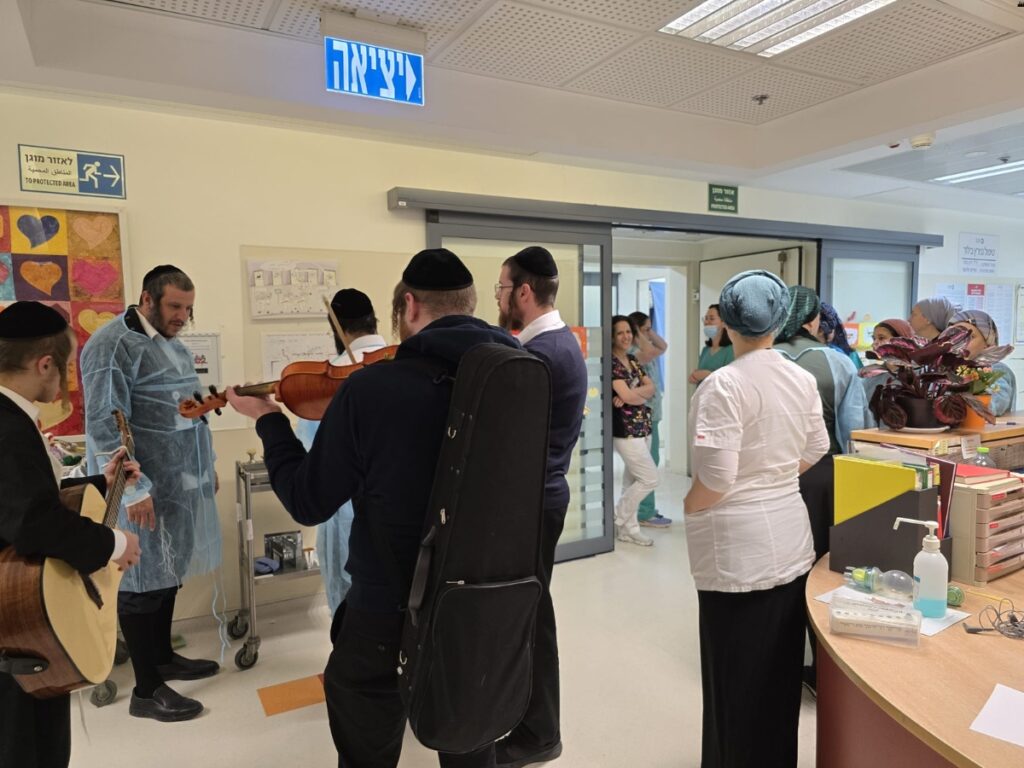
Rav Zilbershtein responded that the gemara says nothing is more important than pikuach nefesh, and bring cheer and joy to sick people is a great mitzva. Also, we find that joy and happiness helps the healing process. So it is a great mitzva to go tot he hospitals and play music and sing and bring joy to the patients who have serious illnesses even during these difficult days of mourning...
source: Haredim10
------------------------------------------------------
Reach thousands of readers with your ad by advertising on Life in Israel
Reach thousands of readers with your ad by advertising on Life in Israel
------------------------------------------------------
Jul 14, 2026
Interesting Psak: Shabbos elevator in RBS D
This exact story happened in my building 25 or so years ago. I personally was involved in the sense of helping an elderly and unwell neighbor who lived on a higher floor. At the time the people involved did not go to a beis din but went to a local rav to resolve the dispute.

Behadrei is reporting on a dispute in a building in RBS D. The building is 8 stories tall and residents living on the upper floors (including an elderly resident) want to use the Shabbos Elevator that was included in the building by the original kablan, which they iostensibly planned to benefit from when they bought their apartments, and everyone who purchased in the building knew this was an included feature which their apartment price included. They say they purchased the right to use the Shabbos elevator. Preventing them form using it will prevent them from being able to be mobile in general and even from going to shul sometimes on Shabbos and holidays.
Other neighbors oppose the use of the Shabbos elevator in the building in which they reside. They make claims of it being harmful to the education of their children, damaging to the spiritual atmosphere of the building and neighborhood.
Unable to resolve the matter amongst themselves, they agreed to go to a beis din for a decision.
The beis din heard both sides and their positions, and after weighing the matter has come to a decision.
The beis din stressed the issue of the holiness of Shabbos, the special charchter of Bet Shemesh and the sensitivity of the Haredi community to the operation of electrical systems on Shabbos, while also taking into consideration the the rights of the residents who purchased this ability when they purchased their apartments and that the shabbos elevator was installed as an original part of the building (rather than them requesting to add it at a later stage).
The beis din came up with a plan for a comprise by which the Shabbos elevator would be operating on a limited schedule, only certain hours of the day rather than over the entire Shabbos, and some other limitations (I imagine only stopping on the upper floors and the ground floor but not on the lower residential floors). Efforts will be made (nothing is specified so I do not know what the efforts are in real life) to minimize the sense of harm to the charachter of Shabbos, while filling the needs of the residents on the upper floors.
in the case that I was familiar with 25 or so years ago the rav they went to said the Shabbos elevator cannot be relied upon (he did not like the shabbos mode and considered it halachically problematic even bdieved) so the Shabbos elevator was not allowed to go into operation and the fellow above had to stay put on Shabbos and yomtov.
------------------------------------------------------
Reach thousands of readers with your ad by advertising on Life in Israel
Reach thousands of readers with your ad by advertising on Life in Israel
------------------------------------------------------
Jul 13, 2026
Interesting Psak: Registering in the Likud to vote in Primaries
Recent news reports have made references to various Haredi askanim who are powerful, or maybe influential is a better word, in the Likud because they register thousands of Haredim as members of the Likud. The general thought is that most have no intention to vote for the Likud but will continue generally voting for UTJ, but being a registered member of the Likud gives them the ability to vote in the primaries and influence the Likud to take positions closer to what the Haredi community or political parties want.
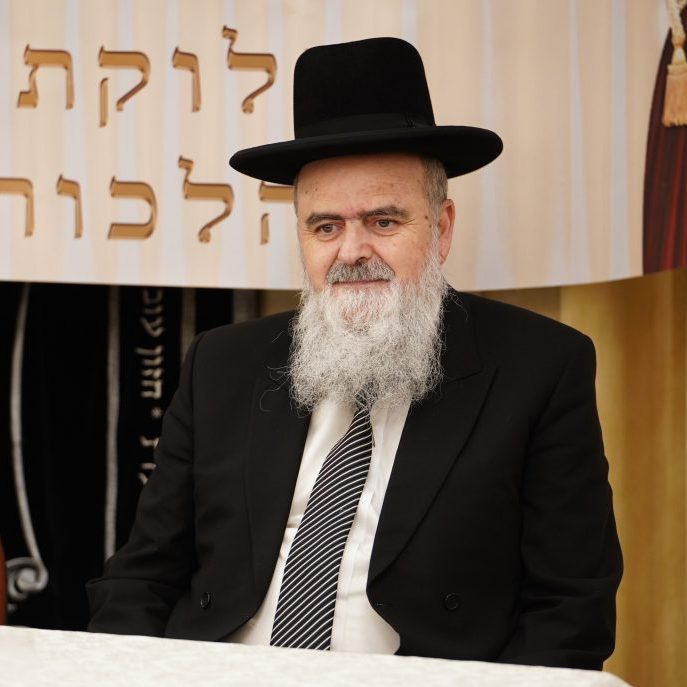
On Kol BeRama radio Rav Ahron Butbol was asked a quesion about this type of behavior.
A listener asked if it is ok to register for Likud membership so as to support a specific candidate who is religious in his candidacy for a slot on the Likud list. the questioner mentioned that until now he has refused to do so so as to avoid strengthening a secular political party, but ont he other hand perhaps continuing to refuse actually leaves the field open to anti-religious elements and leaves it open to the opposite of what he wants - he wants the Likud to get closer to more religious positions, but leaving it because it isnt a religious party (at least officially) leaves it to be more influenced by anti-religious...
Rav Butbol said that on election day voting for a secular party is a problem because that strengthens a secular party, but the request here is not to actually vote for the Likud but to register so as to vote in the primaries and support a religious candidate. It is problematic to do so because the Haredi public is committed and obligated to vote for the Haredi and religious parties. However, registering for internal elections is a tool to influence the identities of their representatives and is not necessarily considered supporting the platform of the party.
Rav Butbol points out there were three Likud MKs who torpedoed the progress of the Draft law. The PM could not do anything about it. They were elected to Likud slots in the Likud primaries. If the public with a connection to tradition would be more involved in the internal elections in the Likud, candidates who keep tradition and religious values can be elected and the Likud could be turned into a party that protects the Torah world more.
Before continuing I would note that MKs Edelstein and Ilouz are both religious and still chose to oppose the law that was being presented.
To conclude, Rav Butbol paskened that if the candidate is recognized as a good decent person with a strong and true connection to religion and tradition, there is a strong reason to register to help him be elected. This would not be considered "assisting a chilul hashem" but the exact opposite - strengthening the Torah positions in other political strongholds.
------------------------------------------------------
Reach thousands of readers with your ad by advertising on Life in Israel
Reach thousands of readers with your ad by advertising on Life in Israel
------------------------------------------------------
Jul 6, 2026
Interesting Psak: Tiveria or Tiveriah?
Names are very important in halacha. Not just what the name is but also how the name is spelled. And not just names of people but also names of places.
I always found the specificty of how names of places or even names when being transliterated from a foreign (ie a language other than Hebrew) language to be somewhat inane as the entire spelling is really made up so as long as it sounds accurate, does it really matter halachically if it is spelled with an aleph here or there, an aleph or a hei or an ayin, a tet or a tav, etc? is one really more right than the other? I am not talking about names that are Hebrew names that have sources for the spelling (though someone might create a name that is a derivative of a name like that and spell the new name slightly differently...), but names that are really foreign names being spelled in Hebrew.
Despite my feeling that being specific regarding the spelling of names that are not originally Hebrew is inane, halacha and batei din place great importance on the "correct" spelling of names, including the spelling of non-Hebrew names being written in Hebrew. This is important in beis din for all sorts of contracts and ketubas, and even treated with greater importance regarding the writing of a gett, the divorce document.
Tiberias has been an inhabited city for over 2000 years. It is a question or debate if Tiberias has the status of a walled city from the time of Yehoshua, Joshua, when the Jewish nation entered the land of Israel (though it might have existed under a different name back in those days, with the more modern city of Tiberias been built later on the ruins of those more ancient towns, whatever - point being, it is a very old city and has been around since biblical times in some form or another).
The Eida Hachareidis is, reportedly, now debating and coming to a conclusion as to the proper spelling of the name of the city Tiberias. According to Bechadrei, they began debating if the properlys pelling in Hebrew has the word ending in an aleph or hei - טבריה or טבריא... how has it been spelled until now? how were gittin and kesubas written in Tiberias until now? I don't know but suddenly it became a question for the Eida.
To cut to the chase, Rav Avraham Yizchak Ulman, a dayan of the Eida, concluded after much research that it should be spelled with a hei, טבריה.
According to the article, with the recent expansion of the Haredi community in Tiberias the discussion of the proper spelling has been renewed and discussed, with Rav Ulman now coming to the above conclusion.
------------------------------------------------------
Reach thousands of readers with your ad by advertising on Life in Israel
Reach thousands of readers with your ad by advertising on Life in Israel
------------------------------------------------------
Jun 23, 2026
Interesting Psak: Shabbos Kipa
Rav Bentzion Hakohen Kook, a rav in Petach Tikva and dayan in Jerusalem, recently discussed a halacha during his weekly shiur that it is recommended to not wear clothing on Shabbos that you wear during the week.
One of the attendees asked if practically one must have a unique clothing item designated for Shabos or can one wear clothes, such as a shirt, that he also wears during the week as long as it is laundered for Shabbos?
Rav Kook responded paskening that clothing that gets laundered regularly, such as shirts for example, can be worn on Shabbos after having be en laundered. There is no need to have unique shirts designated for Shabbos, just launder them for Shabbos. Clothing items that are not normally laundered regularly, such as tallis katan and a kipa, should be designated and unique for Shabbos.
Rav Kook mentioned that he himself saw this by Rev Elyashiv, his rebbi, and has been doing it himself since; Rav Elyashiv had a hanger with his Shabbos clothes prepared in the closet that held his Shabbos pants, tallis katan, kipa and a vest, all specifically designated for Shabbos. Rav Elyashiv did not have a shirt designated for Shabbos, but would change to a freshly laundered shirt before Shabbos.
According to Behadrei, since this psak was recently publicized there has been a run on kipas and tallis katan in the stiores as many people are running to get themsels new kipas and tallis katan that they would designate just for Shabbos use... When Rav Kook heard about this he gave his approval and said anyone who does thhings for the glory, the honor, of Shabbos will definitely receive the merit of the Shabbos providing protection for him and it will be a segula for protection, and will be given unlimited bounty (as promised in the gemara)....
Personally I have had a designated tallis katan for Shabbos for many years as an adult, for as long as I can remember. When I get a new tallis katan, I generally will rotate it in making the new one my "Shabbos tzitzis" and move my previous Shabbos tzitzis into my weekday lineup... I never had a special SHabbos kipa - maybe it is time to get one... back when I used to regularly wear a black hat, I did have a hat designated for Shabbos..
------------------------------------------------------
Reach thousands of readers with your ad by advertising on Life in Israel
Reach thousands of readers with your ad by advertising on Life in Israel
------------------------------------------------------
Mar 12, 2026
Interesting Psak: serving with women in armored vehicles
Recently reporesentaives of the Dati Leumi community, especially rabbonim in the ocmmunity, have made a big deal about an army logistical change in which female soldiers are being taken to serve in the armored corps, most notably in hummers and namers. They are generally serving in these vehicles as either drivers or paramedics. Traditionally the armored corps is a division that the Dati Leumi community frequently sent its soldiers, especially hesder students, to serve in. The community reps, especially the rabbonim see this as a breach of tzniyus and have basically considered this a "breach of contract" of sorts (figuratively speaking) with the dati leumi community, and if necessary they will instruct their students to serve in other divisions instead.
On this topic, INN brings a psak from Rav Dovid Fendel, Rosh Yeshiva of the Yeshiva Hesder Sderot, after being asked by some soldiers what to do in such a situation, would they be able to be in the vehicle when the hummer driver is a female or if a female paramedic is assigned to their armored vehicle, etc..
Rav Fendel, with other rabbonim of the yeshiva, said that the Rama is lenient about yichud in certain situations (specifically 1 woman with 3 men present) but in today's reality it would be difficult to rely on this - the Ramas leniency is when the people involved are kosher and not "prutzim" but today we are all exposed to inappropriate content online so it would be difficult to meet the standards of kosher for this leniency to apply.
Additionally, the reality of the situation is that other problems also exist, such as being in the vehicle for long periods of time would lead to violation prohibitions of looking at women, joking and talking with women and inappropriate thoughts.
The rabbonim said that from what they have been told by many soldiers in these situations, being in these situations of a crowded and cramped military vehicle and how at times it can be difficult to avoid even physical contact, among the other problems already mentioned. Therefore, Rav Fendel and the rabbonim have pasked for their soldiers to avoid these situations. A soldier caught in such a situation should complain to his commander and to the IDF Rabbinate to not allow such yichud. EVen in times of war this is a problem as in times of war and great distress, more safeguarding of the holiness of the camp is warranted..
Similarly, Srugim brings a similar psak from Rav Aviner, though not form a yichud perspective, makng it slightly different than Rav Fendel's psak.
Rav Aviner was asked about the same situation - 3 religious soldiers serving in a hummer with a female soldier as a paramedic or driver, what should they do?
Rav Aviner responded that this is not allowed but not really from a yichud perspective. The issue of yichud does not really apply. The issue really is one of "gas libo" - when people are familiar and confortable with each ther after spending time together and experiencing experiences together (such as in an army vehicle possibly experiencing some harrowing circumstances).
The problem here is less yichud and more the issues of looking at women, talking and joking with women. When serving many hours of the day together in a ttight army vehicle, these situations would be unavoidable.
Practically speaking, Rav Aviner said this situation should be stopped right away. Religious soldiers cannot let themselves be in such a situation. They should request to not serve with a female paramedic/driver. If the commanders ignore these requests, the soldiers should respond saying these instructions are in contradiction to the terms of the shared service agreement. If the commanders continue to force them to serve like this, they should refuse to serve, even at the price of being thrown in the brig.
If this situation is made permanent, the soldiers should be told to not induct to those units and more.
------------------------------------------------------
Reach thousands of readers with your ad by advertising on Life in Israel
Reach thousands of readers with your ad by advertising on Life in Israel
------------------------------------------------------
Mar 2, 2026
Interesting Psak: Stuck in the wrong place because of the war
The posek Rav Moshe Bransdorfer was asked about people who are stuck far away from home because of the war, whether it is people from Yerushalayim stuck abroad or people from abroad who are stuck in Yerushalayim, and they have not been able to travel back home for Purim as they originally intended - when should they read megilla and fulfill the obligations of Purim?
Personally I would not have thought there is even any quesion here. You observe the obligations of Purim according to where you are on the 14th and 15th of adar. Being stuck somewhere does not make a difference.
Rav Bransdorfer thinks otherwise. The rabbi quoted the Shulchan Aruch and Mishna Berura who say that because oen is stuck in another place against his will, he should read megilla and fulfill the other obligations according to the appropriate day of his real place where he intended to be, not where he happens to be stuck.
So, according to that, someone from Yerushalayim stuck abroad, say in New York, because of the war but had intended to be back home for Purim, should celebrate Purim in New York on the 15th of Adar even though he is in New York and everyone else is celebrating on the 14th. Good luck finding a minyan that will read the megilla on the 15th...
And, someone from New York who got "stuck" in Jerusalem because of the war but had originally intended to be back home by Purim should celebrate in Jerusalem on the 14th even though everyone else there is celebrating on the 15th. In this scenario there is an easy solution to go to a different city for Purim, like Bet Shemesh or Bnei Braq or Efrat or wherever and celebrate on the 14th with everyone else. And then maybe go to Jerusalem to celebrate again on the 15th like the way a lot of yeshiva boys do.
Rav Bransdorfer says the rule for this is that it depends where you intended to be when you traveled form your house to somewhere else - if you intended to be back home, celebrate as if you are home, and if you intended to be away, celebrate as if you are away.
Rav Bransdrfer does suggest because of it being a machloket, even though he paskens as above, that one could celebrate on both days to fulfill all opinions and obligations
source: Haredim Yerushalayim
------------------------------------------------------
Reach thousands of readers with your ad by advertising on Life in Israel
Reach thousands of readers with your ad by advertising on Life in Israel
------------------------------------------------------
Interesting Psak: megilla during war
Chief Rabbi Rav Dovid Yosef published instructions and piskei halacha for behavior during Purim in light of the war and ongoing rrocket attacks from Iran...
To start, Rav Yosef stresses that everyone must adhere to the guidance and rules of Pikud Haoref, the Home Front Command and due to concerns of danger to life, one must not act against that guidance. This takes much higher precedence over any hidur mitzva one might try or want to accomplish for Purim.
One of the biggest concerns and uncertainties is regarding the readig of Megillas Esther. Rav Yosef paskened that while normally we prefer to go to hear the megilla with a big crowd (brov am hadras melech), in a busy shul, this year with the instructions being to not congregate with crowds in unprotected areas due to the level of danger, this year it is preferrable to forgo the big crowds and read the megilla in a safe area such as in a bomb shelter or safe room that can only hold a smaller group. This holds true, he says, even if that means one would read it alone or without a minyan of ten men.
Rav Yosef did qualify the above by saying that while reading alone is fine, listening to a megilla reading via zoom or over the radio or youtube would not fulfill your obligation.Someone who does not have a kosher megilla and cant get to a safe reading should read it himself from a chumash without a bracha and should also say full hallel without a bracha.
Regarding soldiers in the field who might not be able to get to a megilla reading while on duty or in an active operation, Rav Yosef said soldiers in this situation can be lenient and read the megilla from as early as plag mincha if possible.
If a siren blares while reading the megilla one must immediately stop and go to the safe room or shelter and then continue reading after from the point you stopped at, rather than starting again from the beginning.
source: Hamechadesh
A question I would like to have heard something about s what do Israeli agents or pilots flying or operating ni Persia do about megilla reading - should they read on the 14th or 15th of Adar?
------------------------------------------------------
Reach thousands of readers with your ad by advertising on Life in Israel
Reach thousands of readers with your ad by advertising on Life in Israel
------------------------------------------------------
Feb 23, 2026
Interesting Psak: hat and jacket for bentching
Rav Aharon Butbol was asked by a yeshiva bochur about the need to don a black hat and jacket for the purpose of bentching.. how necessary is it really?
Rav Butbol responded paskening that technically there is no need to wear a hat and jacket for davening. The problem is, which the hat and jacket resolves, that a head covering has to cover the majority of the head for it to be considered a valid head covering The modern bochurim wear such small kipas it has become necessary to wear a hat for davening to fulfill the halacha of having the head covered. Yeshiva bochurim, a ben torah, should wear larger kippas, specifically a size 6 or 7.
Rav Butbol said that for bentching there is a halachic preference to be "wrapped" - Ituf as we do for davening with a tallis. The jacket accomplishes the need for ituf, but it is not absolutely necessary rather only a midat chassidut.
Also, if someone accepted on himself to don his hat and jacket for bentching, after 3 times it does take the status of a neder and if one wanted to stop doing that he would need to do hatarat nedarim, unless he includes that in the hatarat nedarim done on erev Rosh Hashana.
source: Kol B'Rama
------------------------------------------------------
Reach thousands of readers with your ad by advertising on Life in Israel
Reach thousands of readers with your ad by advertising on Life in Israel
------------------------------------------------------
Feb 4, 2026
Interesting Psak: reporting or helping reckless drivers
In a halacha "shiur" on Radio Kol BaRama, Rav Shai Tchan, head of the Beit Horaah Arzei Halevanon of Brooklyn, discussed halachic issues of using Waze for navigation.
Rav Tachan began discussing reckless drivers saying there is a mitzva to report such drivers as they have the status of rodef on the roads. It is not allowed to report reckless drivers, it is an obligation to report reckless drivers. Also, if you capture reckless driving ona dashcam it is a mitzva to report it to the authorities.
What about reporting the presence of police in Waze so other drivers know police are in the area to slow down in advance or drive safer (eg put away the phone they are using, etc) - on the one hand when you report police presence it causes drivers to slowdown, which is a good thing. On the other hand, reckless drivers will use it to avoid punishment and will continue driving recklessly with nothing to deter them.
Rav Tachan paskened that the purpose of the police presence on the roads is to ensure safe driving. Helping people avoid the police is problematic. It is prohibited to help a reckless driver avoid the police and to avoid the law. Better that he should be arrested, pay his fine and learn his lesson than continuing to drive recklessly..
When someone is putting the public in danger, the concept of "moser" does not apply. A person driving recklessly can be reported without any concern of being considered a moser as he is putting the public at risk.
I would further ask, is it ok to report police as being present on a road even when they are not so as to cause reckless drivers to drive safer?
------------------------------------------------------
Reach thousands of readers with your ad by advertising on Life in Israel
Reach thousands of readers with your ad by advertising on Life in Israel
------------------------------------------------------
Jan 6, 2026
zoning issue shuts down Chabad House
There was an interesting court case in the town, or suburb, of Savyon.
The local Savyon Chabad shliach, Rav Shmuel Bistriztky, opened a Chabad house in his home.
Over time some of his neighors did not like the Chabad house functioning in the middle of their neighborhood, on ther street or whatever, and started to file complaints against the Chabad house. they complained about the traffic it was bringing to their streets, the lack of adequate parking, causing decrease in property values, and ultimately zoning violations as the house is zoned for residential.
The municipal Planning Board that deals with land use and zoning issues discussed the complaints agaist the Chabad House and decided it was a violation of the zoning and was illegal usage of the property.
Eventually a compromise was reached between the munipality and Rabbi Bistritzky, signed off on by the courts, to disallow using a private house as a Chabad House.
Bistritzky eventually changed his mind and appealed the compromise he had previously agree to. He appealed to the courts to reverse the decision. Rav Bistritzky is concerned that this agreement would have a negative impact on Chabad Houses across the country. It might also cause roblems for anybody around Israel who might want to hos a minyan in his house - because he does not believe at all in the zoning rules and does not want his compromise to pull the rug out from anyone else who might be trying the same thing.
The attorney for the municipality responded to the court saying this was a certified and verified compromise that Rabbi Bistrizky is now trying to get out of.
Rabbi Bistritzky's attorney responded that this would set a serious precedent in Israel. Even in the Supreme Court there are minyanim and services, do you want to send us back to the times when we had to hide and pray in secret places?
source: Haredim10
The argument is funny. The Supreme Court building is not a private house in a residential neighborhood. And either there is a room designated for services in the building (like in the Knesset) or the minyanim there are ad hoc, not formalized. And, nobody is saying it is illegal to pray and forcing them to go underground - the issuze is simply zoning. Get an allocation of land designated for public use and build a Chabad House on it, or buy/take over a public building that is available. Praying is nt illegal, and an ad hoc minyan here and there in someone's house will likely be ignored. Turning a home on a quiet street into a busy public institution is the problem.
MK Galit Sital Abtaryan's bill allowing public expression of religion has not passed yet, but even if it had I dont think it would help this case. This is simply a zoning issue regarding misuse of private property..
------------------------------------------------------
Reach thousands of readers with your ad by advertising on Life in Israel
Reach thousands of readers with your ad by advertising on Life in Israel
------------------------------------------------------
Dec 9, 2025
Interesting Psak: Fantasy Footbal coaches should not be witnesses
I have always been a fan and follower of various sports and teams, and when possible have also been pretty active in participaing in a variety of sports activities over the years... but I never got into the fatasy sports like Fantasy Football.. it just never interested me. I like sports but fantasy sports never seemed like being involved in sports.
And I guess it is a good thing. Until now I was not aware there was a halachic discussion about Fantasy Football and that it is such a big issue and debate in the frum community.
I just saw an article in JewishLink in which Rav Haim Jachter relates to some other articles on the issue and himself paskens that people who play Fantasy Football are not technically passul to be an eid, a witness, but such people should not be chosen lechatchila to be a witness.
Rav Jachter refers to recent public positions offered by Rav Yehuda Avner (probably not the aide to several Prime Ministers and auther) and Rav Rothwacs, so it seems to be a hot topic right now for whatever reason.
The issue is really about gambling and addiction, not fantasy football per se, but fantasy football is the manifestation of the gambling addiction that is currently under scrutiny in the frum community.
Rav Jachter refers to several poskim over the years that have taken strong positions against any form of gambling and the strong addiction that follows such involvement. You can read the articleif that interests you.
Besides for the psak of preferably not taking someone involved in Fantasy Football as a witness, the more interesting conclusion from the article to me is that sports is good clean fun, both competing in sports activities and also ffollowing sports and teams.
I am used to rabbis talking about sports, especially following sports while playing sports has the redeeming factor of health and fitness, as narishkeit, as something to keep the goyim busy and off the streets, as being a big waste of time. In this article he refers to Rav Avner who complains that novody just watches sports nowadays (I do) but people watching sports feel they need to place a bet on the game to make it mroe exciting... and then Rav Jachter himself wanes nostalgic about his growing up enjoying sports with his sister and father and not understanding how his mother did not and calls it a reasonable and often necessary outlet, a happy diversion, but then explains it should not become a sick obsession with people wasting lots of time on especially with fantasy sports that causes them to spend many housr watching games and keeping up with whats going on so they can construct their teams and whatnot...
so the psak is interesting, and the rabbinic nod to sports is refreshing
------------------------------------------------------
Reach thousands of readers with your ad by advertising on Life in Israel
Reach thousands of readers with your ad by advertising on Life in Israel
------------------------------------------------------
Dec 7, 2025
Interesting Psak: Haredi women bus drivers
A group of rabbonim in Tzfat (with the support of some national rabbonim) have decided to take on the phenomenon of Haredi women becoming bus drivers. The rabbonim have issued a psak that being that it is already prohibited for women to drive cars, how much mroe so it is prohibited to go down several levels and drive busses.


The rabbonim say that the gedolei yisrael consider it a breach in the guidelines of tzniyus for a woman to drive a car. They never even imagined that the women would go down so many levels backwards and be drivers for public transportation.
The truth is, they say, that even for gentile women it is inappropriate to be such drivers, and the best of them would not lower themselves to take such lowly work, and for sure, how much more so, Haredi women shouldn't.
They then put out a call for those Haredi women who have already been susceptible and been seduced to take this lowly work to resign immediately and look for jobs more in line with the guidelines of tzniyus and halacha..
source: Behadrei
I can udnerstand them being against Haredi women drivers. They, the rabbis of the more extreme Haredi groups, always were, and driving a bus is much more out there than driving your own car, so it makes sense they would oppose it strongly.
But why is driving a bus such a lowly position? Talk aboutt zniyus and what is or isnt appropriate for a Haredi woman, but why put down all bus drivers and call it such degrading work?
As the expression goes, .כל עבודה מכבדת את בעליה - all work dignifies the person doing it. No matter the job, no matter the work, if the person does it with dignity and responsiblity and honesty, it is a dignified work to be done. No need to put down all bus drivers.


------------------------------------------------------
Reach thousands of readers with your ad by advertising on Life in Israel
Reach thousands of readers with your ad by advertising on Life in Israel
------------------------------------------------------
Dec 4, 2025
Interesting Psak: original deal verified as valid for Satmar
Last week we mentioned an interesting case brought to beis din by tzimmer or guest house/hostel owners who felt duped by Satmar by renting at their regular price for the recent Satmar shabbos event in Meron rather than increasing the price as they would have had they known in advance that Satmar was planning to descend on their locale...

The beis din has now issued its ruling, and it is pretty much as expected.

First, they profited just fine, even if they could have profited more had they known and chosen to take advantage of that information.
Second, there is no cause to cancel the business deal retroactively and it is not a "mekach taus" - the agreements they signed are in effect, even if in hindsight it turned out to be a better deal for one of the sides rather than the other.
Third, the community looking for rentals is under no obligation to reveal its plans in advance and cannot be expected to knowing it would increase their costs unfairly. They have the right to conduct their business wisely to get reasonable prices.
It was a silly claim in the first place suggesting Satmar had to give the owner the opportunity to take advantage of them.
------------------------------------------------------
Reach thousands of readers with your ad by advertising on Life in Israel
Reach thousands of readers with your ad by advertising on Life in Israel
------------------------------------------------------
Jul 29, 2025
Interesting Psak: Laundry Motzei 9 Av
Rav Bentzion Hacohen Kook, one of the leading Poskim nowadays, was asked by a leading Rosh Yeshiva about doing laundry on this coming Sunday night, Motzei Tisha B'Av.
The question asked was about yeshiva bochurim who will be going to their camps on Monday, the day after Tisha B'Av, and need to do laundry Sunday night to prepare for their trip away.
To point out - the custom is that during the Nine Days we do not do laundry (caveat that Sephardim do laundry except for the week of Tisha B'Av itself and there are possibly some other customs as well). This has been extended to the night after Tisha B'Av to commemorate that the main burning of the midash actually happened on 10 Av so we refrain from laundry and other restrictions until noon of 10 Av.
So the Rosh Yeshiva asked the Rav was about these young men who cannot wait until the 10th because they will be going away and need the laundry den before that? And also, what about for people who will be getting married on Monday, can they do laundry on Sunday night in preparation for the wedding?
Rav Kook answered with an explanation he heard from his rebbi, Rav Elyashiv.
Rav Kook said that the bride and groom themselves (not guests or family members) can start doing the needed laundry on Sunday night, while other family members can start doing their laundry Monday morning without waiting for mid-day. People who will be traveling on Monday can do laundry on Monday morning before mid-day. At the end of the day, the custom to not do laundry is just a custom.
I am not quite sure what that last comment means. Customs are considered pretty important, especially customs brought in the actual Shulchan Aruch and commentaries.. dismissing it as "just a custom" seems out of character, but it gives me leeway on lots of things!
Regarding the campers laundry question, Rav Kook said that the comment about someone traveling on 10 Av was regarding someone traveling to perform a mitzva. It is not clear if one is traveling not for a mitzva but for personal reasons and benefits if this would be allowed. Rav Kook concludes though that if any aspect of a mitzva is involved, one can be lenient and do laundry on Sunday night. Yeshva bochurim going on Monday, 10 Av, to camp under the auspices of the yeshiva, is surely involving a mitzva in some way as it will include chizzuk, or inspiration and the boys strengthening themselves religiously, so they can surely do laundry on Sunday night. Better, if possible, to wait until the morning but if that is not possible, laundry can be done Sunday night.
source: Behadrei
------------------------------------------------------
Reach thousands of readers with your ad by advertising on Life in Israel
Reach thousands of readers with your ad by advertising on Life in Israel
------------------------------------------------------
Jul 9, 2025
Interesting Psak: sensors and safety features
In light of some recent tragedies in Bet Shemesh in which young children playing in the parking lots of their buildings were hit and injured/killed by cars driving through (backing up), some rabbis of the local communities have come out issuing an interesting psak..
To note, kids commonly ignore cars and drivers and continue to ride their bikes and scooters and bimbas weaving in and out and around the cars trying to carefully maneuver through the lot. Granted, the driver has to always be extra cautious, but the kids are way too flippant about the dangers. The parking lots are made for cars but are also used as playgrounds by the children of the adjacent buildings and this causes an inherent danger. As I once heard said, pedestrians may generally have the right of way but it doesn't help much if they dont want to spend months recuperating from an injury or have to undergo operations and needless to say if killed.
That being said, back to the psak, so a couple rabbonim got together and issued a psak saying drivers need to drive slowly and carefully paying attention to their surroundings and residents and children and parents of children need to be careful and recognize that the parking lot is dangerous and kids should not be there playing unsupervised. Drivers should make sure to install in their cars whatever safety features and sensors that are available and can even pay for them with maaser money.


------------------------------------------------------
Reach thousands of readers with your ad by advertising on Life in Israel
Reach thousands of readers with your ad by advertising on Life in Israel
------------------------------------------------------
Jul 8, 2025
Interesting Psak: eating cholent during the week
Rav Yitzchak Zilbershtein, rav of Ramat Elchonon neighborhood of Bnei Braq, does not like the trend of the cholent shops people go to on Thursday nights to sit and enjoy some chulent... in Hebrew they are called Cholentiyot or Chontiyot.
Rav Zilbershtein really has two problems with the Thursday night cholent places, and they are not what I expected before reading the details.
Rav Zilbershtein was asked by some yeshiva bochurim about the appropriateness of going out for cholent on a Thursday night considering that cholent is a food that was specifically invented for the purpose of being eaten on Shabbos. Also, the cholent is not being eaten as preparation for shabbos, to make sure the cholent is good for Shabbos like people who taste a bit on Friday, but to enjoy a good dish on Thursday night, and now some have extended it and are opening earlier on Thursdays and even earlier in the week to serve cholent. And they put up big pots of cholent, not to sell cholent for shabbos but to eat during the week. So the question asked is if eating a shabbos food like cholent during the week is ok or if it is a problem and some sort of slight to Shabbos...
Rav Zilbershtein went through the potential issues and sources showing that it is important and preferred to designate a food to be special for Shabbos and one should not eat such foods during the week so as to properly honor the Shabbos with these designated foods.
Rav Zilbershtein mentioned people who had special foods for Shabbos and refused to eat them during the week, like the Arizal who wouldnt eat kugel during the week, and the Baal ShemTov who wouldnt eat "tzibbel" during the week, and the Chasam Sofer who wouldnt eat tzimmes during the week. And regarding cholent specifically which was actually invented to be specifically a shabbos food, for sure should be kept for Shabbos.
Rav Zilbershtein added that cholent is really not a healthy food and rabbonim over the years considwered that perhaps it should not be eaten but concluded that eating it on Shabbos is ok because Shabbos adds special bracha to the Shabbos food and provides protection from the unhealthy aspect of it. That bracha and protection only happens on Shabos, but if you eat cholent during the week, or other unhealthy foods, you are not protected and your health will be affected.
To conclude, Rav Zilbershtein pasked not to eat cholent during the week because:
1. it is important to keep the food designated for Shabbos enjoyment
2. it is unhealthy to eat cholent during the week because it does not get the protection awarded on Shabbos.
source: Hamechadesh
what if you dont usually eat cholent on Shabbos? Ok, you'll have to contend with the halacha about eating hot foods on Shabbos (which cholent was meant to satisfy), but you can eat other hot foods. If you designate a different food for Shabbos instead of cholent can you then eat cholent during the week? it might be unhealthy but is it really worse than ice cream or skittles or chocolate cake or fried foods, especially if only eating one portion once a week or once every few weeks?
------------------------------------------------------
Reach thousands of readers with your ad by advertising on Life in Israel
Reach thousands of readers with your ad by advertising on Life in Israel
------------------------------------------------------
Jun 26, 2025
Interesting psak: paying for gan during war closure
An interesting question arose as a result of the war with Iran.

As the State of Israel ordered everything to be shut down, pretty similar to the days of Corona, schools and gans also were shut down for about two weeks or so. Schools and gans run by the State followed specific rules and they have procedures in place. The parents of children who sent their kids to private gans, nurseries and kindergartens, ran into a question - should they pay for the two weeks despite not being allowed to send their kids to school or should they not have to pay.
A rav in RBS D, Rav Yehuda Halevi Rubinstein, came out issuing a psak for these situations.
Rabbi Rubinstein says that payment for the period of forced closure due to the war to private gans and daycare sites should follow the following guidelines..
1. Any days the child was sent to gan must be paid for in full
2. Any days the children were not sent, either because of the ganenet or because of the parents, payment to the tune of 50% should be paid (based on the compromise of the Chasam Sofer)
3. Parents that paid in advance should get a refund according to the above calculation
4. Any ganenet that was paid by the State as restitution for losses caused by the war should refund parents money accordingly (depending on percentages of restitution, etc)

------------------------------------------------------
Reach thousands of readers with your ad by advertising on Life in Israel
Reach thousands of readers with your ad by advertising on Life in Israel
------------------------------------------------------
Interesting Psak: Special Needs status
Generally speaking, probably with exception, children who have been diagnosed and categorized as "special needs" children have been considered, again generally speaking, exempt from mitzvot under the category of being a "shoteh".
Rav Yitzchak Zilbershtein, rav of Ramat Elchonon neighborhood of Bnei Braq, is upending that categorization with an interesting psak he issued while talking with the head of Petachya about what gives a person the status of shoteh in halacha.
Rav Zilbershtein paskened that not always is a child who was determined to be "special needs" by the kupat cholim or by the people on the street (whatever that means) also in the category of shoteh. There are special needs children who function at a higher level and have some level of understanding and wisdom. Such children, despite their limitations in some areas would not be considered a shoteh and would be obligated in commandments like anybody else.
Rav Zilbershtein said that the modern world, affected by influences from England, Romania and Hungary, are at times mistaken in their evaluation of such children. The halachic criteria for this is not a medical condition but their level of understanding and it requires a deep inspection of the child's capabilities.
Rav Zilbershtein referred to a case brought before him. A father wanted to know if his special needs 13 year old son is obligated in mitzvos. Rav Zilbershtein performed a simple examination of the child to determine that. he asked the child if he knows when the shofar is blown. The child knew it is on Rosh Hashana and talked about what else is done on Rosh Hashana. Rav Zilbershtein also asked about going to the store to buy something and getting change, and the child understood the concepts.
Rav Zilbershtein said that according to the Torah a child that understands such basic concepts is considered a mentally capable adult. Anyone making a determination based on any other criteria is the one who is misguided one, not the children..
Rav Zilbershtein says Rav Elyashiv approved this method of evaluating the child. Only Torah-based evaluations can determine the status of a child, not secular or medical criteria alone.
If someone has a question about whether his child is a shoteh or not should speak with his rav for an evaluation or with a gadol byisrael..
source: Kikar
------------------------------------------------------
Reach thousands of readers with your ad by advertising on Life in Israel
Reach thousands of readers with your ad by advertising on Life in Israel
------------------------------------------------------
Jun 22, 2025
Interesting Psak: no tachanun
Rav Shmuel Eliyahu, Chief Rabbi of Tzfat, issued a psak this morning decreeing that tachanun should not be said during the services today. Additionally we should all make the bracha of Hatov V'Hameitiv, and say Mizmor L'Toda.
Rav Eliyahu explained that having received the good news we have waited for so long, to remove the horrible Iranian threat, requires us to say a full throated thank you. When we thank God, the bounty flows even more. God gives the counsel and the strength to the leaders of Israel to succeed, to the government and the army and to the President of the USA.
source: Arutz7
I havent yet seen anyone say anything about Hallel, with or without a bracha
------------------------------------------------------
Reach thousands of readers with your ad by advertising on Life in Israel
Reach thousands of readers with your ad by advertising on Life in Israel
------------------------------------------------------
Subscribe to:
Posts (Atom)
Related Posts
