
Showing posts with label Rav Yitzchak Zilbershtein. Show all posts
Showing posts with label Rav Yitzchak Zilbershtein. Show all posts
Jul 20, 2026
Interesting Psak: Music in the Hospitals
Rav Yitzchak Zilbershtein, rav of Ramat Elchonon neighborhood of Bnei Braq was asked if the groups of people who go to the hospitals top bring cheer to patients by playing music, singing and dancing can contiue doing so during the Nine Days or if they should not play live music during these days of mourning over the destruction of the mikdash?
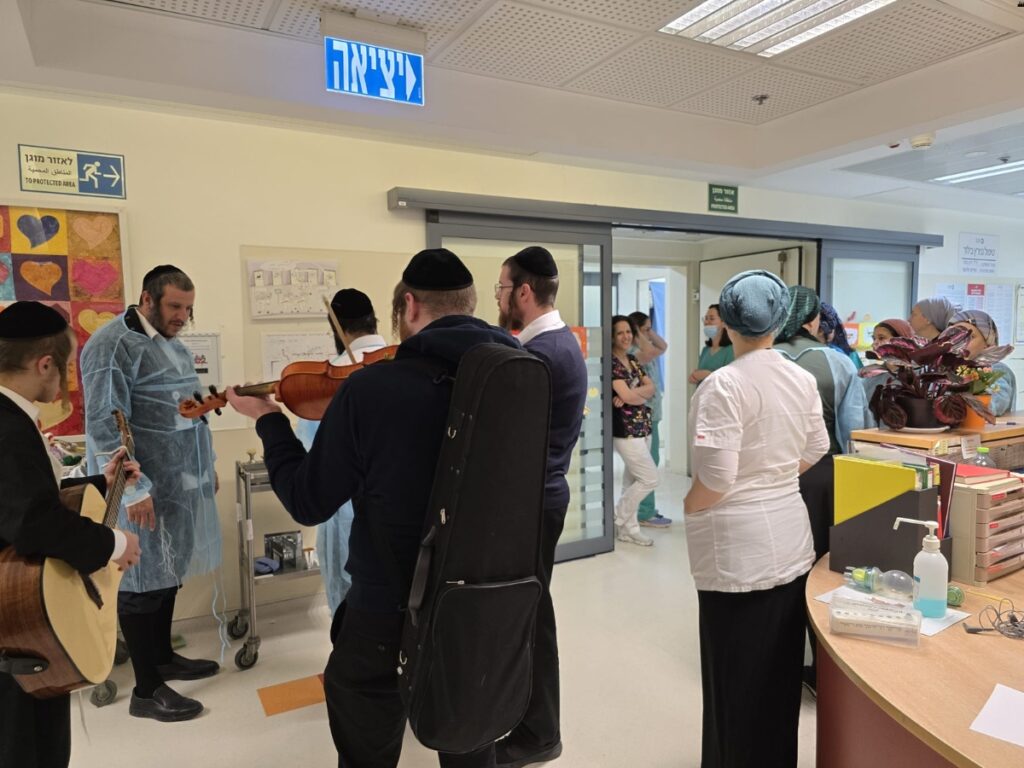
Rav Zilbershtein responded that the gemara says nothing is more important than pikuach nefesh, and bring cheer and joy to sick people is a great mitzva. Also, we find that joy and happiness helps the healing process. So it is a great mitzva to go tot he hospitals and play music and sing and bring joy to the patients who have serious illnesses even during these difficult days of mourning...
source: Haredim10
------------------------------------------------------
Reach thousands of readers with your ad by advertising on Life in Israel
Reach thousands of readers with your ad by advertising on Life in Israel
------------------------------------------------------
Jul 31, 2025
Desecrate Shabbos to run away
There was an emergency conference held by a group of rabbonim and Admorim regarding the situation with the Draft Law for the Haredi community. Rav Yitzchak Zilbershtein, one of the leading poskim of the generation, participated in this conference yesterday.
Rav Zilbershtein says that he said to Rav Abramski that he is shocked to hear that. Rav Abramski basically said what today would be converted to "hold my beer"... you think that is shocking? wait until you hear what I am about to say! Not only should people leave Israel but they should even be mechalel shabbos to run away from Israel if necessary!
I dont know or care much about what went on there and who said what, but Rav Zilbershtein did say something very interesting that I came across.
Rav Zilbershtein related that he had heard form his rebbi Rav Yechezkal Abramski. He says the psak Rav Abramski said was shocking and Rav Abramski had told him to publicize it but then Rav Abramski himself publicized it.
According to Rav Zilbershtein, Rav Abramski had paskened that there is a decree to join the army but it is very not appropriate. The halacha is that if we cannot work it out with the army and avoid the service then there is a mitzva upon each person to leave Israel and make every effort possible to not live here!
Rav Zilbershtein says that he said to Rav Abramski that he is shocked to hear that. Rav Abramski basically said what today would be converted to "hold my beer"... you think that is shocking? wait until you hear what I am about to say! Not only should people leave Israel but they should even be mechalel shabbos to run away from Israel if necessary!
source: Hamechadesh
That is shocking.
My [funny] response to that is that if one is already going to be mechalel shabbos one can also join the army and be mechalel shabbos!
------------------------------------------------------
Reach thousands of readers with your ad by advertising on Life in Israel
Reach thousands of readers with your ad by advertising on Life in Israel
------------------------------------------------------
Jun 26, 2025
Interesting Psak: Special Needs status
Generally speaking, probably with exception, children who have been diagnosed and categorized as "special needs" children have been considered, again generally speaking, exempt from mitzvot under the category of being a "shoteh".
Rav Yitzchak Zilbershtein, rav of Ramat Elchonon neighborhood of Bnei Braq, is upending that categorization with an interesting psak he issued while talking with the head of Petachya about what gives a person the status of shoteh in halacha.
Rav Zilbershtein paskened that not always is a child who was determined to be "special needs" by the kupat cholim or by the people on the street (whatever that means) also in the category of shoteh. There are special needs children who function at a higher level and have some level of understanding and wisdom. Such children, despite their limitations in some areas would not be considered a shoteh and would be obligated in commandments like anybody else.
Rav Zilbershtein said that the modern world, affected by influences from England, Romania and Hungary, are at times mistaken in their evaluation of such children. The halachic criteria for this is not a medical condition but their level of understanding and it requires a deep inspection of the child's capabilities.
Rav Zilbershtein referred to a case brought before him. A father wanted to know if his special needs 13 year old son is obligated in mitzvos. Rav Zilbershtein performed a simple examination of the child to determine that. he asked the child if he knows when the shofar is blown. The child knew it is on Rosh Hashana and talked about what else is done on Rosh Hashana. Rav Zilbershtein also asked about going to the store to buy something and getting change, and the child understood the concepts.
Rav Zilbershtein said that according to the Torah a child that understands such basic concepts is considered a mentally capable adult. Anyone making a determination based on any other criteria is the one who is misguided one, not the children..
Rav Zilbershtein says Rav Elyashiv approved this method of evaluating the child. Only Torah-based evaluations can determine the status of a child, not secular or medical criteria alone.
If someone has a question about whether his child is a shoteh or not should speak with his rav for an evaluation or with a gadol byisrael..
source: Kikar
------------------------------------------------------
Reach thousands of readers with your ad by advertising on Life in Israel
Reach thousands of readers with your ad by advertising on Life in Israel
------------------------------------------------------
Jan 22, 2025
Interesting Psak: Hostages on Shabbos
With the hostage deal having the hostages mostly returned to Israel on Saturdays, Kikar is reporting on an interesting psak by Rav Yitzchak Zilbershtein, rav of Ramat Elchanan neighborhood of Bnei Braq.
The mother of a hostage reached out with a particularly difficult and painful question, She asked what to do when her daughter, a hostage held by Hamas, will be released on Shabbos. She wants to know how to receive her daughter, can she go on Shabbos to the meeting point where the hostages meet their mothers before going on to the hospital for checkups and care.
Rav Zilbershtein told her not to go on Shabbos but to send a picture with a note saying I will see you in a few hours.
She pressed back saying I might not be able to hold back and I might feel I have to go. What should I do then?
Rav Zilbershtein said he told her that if God is so good to do an unnatural miracle to allow your daughter to survive more than a year in captivity, you should say thank you to Hakadosh Baruch Hu. While she said she would stay strong and not go, Rav Zilbershtein says he couldnt not prohibit her from going to greet her daughter but told her that it would be a tremendous blessing to not go on Shabbos. He also suggested on the Shabbos her daughter would be released she go nearby to the release point and stay there for Shabbos.
Rav Zilbershtein suggested in general people should take something obligating a shehecheyanu bracha and make the shecheyanu including keeping in mind the release of the hostages. He said he is going to make a shehecheyanu on a new tallis and have the hostages being released included.
------------------------------------------------------
Reach thousands of readers with your ad by advertising on Life in Israel
Reach thousands of readers with your ad by advertising on Life in Israel
------------------------------------------------------
Jul 30, 2024
Interesting Psak: Standing at Chuppa
I have foudn that while it is common for many to stand at a chuppa when the chosson and kalla walk tot he chuppa, some do not and prefer to sit.
The reasons I have heard are usually in favor of standing due to the status of the chosson and kalla as a king and queen. Another common reason I have heard is standing int he presence of the shchina due to a mitzva being performed. The reason I have heard against standing is that it is not a real custom but absorbed from the goyim.
I must say, this is far more common in the USA (and other countries?) - many chairs are put out. Most people sit, until the chosson and kalla come out and then many stand while some continue sitting. In Israel, very few chairs are usually put out, usually just for elderly grandparents (or others who cant really stand long enough for the chuppa) and most people stand for the entire duration of the chuppa.
Rav Yitzchak Zilbershtein, rav of Ramat Elchonon neighborhood of Bnei Braq, was recently asked about this. The petitioner mentioned that they had made aliya from abroad after they married and now they are marrying off a daughter who was born in Israel. The chosson was born abroad and doesn't live in Israel but is here learning in yeshiva and has been for a few years. Most of the family who will attend the wedding will be from abroad where the minhag is to sit at the chuppa. Because of that they had planned to arrange the chuppa with enough seating for the crowd, but perhaps that would be inappropriately changing the local minhag. What is the correct thing to do regarding the seating at the chuppa of this wedding?
Rav Zilbershetin responded paskening that the minhag is to stand at the chuppa and this was always done in Eretz Yisrael and in other countries, with only some communities in the USA changing from this custom, and not for good halachic reasons, so for this wedding in Israel they should stand for the chuppa even though the family will be coming from the USA. It is bad enough that they do not keep the proper minhag there, they shouldnt change it here as well, and the communities abroad should be influenced to adhere to the original custom and stand.
source: Hamechadesh
I found this interesting. I thought the reason so few chairs, if any, were set out at chuppas in Israel was just practical or just the way halls here do it due to there being not as much as space or not having enough chairs with them all being set in the hall for the meal and other reasons like that. I did not realize it was an actual minhag dictating this...
------------------------------------------------------
Reach thousands of readers with your ad by advertising on Life in Israel
Reach thousands of readers with your ad by advertising on Life in Israel
------------------------------------------------------
May 20, 2024
Interesting Psak: bracha on the death of Raisi
Rav Yitzchak Zilbershtein, rav of Ramat Elchonon neighborhood of Bnei Braq, was asked a shaila regarding current events.
The question was asked before the final confirmation that the Iranian president Raisi was dead, but was asked while he was presumed dead but the search was ongoing. The question posed was with the news that one of the greatest enemies who made a lot of trouble for the Jews has seemingly died. When we will find out that he definitely has died should one maker the bracha of Hatov VeHameitiv? On the one hgand it will be joyous news, on the other hand another enemy and hater of the Jews will be appointed in his place so maybe there is no place to make a bracha?
Rav Zilbershtein paskened that one should buy a new fruit and say a conditional bracha saying that if I can make the shehecheyanu on the news, I am making the bracha on both the fruit and on the news of Raisi's death, but if not then the bracha is only on the watermelon but not on the death of the wicked one.
source: Hamechadesh
------------------------------------------------------
Reach thousands of readers with your ad by advertising on Life in Israel
Reach thousands of readers with your ad by advertising on Life in Israel
------------------------------------------------------
Mar 20, 2024
Interesting Psak: Collecting for Tots
Rav Yitzchak Zilbershtein, in advance of Purim, answered a series of questions posed to him regarding halachos of yeshiva boys collecting money on Purim for the "tat" of their yeshivas - "tat" being an acronym for "tomchei torah" which is a yeshiva fund to help the needier students.. below are some of the questions and answers..
While this isnt relevant to the masses, it is still interesting...
Q: When entering a building to knock on doors for collecting money, is it permitted to turn on the stairwell lights and to use the elevator or is it stealing from the residents? And if permission is asked of one of the residents, is that enough or do all residents need to be asked?
A: the light is definitely allowed to be used, as it is there for anyone entering the building. Collecting money is a legitimate purpose for entering the building and therefore the light can be used.
The elevator is more complicated as it is not uncommon for elevators breaking down on Purim due to misuse and/or overuse. Some buildings put up a sign to not use the elevator on Purim. A building without such a sign - the elevator can be used but one should be careful to not misuse it or doing anything unusual and get rowdy int he elevator. If damage is caused, you would have to pay for it.
Q: can money be collected in a shul while people are learning?
A: the learners should not be disturbed for this
Q: Can mincha on Purim be davened while in costume without a hat and jacket or should they be careful to only daven with a hat and jacket?
A: if it is respectable dress even as a costume, such as clothes people normally wear, for example a Lithuanian Jew dressing as a chassid or vice versa, that is fine. If it is a costume that is festive but not how one normally respectfully dresses, one should not daven like that as one would not stand before a king like this
Q: should money be collected in a large group to accomplish the concept of "brov am"?
A: this is a very important mitzva, and tzeaka is collected by two people together. There is no need for more than two people. And, breaking into many small groups of two each allows more people to be reached and potentially more to be collected.
Q: can one go through a red light or cross where there is no crosswalk and be assured to be safe because they are in the process of doing a mitzva?
A: chas veshalom. Just the opposite, on Purim people might have been drinking and the danger is ever-present. One should be more careful about the traffic laws. And in addition to that, violating the laws will cause a chilul hashem. And at times, kids see adults crossing against traffic without crosswalks and might follow along, and who will take responsibility for damages?
Q: Normally people should not take donations from women - what is the status of this today?
A: there is no clear rule for this. Normal amounts given can be accepted as it is considered a small amount and not unusual. Especially because women are involved in business today and running the house, the husband is ok with it. It would not be appropriate for bochurim to ask a woman explicitly if her husband is ok with it. They should say we will send a thank you letter to your husband, and if she doesnt protest that it is clear her husband is ok with it.
Q: someone collecting money for the tzedaka discovered some of the money if counterfeit. Should he throw it away or pass it along being likely it wont be caught?
A: counterfeit money has no value so using it in exchange for something else is theft. It is not allowed to be transferred to a non-Jew either. The money should be destroyed
Q: Is there any law about not skipping any buildings and going in order when collecting, so as not to pass over a mitzva?
A: there is no mitzva to collect from any specific building, so this isnt an issue
Q: if a boy wont be able to learn while collecting is that ok because he is doing a mitzva or should he not go out collecting if it will mean he wont learn anything?
A:
the role of a yeshiva boy is to learn Torah. Additionally, one of the mitzvas of the day is to learn a little bit before the seuda. It is difficult to say a boy out collecting is busy with the mitzva all day and therefore exempt from learning. he often takes care of his own needs throughout the day and if he would get a phone call he would surely answer it, so he should definitely also take some time out to learn Torah.
And especially with the mitzva of collecting tzedaka, it requires a lot of responsibility and fear of Heaven, as the potential for problems is great. Learning Torah is part of the collecting tzedaka so it should be done properly and taken seriously.
source: Kikar
------------------------------------------------------
Reach thousands of readers with your ad by advertising on Life in Israel
Reach thousands of readers with your ad by advertising on Life in Israel
------------------------------------------------------
Jan 11, 2024
Interesting Psak: dating and marrying people from other eidot and groups
Some shadchanim sent a question to Rav Yitzchak Zilbershtein, rav of Ramat Elchonon neighborhood in Bnei Braq, about mixing and matching.
The question posed was that they think if people would not be strict to only marry within their own sect and group, it might solve the growing issue of older singles. For example, there are older Chassidishe men who have not yet found their match, and their are older Litvish or Sefardic women also not yet having found their match. If they could be set up to date each other, many of them might find their match and get married, but when a shidduch is presented from different communities and eidot, they are often rejected immediately.
Because mixing and matching can lead to halachic questions, such as dealing with different minhagim, nusach of prayers, and the like, is this an issue to avoid as has been mostly done until now with people generally marrying only within their groups, or should an initiative be promoted to encourage people to date and marry people form other groups and eidot?
Rav Zilbershtein responded that the different minhagim and forms of service among different groups did not just form naturally over time but are related to the idea of the 12 tribes each with their own minhagim and mentality and style. Despite those differences in the tribes, Chazal say Tu Bshvat is a happy day because that is the day the tribes were allowed to marry into one another.
Ergo, nowadays as well - despite the differences, this is something we can overcome and halacha knows how to resolve all those questions that might come up. We have so much in common that it is a shame to focus on the minor differences and allow them to prevent people from building klal yisrael. It is a great mitzva to encourage this.
Beit Hillel and Beit Shammai also had differences yet they did not allow those differences to prevent them from marrying into each others families.
Interestingly, Rav Zilbershtein points out, that despite the differences and how different communities lived separately and in different places, the calendar year stayed the same among all the communities, with the holidays on the same days and shabbos and rosh chdesh, etc. Despite all the differences and developments, that all stayed the same. Rav Zilbershtein said that such a change would really have prevented people form marrying from other communities but Hashem helped us as a sign that he wants us all to be together and the differences we do have are minor.
source: Hamechadesh
------------------------------------------------------
Reach thousands of readers with your ad by advertising on Life in Israel
Reach thousands of readers with your ad by advertising on Life in Israel
------------------------------------------------------
Jan 3, 2024
Rav Zilbershtein and the gas station
It was not a Chanuka miracle of gas/fuel/oil lasting 8 days despite being enough for just one, but it is an interesting story nonetheless.
A student of Rav Yitzchak Zilbershtein, rav of Ramat Elchonon neighborhood of Bnei Braq, related this story that recently happened with Rav Zilbershtein - this student frequently drives Rav Zilbershtein, especially from his kollel in Holon back to Bnei Braq where he gives a shiur on Mondays.
The student relates this past Monday he was driving Rav Zilbershtein to Bnei Braq and as they were leaving Holon he noticed the gas light was blinking. He knew with that much gas left it was extremely unlikely they would make it to Bnei Braq and had to fuel up nearby. The only issue being, all the local gas stations are stations that are also open on Shabbos, as are many gas stations in secular cities. Rav Zilbershtein is very careful about supporting and encouraging Shabbos observance and would not approve of using this gas station.
He says he stopped the car and asked the rabbi what to do? The rav clarified - will we be able to make it to Bnei Braq with the gas we have? and the response being that it is highly doubtful they could make it to Bnei Braq. The rav said that in this situation we cant rely on a miracle and must get gas now - that being said, you need to go in to get gas, I dont need to go in, so I will get out here on the road while you go get gas, go to a pump as far to the side as possible and only get the minimum amount of gas needed to get us to Bnei Braq, and you an then fill up in Bnei Braq, while accepting upon yourself to be more careful in the future to only fill gas in shomer shabbos stations. He ended up convincing the Rav to not get out on the road in the cold but to go to the back seat where he would not be seen clearly due to the tinted windows and would not be seen as supporting chilul shabbos.
The student continues saying that when they went into the station to get the gas, he reminded the rabbi that ten years prior the Rav passed by this very station and stopped to go in because they had a big sign saying "open on Shabbos". The Rav went there with 30 avreichim from the kollel and went in pleading with the manager saying that he passes by this station regularly and the sign pains him - even if you cant close the station on Shabbos, at least please take the sign down.
A few days later the sign was gone.
Upon hearing this story the Rav said that shows the owner is not doing it lehachis, to anger God, but because he feels he needs to be open on Shabbos to earn a living, to make money. Knowing that, while still upset about what happened with needing to get gas at such a station, it has subsided somewhat.
Rav Zilbershtein concluded saying to the student that both of them need a kapara for their part in supporting chilul shabbos and as repentance they must strengthen their knowledge of the halachos of shabbos and commit to not filling up in a gas station open on Shabbos, and with the merit of Shabbos observance, the nation of Israel will be protected.
source: Hamechadesh, Haredim10
------------------------------------------------------
Reach thousands of readers with your ad by advertising on Life in Israel
Reach thousands of readers with your ad by advertising on Life in Israel
------------------------------------------------------
Dec 20, 2023
Interesting Psak: Overcrowded buses
According to Kikar, Rav Yitzchak Zilbershtein, rav of Ramat Elchonon neighbrohood of Bnei Braq, was asked an old question that was famously discussed by Rav Moshe Feinstein.
A teacher in a Haredi seminar asked Rav Zilbershtein about how to handle the bus situation. The buses are very crowded in the morning and evening when men go to kollel, yeshiva and seminary students go to learn, kids go to school, teachers go to teach.. There are not enough buses on the lines, so the ones that do run are very crowded at the busy hours of the day.
The issue with this is, it is so crowded it can lead to breaches of tzniyus, men and women touching as the bus hurtles forward, brakes, jerks around turns, etc.
While they have approached the askanim to arrange more buses at the busy hours, until then, what should one do about this situation? As long as the situation stays the same is one even allowed to travel on these buses?
Rav Zilbershtein responded that Rav Moshe Feinstein related to a similar question in New York on public transportation and had paskened that such contact is not intentional and is not categorized as touching of any intimacy or desire and is not even prohibited on a rabbinic level, so one could ride on a crowded subway train or bus, even knowing that at times it will cause people to touch.
Rav Zilbershtein continues and says that today's situation is different than the one Rav Moshe related to back then. In Rav Moshe's time he was talking about married men going to work, they were not interested in the other women. Additionally they were traveling distances that could not be accomplished by walking as an alternative. Today's situation being asked about is different as it involved young men and women going to yeshiva and seminary. At such a young age they have desires and their "yetzer" burns inside like a fire, and it will definitely cause improper thoughts.
Ergo, Rav Zilbershtein paskened, if a bus is overcrowded and one cannot travel with men and women separated as would be proper, even Rav Moshe would agree that one cannot alight such a bus - neither men nor women. How can one begin his or her day and succeed in learning when he or she travels without kedusha! Additionally, usually the distance involved is not so great and walking is a viable alternative, so the bus in such a situation is unacceptable.
Rav Zilbershtein added that nowadays with a situation of danger, it is even worse, because the care for tzniyus protects us. Lessening the kedusha leaves us exposed to the dangers.
I guess that is one way to relieve the buses of being overcrowded.. if the other methods dont work...
I do wonder about the statement that married men have no yetzer and do not have such thoughts or interests in the women around them. I wonder if Rav Moshe would have agreed to such a distinction.
------------------------------------------------------
Reach thousands of readers with your ad by advertising on Life in Israel
Reach thousands of readers with your ad by advertising on Life in Israel
------------------------------------------------------
Dec 11, 2023
Interesting Psak: Chanuka Parties
It was recently reported that Rav Yitzchak Zilbershtein, rav of Ramat Elchonon neighborhood of Bnei Braq, had paskened that people should not make large Chanuka parties, inviting the extended family and friends, but people can make their own small parties for the immediate family each in their own home.
One of his students just asked him to confirm if he issued such a psak. Rav Zilbershtein confirmed and explained. He said that throwing a big party now can create a chilul hashem. While Jews are being slaughtered in Gaza that frum people are throwing parties and dancing and rejoicing. People will get upset seeing such images. Rav Zilbershtein said similar psak was given during other previous wars in Israel as well by rabbonim of previous generations.
When asked what people can do to commemorate the joy of the holiday Rav Zilbershtein said there are no explicit rules but each person should use his seichel and judgement to consider himself how to celebrate the holiday without turning it into a chilul hashem
source: Kol Hai News
------------------------------------------------------
Reach thousands of readers with your ad by advertising on Life in Israel
Reach thousands of readers with your ad by advertising on Life in Israel
------------------------------------------------------
Dec 6, 2023
Interesting Psak: taking oil from a tank to light Hanukkah candles
Another interesting psak from Rav Zilbershtein regarding the issue of celebrating Hanukkah while fighting a war in Gaza is the following:
If someone in the army wants to light menorah but has no oil to do so, would he be allowed to take some oil/grease form an Israeli tank and then light it with a wick in a house they took over and are stationed in temporarily or wherever else they might be sleeping?
Rav Yitzchak Zilbershtein, rav of ramat Elchonon neighborhood of Bnei Braq, paskened that he can definitely take some oil form the tank for lighting the menora. He should only take enough oil for one candle, as that is all he needs, and it is worth a very small amount and the IDF also wants the soldiers to have the segula of the Hanukkah candles and to get strength from them so they are definitely ok with him taking a small amount of oil for that..
This psak actually is what led Rav Zilbershtein to the psak yesterday I posted about no obligation for lighting menora in Gaza due to the security issues and it not really being his home. Rav Zilbershtein does not seem to say that one should NOT take the oil form the tank because there is no obligation to light, but he does say one can light without a bracha, so I guess one can still take the oil from the tank to light a candle without a bracha and not fulfill a mitzva. It does probably give them energy, and excitement, and lift morale, so I have no problem with that.
The question that does come to mind is if it is ok to take a bit of oil form the tank, what Rav Zilbershtein says makes sense, but only when it is one soldier doing it. If ten thousand, or a hundred thousand soldiers, are all taking a bit of oil from the tank to light, that is going to be a significant dent in the tanks oil reserves and a nice amount of money altogether that the IDF might care about.
I actually do not think it is practically a big deal as 1. the army is probably ok with it. I dont understand why they cant ask a commander if it is ok or if someone might ask a higher up and they might make a policy that it is fine. and 2. civilians will almost definitely be sending Hanukkah supplies to soldiers, and the IDF itself also might. It seem unlikely to me that most soldiers will be stuck with nothing available for lighting.
source: Hamechadesh
------------------------------------------------------
Reach thousands of readers with your ad by advertising on Life in Israel
Reach thousands of readers with your ad by advertising on Life in Israel
------------------------------------------------------
Dec 5, 2023
Interesting Psak: lighting Hanukkah candles in Gaza
I have seen a couple of interesting questions come up from the battlefield with Hanukkah approaching while at war.. here is one of them...
A question presented to Rav Yitzchak Zilbershtein, rav of Ramat Elchnonon neighborhood of Bnei Braq, is if soldiers in Gaza need to or should light Hanukkah candles. Some of them even take over houses of Gazans as they clear the area of terrorists - they then sleep in these houses while using them as bases as they prepare to advance to the next area.
Rav Zilbershtein said that soldiers in Gaza, not knowing at any time if and when and from where a terrorist might come crawling out of a hole, are exempt from the obligation to light Hanukkah candles. Even if they are located in a Gazan house at any given time, that is not called living in a house - the soldier might sleep there but that isn't sleep, the soldier is constantly on the watch for terrorists, sleeping with one eye open, scared and busy with war. Every moment there is a danger to his life.
Hanukkah candles were meant for praising God and thanking Him for the miracles but while in gaza one is not in a situation for praise and thanks but is in constant danger and fear, davening to remain safe and alive.
Rav Zilbershtein says if one really wants to, a soldier can light Hanukkah candles while in Gaza at war, but only without a bracha.
source: Hamechadesh
------------------------------------------------------
Reach thousands of readers with your ad by advertising on Life in Israel
Reach thousands of readers with your ad by advertising on Life in Israel
------------------------------------------------------
Nov 20, 2023
Interesting Psak: Returning to Learn in Israel
Some yeshiva students from Mexico have not returned to their yeshivas in Israel after the Sukkos break because of the war that broke out. Because the war and potential danger, they were unsure whether to return to Israel or not and sent the question to Rav Yitzchak Zilbershtein looking for guidance.
Rav Zilbershtein, rav of Ramat Elchnonon neighborhood of Bnei Braq, referred to the Chafetz Chaim who was asked before World War II in 1933 who would be saved from Hitler if he is successful in wiping out the Jews of Europe. According to the story,
Rav Moshe Londinski, one of the three Roshei Yeshiva of the Chofetz Chaim’s Yeshiva in Radin, inquired of the Chofetz Chaim, “What will be the fate of our brethren in Germany and in Poland?” Rav Londinski pointed out that Hitler y”s had been talking about destroying the entirety of Klal Yisroel for years.The Chofetz Chaim responded that it is impossible for someone to succeed in wiping out Klal Yisroel in all the lands of the exile and he cited the pasuk (Bereishis 32:4-9) “’If Esav comes to the one camp and attacks it, the other camp will escape.”At that point, Rav Moshe Londinski zt”l realized that the danger was quite grave. He asked further, “If Heaven forbid, he succeeds in wiping out European Jewry, who and where is the other camp that will survive?”The Chofetz Chaim answered, “This too is a pasuk, it is in the beginning of the Navi Ovadiah (1:17), “And on Mount Zion there shall be a remnant, and it shall be holy..” Rav Londinski left the Chofetz Chaim’s presence with his hands shaking on the future destruction of European Jewry, but he was assured that the Holy Land will be spared and no sword of the Nazi menace would pass before it.
Rav Zilbershtein says the words of the Chafetz Chaim were accurate. As soon as the German army approached Eretz Yisrael, that brought about their downfall. We are now in the times of the birth pangs of Mashiach and the nations of the world have increased their hatred of the Jews around the world. No place is safe and calm and only Hashem saves us from them.
Because the Torah learning protects, especially in the land of Israel where there is special protection, the Yeshiva students should return and have nothing to be concerned about and will be safe.
That being said, Rav Zilbershtein added that the boys should take on additional learning, including learning at least two laws of Shabos daily and the merit of Shabbos will add additional protection.
source: Hamechadesh
------------------------------------------------------
Reach thousands of readers with your ad by advertising on Life in Israel
Reach thousands of readers with your ad by advertising on Life in Israel
------------------------------------------------------
Nov 15, 2023
Interesting Psak: hiring Arab workers
Since the war began on October 7, Simchat Torah, a lot of industries in Israel have been negatively impacted due to the lockout of Palestinian workers. Among the hardest hit industries is the construction industry. Almost all construction workers were Arabs, especially Palestinian Arabs with work permits.
Even as kablanim try to find alternatives and hire Israeli Arabs and Palestinians with work permits (from areas other than Gaza, such as East Jerusalem along with some from Judea and Samaria), residents in the areas are nervous about these Arabs being employed in their neighborhood - much of the intel collected by Hamas that helped them in their attack on southern Israel was collected by [some? many?] Palestinian workers who just went to work on a regular basis in Jewish areas and then helped Hamas with details about people and houses and communities.
The question posed to Rav Yitzchak Zilbershtein is if residents of the area have the right to complain about such Arab workers and demand that they not be allowed to work in the area? Regarding supermarket chains, the supermarkets can employ Jews in the place of their Arab employees even though it means paying a higher salary, but at least it is an option. In construction it is hardly a realistic option to replace the Arab workers with Jewish ones, and the entire industry will collapse if the Arabs are prevented form working. On the other hand, people are scared and nervous.
Rav Zilbershtein responded that he has already paskened in similar situations in the past in times of terror attacks when people were scared of Arab workers that we can rely on God protects the foolish, and that if the government says these employees are safe we can rely on that and Hashem will protect us.
Rav Zilbershtein says that today things are different, as we have now seen their cruelty, they do not have the "form of a human being" and have justified the expression "pere adam - wild man" that has been associated with them. And the ones that came in to work who might have been safe helped the barbarians with their knowledge and information. The scared neighbors are correct and right.
Rav Zilbershtein paskens that whoever can employ a Jew now should, people should purchase only from shops that employ Jews even if it is a bit more expensive - this will prevent stores form hiring Arabs and then there will be fewer Arabs entering the towns, and that will save untold numbers of Jews in the future.
Regarding construction and other situations that hiring Jews instead of Arabs is not so practical, Rav Zilbershtein says that the kablan needs to hire an armed security guard to be present the entire time the Arab workers are there, and at the end of the day he should escort them out of the city. This will calm the neighbors and they would agree to let the Arabs work with these conditions.
A claim was made that treating them like this and having an armed guard at all times would upset the Arab workers and instigate them but Rav Zilbershtein said there is no choice at this time and this is the required hishtadlus, and of course we should also pray that this should pass peacefully.
source: Haredim10
------------------------------------------------------
Reach thousands of readers with your ad by advertising on Life in Israel
Reach thousands of readers with your ad by advertising on Life in Israel
------------------------------------------------------
Oct 24, 2023
Interesting Psak: Seudas Hodaa
A survivor from one of the towns attacked by Hamas on October 7 in which the Jews were brutally massacred and the towns ravaged and destroyed sent an interesting question to Rav Yitzchak Zilbershtein, rav of Ramat Elchonon neighborhood of Bnei Braq.
The survivor was able to save himself and his family as the terrorists rampaged through his town by locking himself in his safe room with his family and fighting off attempts of the terrorists to get in to murder them all.
He sent a question to Rav Zilbershtein asking if he should make a seuda to thank God for saving him from the horrors, in light of the fact that so many in his community are injured or have been killed and people are suffering so much? He understands he needs to make a seuda to thank God but maybe it is not appropriate now considering his friends and neighbors. He asked Rav Zilbershtein what to do.
Rav Zilbershtein paskened, after some back and forth regarding a relevant gemara, that he does need t make a seudas hodaa but he cannot do it in his home community. People there are suffering, the blood is still flowing, the people are still crying and mourning, it would not be appropriate for him to celebrate there while they are suffering so strongly. Rav Zilbershtein said he should travel to the center of Israel and make a seudas hodaa there for yeshiva boys or avreichim to partake in, or he should even just give out sweets, and thank Hashem for the miracles done for him, while also including some chapters of tehillim and prayers for Israel's salvation
source: Hamechadesh
------------------------------------------------------
Reach thousands of readers with your ad by advertising on Life in Israel
Reach thousands of readers with your ad by advertising on Life in Israel
------------------------------------------------------
Oct 15, 2023
Chazon Ish's protection extended
In a shiur recently, Rav Yitzchak Zilbershtein mentioned that Bnei Braq is a safe city, the safest in the world, and the residents do not need to worry, as the Chazon Ish promised, and it was supported later by Rav Chaim Kanievsky, that bombs will not fall in Bnei Braq.
Rav Zilbershtein was asked if the promise of the Chazon Ish extends to Modiin Ilit and other Haredi towns.
Rav Zilbershtein responded that while the Chazon Ish himself never said so about any place other than Bnei Braq, and he himself (ie Rav Zilbershtein) cannot stand in the place of the Chazon Ish to extend the promise, but it is clear that the promise was based on the Shabbos observance of the residents of Bnei Braq. Any place that observes the Shabbos - the promise and security applies equally to that place, and bombs will not fall there.
source: Hamechadesh
If it provides people some comfort and calmness, more power to him!
I would note, that there are plenty of towns across Israel that are fully shomer shabbos, and it isnt just limited to Bnei Braq and Modiin Ilit or even just to all haredi towns, though I would note that just this past Thursday a rocket landed and exploded in Beitar Ilit, a fully Haredi and shomer shabbos town, with several injured (thankfully nobody was killed). If Rav Zilbershtein is correct, they should all have this protection of the promise of the Chazon Ish, and I hope they all do.
I do wonder if the protection of the Chazon Ish promise requires the entire city to be shomer shabbos or can neighborhoods within a city get the promise applied as well if the entire city isnt necessarily shomer shabbos but some neighborhoods within area. I suspect it does. Even Bnei Braq isnt fully shomer shabbos, though today the bulk of it is. In the time of the Chazon Ish there was a significant portion that was not, such as the Pardes Katz neighborhood, among others. Even today, while Pardes Katz is more frum than it used to be, it still isnt fully Haredi.
------------------------------------------------------
Reach thousands of readers with your ad by advertising on Life in Israel
Reach thousands of readers with your ad by advertising on Life in Israel
------------------------------------------------------
Oct 11, 2023
Interesting Psak: Shabbos Breishis Kiddush
This coming Shabbos is Shabbos Breishis, the Shabbos we begin the cycle of reading the Torah portions again from the first portion, Breishis.
The common custom is that shuls have a kiddush on Shabbos Breishis, generally sponsored by the "chosson breishis" from Simchas Torah, and it is usually a bit more festive of a kiddush than what a standard kiddush might be.
Kikar is reporting that a group of shul beadles, the gabbaim of many shuls, sent a question to Rav Yitzchak Zilbershtein, asking if it is appropriate for the shuls to make the kiddush on Shabbos Breishis this week, considering the tense security situation and the difficult situation so many of our brothers and sisters find themselves in directly perhaps it is not appropriate to be celebrating.
Rav Zilbershtein respnded that the shuls should make the kiddush as planned on Shabbos Breishis but before and after the kiddush the congregations should say some tehillim for the healing of the injured and for the return of the captives and for the general salvation of the people of Israel.
Rav Zilbershtein added and explained that at a regular kiddush there can be leitzanus, levity and a fun atmosphere which is not appropriate in these days. The simcha of finishing the Torah and starting anew should be held but by adding tehillim before and after it will give the kiddush an atmosphere of more seriousness. The merit of the simcha of TOrah should/will protect the nation
------------------------------------------------------
Reach thousands of readers with your ad by advertising on Life in Israel
Reach thousands of readers with your ad by advertising on Life in Israel
------------------------------------------------------
Sep 20, 2023
Interesting Psak: AI making haredi women obsolete
In recent years it has become popular for Haredi seminary students to learn programming for a future career in which they can better support their learning husbands, rather than the old style studies of teachers certificates and accounting.
The recent advent of Artificial Intelligence seems to have some worried about their future parnasa capabilities. Parents of a Haredi seminary student asked Rav Yitzchak Zilbershtein, rav of Ramat Elchonon neighborhood of Bnei Braq, if their daughter should change fields and study something else as programming very well might become obsolete as AI itself will do do a lot of the programming at a higher level than trained programmers. While programmers will still be needed, the concern is that specifically the Haredi women will be the first to lose their jobs and be replaced by AI because of being late tot he game and being less trained and less experienced overall (individuals might be different, but as a whole this is the concern). The cost of the studies is high and if their field will go away, perhaps they should train in other studies?
According to Kikar, Rav Zilbershtein responded that proof of God is that we still have workers in every type of work in the world at all different levels, and everyone loves his (or her) work and goes to work happily.
Before continuing I would just personally point out that plenty of people do not love their work and plenty of people go to work less than happy. But they do still go to work and perform as they must because they need to pay the mortgage and bring home the facon.
Back to the response of Rav Zilbershtein...
Rav Zilbershtein says the reason for this is that for the sustenance of the world this is necessary to have all this work done and for all the people to have their parnassa - there are people who have to collect the garbage and others who fix the sewage systems, etc. so during creation God gave out the different attributes to different people for the tasks they would later accomplish, along with the pull to those fields.
If everybody wanted to work in only a specific field because it earns more or is more respectable, or is easy or whatnot, the world would not last as many other jobs would just not get done as nobody would want to do them.
Therefore, Rav Zilbershtein said, there is nothing to worry about. It is possible AI might make many positions redundant but God will not abandon the world and nobody will be left without parnassa. If the student has a pull to the field of programming and sees that as her calling, that means God has given her those attributes and direction and He wont leave her without parnassa.
Even though it is true that sometimes some fields become obsolete, but God provides for those workers by sending other jobs and opportunities, so even if AI makes some fields obsolete, there will be others ceated, and everyone will have parnassa.
God controls the world and makes sure everything runs well. We just have to worry about sustaining the world through our Torah and mitzvos. Leave the rest to God running the world better than anyone else can.
------------------------------------------------------
Reach thousands of readers with your ad by advertising on Life in Israel
Reach thousands of readers with your ad by advertising on Life in Israel
------------------------------------------------------
Aug 23, 2023
Interesting Psak: Tel Aviv Light Rail
The other day we brought one psak from Rav Amram Fried regarding the use of the new Tel Aviv Light Rail in light of the construction having [also] taken place on Shabbos. Kikar is now reporting on Rav Yitzchak Zilbershtein's psak on the same matter.
Rav Zilbershtein, rav of Ramat Elchonon neighborhood of Bnei Braq, was asked despite already having paskened years ago about a similar situation that it is public property and they do not have the pwoer via their chilul shabbos (or any other way) to cause property that is not theirs to become prohibited and therefore it is ok, but at the time Rav Zilbershtein had also suggested that is not necessary one shouldnt use it. So what about the Tel Aviv light rail - it was built on Shabbos with actual chilul shabbos. But there are many women, wives of avreichim, who work in the area and getting to work by bus can take up to an hour and a half in traffic while using the light rail would get them there in ten minutes. Is it appropriate to use the light rail or should they avoid it?
Rav Zilbershtein responded that it is allowed because it is a kiddush hashem because the government said it would not operate onS habbos. The government is giving respect to Shabbos, they are closing the line. The fact that they built it on Shabbos is not a strong factor as they cant prohibit what is not theirs, what is public property. Because they are saying it will be closed on Shabbos, so it can be used.
------------------------------------------------------
Reach thousands of readers with your ad by advertising on Life in Israel
Reach thousands of readers with your ad by advertising on Life in Israel
------------------------------------------------------
Subscribe to:
Posts (Atom)
Related Posts
