
Showing posts with label Rav Shmuel Eliyahu. Show all posts
Showing posts with label Rav Shmuel Eliyahu. Show all posts
Jun 22, 2025
Interesting Psak: no tachanun
Rav Shmuel Eliyahu, Chief Rabbi of Tzfat, issued a psak this morning decreeing that tachanun should not be said during the services today. Additionally we should all make the bracha of Hatov V'Hameitiv, and say Mizmor L'Toda.
Rav Eliyahu explained that having received the good news we have waited for so long, to remove the horrible Iranian threat, requires us to say a full throated thank you. When we thank God, the bounty flows even more. God gives the counsel and the strength to the leaders of Israel to succeed, to the government and the army and to the President of the USA.
source: Arutz7
I havent yet seen anyone say anything about Hallel, with or without a bracha
------------------------------------------------------
Reach thousands of readers with your ad by advertising on Life in Israel
Reach thousands of readers with your ad by advertising on Life in Israel
------------------------------------------------------
Aug 21, 2024
Interesting Psak: Channel 12
Rav Shmuel Eliyahu, Chief Rabbi of Tzfat and candidate for the position of chief Rabbi of Israel, paskened that Channel 12 is like the spies that spoke badly about Israel, and it is prohibited to listen to their broadcasts.
Someone who listens to Channel 12 should shoot himself in the head. That his only solution. Listening all day to Channel 12 talking how bad it is and how much worse it will be , that God went to sleep or is in the bunker...it is prohibited to listen to.
source: Kol Hai News
I am not sure someone of his stature should be saying that they should shoot themselves in the head...
------------------------------------------------------
Reach thousands of readers with your ad by advertising on Life in Israel
Reach thousands of readers with your ad by advertising on Life in Israel
------------------------------------------------------
Jun 17, 2024
I envy his confidence
in the leadup to the elections for Chief Rabbi (which may possibly get postponed again), Rav Shmuel Eliyahu, Chief Rabbi of Tzfat and candidate for the position of Chief Rabbi of Israel, was asked an interesting question at a recent session in Yeshivat Hakotel in Jerusalem. Rav Eyal Yakobovitz, Rosh Yeshiva of the Hesder Yeshiva of Tzfat, asked Rav Eliyahu what is the first thing he would do upon being elected as Chief Rabbi of Israel?
Rav Shmuel Eliyahu gave a unique, and I think unusual, answer in response.
Rav Shmuel Eliyahu said that should he be elected to the position of Chief Rabbi the first thing he will do is invite the Pope to a meeting and teach him the book of prophecy, help him do teshuva, and thereby uproot evil from the root. And the second thing he would do, he said, is spend Shabbos with the soldiers in the South.
source: Israel National NewsIsrael National News
I envy his confidence. He is going to invite the Pope to a meeting, help him do teshuva and uproot evil from the roots. Impressive!
------------------------------------------------------
Reach thousands of readers with your ad by advertising on Life in Israel
Reach thousands of readers with your ad by advertising on Life in Israel
------------------------------------------------------
Jun 20, 2023
clean elections for Chief Rabbinate
The coalition infight continues as UTJ bad-mouths Smotritch and Shas and Otzma Yehudit continue to snipe at each other. The Shas and Otzma sniping is the interesting part.
Shas recently decided it wanted to push off the elections for the Chief Rabbinate so it prepared a law to enable that. The law passed its first reading yesterday and Otzma did not vote for it. Otzma criticized Shas for changing the rules of the game in the middle of the game. Elections are underway, candidates have announced and have been campaigning and now is not the time to make changes. Shas claims they have to push it off to keep the elections kosher. While I do not understand it, the issue is the proximity of the Chief Rabbinate elections to the upcoming municipal elections and somehow one affects the other with mayors possibly supporting rabbinic candidates when they themselves might not be re-elected.
So, Otzma did not support the bill presented by Shas to postpone the Chief Rabbinate elections. Shas then accused Otzma of having "interests" and those interests being behind their opposition. What are their interests? Minister Amichai Eliyahu is the son of Rav Shmuel Eliyahu and according to Shas, Otzma is making this trouble because they want Rav Shmuel Eliyahu to be appointed Chief Rabbi. Shas says they tried to push his candidacy and tried to make a deal in exchange for supporting postponing the bill. Shas accused Otzma of being willing to forgo election purity if they would have been able to get some positions for their people.
source: Kikar
The funny part is that the Chief Rabbinate elections require no purity or anything at all. they are not even actually elections, more like selections, with Shas almost completely controlling the entire process. Whether Otzma wanted Rav Eliyahu appointed or not, is that any worse than Shas trying to decide between supporting Aryeh Deri's brother or Rav Yizchak Yosef's brother? Is only Otzma not allowed to prefer a family member (if they actually did)?
------------------------------------------------------
Reach thousands of readers with your ad by advertising on Life in Israel
Reach thousands of readers with your ad by advertising on Life in Israel
------------------------------------------------------
May 27, 2020
Interesting Psak: Do not buy imported cheeses, no matter the hechsher
Rav Shmuel Eliyahu was asked a question about buying imported cheeses that bear a hechsher and also says "mehadrin" along with the stamp of approval from the Chief Rabbinate.
The specific product is not mentioned, nor is the specific hechsher on the product mentioned, so presumably it makes no difference and the question asked is regarding all foreign hechshers, not the specific hechsher on the specific cheese this fellow saw in the store.
I do not know why such a general question was asked. If the hechsher is one the buyer normally relies on, why would he ask now? And if the buyer was unfamiliar with this hechsher, why did he not just ask about the specific hechsher? I suspect that either the question is fabricated to get to the point in the answer, which is fine and not uncommon.
Rav Shmuel Eliyahu, Chief Rabbi of Tzfat and member of the kashrut committee for imports, responded with a psak that one should not purchase imported cheeses. Rav Eliyahu stressed that it does not matter which hechsher is on the cheese nor if it claims to be mehadrin and cholov yisrael, and even if it bears the logo of multiple hechsher companies, and even with the approval of the Chief Rabbinate, or whatever else it might be - do NOT buy imported cheeses.
Rav Eliyahu quotes his father, Rav Mordechai Eliyahu zt"l, to explain that the level of kashrut in Israel is far superior to the kashrut levels abroad. he says the best hechshers in chutz laaretz don't come to 1000th of the level of the basic hechsher level in Israel.
source: Kipa
Presumably cheese is only mentioned because of Shvuos right around the corner, but his approach is surely on all imported goods - the quote from his father makes no mention of cheese, just the levels of kashrut in Israel and abroad.
There are kashrut awareness organizations in Israel that believe the same and promote the same approach. A particular organization I am familiar with rejects the kashrut of imported products, no matter the hechsher on them with the same explanation of the best of kashrut abroad using too many kulas, leniencies, and being a far lower level than kashrut here. I myself have tested this by asking about products bearing the most widely acceptable of hechsherim and have been told not to rely on them.
The specific product is not mentioned, nor is the specific hechsher on the product mentioned, so presumably it makes no difference and the question asked is regarding all foreign hechshers, not the specific hechsher on the specific cheese this fellow saw in the store.
I do not know why such a general question was asked. If the hechsher is one the buyer normally relies on, why would he ask now? And if the buyer was unfamiliar with this hechsher, why did he not just ask about the specific hechsher? I suspect that either the question is fabricated to get to the point in the answer, which is fine and not uncommon.
Rav Shmuel Eliyahu, Chief Rabbi of Tzfat and member of the kashrut committee for imports, responded with a psak that one should not purchase imported cheeses. Rav Eliyahu stressed that it does not matter which hechsher is on the cheese nor if it claims to be mehadrin and cholov yisrael, and even if it bears the logo of multiple hechsher companies, and even with the approval of the Chief Rabbinate, or whatever else it might be - do NOT buy imported cheeses.
Rav Eliyahu quotes his father, Rav Mordechai Eliyahu zt"l, to explain that the level of kashrut in Israel is far superior to the kashrut levels abroad. he says the best hechshers in chutz laaretz don't come to 1000th of the level of the basic hechsher level in Israel.
source: Kipa
Presumably cheese is only mentioned because of Shvuos right around the corner, but his approach is surely on all imported goods - the quote from his father makes no mention of cheese, just the levels of kashrut in Israel and abroad.
There are kashrut awareness organizations in Israel that believe the same and promote the same approach. A particular organization I am familiar with rejects the kashrut of imported products, no matter the hechsher on them with the same explanation of the best of kashrut abroad using too many kulas, leniencies, and being a far lower level than kashrut here. I myself have tested this by asking about products bearing the most widely acceptable of hechsherim and have been told not to rely on them.
------------------------------------------------------
Reach thousands of readers with your ad by advertising on Life in Israel
Reach thousands of readers with your ad by advertising on Life in Israel
------------------------------------------------------
Apr 29, 2019
Rav Shmuel Eliyahu with a behind the scenes story about the return of Zacharia Baumel's remains (video)
------------------------------------------------------
Reach thousands of readers with your ad by advertising on Life in Israel
Reach thousands of readers with your ad by advertising on Life in Israel
------------------------------------------------------
Sep 20, 2018
Interesting Psak: buying lulavs from Gaza
Rav Shmuel Eliyahu, Chief Rabbi of Safed (Tzfat), issued a psak today that people should not buy lulavs for the upcoming holiday that were grown in Gaza. Rav Eliyahu said that this would be a "mitzva haba ba'aveira", and such a person would be giving his money to the wicked people of Gaza.
Rather, one should buy from the farmers of southern Israel and we must assist them by giving them our business and not give our business to the farmers of Gaza or their brethren who burn down the fields of the Jewish farmers in the south.
Rav Eliyahu added that it is prohibited to buy anything from them - even shoelaces. One cannot buy things from people who shoot rockets at Sderot, Ashqelon or Beer Sheva. One cannot buy things from the people who dig tunnels in order to abduct soldiers or attack kindergartens.
Rav Eliyahu called on other rabbonim to refuse to give kashrut certification on lulavs from Gaza.
source: Haredim10
I have no problem with this. The one question I have is a similar one to the one asked during shmitta - are our vegetables coming from Gaza, making this moot, or are we careful to ensure that we are not buying our cucumbers either from the terrorists? I am not asking rhetorically - I really don't know the answer as to where our cucumbers and other vegetables come from, but if we only make a big deal out of the big things but are not consistent with the daily little things, the whole thing is pointless.
Rather, one should buy from the farmers of southern Israel and we must assist them by giving them our business and not give our business to the farmers of Gaza or their brethren who burn down the fields of the Jewish farmers in the south.
Rav Eliyahu added that it is prohibited to buy anything from them - even shoelaces. One cannot buy things from people who shoot rockets at Sderot, Ashqelon or Beer Sheva. One cannot buy things from the people who dig tunnels in order to abduct soldiers or attack kindergartens.
Rav Eliyahu called on other rabbonim to refuse to give kashrut certification on lulavs from Gaza.
source: Haredim10
I have no problem with this. The one question I have is a similar one to the one asked during shmitta - are our vegetables coming from Gaza, making this moot, or are we careful to ensure that we are not buying our cucumbers either from the terrorists? I am not asking rhetorically - I really don't know the answer as to where our cucumbers and other vegetables come from, but if we only make a big deal out of the big things but are not consistent with the daily little things, the whole thing is pointless.
------------------------------------------------------
Reach thousands of readers with your ad by advertising on Life in Israel
Reach thousands of readers with your ad by advertising on Life in Israel
------------------------------------------------------
Aug 3, 2017
Violence is only allowed in one direction
why is it that when a rabbi says something against the Pride Parade or against the Gay community (and usually it is not calls to violence), it becomes a very big deal yet when the Gay community or its supporters speaks harshly against rabbis, specifically issuing death threats or threats of violence, it barely gets mentioned? Violence is acceptable when it comes in support of the Gay community?
Rav Shmuel Eliyahu has been threatened due to his stance on the Pride Parade and the Gay community. Why is that ok? Why is that not considered a big deal?
Rav Shmuel Eliyahu has been threatened due to his stance on the Pride Parade and the Gay community. Why is that ok? Why is that not considered a big deal?
------------------------------------------------------
Reach thousands of readers with your ad by advertising on Life in Israel
Reach thousands of readers with your ad by advertising on Life in Israel
------------------------------------------------------
May 14, 2017
no chilul shabbos on Lag bOmer
Rav Shmuel Eliyahu, rav of Tzfat, had an interesting perspective on the discussion of the chilul shabbos in the preparations for the Lag bOmer bonfires in Meron.
Rav Eliyahu said that what the police do is not chilul shabbos. Their preparations are necessary to protect the masses of people, and therefore are really a big mitzva. That being the case, the celebrants are not causing chilul shabbos. While it would be better to delay the bonfires so as to avoid causing the police to travel on Shabbos, the actual travel being done is not considered chilul shabbos. If we would consider it a probelem, Rav Eliyahu says, one would not be allowed to go to Mearat Hamachpela on Shabbos, and definitely not on Shabbos Chayei Sara. As well, one would not be allowed to live in places like Bet El, or actually anywhere in Eretz Yisrael.
source: Kipa
That is an interesting perspective.
The debate has been looking at the increased chilul shabbos caused by the bonfires happening after shabbos. The police actions were never in question, as far as I can tell, but the causing of those actions was. According to Rav Eliyahu such considerations are not relevant because nobody would ever be allowed to do anything in Eretz Yisrael on Shabbos or after Shabbos anywhere. The fact that it is a mass event makes no difference. If you are causing chilul shabbos of a few police or soldiers, it is the same as causing the chilul shabbos of thousands of police and soldiers. And it isnt chilul shabbos anyway.
The problem is that the chilul shabbos is happening at a time before the pikuach nefesh happens, not as a result of pikuach nefesh. As well, people are knowingly putting themselves in a situation in which the situation will then become pikuach nefesh - there is discussion in halacha whether one can knowingly create a bdieved situation and then benefit from hetterim of the results.
Regardless of all that, the issue Rav Eliyahu discussed was the chilul shabbos, or not, of the police. He did not find a way to justify the work caused to the bus drivers, the organizers, and all the other people not dealing with pikuach nefesh but working on shabbos to be ready on time and to make sure plans go smoothly..
Rav Eliyahu said that what the police do is not chilul shabbos. Their preparations are necessary to protect the masses of people, and therefore are really a big mitzva. That being the case, the celebrants are not causing chilul shabbos. While it would be better to delay the bonfires so as to avoid causing the police to travel on Shabbos, the actual travel being done is not considered chilul shabbos. If we would consider it a probelem, Rav Eliyahu says, one would not be allowed to go to Mearat Hamachpela on Shabbos, and definitely not on Shabbos Chayei Sara. As well, one would not be allowed to live in places like Bet El, or actually anywhere in Eretz Yisrael.
source: Kipa
That is an interesting perspective.
The debate has been looking at the increased chilul shabbos caused by the bonfires happening after shabbos. The police actions were never in question, as far as I can tell, but the causing of those actions was. According to Rav Eliyahu such considerations are not relevant because nobody would ever be allowed to do anything in Eretz Yisrael on Shabbos or after Shabbos anywhere. The fact that it is a mass event makes no difference. If you are causing chilul shabbos of a few police or soldiers, it is the same as causing the chilul shabbos of thousands of police and soldiers. And it isnt chilul shabbos anyway.
The problem is that the chilul shabbos is happening at a time before the pikuach nefesh happens, not as a result of pikuach nefesh. As well, people are knowingly putting themselves in a situation in which the situation will then become pikuach nefesh - there is discussion in halacha whether one can knowingly create a bdieved situation and then benefit from hetterim of the results.
Regardless of all that, the issue Rav Eliyahu discussed was the chilul shabbos, or not, of the police. He did not find a way to justify the work caused to the bus drivers, the organizers, and all the other people not dealing with pikuach nefesh but working on shabbos to be ready on time and to make sure plans go smoothly..
------------------------------------------------------
Reach thousands of readers with your ad by advertising on Life in Israel
Reach thousands of readers with your ad by advertising on Life in Israel
------------------------------------------------------
Feb 23, 2014
Quote of the Day
let's say that it is a lot more respectful than the Arabs who play soccer without any sensitivity or shame... I don't understand, even animals feel sensitivity on this place [Har Habayit] and would act with holiness.. but they, they don't have any sensitivity..
- Chief Rabbi of Tzfat Rav Shmuel Eliyahu, when asked on the radio about carrying a bag containing general items while on Har Habayit
He is going to get reamed for seemingly comparing the Arabs to animals.. but the fact is he is right about the point he is making about them not treating it respectfully. Even if you say they disagree it is holy to Jews and therefore do not need to show it respect - but they claim it is holy to them and they say the entire courtyard has the same level of holiness as a mosque.. so even if it is just holy to them in their eyes, it is still considered respectful to play soccer in a mosque? Surely this will also be used against him when it comes time for elections for Jerusalem Chief Rabbi in which he is expected to be caniddate..
- Chief Rabbi of Tzfat Rav Shmuel Eliyahu, when asked on the radio about carrying a bag containing general items while on Har Habayit
He is going to get reamed for seemingly comparing the Arabs to animals.. but the fact is he is right about the point he is making about them not treating it respectfully. Even if you say they disagree it is holy to Jews and therefore do not need to show it respect - but they claim it is holy to them and they say the entire courtyard has the same level of holiness as a mosque.. so even if it is just holy to them in their eyes, it is still considered respectful to play soccer in a mosque? Surely this will also be used against him when it comes time for elections for Jerusalem Chief Rabbi in which he is expected to be caniddate..
------------------------------------------------------
Reach thousands of readers with your ad by advertising on Life in Israel
------------------------------------------------------
Jul 22, 2013
Quotes of the Day
thank God for elections.. because of upcoming elections for the Chief Rabbinate, today we get two quotes for QOTD...
1.
Over the years my father all the time advanced many rabbonim and supported their elections, whether it was Rav Bakshi Doron, Rav Lau, Rav Amar and many other city and chief rabbis. We the sons were their same age, but our father never wanted to push us to run. He understood people talk, people will think it is because "he is the son of", so he did not want it.
[people asked why none of his sons were running for Chief Rabbi so] he called me and said "are you willing to take this on yourself", and after weighing the idea I said ok.
The attacks on the Dati Leumi hurt me very much. It does not matter which kippa a person wears - knitted, black with holes, without holes, what's the difference? The main thing is to make the Torah beloved to the people of Israel, so there will be unity among the people of Israel
-- Rav Yitzchak Yosef
2.
You cannot be chosen for a position of rav in the State of Israel as the representative of one party - and it is also not right. I have to be the rav of everyone - even of the Arabs. The Chief Rabbi needs to be the rav of the entire country. So, I am happy that my support crosses party lines to parties of religious, also of haredim and also of the secular. I also have support from the Arabs of Tzfat and the region. They are our neighbors, and they came to me and told me that they support me and even gave me a letter of support.
We are considering moving to live in Tel Aviv, at least during the first year after the election. The intention is to be more connected with the public, with the public that lives in the Gush Dan area, to meet with it, to learn with it and to deal with the questions that it is involved in. What's important to me mainly is to go from Metula to Eilat and bring to people the light of Torah. I imagine I will not be able to do it all by myself, and together with my friends who love the People of Israel we will do this together.
-- Rav Shmuel Eliyahu
1.
Over the years my father all the time advanced many rabbonim and supported their elections, whether it was Rav Bakshi Doron, Rav Lau, Rav Amar and many other city and chief rabbis. We the sons were their same age, but our father never wanted to push us to run. He understood people talk, people will think it is because "he is the son of", so he did not want it.
[people asked why none of his sons were running for Chief Rabbi so] he called me and said "are you willing to take this on yourself", and after weighing the idea I said ok.
The attacks on the Dati Leumi hurt me very much. It does not matter which kippa a person wears - knitted, black with holes, without holes, what's the difference? The main thing is to make the Torah beloved to the people of Israel, so there will be unity among the people of Israel
-- Rav Yitzchak Yosef
2.
You cannot be chosen for a position of rav in the State of Israel as the representative of one party - and it is also not right. I have to be the rav of everyone - even of the Arabs. The Chief Rabbi needs to be the rav of the entire country. So, I am happy that my support crosses party lines to parties of religious, also of haredim and also of the secular. I also have support from the Arabs of Tzfat and the region. They are our neighbors, and they came to me and told me that they support me and even gave me a letter of support.
We are considering moving to live in Tel Aviv, at least during the first year after the election. The intention is to be more connected with the public, with the public that lives in the Gush Dan area, to meet with it, to learn with it and to deal with the questions that it is involved in. What's important to me mainly is to go from Metula to Eilat and bring to people the light of Torah. I imagine I will not be able to do it all by myself, and together with my friends who love the People of Israel we will do this together.
-- Rav Shmuel Eliyahu
------------------------------------------------------
Reach thousands of readers with your ad by advertising on Life in Israel
------------------------------------------------------
Jul 3, 2013
Government overstepping its bounds in attempt to disqualify Rav Shmuel Eliyahu
Some politicians have called out a hit against the expected candidacy of Rav Shmuel Eliyahu, Chief Rabbi of Tzfat, for Chief Rabbi of Israel. They have turned to the Attorney General in the hope to disqualify Rav Eliyahu, and it seems that the Attorney General won't disappoint. The Attorney General Yehuda Weinstein has already spoken out against Rav Eliyahu's candidacy, and has announced that he will conduct a hearing with Rav Eliyahu on the matter of his statements in the past against renting houses to Arabs.
Such a hearing would likely be the death knell in his candidacy.
The problem with that is, according to a lawyer I spoke to and according to the letter below sent to the Attorney General by the Organization for Goverance and Democracy, the Attorney General has no jurisdiction over the matter. his job is on legal issues - not disqualifying candidates. As well, Rav Eliyahu was never tried and convicted for his statements - a case was opened and then closed with no charges. So, if charges were never brought, on what basis can Mr. Weinstein disqualify Rav Eliyahu?
These politicians can speak out against Rav Eliyahu as much as they want. they can implore voters to not vote for him. But to disqualify him? on what basis? By what right?
I don't know if he would make a good Chief Rabbi or not. I think it is wrong to take away his right to run as a candidate. Let the voters in the electoral body have their say and decide what they think. Some politicians are overstepping their bounds because they have some power and are deciding on things they have no jurisdiction over. That is called bad government.

------------------------------------------------------
Reach thousands of readers with your ad by advertising on Life in Israel
------------------------------------------------------
Mar 7, 2013
Rav Shmuel Eliyahu has the solution to coalition strife!
Rav Shmuel Eliyahu, Chief Rabbi of Tzfat, has the solution to the political mess of the coalition negotiations, and to all our other problems.
According to Rav Eliyahu it is really just about a change in attitude.
Rav Eliyahu says:
There you have it. The solution to our government coalition problems, and all our other problems. And I think he is right!
Weirdly enough, at the same time, Rav Eliyahu wrote for the "Olam Kattan" pamphlet that they are not against the Haredim and want the Haredim in the government, in the form of UTJ just not Shas. Shas, Rav Eliyahu says, cannot be trusted - they sold us out via the Oslo Accords, and he says he want to all the rabbonim and haredi MKs and askanim in order to try to work out an arrangement where they could all sit together, and he could not get a guarantee from anybody, including from nobody in Shas, that Aryeh Deri would not pull a fast one behind their backs and deceive them and renege on the agreements. But that is Shas, whereas UTJ is fine and should be warmly embraced and included i the government.
(source: Kipa)
So, on the one hand, everyone, and he means everyone even Meretz, should be in the government, in order to be able to accomplish miracles! While on the other hand, anybody but Shas...
hmmmm
According to Rav Eliyahu it is really just about a change in attitude.
Rav Eliyahu says:
Politics is about both the sacred and the profane, and the government must comprise itslef as both Mordechai and Esther, who dealt in government as chulin, profane, and as well like Moshe and Aharon, who dealt with government as kodesh, sacred, and thereby desire to build the Beit Hamikdash. The same anointing oil was used to anoint the kohein gadol who entered the Holy of Holies, and to anoint the king who dealt in politics.(source: INN)
In order to save the world, we must have the Beit Hamikdash, and for that we need talmidei chachomim, army, holiness, and not just to ask from others.
Some think our need for yeshivot is as a way to avoid army service, but others understand that it is in order to bring redemption to the world. If we speak the right way, the political debate will be turned around - Yair Lapid will want to expand the number of yeshiva students and he will claim that there is not enough Torah being learned! If you pay attention to what Yair Lapid is saying, you will see that he says that if they would be learning Torah l'shma, he would be in favor. These are the days of Mashiach!
A government that wants to bring Mashiach must be broad - from wall to wall. The State began with exclusions and bans - without Heirut (Menachem Begin's right-wing party) and with Mak"I (communist party), and specifically in the year that a national unity government was established with Menachem Begin they recaptured Jerusalem.
If everyone would be in the government, even Meretz, we would see great miracles for the Jewish nation. Suddenly we would hear about the nuclear reactor in Iran exploding and destroying Tehran.
There you have it. The solution to our government coalition problems, and all our other problems. And I think he is right!
Weirdly enough, at the same time, Rav Eliyahu wrote for the "Olam Kattan" pamphlet that they are not against the Haredim and want the Haredim in the government, in the form of UTJ just not Shas. Shas, Rav Eliyahu says, cannot be trusted - they sold us out via the Oslo Accords, and he says he want to all the rabbonim and haredi MKs and askanim in order to try to work out an arrangement where they could all sit together, and he could not get a guarantee from anybody, including from nobody in Shas, that Aryeh Deri would not pull a fast one behind their backs and deceive them and renege on the agreements. But that is Shas, whereas UTJ is fine and should be warmly embraced and included i the government.
(source: Kipa)
So, on the one hand, everyone, and he means everyone even Meretz, should be in the government, in order to be able to accomplish miracles! While on the other hand, anybody but Shas...
hmmmm
------------------------------------------------------
Reach thousands of readers with your ad by advertising on Life in Israel
------------------------------------------------------
Oct 29, 2012
Why The Red String?
What's the red string about? Why do people wear red string around their wrists? Why do they sell this red string at various holy places, such as near the Kotel, by Kever Rachel, and by many of the other grave sites of tzaddikim?
I always thought the string supposedly originated from someone who would take these balls of yarn, or bundles, and walk around kever Rachel 7 times chanting certain prayers, and the red string was supposedly expected to ward off ayin ha'ra, the evil eye.
Whether somebody actually took the balls of red yarn and walked around the kever and actually imbued it with whatever powers it supposedly has, is obviously a different story. But that is what I thought it was supposed to be. The association between the red string and kever Rachel is, for some reason unknown to me, very strong and behind the entire mystic belief in the red string's powers.
Due to the yahrtzeit of Rachel Imeinu the other day, someone asked Rav Shmuel Eliyahu about the segulah of the red string.
In my opinion, if anyone would know what the red string is all about, it would be Rav Shmuel Eliyahu. Rav Shmuel Eliyahu's father was Rav Mordechai Eliyahu zt"l, considered one of the greatest kabbalists of recent times. I am sure there are plenty of other people who also know, but I am confident that if anyone knows, Rav Eliyahu knows.
Rav Shmuel Eliyahu's response was, according to the article on Bechadrei (quoting from the Yeshiva website, though I couldn't find it there), was that people should be careful not to be too drawn to the strings. The original purpose, he said, was to give the person the feeling of a connection to the tzaddik, to the place. The red string is kind of like tying a string around your finger to remind you of something, or wearing your watch on the "other" wrist for that purpose. The string, Rav Eliyahu said, would be taken and tied to his wrist so as to remind him of the tzaddik, but there is nothing mystical or magical about it.
And that is the purpose of the red string.
------------------------------------------------------
Reach thousands of readers with your ad by advertising on Life in Israel
------------------------------------------------------
I always thought the string supposedly originated from someone who would take these balls of yarn, or bundles, and walk around kever Rachel 7 times chanting certain prayers, and the red string was supposedly expected to ward off ayin ha'ra, the evil eye.
Whether somebody actually took the balls of red yarn and walked around the kever and actually imbued it with whatever powers it supposedly has, is obviously a different story. But that is what I thought it was supposed to be. The association between the red string and kever Rachel is, for some reason unknown to me, very strong and behind the entire mystic belief in the red string's powers.
Due to the yahrtzeit of Rachel Imeinu the other day, someone asked Rav Shmuel Eliyahu about the segulah of the red string.
In my opinion, if anyone would know what the red string is all about, it would be Rav Shmuel Eliyahu. Rav Shmuel Eliyahu's father was Rav Mordechai Eliyahu zt"l, considered one of the greatest kabbalists of recent times. I am sure there are plenty of other people who also know, but I am confident that if anyone knows, Rav Eliyahu knows.
Rav Shmuel Eliyahu's response was, according to the article on Bechadrei (quoting from the Yeshiva website, though I couldn't find it there), was that people should be careful not to be too drawn to the strings. The original purpose, he said, was to give the person the feeling of a connection to the tzaddik, to the place. The red string is kind of like tying a string around your finger to remind you of something, or wearing your watch on the "other" wrist for that purpose. The string, Rav Eliyahu said, would be taken and tied to his wrist so as to remind him of the tzaddik, but there is nothing mystical or magical about it.
And that is the purpose of the red string.
------------------------------------------------------
Reach thousands of readers with your ad by advertising on Life in Israel
------------------------------------------------------
Jan 16, 2012
Giving A Hetter To Smoke On Shabbos
Rav Yisrael Rosen, head of the Tzomet Institute, recently wrote an article about the issues of gender-segregation, when it is, in his opinion, acceptable to segregate, and when it is not. It was an interesting read, and if you can make out the Hebrew, you should read it.
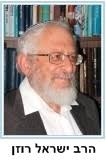 In Rabbi Rosen's article he explains that not every time there is gender-segregation is there ncessarily the exclusion of women. He explains that many of the examples discussed in the media as excluding women are simply gender-segregation. Separate hours in a fitness center in the Technion (which made the news recently) is not excluding women, but simply separating the hours of usage, and Rav Rosen says he supports that. Separate sidewalks in mea Shearim, on the other hand, he does not support even though it is not the exclusion of women but just segregation because the street is a public place meant to be used even by people who oppose the segregation.
Rav Rosen goes on to say he opposes the segregation on the bus lines with men in front and women in back, for the same reason. On the other hand, if a certain community wanted to form separate lines at the supermarket, he would be fine with that (even though he thinks it is a sick craze of hype-modesty).
Rav Rosen goes on to say he supports "mixed seating" at weddings, for social reasons (that he has spoken abut on other occasions), and also supports mixed gender classrooms for young children when there are not enough kids to justify splitting the class and forming two separate classes.
These, he says, are issues unrelated to the exclusion of women, but involve the issue of gender segregation.
 This morning Rav Shmuel Eliyahu, the Chief Rabbi of Tzfat, responded to Rav Rosen's comments. He compared it to a story, a true story, in which a fellow reeking of cigarette smoke came to him once on Shabbos and asked for wine to make kiddush. He asked the fellow why he wants to make kiddush if he so obviously does not keep Shabbos as he had just been smoking. The fellow responded that he had been given a hetter to smoke on Shabbos from Rav Abuhatzeira.
Rav Eliyahu tried to understand what the hetter could possibly be, and the fellow explained. He was smoking 40 cigarettes a day, including on Shabbos, and explained that e could not just stop. Rav Abuhatzeira suggested that instead of just not smoking on Shabbos, which would be too difficult, he should cut it down slowly. First drop it to 20 cigarettes, then to 10, etc. until eventually he would stop completely.
Rav Eliyahu explained that this fellow only remembered the first half of what he had been told, but forgot the second half. it was not a hetter to smoke, but it was a method to cut it down until he would not smoke at all. but this fellow only heard, or only remembered that Rav Abuhatzeira told him he could smoke 20 cigarettes instead of 40.
Rav Eliyahu compares that story to rav Rosen's situation - the fact that we have a bdieved situation that rabbonim must conduct weddings to mixed audiences, that some weddings are arranged with mixed seating, does not turn that fact into a lechatchila that now all weddings should be mixed.
Rav Eliyahu goes on and says that saying such things publicly is a big mistake and very dangerous, as some people are out looking for these allowances and will use them to try to bring the community down a notch or two.
 He asks if such a method, of turning bdieveds into lechatchilas is also applied equally in the Tzomet Institute. And because he knows that it is not, he asks why is tzniyut different than Shabbos? Why by issues of tzniyut must we set up our children to falter with bdieved allowances for no reason?
It is an interesting debate at what point is segregation needed lechatchila, what makes it bdieved, and at what point is it totally unnecessary. There are obviously two very different opinions being displayed in this debate. I would add that Rav Eliyahu's comment comparing it to the products developed by the Tzomet Institute is out of place. Everything they develop is for a bdieved situation. nobody says healthy people should go buy their telephones and pens and other inventions to use on Shabbos. They are developed for the purpose of people who are in certain situations where Shabbos would otherwise be desecrated by necessity, and these inventions mitigate that. As well, even if such a comparison were to be made, Shabbos is far more severe - being a d'oraisa, along with being the main issue looked at in halacha that determines if someone is a fine Jew or a rasha. Tzniyus is not on a similar standing with Shabbos, no matter how important it is.
Rav Rosen goes on to say he opposes the segregation on the bus lines with men in front and women in back, for the same reason. On the other hand, if a certain community wanted to form separate lines at the supermarket, he would be fine with that (even though he thinks it is a sick craze of hype-modesty).
Rav Rosen goes on to say he supports "mixed seating" at weddings, for social reasons (that he has spoken abut on other occasions), and also supports mixed gender classrooms for young children when there are not enough kids to justify splitting the class and forming two separate classes.
These, he says, are issues unrelated to the exclusion of women, but involve the issue of gender segregation.
Rav Eliyahu tried to understand what the hetter could possibly be, and the fellow explained. He was smoking 40 cigarettes a day, including on Shabbos, and explained that e could not just stop. Rav Abuhatzeira suggested that instead of just not smoking on Shabbos, which would be too difficult, he should cut it down slowly. First drop it to 20 cigarettes, then to 10, etc. until eventually he would stop completely.
Rav Eliyahu explained that this fellow only remembered the first half of what he had been told, but forgot the second half. it was not a hetter to smoke, but it was a method to cut it down until he would not smoke at all. but this fellow only heard, or only remembered that Rav Abuhatzeira told him he could smoke 20 cigarettes instead of 40.
Rav Eliyahu compares that story to rav Rosen's situation - the fact that we have a bdieved situation that rabbonim must conduct weddings to mixed audiences, that some weddings are arranged with mixed seating, does not turn that fact into a lechatchila that now all weddings should be mixed.
Rav Eliyahu goes on and says that saying such things publicly is a big mistake and very dangerous, as some people are out looking for these allowances and will use them to try to bring the community down a notch or two.
It is an interesting debate at what point is segregation needed lechatchila, what makes it bdieved, and at what point is it totally unnecessary. There are obviously two very different opinions being displayed in this debate. I would add that Rav Eliyahu's comment comparing it to the products developed by the Tzomet Institute is out of place. Everything they develop is for a bdieved situation. nobody says healthy people should go buy their telephones and pens and other inventions to use on Shabbos. They are developed for the purpose of people who are in certain situations where Shabbos would otherwise be desecrated by necessity, and these inventions mitigate that. As well, even if such a comparison were to be made, Shabbos is far more severe - being a d'oraisa, along with being the main issue looked at in halacha that determines if someone is a fine Jew or a rasha. Tzniyus is not on a similar standing with Shabbos, no matter how important it is.
Apr 3, 2011
Rav Shmuel Eliyahu Says Fear Prevents Us From Bringing Korban Pesach Today (video)
Rav Shmuel Eliyahu, Chief Rabbi of Tzfat, gave a shiur about korban pesach. You can see the video of the shiur.
In the shiur he discusses how fear the biggest issue preventing us today from bringing the korban pesach. Fear of upsetting the world. Being that that is not listed as one of the valid reasons for not bringing the korban pesach that is d'oraisa, I wonder how that will eventually play out as a t'viya aganst us..
In the shiur he discusses how fear the biggest issue preventing us today from bringing the korban pesach. Fear of upsetting the world. Being that that is not listed as one of the valid reasons for not bringing the korban pesach that is d'oraisa, I wonder how that will eventually play out as a t'viya aganst us..
Dec 23, 2010
Interesting Psak: Tagging Pictures On Facebook
Rav Shmuel Eliyahu was asked by a young student if it is ok to upload class pictures to Facebook, without asking first, when the pictures include photos of other classmates and friends.
Rav Eliyahu's response was that it is never allowed to photograph someone without their express permission. Therefore one could also not publicize pictures of other people on Facebook without their permission.
Rav Eliyahu's response was that it is never allowed to photograph someone without their express permission. Therefore one could also not publicize pictures of other people on Facebook without their permission.
Dec 9, 2010
The Carmel Fires Demand More Love
I find this news piece interesting, and different than some other recent pieces on the same issue.
The piece is quoting Rav Shmuel Eliyahu, Chief Rabbi of Tzfat (safed) regarding the recent fires that ravaged and destroyed in the range of 50,000 dunams in the Carmel Forests near Haifa.
Recently many different rabbis spoke out saying what needs to be "fixed" in light of the recent tragedy. It basically turned into a blame game, with many different sectors being blames, whether it was those who do not keep shabbos, or those who are not honest, or others (I dont remember them all right now but I remember seeing at least 7 different types of people, their actions really, being blamed for the fires).
While it might not have been so productive to start laying blame so close (even during for many of the rabbis) to the actual tragedy, but the rabbis job description includes exhorting his people, those by whom he holds influence, to do better, to improve their ways, etc. So it bothered me less that they were doing so, even if I thought the timing was not great, than the tone they were using.
Rabbi Eliyahu's response to the fires is different. While their tone was all negative - The fires are due to chillul shabbos - as if people are going to start keeping shabbos because of that statement, the fires are due to renting houses to non-Jews, etc. are all negatively based. Maybe they feel it needs to be said, ok. But Rabbi Eliyahu turned the tables.
Rabbi Eliyahu did not blame others, saying they need to improve, it is their fault, they caused the fire , they are bad people. He said we need to improve. It is our fault. We don't love Hashem enough. If we would love Hashem more, if we would perform the mitzvos with more love, as it says in the kiryat shema, then we will receive the rains, as it promises in kriyat shema. Rabbi Eliyahu compared it to the fire of Eliyahu HaNavi on the Carmel, where there was a large drought, and then a major fire, and then the rains came.
The piece is quoting Rav Shmuel Eliyahu, Chief Rabbi of Tzfat (safed) regarding the recent fires that ravaged and destroyed in the range of 50,000 dunams in the Carmel Forests near Haifa.
Recently many different rabbis spoke out saying what needs to be "fixed" in light of the recent tragedy. It basically turned into a blame game, with many different sectors being blames, whether it was those who do not keep shabbos, or those who are not honest, or others (I dont remember them all right now but I remember seeing at least 7 different types of people, their actions really, being blamed for the fires).
While it might not have been so productive to start laying blame so close (even during for many of the rabbis) to the actual tragedy, but the rabbis job description includes exhorting his people, those by whom he holds influence, to do better, to improve their ways, etc. So it bothered me less that they were doing so, even if I thought the timing was not great, than the tone they were using.
Rabbi Eliyahu's response to the fires is different. While their tone was all negative - The fires are due to chillul shabbos - as if people are going to start keeping shabbos because of that statement, the fires are due to renting houses to non-Jews, etc. are all negatively based. Maybe they feel it needs to be said, ok. But Rabbi Eliyahu turned the tables.
Rabbi Eliyahu did not blame others, saying they need to improve, it is their fault, they caused the fire , they are bad people. He said we need to improve. It is our fault. We don't love Hashem enough. If we would love Hashem more, if we would perform the mitzvos with more love, as it says in the kiryat shema, then we will receive the rains, as it promises in kriyat shema. Rabbi Eliyahu compared it to the fire of Eliyahu HaNavi on the Carmel, where there was a large drought, and then a major fire, and then the rains came.
Rabbi Shmuel Eliyahu’s answer:
“Every Jew who recites the Kriat Shma [Deuteronomy 6:4-9, 11:13-21, and Numbers 15:37-41] every day knows that the Land of Israel, unlike other countries, lives according to its rainfall. This is simply G-d’s way of speaking to us; this is His language.
"If we experience a drought for two months, G-d is saying something, as we read in Kriat Shma: “If you hearken to My commandments… and love G-d… I will give you rainfall… But if you stray… I will be angered… and there will not be rain…” But if we perhaps don’t get the hint, then we get the great fire in the Carmel, which is very reminiscent of Elijah the Prophet who challenged the idol-worshipers in the same area; there, too, there was a drought, followed by a large fire and then – rains of blessing.
“There, the story was quite clear, as Elijah told them straight out that they tried to dance at two weddings; they straddled the fence without deciding whether they truly believed in the false god Baal, or in G-d, the Creator of the world. In their private lives they conducted themselves according to Baal and Asherah, adopting foreign modes of behavior imported by Queen Jezebel and King Ahab, but at the same time they still believed in G-d.
"This is very reminiscent of the Chanukah story, in which many of the Hellenized Jews retained their belief in G-d at the critical moments; they acted like Greeks on the outside because it was pleasant and ‘everyone is doing it,’ but inside they realized that it was nonsense – and when Mattathias called out, “Whoever is for G-d, come to me!”, many of them came.
“My feeling is that as a nation, we too must say that we are not straddling two fences, but that we truly feel our belief in G-d...
"I’m talking to the religious public too; when we read Kriat Shma, we must internalize what it says – that the key is not just fulfilling the commandments, but to do them with love of G-d, as is written: With all your hearts and all your souls. When we pray, or light Chanukah candles, or keep the Sabbath, we can either do it just by rote, or with love. We must imbue our children with love, and then the rains will come – and if not, not.
“To say that ‘the lack of rain does not speak to me,’ as I have heard some people saying, means that they are not fulfilling properly the commandment of reciting Kriat Shma, which must be done with forethought…”
May 31, 2010
Dealing with the enemy
Rav Shmuel Eliyahu has been in the press a lot recently, for a lot of provocative statements, and today he doesn't let us down.
In response to what happened with the Gaza flotilla, Rav Shmuel Eliyahu said, "We should raise our heads up against the accusations and criticisms pointed at Israel and say that this is what we had to do... There is no need to apologize, and it is a shame that the Israeli soldiers did not kill more...That is what any other country in the world would have done... Just because there are anti-semites in the world, does not mean we have to forgo our own rights."
And in response to accusations made by Arab MKs and to the incitement by Hamas, Rav Eliyahu said, "Hamas and their partners are the last who can teach anyone ethics and morals. Those who throw people from rooftops and drag them behind jeeps until their bodies are ripped apart and execute people without any judgment, should not try to teach us ethics. People live in a lie and deceive their own people with lies and hatred...
It is a shame that the billions they have received from countries around the world have been stolen to line their pockets and they have not built a single normal hospital, they have not paved a single normal road.. All they want is war and murder... Thank God [the IDF] did what they did to them, and it is a shame they did not kill more of them" (source: Srugim)
I am fairly liberal, and am ok with, or I should say resigned to, the idea of peace and land for peace, if a peace is possible and if they are willing to be peaceful with us.
On the other hand, I am far right wing when I believe that the other side is not peaceful and does not have peaceful intentions. Right now we are at war with them. If they want peace, our hand is extended. As long as they want war, and want to deceive the world into thinking we are bad, I am all for treating them like hostile enemy in every way possible.
As Rav Eliyahu says, they should have killed more. The boat should have "hit an iceberg" (in the Mediterranean) and been sunk early on during the voyage. The IDF should not have let this ordeal shlep out for so long.
In response to what happened with the Gaza flotilla, Rav Shmuel Eliyahu said, "We should raise our heads up against the accusations and criticisms pointed at Israel and say that this is what we had to do... There is no need to apologize, and it is a shame that the Israeli soldiers did not kill more...That is what any other country in the world would have done... Just because there are anti-semites in the world, does not mean we have to forgo our own rights."
And in response to accusations made by Arab MKs and to the incitement by Hamas, Rav Eliyahu said, "Hamas and their partners are the last who can teach anyone ethics and morals. Those who throw people from rooftops and drag them behind jeeps until their bodies are ripped apart and execute people without any judgment, should not try to teach us ethics. People live in a lie and deceive their own people with lies and hatred...
It is a shame that the billions they have received from countries around the world have been stolen to line their pockets and they have not built a single normal hospital, they have not paved a single normal road.. All they want is war and murder... Thank God [the IDF] did what they did to them, and it is a shame they did not kill more of them" (source: Srugim)
I am fairly liberal, and am ok with, or I should say resigned to, the idea of peace and land for peace, if a peace is possible and if they are willing to be peaceful with us.
On the other hand, I am far right wing when I believe that the other side is not peaceful and does not have peaceful intentions. Right now we are at war with them. If they want peace, our hand is extended. As long as they want war, and want to deceive the world into thinking we are bad, I am all for treating them like hostile enemy in every way possible.
As Rav Eliyahu says, they should have killed more. The boat should have "hit an iceberg" (in the Mediterranean) and been sunk early on during the voyage. The IDF should not have let this ordeal shlep out for so long.
May 17, 2010
Rav Eliyahu against the Asra Kadisha
Rav Shmuel Eliyahu came down heavy duty against R' Shmidel and the Asra Kadisha and their protests...
"In my opinion it is a mitzva to move these graves. So it is brought in the gemara, so in the Shulchan Aruch, so did Rav Shimon bar Yochai..the gemara says Rashbi moved bones that were a disturbance to the public. When an old man protested, Rashbi set his eyes upon him and turned him to a pile of bones."
"Shmidel is known as a troublemaker, he is not a rav, and many great rabbonim said it is a mitzva to remove the bones -so paskened the rav of the city, so paskened Rav Roza who is an expert on these matters, so paskened the Chief Rabbis, and so paskened the Religious Council of the Rabbinate. Who is this Shmidel? Why does anybody have to listen to him? Whoever follows him is a fool... For what do we need the chilul hashem caused between religious and non-religious? This is superfluous, it is not halacha but foolishness."
"Don't say the rabbonim signed. I know how it works, the person comes to the rabbonim and tells them all sorts of stories that never happened. So the signatures of rabbis doesnt impress me. If the great Rav ELyashiv would come and tell us this is the halacha after he saw what the reality is, we would bow our heads and submit to him, but I dont believe Rav Elyashiv said not to move the graves because it can't be - there is the halacha, and Rav Elyashiv is a man of halacha, not politics. Whatever they say in his name is a lie and deceitful."
"In my opinion it is a mitzva to move these graves. So it is brought in the gemara, so in the Shulchan Aruch, so did Rav Shimon bar Yochai..the gemara says Rashbi moved bones that were a disturbance to the public. When an old man protested, Rashbi set his eyes upon him and turned him to a pile of bones."
"Shmidel is known as a troublemaker, he is not a rav, and many great rabbonim said it is a mitzva to remove the bones -so paskened the rav of the city, so paskened Rav Roza who is an expert on these matters, so paskened the Chief Rabbis, and so paskened the Religious Council of the Rabbinate. Who is this Shmidel? Why does anybody have to listen to him? Whoever follows him is a fool... For what do we need the chilul hashem caused between religious and non-religious? This is superfluous, it is not halacha but foolishness."
"Don't say the rabbonim signed. I know how it works, the person comes to the rabbonim and tells them all sorts of stories that never happened. So the signatures of rabbis doesnt impress me. If the great Rav ELyashiv would come and tell us this is the halacha after he saw what the reality is, we would bow our heads and submit to him, but I dont believe Rav Elyashiv said not to move the graves because it can't be - there is the halacha, and Rav Elyashiv is a man of halacha, not politics. Whatever they say in his name is a lie and deceitful."
Subscribe to:
Posts (Atom)
Related Posts
