
Showing posts with label fraud. Show all posts
Showing posts with label fraud. Show all posts
Dec 22, 2025
foilishtik vs yiras shamayim
Very recently (was it 6 weeks ago or so?) Mishpacha ran ainterview with Yoeli Landau, a Satmar chassid billionaire. They even put him plugging the interview on the cover photo. They claimed then that while it is unusual to do so, to put a businessman on the cover and give him such prominence but they did it not because they are honoring a businessman who made lots of money but because of his story and how he grew up and then with honesty and yiras shamayim became a success and has complete fealty to his rabbonim... The interview, and especially the cover made waves and with it came a lot of criticism of Mishpacha choosing this and of Landau as well..
Personally I enjoyed the interview, even if I figured much of it was embellishment. For example, they sold him as having even been homeless at one point when he was younger and had to sleep in a shul..in the interview when he tells the story he describes how he slept in the shul so he could play homeless because he needed to qualify for welfare programs (like WICS or SNAP or whatever program it was at the time)...
Anyway, I am wondering if he now regrets having given the interview. it was supposedly a very rare interview as he normally stays away from the limelight and doesn't talk to media. I am wondering if he or those around him might think it caused him an ayn hara of sorts.
According to CBS News, Landau is in lots of legal trouble for playing foilishtik with his nursing homes. honesty and yiras shamayim are the name of the game...A bankruptcy judge blocked an attempt by a nursing home chain's primary investor to shield himself from settlement payments and liability in lawsuits alleging hundreds of patient injuries and deaths, encouraging those pursuing millions in damages.
Genesis HealthCare, once the nation's largest nursing home chain, filed for Chapter 11 reorganization bankruptcy in July with a proposal to protect its controlling investor, Joel Landau, from legal liability. In court papers, Genesis had originally estimated all its settled and pending cases — which it said numbered nearly a thousand — would cost $259 million to resolve.
KFF Health News reported this month that in the years before filing for bankruptcy, Genesis had settled at least 155 patient injury and death lawsuits with provisions that allowed it to delay paying, sometimes for more than a year. As a result, when Genesis filed for bankruptcy in July, it still owed $41 million out of the $58 million promised in those settlements with families of current or former residents, according to the bankruptcy and case records KFF Health News reviewed.
In hearings Wednesday and last week in U.S. Bankruptcy Court in Dallas, Judge Stacey G.C. Jernigan said she would not approve a sale of the company's assets that included legal releases from liability for Landau and a private equity associate, David Gefner. Landau, who was seeking to purchase the assets through another company he controlled, did not attend the bankruptcy hearings or respond to a subpoena, lawyers said in court.
ayin hara indeed... I hope he comes out of it ok and cleared and can make amends but maybe talking in public about how great he is was not a good idea when he is actually in so much trouble... I wonder if Mishpacha will relate to the latest news and regret having interviewed him and especially putting him on the cover
------------------------------------------------------
Reach thousands of readers with your ad by advertising on Life in Israel
Reach thousands of readers with your ad by advertising on Life in Israel
------------------------------------------------------
Jan 9, 2023
the Lebanese groom divorces his wife, just in case
We have not heard form the Lebanese groom in a while. To remind you, Eliyahu Hawila from Lebanon living in the USA posed as a Jew while he became frum, though he was not actually Jewish. Hawila met a nice frum girl form the Syrian community and they dated and married. her family shortly thereafter discovered his real identity and that he is not Jewish and chased him out of town. Hawila went soul searching, I guess, and actually discovered that he is Jewish, as a maternal grandmother a few generations back was Jewish and married a Muslim, and the generations of daughters since had lived as Muslims but were actually Jewish, making him Jewish. this discovery made things even more complicated because, if true, his wife would now need a gett, an official halachic divorce paper and not just a civil divorce.
Hawila wanted to reconcile and because he was actually Jewish, in at least his opinion, he wanted to stay married and it would not be a problem with her Syrian community as he is not a convert. A beis din supposedly did the research and actually discovered it to be true, he is Jewish, but to erase any shadow of a doubt he did a conversion lchumra.
The lady's family filed for annulment in the beis din of the Rabbanut of Tel Aviv. The family claimed because he was a Muslim at the time of the wedding the marriage was null and void and no divorce should be needed. The beis din did their own research and also discovered he is actually Jewish, or at least there is a strong possibility of that being so. The Rabbanut beis din decided that because of the possibility he might have been Jewish all along, they cannot approve of the dissolution of the marriage without a gett.
To that end, the beis din put a restraining order on Hawila preventing him from leaving Israel until he would grant the divorce to his wife.
It took several months, but Hawila has now granted his wife the divorce. She is finally rid of him. The crazy story has finally come to an end. At least until he dupes another Jewish girl into marrying him.
------------------------------------------------------
Reach thousands of readers with your ad by advertising on Life in Israel
Reach thousands of readers with your ad by advertising on Life in Israel
------------------------------------------------------
Jun 12, 2022
goodbye Yaakov Litzman
So Yaakov Litzman, former MK from UTJ, is gone from public service, at least in the Knesset realm.
He is being replaced by Gur chassid Yitzchak Goldknopf, so I am not sure if before too long we will be pining for the days of Yaakov Litzman as MK or if this will work out well.
Either way. what he did to assist Malka Leifer avoid justice and trials (which he admitted to as part of the plea bargain) was pretty horrendous
Litzman was like a yoyo throughout his ministerial career seeing heights in public surveys as the most popular minister and also seeing lows as among the most reviled. Litzman claims the Left did not like his spodik when he famously appeared at a Corona press conference on a Saturday night in full Gur regalia including the spodik and turned on him. He does not talk about the tough regulations he was imposing on the Israeli public with tight lockdowns and tough mask mandates, and he himself breaking his own rules, as alternative reasons for the turn in public opinion. Like all ministers, or at least like most, Litzman surely did some positive things, especially in his roles as Health Minister (and Deputy Minister) increasing MRis, surprise hospital evaluation visits, free dental care for kids, etc... and some less so. He himself likes to focus on how much he helped individuals, whoever asked no matter from which sector of Israeli society. The Haredi MKs like to treat the position of MK as a vaad bayit of sorts,. where they can help individuals more than helping the public with improving policy, and Litzman did a lot of that, and couches his assistance to Leifer as just helping someone in need, as if it was so innocent even though it entailed pressuring a psychiatrist to change his medical opinion on her ability to stand trial.
I doubt we have seen the last of Yaakov Litzman. He is too accomplished and capable to just ride away into the sunset.
------------------------------------------------------
Reach thousands of readers with your ad by advertising on Life in Israel
Reach thousands of readers with your ad by advertising on Life in Israel
------------------------------------------------------
Aug 1, 2021
Interesting Psak: Conversion Fraud
Kipa brings an interesting psak of the Higher Conversion Court regarding conversion fraud.
We have all heard the stories, at least the ones that made the news, in recent years where a beis din in Israel, generally the beis din of the Chief Rabbinate, invalidated a conversion retroactively claiming the convert, or potential convert, had defrauded the conversion court and had never really intended to keep the Torah and mitzvos or never believed and therefore the original conversion did not take effect.
A couple of Ethiopian couples, of the Falash Mura tribe, claimed to be part of the Beta Israel community and using the applied Law of Return moved to Israel where they then converted as per the requirements of the Chief Rabbinate conversion court.
The problem is they did this under false identities.
So they converted, and maybe (or maybe not) were even honest in their conversion about their desire to connect with the Jewish people, but the entire premise the operation was based on was false. They did not qualify to come to Israel under the Law of Return, they were not descendants of Beta Israel members, they were not who they said they were.
the beis din, upon discovering the fraud, decided to revoke the conversion because they had not actually qualified under the Law of Return and should not have qualified to even appear before the beis din to convert. Additionally, they clearly were not being honest, which is a requirement of conversion. They had also presented themselves as brothers and sisters but continued living with each other after conversion and did not marry (I am not clear how they came presenting themselves as couple but also as brothers and sisters but living as married people). The beis din revoked the conversions of all four people based on their fraud.
The four de-converts then appealed to the Beis Din Hagadol requesting that the original conversion be reaffirmed, despite the fraud. After much deliberation, the dayanim Rav Eliezer Igra, Rav Shlomo Shapira and Rav Tzvi Ben Yaakov decided to accept their appeal and declare their conversion valid and they as halachic Jews, with no ability to invalidate their conversion.
The dayanim stated they they are not taking lightly the fraud employed by the converts and recommended the State take action against them with even serious criminal sanctions for defrauding the State in use of the Law of Return and also in defrauding the beis din, and to that end instructed the beis din to inform the police and the prosecutor's office as to what happened and to open an investigation.
I wonder if this means even clear fraud cannot invalidate a conversion - once done, it is done and is final - or if the beis din hagadol determined that while they used fraud to qualify as potential converts the conversion itself was honest and they really intended to be Jews. This distinction would make a difference moving forward...
.
------------------------------------------------------
Reach thousands of readers with your ad by advertising on Life in Israel
Reach thousands of readers with your ad by advertising on Life in Israel
------------------------------------------------------
Feb 23, 2021
Kashrut Alert: Fuse Tea from Georgian Coca Cola plant
The following kashrut alert seems important.


We've discussed numerous times the reliability of Coca Cola (and related products) imported form countries without a hechsher. There are different opinions on this. And not too long ago the factory of Coca Cola in Ukraine started to be certified by the kashrut of Machzikei Hadas, Belz kashrut - and regarding this too some say it is reliable and some say it is not.
The current kashrut alert is regarding a Coca Cola product, not Coca Cola itself, manufactured in Georgia.
Funnily enough, the main Coca Cola headquarters is in Georgia, but in the State of Georgia in the United States of America. That plant and headquarters is perfectly fine and certified kosher. The problem, or the alert, is with the Coca Cola plant in the country of Georgia.
The specific product in the alert is peach flavored Fuse Tea. The import label of this product bears the hechsher of Belz, Machzikei Hadas, along with the confirmation of the Chief Rabbinate of Israel.

Machzikei Hadas put out an alert stating that the Coca Cola of Georgia (the country) factory is not under their supervision and certification and they do not certify any drinks produced there. The label on that product is fraudulent..

The problem is on the import label, which is not uncommon. The import labels are printed by the importer, and the importer can put whatever he wants on it. There is no oversight or supervision on the import label.
Be aware.
------------------------------------------------------
Reach thousands of readers with your ad by advertising on Life in Israel
Reach thousands of readers with your ad by advertising on Life in Israel
------------------------------------------------------
Jul 1, 2020
the restaurant that lost its hechsher... or did it?
It seems that people running restaurants realize that losing, or giving up, a Rabbanut teuda due to Corona problems (ie hechsher/teuda too expensive in the days of Corona) can be very profitable, at least in the short term. It becomes splashy news, and the masses come out to support the restaurant against the oppressive and insensitive Rabbanut. It might not work as a long term boost to business, but at least int eh short term it can give the restaurant a nice jolt.
A restaurant in Kiryat Ono, Hamaadaniya Shel Erez, put out an announcement that it has decided to give up its connection with the Rabbanut due to financial difficulties due to CoronaVirus, and that from now the public should know that it is operating without a teudat kashrut.
The only problem is that shortly after the announcement one of the rabbis from the kashrut division of the local Rabbanut, along with the Chief Rabbi Rav Ratzon Arussi, responded exposing the announcement as fraudulent as this restaurant has never had a teuda from the Rabbanut, so it isn't giving up anything. They have operated until now without a teudat kashrut and are continuing to do so.
To explain further the rabbis said that the restaurant owners did recently request a teudat kashrut. They responded positively to some of the Rabbanut's requests, but they refused other aspects of the Rabbanut's concerns, such as food sold on Fridays being supervised.
The Rabbanut stressed that this restaurant never had a teuda, and had only started communicating with the Rabbanut about the possibility but it had not ended with any certification. They were granted a temporary authorization, without a teuda, for 2 days, based on a promise about kashrut on products sold out of the city. Immediately after that they announced that they are giving up on the Rabbanut and will be operating from now without a teuda.
The restaurant owners responded saying that they really planned on getting a teuda from the Rabbanut since the restaurant is really kosher anyway, just without a teuda, but when they saw the massive investment they would need to make based on the requirements of the Rabbanut, they decided they could not do it. They said there was a mashgiach from the Rabbanut each day with a temporary kashrut teuda and this was coordinated via the Rabbanut. Because they had announced they were kosher with the Rabbanut (ie on a temporary basis with intent to become permanent), when the communication with the Rabbanut was ended, integrity demanded of them that they announce that they will no longer have the Rabbanut teuda.
source: Kikar
As King Solomon said, only God knows what is in the hearts of man. We don't really know if this was a scam or an honest attempt that just didn't work out. but it looks really bad (from the little we know). Sure, the Rabbanut has a lot to work on and we all know how difficult the Rabbanut can be - that does not mean every claim against the Rabbanut is fair and justified and even true. This is nothing like any of the other recent cases. if a non-kosher restaurant, even if they claim they were technically kosher before, wants to become kosher, they are going to have to make changes and meet the requirements, and that takes investment.
A restaurant in Kiryat Ono, Hamaadaniya Shel Erez, put out an announcement that it has decided to give up its connection with the Rabbanut due to financial difficulties due to CoronaVirus, and that from now the public should know that it is operating without a teudat kashrut.
The only problem is that shortly after the announcement one of the rabbis from the kashrut division of the local Rabbanut, along with the Chief Rabbi Rav Ratzon Arussi, responded exposing the announcement as fraudulent as this restaurant has never had a teuda from the Rabbanut, so it isn't giving up anything. They have operated until now without a teudat kashrut and are continuing to do so.
To explain further the rabbis said that the restaurant owners did recently request a teudat kashrut. They responded positively to some of the Rabbanut's requests, but they refused other aspects of the Rabbanut's concerns, such as food sold on Fridays being supervised.
The Rabbanut stressed that this restaurant never had a teuda, and had only started communicating with the Rabbanut about the possibility but it had not ended with any certification. They were granted a temporary authorization, without a teuda, for 2 days, based on a promise about kashrut on products sold out of the city. Immediately after that they announced that they are giving up on the Rabbanut and will be operating from now without a teuda.
The restaurant owners responded saying that they really planned on getting a teuda from the Rabbanut since the restaurant is really kosher anyway, just without a teuda, but when they saw the massive investment they would need to make based on the requirements of the Rabbanut, they decided they could not do it. They said there was a mashgiach from the Rabbanut each day with a temporary kashrut teuda and this was coordinated via the Rabbanut. Because they had announced they were kosher with the Rabbanut (ie on a temporary basis with intent to become permanent), when the communication with the Rabbanut was ended, integrity demanded of them that they announce that they will no longer have the Rabbanut teuda.
source: Kikar
As King Solomon said, only God knows what is in the hearts of man. We don't really know if this was a scam or an honest attempt that just didn't work out. but it looks really bad (from the little we know). Sure, the Rabbanut has a lot to work on and we all know how difficult the Rabbanut can be - that does not mean every claim against the Rabbanut is fair and justified and even true. This is nothing like any of the other recent cases. if a non-kosher restaurant, even if they claim they were technically kosher before, wants to become kosher, they are going to have to make changes and meet the requirements, and that takes investment.
------------------------------------------------------
Reach thousands of readers with your ad by advertising on Life in Israel
Reach thousands of readers with your ad by advertising on Life in Israel
------------------------------------------------------
Jun 1, 2020
Rabbanut indicts first restaurant for fraudulent kosher claims
Back in February it was reported that the Rabbanut had been authorized to issue criminal indictments against food establishments that declare themselves as kosher without proper authorization for the Rabbanut.
Ynet is reporting today that for the first time ever, the Rabbanut notably just issued such a criminal indictment.
The Rabbanut brought charges against a restaurant owner from Haifa who declared his restaurant kosher without certification from the Rabbanut.
The owner is claiming that he was not declaring the restaurant kosher, just letting the customers know that the ingredients used in the restaurant are all kosher and certified by the Rabbanut. The owner also claims that the Rabbanut is guilty of selective punishment, as he has supervision from a private organization (without using the word kosher), as do other restaurants yet only he has been issued the indictment for kashrut fraud - proof is that he is the first one to receive such an indictment.
Without a picture of the sign the owner posted on his restaurant window regarding the kashrut it is difficult to verify the claims in either direction, but the article says that he posted to signs - one that says all the products are kosher (different than saying the restaurant is kosher) and the second saying the establishment is under the supervision of Igud HaRabbanim bYisrael. Inside the restaurant was the certificate of supervision from the Iggud Harabanim bYisrael - Kehilot Hacharedim and it specifically says that there is no certification by the Rabbanut.
Basically the owner is claiming no fraud. He is only using the word "kosher" regarding products which are certified by the Rabbanut, and he specifically says that the restaurant is not supervised by the Rabbanut. So no fraud.
I am not sure the claim of selective enforcement is overly strong. they only recently received the authorization for this level of enforcement, and somebody is going to be the first. With the Coronavirus shutting down restaurants for a long period between March and the end of May, it makes sense that they are only now getting the opportunity to implement this new level of enforcement. Just because you are the first victim doesn't make it selective. That might depend on if the Rabbanut continues to take such steps against others.
The court is hearing the case and will decide on the matter.
Ynet is reporting today that for the first time ever, the Rabbanut notably just issued such a criminal indictment.
The Rabbanut brought charges against a restaurant owner from Haifa who declared his restaurant kosher without certification from the Rabbanut.
The owner is claiming that he was not declaring the restaurant kosher, just letting the customers know that the ingredients used in the restaurant are all kosher and certified by the Rabbanut. The owner also claims that the Rabbanut is guilty of selective punishment, as he has supervision from a private organization (without using the word kosher), as do other restaurants yet only he has been issued the indictment for kashrut fraud - proof is that he is the first one to receive such an indictment.
Without a picture of the sign the owner posted on his restaurant window regarding the kashrut it is difficult to verify the claims in either direction, but the article says that he posted to signs - one that says all the products are kosher (different than saying the restaurant is kosher) and the second saying the establishment is under the supervision of Igud HaRabbanim bYisrael. Inside the restaurant was the certificate of supervision from the Iggud Harabanim bYisrael - Kehilot Hacharedim and it specifically says that there is no certification by the Rabbanut.
Basically the owner is claiming no fraud. He is only using the word "kosher" regarding products which are certified by the Rabbanut, and he specifically says that the restaurant is not supervised by the Rabbanut. So no fraud.
I am not sure the claim of selective enforcement is overly strong. they only recently received the authorization for this level of enforcement, and somebody is going to be the first. With the Coronavirus shutting down restaurants for a long period between March and the end of May, it makes sense that they are only now getting the opportunity to implement this new level of enforcement. Just because you are the first victim doesn't make it selective. That might depend on if the Rabbanut continues to take such steps against others.
The court is hearing the case and will decide on the matter.
------------------------------------------------------
Reach thousands of readers with your ad by advertising on Life in Israel
Reach thousands of readers with your ad by advertising on Life in Israel
------------------------------------------------------
Dec 27, 2017
fake yeshiva with fake students but real protesters
whoa...
from Walla News and YWN
from Walla News and YWN
12 suspects were arrested in Beit Shemesh Monday in a massive fraud case involving a fake yeshiva.I must say, 1,000,000nis seems like an awefully low number for a fake yeshiva with 150 fake students registered. 1 million shekels sounds like it would be about a few months worth of fraud for that size institution.
According to the authorities, the suspects created a fake yeshiva and registered 150 'students' in order to receive government funding in the form of Education Ministry stipends and scholarship funds, Yeshiva World News reported.
The suspects allegedly pocketed over NIS 1,000,000 ($287,000).
During a routine inspection, Education Ministry officials found a pile of rubble at the address given for the yeshiva. The officials filed a complaint with the police and undercover detectives, who discovered that the yeshiva and its 150 students did not exist.
Haredi protesters clashed with police as they attempted to apprehend the suspects Monday. Rioters shoved police officers and threw eggs at them. The police responded with pepper spray.
The suspects were arraigned and taken in for questioning, Several suspects were released under restrictive orders.
The suspects are accused of obtaining defrauded money under aggravated circumstances, conspiracy to thievery, and money laundering.
------------------------------------------------------
Reach thousands of readers with your ad by advertising on Life in Israel
Reach thousands of readers with your ad by advertising on Life in Israel
------------------------------------------------------
Jun 28, 2017
eventually they will catch up to you
I did not mention the arrests in Lakewood for alleged welfare fraud, as I had nothing different to say about it beyond the shock and anger everyone else was already expressing. A news report that was published today provides some additional insight worth getting upset about.
Previously, when the news broke, it was relatively easy to say it is a few people, and even though a shul rabbi was involved, and just less than a dozen people - ok, every community has its black sheep. As much of a chilul hashem it is, and it is, at the end of the day it is a few people and not widespread.
According to today's news report on the matter, "In the last two days, hundreds of residents called township leaders asking how they can avoid arrest or get amnesty related to an alleged public-assistance fraud scheme that could stretch into the millions of dollars, according to one law enforcement with knowledge of the ongoing probes." (from APP)
Did you get that? hundreds of residents are calling township leaders asking how to avouid arrest or if they can get amnesty.
That means it is widespread. Assuming, of course, this one law enforcement officer with knowledge is not actually just making it up to scare people.
It is shocking and upsetting that it is so widespread, and it is shocking that they would call in like that looking for amnesty. When, as reported, law officials last year warned community leadership about welfare fraud and how seriously they are taking it and investigating such matters, nobody seemed worried enough to stop or put an end to it, but now that arrests are coming down the pipeline, suddenly everyone is looking to cut a deal.
It looks bad for the entire community, it looks bad for the entire nation, and it really looks bad for Lakewood. and I don't just mean "bad" as far as arrests, but as far as the State probably then changing the welfare system because of this, and the more difficult time people will have in the future qualifying and making a basic living as they have become accustomed to do.
My father has told many times in the past about such things that people need to realize that the government has people employed to spend the entire day, from when they wake up until they go to sleep being paid to find these schemes and charlatans. You might get away with it for a while, but eventually they will catch up to you.
Previously, when the news broke, it was relatively easy to say it is a few people, and even though a shul rabbi was involved, and just less than a dozen people - ok, every community has its black sheep. As much of a chilul hashem it is, and it is, at the end of the day it is a few people and not widespread.
According to today's news report on the matter, "In the last two days, hundreds of residents called township leaders asking how they can avoid arrest or get amnesty related to an alleged public-assistance fraud scheme that could stretch into the millions of dollars, according to one law enforcement with knowledge of the ongoing probes." (from APP)
Did you get that? hundreds of residents are calling township leaders asking how to avouid arrest or if they can get amnesty.
That means it is widespread. Assuming, of course, this one law enforcement officer with knowledge is not actually just making it up to scare people.
It is shocking and upsetting that it is so widespread, and it is shocking that they would call in like that looking for amnesty. When, as reported, law officials last year warned community leadership about welfare fraud and how seriously they are taking it and investigating such matters, nobody seemed worried enough to stop or put an end to it, but now that arrests are coming down the pipeline, suddenly everyone is looking to cut a deal.
It looks bad for the entire community, it looks bad for the entire nation, and it really looks bad for Lakewood. and I don't just mean "bad" as far as arrests, but as far as the State probably then changing the welfare system because of this, and the more difficult time people will have in the future qualifying and making a basic living as they have become accustomed to do.
My father has told many times in the past about such things that people need to realize that the government has people employed to spend the entire day, from when they wake up until they go to sleep being paid to find these schemes and charlatans. You might get away with it for a while, but eventually they will catch up to you.
------------------------------------------------------
Reach thousands of readers with your ad by advertising on Life in Israel
Reach thousands of readers with your ad by advertising on Life in Israel
------------------------------------------------------
Jan 24, 2017
Rabbanut Kfar Kassem
This picture has been making the rounds...

it is a package of chicken "pargiyot" - boneless chicken thighs. In addition tot he sticker form the store with the price and weight, it bears a sticker claiming to be kosher under the supervision of the Rabbanut of Kfar Kassam - an Arab town - with the mashgiach's [Arabic] name and phone number.
At first I thought this was a cute joke and the picture had been photoshopped. Nothing worth posting about. The kashrut sticker looks to be photoshopped in to me, and the other packages of chicken behind it don't have a similar sticker visible (though maybe it is just not visible) but also present on those.
A friend of mine jokingly pointed out that it must be real as the price for the chicken as seen on the price sticker is so high it could only be for kosher, and probably mehadrin, pargiyot.
It seems the Rabbanut has seen this photo as well and is taking it seriously, which makes it post-worthy for me. At least, seriously enough to investigate. On the Rabbanut Facebook page they posted the picture and said that while it looks like a joke they are looking into it. They mention that, obviously, no such Rabbanut (of Kfar Kassem) exists, and the phone number listed is not real.
The Rabbanut does point out that any area without its own religious council, including Kfar Kassem, responsible for kashrut would give certification using the name "הרבנות לכשרות ארצית" - Rabbanut for Kashrut around the country.
While it almost definitely looks like a photoshopped joke, if you come across it, or any other suspicious looking kashrut certification, contact the Rabbanut (at achifa@rabbinate.gov.il or 02-5313163) and let them know. I have done so on a number of occasions, and they really do look into the issues raised.

it is a package of chicken "pargiyot" - boneless chicken thighs. In addition tot he sticker form the store with the price and weight, it bears a sticker claiming to be kosher under the supervision of the Rabbanut of Kfar Kassam - an Arab town - with the mashgiach's [Arabic] name and phone number.
At first I thought this was a cute joke and the picture had been photoshopped. Nothing worth posting about. The kashrut sticker looks to be photoshopped in to me, and the other packages of chicken behind it don't have a similar sticker visible (though maybe it is just not visible) but also present on those.
A friend of mine jokingly pointed out that it must be real as the price for the chicken as seen on the price sticker is so high it could only be for kosher, and probably mehadrin, pargiyot.
It seems the Rabbanut has seen this photo as well and is taking it seriously, which makes it post-worthy for me. At least, seriously enough to investigate. On the Rabbanut Facebook page they posted the picture and said that while it looks like a joke they are looking into it. They mention that, obviously, no such Rabbanut (of Kfar Kassem) exists, and the phone number listed is not real.
The Rabbanut does point out that any area without its own religious council, including Kfar Kassem, responsible for kashrut would give certification using the name "הרבנות לכשרות ארצית" - Rabbanut for Kashrut around the country.
While it almost definitely looks like a photoshopped joke, if you come across it, or any other suspicious looking kashrut certification, contact the Rabbanut (at achifa@rabbinate.gov.il or 02-5313163) and let them know. I have done so on a number of occasions, and they really do look into the issues raised.
------------------------------------------------------
Reach thousands of readers with your ad by advertising on Life in Israel
Reach thousands of readers with your ad by advertising on Life in Israel
------------------------------------------------------
Jun 7, 2016
You donate, they see salvation
"Vaad Harabbonim l'inyanei tzedaka" is one of the most important, and one of the largest, tzedaka organizations in the Haredi community.
They are in serious trouble, and they did it to themselves.
After an audit by the registrar of organizations, a department in the Justice Ministry, they are losing their status of "chapter 46" and might have to disband completely.

The audit found many many financial irregularities, including money laundering, money collected in campaigns for specific distributions that were then not distributed (at least not for the purpose for which they were collected), money taken by board members, money distributed with no authorization to relatives of board members, illegal salaries taken by board members, "loans" taken by board members with no paperwork and no records of repayment, and the list goes on and on with thousands of examples of problems in the books.
See Kikar's article about the report for some of the details.
Some might say this is all fabricated and they are clearly anti-haredi. I just say be as careful as you can when you give your money to tzedaka. Obviously we cannot possibly know any such thing about any organization, but don't just give because of a slick marketing campaign. Give to organizations you are personally familiar with, give to people you are personally familiar with or causes that you have a connection to. Don't just give to an organization because they put out a glossy pamphlet with pictures, stories of salvation, and promises of blessings.
To paraphrase their catch-line, with the Vaad Harabbonim, you donate, and they see the salvation.
They are in serious trouble, and they did it to themselves.
After an audit by the registrar of organizations, a department in the Justice Ministry, they are losing their status of "chapter 46" and might have to disband completely.
The audit found many many financial irregularities, including money laundering, money collected in campaigns for specific distributions that were then not distributed (at least not for the purpose for which they were collected), money taken by board members, money distributed with no authorization to relatives of board members, illegal salaries taken by board members, "loans" taken by board members with no paperwork and no records of repayment, and the list goes on and on with thousands of examples of problems in the books.
See Kikar's article about the report for some of the details.
Some might say this is all fabricated and they are clearly anti-haredi. I just say be as careful as you can when you give your money to tzedaka. Obviously we cannot possibly know any such thing about any organization, but don't just give because of a slick marketing campaign. Give to organizations you are personally familiar with, give to people you are personally familiar with or causes that you have a connection to. Don't just give to an organization because they put out a glossy pamphlet with pictures, stories of salvation, and promises of blessings.
To paraphrase their catch-line, with the Vaad Harabbonim, you donate, and they see the salvation.
------------------------------------------------------
Reach thousands of readers with your ad by advertising on Life in Israel
------------------------------------------------------
May 19, 2016
Amazing sale price! or is it?
This looks like an awesome sale price! So much savings to the consumer!

you only have 10 days to take advantage of this amazing sale price, and then it jumps back up to the original.
Hard to believe this actually works...
you only have 10 days to take advantage of this amazing sale price, and then it jumps back up to the original.
Hard to believe this actually works...
------------------------------------------------------
Reach thousands of readers with your ad by advertising on Life in Israel
------------------------------------------------------
May 15, 2016
kashrut fraud: Lot Winery Syrah Reserve 2013
***important update at the bottom of the post
I wrote to the Rabbanut about a bottle of wine I came across whose label triggered a warning light in my head.
As you can see from the pictures, the wine is from the Lot Winery, Syrah Reserve 2013. On the back label it says, along with the hechsher that the wine is hetter mechira.


There are a couple of things strange about this.
First of all, the way it is written. It says "kosher for Pesach via the hetter mechira". That makes no sense, and looks like whoever wrote the label was confusing hetter mechira of shmitta and mechiras chametz, and combined the two on the label.
Second, 2013 was not a shmittah year, so how could this wine possibly be hetter mechira?
Third, in small letters on the back label it says the date of filling the bottle was August 2015. Is the categorization as hetter mechira based on that date? It would be wrong if it did, as the date the bottle was filled should have no bearing on its shmitta status. However that is the only mention of anything that might connect this wine to the shmitta year, so is that what it is based on?
So, is this wine kosher via use of the hetter mechira? Is it kosher and not connected to shmitta in any way? Is it shmitta and not hetter mechira?
So, I wrote to the Rabbanut email address with which I am familiar - the address of the kashrut fraud department. I sent the pictures to them and asked for an explanation.
My email was forwarded to the relevant people, and I was responded to by the rav of the Ramat Hanegev regional council, Rav Meir Suissa. His logo and signature is on the bottle as certifying its kashrut status, hence they forwarded it to him for confirmation.
Rav Suissa wrote back to me saying that he has never seen such wine before. He point sout further that no wine manufacturer keeps the details of the winery secret on the label, and on this label there are no details of the winery. Rav Suissa goes on to say that the Lot Winery has regularly produced less than desirable issues, and this is a definite forgery of the kashrut. They will deal with this and register their complaint.
My point in posting this is not to say don't buy this wine, though you should not if you care about kashrut, but to say that you should pay attention to the information on the labels when you come across an item you are not familiar with. Sometimes everything is in good order, and sometimes things just look strange and trigger warning lights. If something does not make sense, ask. They are normally pretty good about labeling things properly, and if the information on the label is weird, it should trigger a warning. And you can ask. And they will deal with it and respond.
Personally, I have written to the Rabbanut a number of times in the past, usually about imported products with questionable labels, and they have always responded, clarified, and thanked me for pointing out the problem.
UPDATE (May 19, 2016):
The Rabbanut just wrote back to me with the results of their investigation.
If I understood correctly, the story is:
the label was printed without going through the proper channels, but the wine was bottled in the presence of the mashgiach. The label was used, as the mashgiach did not realize the label had not been approved, and the rav of the rabbanut initially thought it was a forgery because he had never approved or even seen this label for this wine. The relevant parties have been reprimanded about that.
Regarding the heter mechira issue, he tells me that this wine is a blend of a number of other wines and some of them are from hetter mechira wine from 2015, though the main wine is from 2013. Therefore, even though the wine is labeled as 2013 vintage, it is hetter mechira because of some of the wine it is mixed with.
I wrote to the Rabbanut about a bottle of wine I came across whose label triggered a warning light in my head.
As you can see from the pictures, the wine is from the Lot Winery, Syrah Reserve 2013. On the back label it says, along with the hechsher that the wine is hetter mechira.


There are a couple of things strange about this.
First of all, the way it is written. It says "kosher for Pesach via the hetter mechira". That makes no sense, and looks like whoever wrote the label was confusing hetter mechira of shmitta and mechiras chametz, and combined the two on the label.
Second, 2013 was not a shmittah year, so how could this wine possibly be hetter mechira?
Third, in small letters on the back label it says the date of filling the bottle was August 2015. Is the categorization as hetter mechira based on that date? It would be wrong if it did, as the date the bottle was filled should have no bearing on its shmitta status. However that is the only mention of anything that might connect this wine to the shmitta year, so is that what it is based on?
So, is this wine kosher via use of the hetter mechira? Is it kosher and not connected to shmitta in any way? Is it shmitta and not hetter mechira?
So, I wrote to the Rabbanut email address with which I am familiar - the address of the kashrut fraud department. I sent the pictures to them and asked for an explanation.
My email was forwarded to the relevant people, and I was responded to by the rav of the Ramat Hanegev regional council, Rav Meir Suissa. His logo and signature is on the bottle as certifying its kashrut status, hence they forwarded it to him for confirmation.
Rav Suissa wrote back to me saying that he has never seen such wine before. He point sout further that no wine manufacturer keeps the details of the winery secret on the label, and on this label there are no details of the winery. Rav Suissa goes on to say that the Lot Winery has regularly produced less than desirable issues, and this is a definite forgery of the kashrut. They will deal with this and register their complaint.
My point in posting this is not to say don't buy this wine, though you should not if you care about kashrut, but to say that you should pay attention to the information on the labels when you come across an item you are not familiar with. Sometimes everything is in good order, and sometimes things just look strange and trigger warning lights. If something does not make sense, ask. They are normally pretty good about labeling things properly, and if the information on the label is weird, it should trigger a warning. And you can ask. And they will deal with it and respond.
Personally, I have written to the Rabbanut a number of times in the past, usually about imported products with questionable labels, and they have always responded, clarified, and thanked me for pointing out the problem.
UPDATE (May 19, 2016):
The Rabbanut just wrote back to me with the results of their investigation.
If I understood correctly, the story is:
the label was printed without going through the proper channels, but the wine was bottled in the presence of the mashgiach. The label was used, as the mashgiach did not realize the label had not been approved, and the rav of the rabbanut initially thought it was a forgery because he had never approved or even seen this label for this wine. The relevant parties have been reprimanded about that.
Regarding the heter mechira issue, he tells me that this wine is a blend of a number of other wines and some of them are from hetter mechira wine from 2015, though the main wine is from 2013. Therefore, even though the wine is labeled as 2013 vintage, it is hetter mechira because of some of the wine it is mixed with.
------------------------------------------------------
Reach thousands of readers with your ad by advertising on Life in Israel
------------------------------------------------------
May 2, 2016
Kashrut fraud goes to the courts
There have been a lot of cases of kashrut fraud over the years, as well as many honest mistakes, that have left the Jewish consumer inadvertently consuming non-kosher food. It might have happened before, but I don't remember a class-action suit against a company passing off its food as kosher with fraudulent certification logos.
Whether or not it has happened before, it is happening now. A Yeshiva High School has filed a class action suit against a company that produces and distributes sugar for having sold sugar with a fraudulent hechsher.
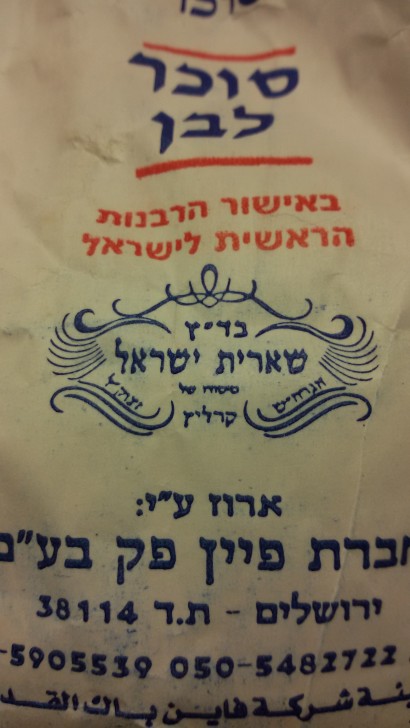 The packages of sugar did not say "kosher" anywhere on the package, but they did say "b'ishur harabbanut hareishit lyisrael" - with the approval of the Israeli Rabbanut. In addition, the packages also bore the logo of the Badatz Sheairis Yisrael, also without using the words "under the supervision of". As well, the packaging is very similar in style to a different brand, making ti clear the intent to dupe the consumer.
It turns out that the Rabbanut had removed its hechsher from this sugar 5 years previously, the Sheairis says they never gave a hechsher on this, and it is a clear case of kashrut fraud.
The suit is class action and asks for 4,000,000nis to compensate all the company's clients that were defrauded, and it wants the courts to force the company to stop distributing the sugar in this fashion.
The company has denied any wrongdoing and says they hold ishurim from both the Rabbanut and from Sheairis. source: Srugim
I am not quite sure how they can make such a claim, considering Sheairis says they have not given this company a hechsher, and the Rabbanut says they removed the hechsher years ago. It is not a matter of interpretation, either they have it or they don't. One of the sides is definitely not being honest.
If this goes through, and if they win the suit, will we see more lawsuits against companies that perpetrate kashrut fraud?
Whether or not it has happened before, it is happening now. A Yeshiva High School has filed a class action suit against a company that produces and distributes sugar for having sold sugar with a fraudulent hechsher.
The packages of sugar did not say "kosher" anywhere on the package, but they did say "b'ishur harabbanut hareishit lyisrael" - with the approval of the Israeli Rabbanut. In addition, the packages also bore the logo of the Badatz Sheairis Yisrael, also without using the words "under the supervision of". As well, the packaging is very similar in style to a different brand, making ti clear the intent to dupe the consumer.It turns out that the Rabbanut had removed its hechsher from this sugar 5 years previously, the Sheairis says they never gave a hechsher on this, and it is a clear case of kashrut fraud.
The suit is class action and asks for 4,000,000nis to compensate all the company's clients that were defrauded, and it wants the courts to force the company to stop distributing the sugar in this fashion.
The company has denied any wrongdoing and says they hold ishurim from both the Rabbanut and from Sheairis. source: Srugim
I am not quite sure how they can make such a claim, considering Sheairis says they have not given this company a hechsher, and the Rabbanut says they removed the hechsher years ago. It is not a matter of interpretation, either they have it or they don't. One of the sides is definitely not being honest.
If this goes through, and if they win the suit, will we see more lawsuits against companies that perpetrate kashrut fraud?
------------------------------------------------------
Reach thousands of readers with your ad by advertising on Life in Israel
------------------------------------------------------
Apr 21, 2016
Polish-Israeli rabbi not even Jewish
There is a very strange story coming to light in Poland right now, in the town of Posnan.
A man shows up, appearing as a Haredi Jew - dressed in classic Haredi garb, sporting a beard and peyos, calling himself Rav Yaakov Ben Nistal from Haifa, Israel. Rabbi Ben Nistal was looking for a job as a community rabbi.

I guess he was charismatic and likable, and was soon hired by the community. Ben Nistal represented them in full capacity as rabbi, partaking in events organized by various organizations, City Hall, and all the normal things city rabbis do.
At some point it became clear that there was something suspicious regarding Ben Nistal - he spoke no Hebrew, new little about Judaism and almost nothing about Torah.
A local (Polish) newspaper just exposed Ben Nistal as being a fraud. Ben Nistal's real name is Yatzik Nishchota from another town in Poland and is not even Jewish. He was positively identified by another resident of his hometown when he was on national television for some interview, posing as the Chief Rabbi of Posnan.
Since he was exposed, the honorable "chief rabbi" has gone on the lam and has yet to surface anywhere in public.
A community representative has said that Nishchota never received any money for hsi services or for his participation in events. Supposedly people from the community are now claiming that they were suspicious for a while already that something strange was going on as it was clear that Ben Nistal did not know much about Judaism and customs and whatnot, did not know basic words of basic prayers, how to hold a Torah properly, and the like..
Weird story.
I don't think any comment on this is even necessary. I do wonder why he would do it. Someone suggested to me that there are many Christians in Poland who love the Jews and want to make up for past bad behavior of Polish Christians, and perhaps thought he had found a way to help a small community that needed leadership. That sounds too convenient to me. Also, he did not have to put on fake beard and peyos and color his hair and take a fake name and play rabbi - he could have done whatever in his capacity to help as a Christian.
Maybe he wanted honor and respect. Maybe he was just curious to see if he could get away with it. Maybe he started it off as a prank of sorts and then just continued it when he saw it was going well.
Or maybe there was another reason. Who knows? But it is a crazy story. The picture of him that is going around makes him look as if he is straight out of one of the many movies about hassidic Jewry where the actor is clearly dressed up...
I wonder if he was on the newly-formed Israeli Rabbanut list as approved for performing conversions..
We must be living in amazing times when Polish Christians want to dress up and act like Jews...
A man shows up, appearing as a Haredi Jew - dressed in classic Haredi garb, sporting a beard and peyos, calling himself Rav Yaakov Ben Nistal from Haifa, Israel. Rabbi Ben Nistal was looking for a job as a community rabbi.
I guess he was charismatic and likable, and was soon hired by the community. Ben Nistal represented them in full capacity as rabbi, partaking in events organized by various organizations, City Hall, and all the normal things city rabbis do.
At some point it became clear that there was something suspicious regarding Ben Nistal - he spoke no Hebrew, new little about Judaism and almost nothing about Torah.
A local (Polish) newspaper just exposed Ben Nistal as being a fraud. Ben Nistal's real name is Yatzik Nishchota from another town in Poland and is not even Jewish. He was positively identified by another resident of his hometown when he was on national television for some interview, posing as the Chief Rabbi of Posnan.
Since he was exposed, the honorable "chief rabbi" has gone on the lam and has yet to surface anywhere in public.
A community representative has said that Nishchota never received any money for hsi services or for his participation in events. Supposedly people from the community are now claiming that they were suspicious for a while already that something strange was going on as it was clear that Ben Nistal did not know much about Judaism and customs and whatnot, did not know basic words of basic prayers, how to hold a Torah properly, and the like..
Weird story.
I don't think any comment on this is even necessary. I do wonder why he would do it. Someone suggested to me that there are many Christians in Poland who love the Jews and want to make up for past bad behavior of Polish Christians, and perhaps thought he had found a way to help a small community that needed leadership. That sounds too convenient to me. Also, he did not have to put on fake beard and peyos and color his hair and take a fake name and play rabbi - he could have done whatever in his capacity to help as a Christian.
Maybe he wanted honor and respect. Maybe he was just curious to see if he could get away with it. Maybe he started it off as a prank of sorts and then just continued it when he saw it was going well.
Or maybe there was another reason. Who knows? But it is a crazy story. The picture of him that is going around makes him look as if he is straight out of one of the many movies about hassidic Jewry where the actor is clearly dressed up...
I wonder if he was on the newly-formed Israeli Rabbanut list as approved for performing conversions..
We must be living in amazing times when Polish Christians want to dress up and act like Jews...
------------------------------------------------------
Reach thousands of readers with your ad by advertising on Life in Israel
------------------------------------------------------
Apr 1, 2014
Rabbanut kashrut update points to increased fraud on meat kashrut
The Rabbanut has put out, in its latest kashrut fraud update, a series of places in which non-kosher meat was caught being passed off as kosher. The list and details included meat at butcheries in Emek Yizrael, Ramat Gan, Bet Shemesh (Atliz on Rechov Herzl 5), Kiryat Ekron, Rehovot and Merom Hagalil...
I don't see a need to post all the details, but if you want them you are welcome to contact me.
What I do want to post is the warning the Rabbanut issued. The Rabbanut added:
There is increased demand for meat and chicken as the holiday approaches. In the markets there are many products being sold at very cheap prices - whose low price might possibly be attributed to various kashrut issues and sometimes even health issues. The community of people who keep kashrut are requested to buy meat only from businesses that present valid kashrut certification from the local Rabbinate....

If someone is trying to sell you meat at unusually cheap prices, take extra caution. Make sure the meat is in good condition, has not passed the expiry date and that you are familiar with the kashrut and that there is nothing suspicious (such as a kashrut symbol that does not look the way it should, it might be a forgery, etc.)..
בברכת יאכלו ענבים וישבעו
I don't see a need to post all the details, but if you want them you are welcome to contact me.
What I do want to post is the warning the Rabbanut issued. The Rabbanut added:
There is increased demand for meat and chicken as the holiday approaches. In the markets there are many products being sold at very cheap prices - whose low price might possibly be attributed to various kashrut issues and sometimes even health issues. The community of people who keep kashrut are requested to buy meat only from businesses that present valid kashrut certification from the local Rabbinate....
If someone is trying to sell you meat at unusually cheap prices, take extra caution. Make sure the meat is in good condition, has not passed the expiry date and that you are familiar with the kashrut and that there is nothing suspicious (such as a kashrut symbol that does not look the way it should, it might be a forgery, etc.)..
בברכת יאכלו ענבים וישבעו
------------------------------------------------------
Reach thousands of readers with your ad by advertising on Life in Israel
------------------------------------------------------
Mar 30, 2014
Interesting Psak: cheating in school
Is cheating allowed in school? copying work?
Surprisingly enough, it depends who you ask.
While many poskim will say it is prohibited to cheat in school, I can even see some giving perhaps a private, not public, psak saying ti is allowed. I cannot even think of any rationale that works, but I can fathom it happening. I cannot fathom a rav giving a public, general, psak that cheating is allowed.
Yet it happened.
Rav Avraham Yosef, Chief Rabbi of Holon, paskened so on the Moreshet "Ask The Rabbi" site.
The questioner asked:
My friend needs to submit work in university. She took work prepared by somebody else and asked me to help her rewrite it so it would not look noticeably the same (the original was submitted to the same professor).
I think the professor is aware of the industry of recycling schoolwork in his course (the fact is that he gives the exact same material), but I am not sure. Am I allowed to help my friend rewrite the work?
Rav Yosef answered simply:
It is allowed, and it is a mitzva of gemilut chessed (kindness), especially if she knows the material.
Understandably this psak raised a firestorm. I still cannot believe any rav would give such a psak in public.
A students organization wrote complaining about the psak saying it is prohibited by university rules, as well as immoral.
 In all the various articles I saw regarding this subject, including on the frum websites, in none of them does Rav Yosef respond and explain his psak or his rationale.
It makes no sense to me. His answer does not even make sense to me. gemilut chessed to cheat?
In my attempt to be dan lkaf zchus, give him the benefit of the doubt, this is the explanation I was able to come up with.
Possibly, Rav Yosef misunderstood the original question. Perhaps he understood the question to be not about cheating and copying schoolwork, but to be about helping another student write the work rather than making her write it herself. Perhaps Rav Yosef understood the question to be if she can help her friend write her paper or not. And to that Rav Yosef responded that it is ok to, it is gemilut chessed, as long as the student knows the material, so the helper isnt the one really writing the paper.
That's the best I could come up with, though to be honest the question seems pretty straightforward and difficult to misunderstand. I wish he would explain himself, because as it is with this public psak out saying it is allowed to cheat, all it causes is a chilul hashem,
------------------------------------------------------
Surprisingly enough, it depends who you ask.
While many poskim will say it is prohibited to cheat in school, I can even see some giving perhaps a private, not public, psak saying ti is allowed. I cannot even think of any rationale that works, but I can fathom it happening. I cannot fathom a rav giving a public, general, psak that cheating is allowed.
Yet it happened.
Rav Avraham Yosef, Chief Rabbi of Holon, paskened so on the Moreshet "Ask The Rabbi" site.
The questioner asked:
My friend needs to submit work in university. She took work prepared by somebody else and asked me to help her rewrite it so it would not look noticeably the same (the original was submitted to the same professor).
I think the professor is aware of the industry of recycling schoolwork in his course (the fact is that he gives the exact same material), but I am not sure. Am I allowed to help my friend rewrite the work?
Rav Yosef answered simply:
It is allowed, and it is a mitzva of gemilut chessed (kindness), especially if she knows the material.
Understandably this psak raised a firestorm. I still cannot believe any rav would give such a psak in public.
A students organization wrote complaining about the psak saying it is prohibited by university rules, as well as immoral.
In all the various articles I saw regarding this subject, including on the frum websites, in none of them does Rav Yosef respond and explain his psak or his rationale.It makes no sense to me. His answer does not even make sense to me. gemilut chessed to cheat?
In my attempt to be dan lkaf zchus, give him the benefit of the doubt, this is the explanation I was able to come up with.
Possibly, Rav Yosef misunderstood the original question. Perhaps he understood the question to be not about cheating and copying schoolwork, but to be about helping another student write the work rather than making her write it herself. Perhaps Rav Yosef understood the question to be if she can help her friend write her paper or not. And to that Rav Yosef responded that it is ok to, it is gemilut chessed, as long as the student knows the material, so the helper isnt the one really writing the paper.
That's the best I could come up with, though to be honest the question seems pretty straightforward and difficult to misunderstand. I wish he would explain himself, because as it is with this public psak out saying it is allowed to cheat, all it causes is a chilul hashem,
------------------------------------------------------
Reach thousands of readers with your ad by advertising on Life in Israel
------------------------------------------------------
Mar 9, 2014
treating innocent people like criminals
I saw the strangest announcement - it said that many haredim were appearing at the local branch of the Ministry of Interior today to print out new identification cards to replace worn out cards with worn out photographs - ostensibly because with tighter inspection expected in Tuesday's elections, playing it safe means having a fresh identification card rather than a worn out one that some suspicious inspector might invalidate.

The announcement goes on that Richard Peres, a city councilman, contacted the police and the Ministry of Interior and warned them to be on the lookout for fraud (people trying to get other people's id cards with their pictures, perhaps?). The police subsequently sent down an officer to inspect everyone in line and check their id cards.
Richard Peres is not known for his love for haredim (though I dont know if he is anti-haredi), and is also the main person behind the idea of splitting Bet Shemesh into two cities. With these people doing nothing wrong, refreshing your identity card is a perfectly legal activity, there was no place to bring the police into the matter. The police should have told him to jump in the lake or else come to them with actual claims of a crime.
I understand people are jumpy and prefer to err on the side of caution, considering the situation, but that does not give anyone a right to treat innocent people like criminals.
The only justification would be that these people were brought to the office by activists from the Koach party - the party that was responsible for at least much of the fraud (or attempts at fraud) in the previous elections, and maybe that justified raising suspicions. Perhaps the activists should have been questioned rather than the people refreshing their ID cards.
The announcement goes on that Richard Peres, a city councilman, contacted the police and the Ministry of Interior and warned them to be on the lookout for fraud (people trying to get other people's id cards with their pictures, perhaps?). The police subsequently sent down an officer to inspect everyone in line and check their id cards.
Richard Peres is not known for his love for haredim (though I dont know if he is anti-haredi), and is also the main person behind the idea of splitting Bet Shemesh into two cities. With these people doing nothing wrong, refreshing your identity card is a perfectly legal activity, there was no place to bring the police into the matter. The police should have told him to jump in the lake or else come to them with actual claims of a crime.
I understand people are jumpy and prefer to err on the side of caution, considering the situation, but that does not give anyone a right to treat innocent people like criminals.
The only justification would be that these people were brought to the office by activists from the Koach party - the party that was responsible for at least much of the fraud (or attempts at fraud) in the previous elections, and maybe that justified raising suspicions. Perhaps the activists should have been questioned rather than the people refreshing their ID cards.
------------------------------------------------------
Reach thousands of readers with your ad by advertising on Life in Israel
------------------------------------------------------
Mar 4, 2014
Haredi candidate in Afula gets disqualified
The haredim just can't get a break...
now in Afula the Haredi representative, who was representing a joint party list of Degel and Shas, has been evicted by the Supreme Court from the City Council.
After squeaking in by just 2 votes over the minimum, the single Haredi representative has been disqualified. A competing party, called "Choosing Afula" had petitioned the court because 4 voting slips of theirs had been disqualified for having been marked up improperly.
According to Bechadrei, the Degel party also lost 25 votes due to similar disqualifications.
The Supreme Court decided in favor of "Choosing Afula" and overturned the disqualification of those slips. This pushed "Choosing Afula" past Degel by just 2 votes.
The article does not say if fraud was involved in the disqualification of the relevant ballots, but that seems to be the implication (at least to me).
MK Moshe Gafni (UTJ) responded by saying its already clear to everyone that the court is conspiring against the Haredi community.. and pointed to Bet Shemesh as the prime example..
The Israeli electoral system really needs to be reformed and to go to some form of digital or electronic voting. This voter slip situation is a complete mess - besides for the possibility of fraud, which will surely remain in one form or another in electronic voting as well, there is just too much room to mess up with this archaic system of paper ballots. Even if they insist on continuing to use non-electronic voting, the system needs to be changed away from the type of ballot slips currently used..
of course this won't resolve anti-haredi bias by the courts, but regardless of that the election system is ridiculous and needs to be changed...
now in Afula the Haredi representative, who was representing a joint party list of Degel and Shas, has been evicted by the Supreme Court from the City Council.
After squeaking in by just 2 votes over the minimum, the single Haredi representative has been disqualified. A competing party, called "Choosing Afula" had petitioned the court because 4 voting slips of theirs had been disqualified for having been marked up improperly.
According to Bechadrei, the Degel party also lost 25 votes due to similar disqualifications.
The Supreme Court decided in favor of "Choosing Afula" and overturned the disqualification of those slips. This pushed "Choosing Afula" past Degel by just 2 votes.
The article does not say if fraud was involved in the disqualification of the relevant ballots, but that seems to be the implication (at least to me).
MK Moshe Gafni (UTJ) responded by saying its already clear to everyone that the court is conspiring against the Haredi community.. and pointed to Bet Shemesh as the prime example..
The Israeli electoral system really needs to be reformed and to go to some form of digital or electronic voting. This voter slip situation is a complete mess - besides for the possibility of fraud, which will surely remain in one form or another in electronic voting as well, there is just too much room to mess up with this archaic system of paper ballots. Even if they insist on continuing to use non-electronic voting, the system needs to be changed away from the type of ballot slips currently used..
of course this won't resolve anti-haredi bias by the courts, but regardless of that the election system is ridiculous and needs to be changed...
------------------------------------------------------
Reach thousands of readers with your ad by advertising on Life in Israel
------------------------------------------------------
Jan 23, 2014
Bet Shemesh elections Supreme Court update
looking for an update about the hearing in the Supreme Court about the Bet Shemesh elections request for appeal?
There has been no decision yet.
Lawyers for all relevant parties presented their arguments. When arguments concluded, judges left, said decision would be announced in coming days.
There has been no decision yet.
Lawyers for all relevant parties presented their arguments. When arguments concluded, judges left, said decision would be announced in coming days.
------------------------------------------------------
Reach thousands of readers with your ad by advertising on Life in Israel
------------------------------------------------------
Subscribe to:
Posts (Atom)
Related Posts
