
Showing posts with label train. Show all posts
Showing posts with label train. Show all posts
Jul 17, 2023
how will we know?
The train lines go down often enough (today a line was down for a significant portion of the day due to an electrical fault) that I am not sure the protestors need to threaten to block the trains.
And if they do threaten this anyway, and actually protest by train lines and block trains, how will anyone know if the trains are not running because of the protests or if they are not running because of the trains?
------------------------------------------------------
Reach thousands of readers with your ad by advertising on Life in Israel
Reach thousands of readers with your ad by advertising on Life in Israel
------------------------------------------------------
Jun 13, 2022
Train Authority loses lawsuit over minyan seating
According to Globes, the courts ruled against the Israel Rail Authority in a case in which a group of men decided to daven in one of the rail cars, and the woman was told by a train attendant/usher to move to sit in another car. She was awarded 16,000nis by the courts for the incident.
It isnt in this article but I read elsewhere that the train people defended themselves saying that they did not tell her to move but when she complained about the noise and commotion of the minyan they suggested that they could help her find a seat somewhere else. I guess the courts either did not believe them or felt that this too is problematic.
I have not davened in the Bet Shemesh train minyan in ages, but I do remember that when it first started there was a common decency rule (my name) stating that nobody davening in the minyan is allowed to ask any other passenger in the rail car to move. And plenty of people enjoyed sitting there, both men and women who were not part of the minyan but either enjoyed the atmosphere, used it to daven along quietly themselves, or even some who just couldnt find other seats in other cars on busy days with overcrowding. I am not aware of anyone having asked or encouraged non-minyan people to move.
If the train attendant really asked her to move, they deserve to be fined. The train isnt anyone's personal fiefdom. If they were just being helpful because she expressed her annoyance, then she achieved her goals (as stated in the article, as rejecting the possibility of any woman being asked to move because she disturbs a man) in an underhanded manner.
.
------------------------------------------------------
Reach thousands of readers with your ad by advertising on Life in Israel
Reach thousands of readers with your ad by advertising on Life in Israel
------------------------------------------------------
Jun 22, 2020
the train less traveled
There is no real reason for people to be more afraid of using the train nowadays than using the bus, in regards to the risk of exposure to CoronaVirus. Both the train and the bus can be overpacked, so if someone is afraid of using the just-renewed train, they should be just as fearful of using the bus.
The news is reporting that the train started functioning today, but instead of the normal 250,000 people that use it on a daily basis to get to work or elsewhere around the country, only about 40,000 people reserved seats for today, and so, as of now, far only 17,000 have reserved for tomorrow. They are reporting on empty platforms, the regular crowds not present, etc.
I would say that more than the fear of CoronaVirus exposure as the cause of this is possibly a number of factors:
- the fact that it is new. The train just started. Maybe many people didn't beleieve it would happen, with another last minute delay or postponement so they wanted to see it up and running before relying on it
- the fact that it is difficult - you have to reserve a spot. Maybe plenty felt they didn't want to have to fight about getting a seat and if they couldnt reserve they would be stuck without a reasonable alternative.
- many people have still nor returned to work. Manye businesses shut down, many employees were laid off, many employees are still on furlough (aka chalat) even if the business did reopen (many reopened with minimal staff), or other reasons... so fewer people are traveling for work.
and probably some other reasons.
The news is reporting that the train started functioning today, but instead of the normal 250,000 people that use it on a daily basis to get to work or elsewhere around the country, only about 40,000 people reserved seats for today, and so, as of now, far only 17,000 have reserved for tomorrow. They are reporting on empty platforms, the regular crowds not present, etc.
I would say that more than the fear of CoronaVirus exposure as the cause of this is possibly a number of factors:
- the fact that it is new. The train just started. Maybe many people didn't beleieve it would happen, with another last minute delay or postponement so they wanted to see it up and running before relying on it
- the fact that it is difficult - you have to reserve a spot. Maybe plenty felt they didn't want to have to fight about getting a seat and if they couldnt reserve they would be stuck without a reasonable alternative.
- many people have still nor returned to work. Manye businesses shut down, many employees were laid off, many employees are still on furlough (aka chalat) even if the business did reopen (many reopened with minimal staff), or other reasons... so fewer people are traveling for work.
and probably some other reasons.
------------------------------------------------------
Reach thousands of readers with your ad by advertising on Life in Israel
Reach thousands of readers with your ad by advertising on Life in Israel
------------------------------------------------------
Feb 6, 2020
tefillin at the train station
A "flurry" of tweets, that could have turned into a fight, turned funny, and still could turn into a fight.
An organization called "Ba Rakevet" is dedicated to reporting (on twitter) information about issues with the trains in Israel in order to encourage improved service. They report on delays, technical failures, and all sorts of problems.
Yesterday they tweeted the following:
An organization called "Ba Rakevet" is dedicated to reporting (on twitter) information about issues with the trains in Israel in order to encourage improved service. They report on delays, technical failures, and all sorts of problems.
Yesterday they tweeted the following:
אז ביררנו...— בארכבת (@InTheRakevet) February 5, 2020
ואסור לפתוח דוכנים להנחת תפילין בתחנות הרכבת.
נתקלתם - דווחו לנו ונעביר הלאה לטיפול pic.twitter.com/g2gBZJUDTH
They say they looked into it and it is prohibited to set up a booth for putting on tefillin int eh train stations. They ask people to report any such booths they might come across.
Shortly after they put out another tweet saying they looked into it further and the station manager at that station had allowed the booth.
Regardless of the second tweet (I checked - based on the timeline the second tweet was well before the response), Minister of Transportation Betzalel Smotritch tweeted in response saying that he thought their role was to help improve the train service and not to deal in anti-semitism. Smotritch then clarified that as long as he is Minister of Transportation setting up booths for tefillin in train stations (and anywhere else) will be allowed and encouraged, and if you try and anyone makes trouble contact him and he'll take care of it.
לתומי חשבתי שבאתם לשפר את השירות של הרכבת ולא לעסוק באנטישמיות ורדיפת יהדות.— בצלאל סמוטריץ' (@bezalelsm) February 5, 2020
אבהיר: כל עוד אני שר התחבורה מותר ואף רצוי להעמיד דוכני יהדות והנחת תפילין בתחנות הרכבת (ולא רק בהן) ניסיתם להקים ונתקלתם בקושי? פנו אלי ונטפל בעזרת השם. https://t.co/4XfJTmAH5T
So far so good.
Shortly after, the Women of the Wall followed up with their own tweet saying they are happy to see the minister committed to the mitzva of tefillin and making Judaism approachable to those who want it. They then announce that in light of that, they will soon be setting up booths in train stations (for women to put on tefillin) and will appreciate assistance form the minister in getting approval for the booths..
אנחנו שמחות לראות את מחויבותו הגדולה של השר למצוות הנחת תפילין והנגשת היהדות למי שחפץ בכך.— נשות הכותל (@Neshot_hakotel) February 6, 2020
בקרוב גם אנחנו נקים דוכן הנחת תפילין לנשים ונשמח לעזרת השר בקבלת אישור לדוכן.
סומכות עליך כבוד השר. https://t.co/6xriz3SKZS
I have to appreciate the sharp response taking advantage of the opportunity given to them by Minister Smotritch!
------------------------------------------------------
Reach thousands of readers with your ad by advertising on Life in Israel
Reach thousands of readers with your ad by advertising on Life in Israel
------------------------------------------------------
Jan 9, 2020
New! A fast train from Tel Aviv to Jerusalem, Israel - information and sites to see on the way (video)
------------------------------------------------------
Reach thousands of readers with your ad by advertising on Life in Israel
Reach thousands of readers with your ad by advertising on Life in Israel
------------------------------------------------------
Aug 20, 2019
Interesting Psak: riding the trains after Shabbos
Rav Moshe Shternbuch has issued an interesting psak about riding the trains in Israel after Shabbos.
Ladaat brings the psak of Rav Shternbuch, Raavad of the Eida Hachareidis, that one should not ride any Israeli train that runs on any line that was worked on on Shabbos until the time of "kdei sheyaasu", the amount of time it takes to have done that specific work not on Shabbos, wuill have passed. Only after that time has passed will it be ok to ride the trains.
Unfortunately he does not say how much time that is, but he gives the general rule of not riding the train until the amount of time that it went into operation was advanced by the work done on Shabbos has passed.
Rav Shternbuch adds that the authorities should be told about this, as doing so prevents future chilul shabbos as they would try to avoid any boycott, as has happened in other areas in the past.
Interestingly, Rav Shternbuch says there is a discussion about whether something produced via chilul shabbos should be prohibited forever or only for the same amount of time it took to produce on Shabbos. The example given is of someone who dug a grave on Shabbos and that is prohibited forever, but the question is if that was specific for that case but in other scenarios "the amount of time" would be enough or if by other things as well the prohibition is permanent. Rav Shternbuch brings sources that the permanent prohibition was only in that scenario of the grave but not in other cases. Normally "kdei sheyaasu" is all you need.
And therefore, he concludes, riding the train is ok but only after "kdei sheyaasu" will have passed, and to calculate that amount of time one has to be able to figure out how much additional time would have been needed to work on the rail lines had they not worked on them on Shabbos.
Ladaat brings the psak of Rav Shternbuch, Raavad of the Eida Hachareidis, that one should not ride any Israeli train that runs on any line that was worked on on Shabbos until the time of "kdei sheyaasu", the amount of time it takes to have done that specific work not on Shabbos, wuill have passed. Only after that time has passed will it be ok to ride the trains.
Unfortunately he does not say how much time that is, but he gives the general rule of not riding the train until the amount of time that it went into operation was advanced by the work done on Shabbos has passed.
Rav Shternbuch adds that the authorities should be told about this, as doing so prevents future chilul shabbos as they would try to avoid any boycott, as has happened in other areas in the past.
Interestingly, Rav Shternbuch says there is a discussion about whether something produced via chilul shabbos should be prohibited forever or only for the same amount of time it took to produce on Shabbos. The example given is of someone who dug a grave on Shabbos and that is prohibited forever, but the question is if that was specific for that case but in other scenarios "the amount of time" would be enough or if by other things as well the prohibition is permanent. Rav Shternbuch brings sources that the permanent prohibition was only in that scenario of the grave but not in other cases. Normally "kdei sheyaasu" is all you need.
And therefore, he concludes, riding the train is ok but only after "kdei sheyaasu" will have passed, and to calculate that amount of time one has to be able to figure out how much additional time would have been needed to work on the rail lines had they not worked on them on Shabbos.
------------------------------------------------------
Reach thousands of readers with your ad by advertising on Life in Israel
Reach thousands of readers with your ad by advertising on Life in Israel
------------------------------------------------------
Oct 21, 2018
Interesting Psak: Mashiach will cancel the train line
Kikar is reporting about an interesting psak from Rav Yitzchak Zilbershtein regarding the ne wtrain line from Tel Aviv to Jerusalem.
Rav Zilbershtein was asked that with the new train line now in operation, the fact that it was constructed with horrible chilul shabbos, are we allowed to use the train line - perhaps because for the first 3 months it is free of charge maybe it is allowed as nobody is profiting or benefiting now and only later when they begin charging for riding the train will one have to stop using it for as many shabbos days as those that were desecrated, or perhaps even now when it is free it cannot be used until "kdei she'yaasu" - the amount of time against the amount of shabbos desecration - has passed?
Rav Yitzchak Zilbershtein responded that perhaps one could find a hetter to use the train, as it isn't clearly know how many shabbatot were desecrated to speed up the train line construction, and perhaps it even caused all the problems the train is now experiencing. Still, a God-fearing person will avoid using the train whose lines were built on Shabbos...
Rav Zilbershtein explains further that it seems to be allowed because nobody can cause land allocated for public use to become prohibited.
Rav Zilbershtein concludes that some think that this train line, bringing the masses of people to Jerusalem quickly is a sign of the impending arrival of Mashiach, though the truth is that when Mashiach arrives he will cancel these disgusting train lines that were built via chilul shabos. How is it possible that one can think that we will travel to the Mikdash via a train that was built via chilul shabbos??
Rav Zilbershtein was asked that with the new train line now in operation, the fact that it was constructed with horrible chilul shabbos, are we allowed to use the train line - perhaps because for the first 3 months it is free of charge maybe it is allowed as nobody is profiting or benefiting now and only later when they begin charging for riding the train will one have to stop using it for as many shabbos days as those that were desecrated, or perhaps even now when it is free it cannot be used until "kdei she'yaasu" - the amount of time against the amount of shabbos desecration - has passed?
Rav Yitzchak Zilbershtein responded that perhaps one could find a hetter to use the train, as it isn't clearly know how many shabbatot were desecrated to speed up the train line construction, and perhaps it even caused all the problems the train is now experiencing. Still, a God-fearing person will avoid using the train whose lines were built on Shabbos...
Rav Zilbershtein explains further that it seems to be allowed because nobody can cause land allocated for public use to become prohibited.
Rav Zilbershtein concludes that some think that this train line, bringing the masses of people to Jerusalem quickly is a sign of the impending arrival of Mashiach, though the truth is that when Mashiach arrives he will cancel these disgusting train lines that were built via chilul shabos. How is it possible that one can think that we will travel to the Mikdash via a train that was built via chilul shabbos??
------------------------------------------------------
Reach thousands of readers with your ad by advertising on Life in Israel
Reach thousands of readers with your ad by advertising on Life in Israel
------------------------------------------------------
Feb 21, 2018
Opening of High Speed Rail Line Delayed
Today's news has an announcement that the opening of new high speed rail line will be delayed by half a year in light of the issues recently raised of security flaws in the system.
That is bad news in general, but the target date of Erev Pesach was considered unrealistically ambitious anyway. The good news is that it means the line won't be opened too early and lead to some sort of disastrous tragedy.
There are two interesting aspects to this:
1. MK Yaakov Asher (UTJ) compared the delays due to safety and regulatory matters to the need to work on the rail lines on Shabbos to avoid delays. Asher finds it unacceptable that they will delay the new rail line just like that for 6 months due to regulatory issues but Shabbos isn't considered a valid reason to delay the line and take longer to build it. He does not seem to get that the people behind it don't care about Shabbos or about what he thinks about Shabbos. To them it is just another day of the week that they are waiving the right to not work in order to speed up the work on the line.
2. Behadrei's reporting on this calls it a "blow to the mechalelei shabbos". I am not sure why ti is more of a blow to the secular people who don't keep Shabbos than it is to religious people. All sorts of people, Jews and non-Jews, religious, secular and Haredi alike would have used this train and will be inconvenienced by its delay. The delay is a blow to everyone, and is good (from a safety perspective) for everyone.
That is bad news in general, but the target date of Erev Pesach was considered unrealistically ambitious anyway. The good news is that it means the line won't be opened too early and lead to some sort of disastrous tragedy.
There are two interesting aspects to this:
1. MK Yaakov Asher (UTJ) compared the delays due to safety and regulatory matters to the need to work on the rail lines on Shabbos to avoid delays. Asher finds it unacceptable that they will delay the new rail line just like that for 6 months due to regulatory issues but Shabbos isn't considered a valid reason to delay the line and take longer to build it. He does not seem to get that the people behind it don't care about Shabbos or about what he thinks about Shabbos. To them it is just another day of the week that they are waiving the right to not work in order to speed up the work on the line.
2. Behadrei's reporting on this calls it a "blow to the mechalelei shabbos". I am not sure why ti is more of a blow to the secular people who don't keep Shabbos than it is to religious people. All sorts of people, Jews and non-Jews, religious, secular and Haredi alike would have used this train and will be inconvenienced by its delay. The delay is a blow to everyone, and is good (from a safety perspective) for everyone.
------------------------------------------------------
Reach thousands of readers with your ad by advertising on Life in Israel
Reach thousands of readers with your ad by advertising on Life in Israel
------------------------------------------------------
Feb 19, 2018
Will new high speed train be safe?
The Ministry of Transportation recently announced the end of March, Erev Pesach, as the date for the opening of the first stage of the high speed rail between Jerusalem and Tel Aviv, with the new train being available to bring tens of thousands of people to Jerusalem for the holidays at very high speeds.
truly a wonderful and optimistic announcement.
Globes is reporting that experts are warning that the project is not even close to being ready and there is no way they will be able to safely operate the new line at the end of March - unless they speed up the work and in the process ignore important safety factors. You can get all the details of the various concerns in the Globes article, but the issues are truly concerning and one wonders how the MoT really expects to be ready, considering the issues raised by those experts.
Hopefully the experts are just being overly cautious with their warnings, but hopefully there will not be a horrible tragedy when the train opens. The MoT response is that they are working very hard with all the relevant parties and authorities and are making great efforts to finish on time while ensuring passenger safety.
Nobody really believed, from day 1, that the project would be finished on time. The agressive target date recently announced brought out more skepticism, but also made one wonder why pick such an early date if they are not even close to ready, suggesting that perhaps they are further along than expected. They now have about 5.5 weeks until the conductor is supposed to toot the first horn on that line, so it is coming down to the wire. I probably would not have been on any of those first few days of train rides anyway, just because I don't like to go to such events and attractions with big crowds, but now I will probably just stay away until it is clear that train route is safe.
truly a wonderful and optimistic announcement.
Globes is reporting that experts are warning that the project is not even close to being ready and there is no way they will be able to safely operate the new line at the end of March - unless they speed up the work and in the process ignore important safety factors. You can get all the details of the various concerns in the Globes article, but the issues are truly concerning and one wonders how the MoT really expects to be ready, considering the issues raised by those experts.
Hopefully the experts are just being overly cautious with their warnings, but hopefully there will not be a horrible tragedy when the train opens. The MoT response is that they are working very hard with all the relevant parties and authorities and are making great efforts to finish on time while ensuring passenger safety.
Nobody really believed, from day 1, that the project would be finished on time. The agressive target date recently announced brought out more skepticism, but also made one wonder why pick such an early date if they are not even close to ready, suggesting that perhaps they are further along than expected. They now have about 5.5 weeks until the conductor is supposed to toot the first horn on that line, so it is coming down to the wire. I probably would not have been on any of those first few days of train rides anyway, just because I don't like to go to such events and attractions with big crowds, but now I will probably just stay away until it is clear that train route is safe.
------------------------------------------------------
Reach thousands of readers with your ad by advertising on Life in Israel
Reach thousands of readers with your ad by advertising on Life in Israel
------------------------------------------------------
Jan 10, 2018
high speed train to bring people to Jerusalem on Pesach
Minster of Transportation Yisrael Katz has announced that the new high speed train between Tel Aviv and Jerusalem will begin to operate right before Pesach, in 3 months - specifically March 30, 2018 - Erev Pesach.
According to Katz, the first 3 months transportation on the new line will be free when using a rav kav card. The route is 28 minutes between the two cities. The train will fly at a speed of 160kmph, which is almost as fast as the average driver on the highways of Israel when there is no traffic.
Initially the route will be between the train station next to Binyanei Hauma in Jerusalem and the Hagana train station in Tel Aviv. There will be two trains per hour on this route (to start). I don't know if that is two trains in each direction per hour or two trains total, one in each direction.
The second stage will add a second train track and will increase the number of trains to 3 per hour - every 20 minutes a train will leave Jerusalem to Tel Aviv, and vice versa - with the possibility of increasing the routes to 6 per hour when necessary.
The interesting part is Katz's promotion in the announcement, saying that by Pesach we will enable all the people of Israel to ascend in the masses to Jerusalem via the high speed train from Tel Aviv. We are connecting and strengthening the capital, Jerusalem, and connecting to the history of Jerusalem.
I say interesting because Katz did not speak about connecting Jerusalem to the central region, making it easier for people to get to work or tourism. He did not talk about other benefits of the train bringing people to work in Jerusalem, possibly creating more expansion of business, more tourism, other financial benefits to the country or to those specific cities. He spoke about bringing people to Jerusalem, helping them connect to Jerusalem and the history. He spoke about them coming to Jerusalem to visit on Pesach and be a part of the holiday in Jerusalem.
There are a lot of benefits to the new train. Katz focused on the most Jewish of them.
According to Katz, the first 3 months transportation on the new line will be free when using a rav kav card. The route is 28 minutes between the two cities. The train will fly at a speed of 160kmph, which is almost as fast as the average driver on the highways of Israel when there is no traffic.
Initially the route will be between the train station next to Binyanei Hauma in Jerusalem and the Hagana train station in Tel Aviv. There will be two trains per hour on this route (to start). I don't know if that is two trains in each direction per hour or two trains total, one in each direction.
The second stage will add a second train track and will increase the number of trains to 3 per hour - every 20 minutes a train will leave Jerusalem to Tel Aviv, and vice versa - with the possibility of increasing the routes to 6 per hour when necessary.
The interesting part is Katz's promotion in the announcement, saying that by Pesach we will enable all the people of Israel to ascend in the masses to Jerusalem via the high speed train from Tel Aviv. We are connecting and strengthening the capital, Jerusalem, and connecting to the history of Jerusalem.
I say interesting because Katz did not speak about connecting Jerusalem to the central region, making it easier for people to get to work or tourism. He did not talk about other benefits of the train bringing people to work in Jerusalem, possibly creating more expansion of business, more tourism, other financial benefits to the country or to those specific cities. He spoke about bringing people to Jerusalem, helping them connect to Jerusalem and the history. He spoke about them coming to Jerusalem to visit on Pesach and be a part of the holiday in Jerusalem.
There are a lot of benefits to the new train. Katz focused on the most Jewish of them.
------------------------------------------------------
Reach thousands of readers with your ad by advertising on Life in Israel
Reach thousands of readers with your ad by advertising on Life in Israel
------------------------------------------------------
Dec 27, 2017
Donald Trump Hakotel Station
Minister of Transportation Yisrael Katz has approved the decision/recommendation to build a train station in the Old City of Jerusalem very close to the Kotel, near the site of the Cardo in the Jewish Quarter. That was already pretty set in stone and the approval was already sure to happen.
What is more interesting is Katz's decision to name the station after the President of the United States of America, Donald J Trump.
That's right. The Kotel Train Station will be called "Tachanat Donald Trump, Hakotel" - "The Donald Trump, Kotel Station".
Katz explains that he has decided to name the station after Trump in light of his courageous and historic decision to recognize Jerusalem as the capital of Israel. As if that needed to be said.
source: Yediot
I seem to recall that when Trump was running for President, and shortly after he was elected, people were joking about putting a large plaque on the Kotel with Trump's name, as well as a similar one on the golden Dome of the Rock. That joke is now just a few meters away from becoming reality.
What is more interesting is Katz's decision to name the station after the President of the United States of America, Donald J Trump.
That's right. The Kotel Train Station will be called "Tachanat Donald Trump, Hakotel" - "The Donald Trump, Kotel Station".
Katz explains that he has decided to name the station after Trump in light of his courageous and historic decision to recognize Jerusalem as the capital of Israel. As if that needed to be said.
source: Yediot
I seem to recall that when Trump was running for President, and shortly after he was elected, people were joking about putting a large plaque on the Kotel with Trump's name, as well as a similar one on the golden Dome of the Rock. That joke is now just a few meters away from becoming reality.
------------------------------------------------------
Reach thousands of readers with your ad by advertising on Life in Israel
Reach thousands of readers with your ad by advertising on Life in Israel
------------------------------------------------------
Nov 30, 2017
Proposed Law: regular wages for Shabbos employment
The current law says that an employee must get paid 250% salary for employment on Shabbos. The purpose of that is to discourage working on Shabbos, as no employer will want to pay that unless the work is critical and absolutely necessary.
According to resigning minister Yaakov Litzman, this actually encourages people to work on Shabbos, even when it has nothing to do with pikuach nefesh, and earn more money by doing so. People choose to work on Shabbos, Litzman says, because it is worth it to lose that day off and get paid so much more than on a regular weekday.
Litzman has proposed a law that would have employees of public (i.e. controlled by the government) companies will only earn the regular wages on Shabbos and not the 250% value. Litzman says this will take away the benefits of working on Shabbos and people will not agree to give up their day off for no benefit.
source: Kikar and Haredim10
This is not a bad idea but it will only work if employees have the "choice" to work or not work on Shabbos. If they do not really have a choice, and I do not mean they are being forced by the employers which is illegal, they will continue to work anyway but will lose the salary. Litzman (apologies but I am not sure if he is called MK or Minister right now) might be hurting the employees rather helping them and hurting than the employer. Meaning, if the Rail Authority, for example, is going to have the work being done on Shabbos, some employees will choose to work anyway - maybe they have nothing else planned or they want the additional day of wages. The Rail Authority, for example, is going to get the work done anyway.
There is no shortage of workers who will work. The Rail Authority, for example, will just have to pay less for that work, while the employees will earn less for the same work.
According to resigning minister Yaakov Litzman, this actually encourages people to work on Shabbos, even when it has nothing to do with pikuach nefesh, and earn more money by doing so. People choose to work on Shabbos, Litzman says, because it is worth it to lose that day off and get paid so much more than on a regular weekday.
Litzman has proposed a law that would have employees of public (i.e. controlled by the government) companies will only earn the regular wages on Shabbos and not the 250% value. Litzman says this will take away the benefits of working on Shabbos and people will not agree to give up their day off for no benefit.
source: Kikar and Haredim10
This is not a bad idea but it will only work if employees have the "choice" to work or not work on Shabbos. If they do not really have a choice, and I do not mean they are being forced by the employers which is illegal, they will continue to work anyway but will lose the salary. Litzman (apologies but I am not sure if he is called MK or Minister right now) might be hurting the employees rather helping them and hurting than the employer. Meaning, if the Rail Authority, for example, is going to have the work being done on Shabbos, some employees will choose to work anyway - maybe they have nothing else planned or they want the additional day of wages. The Rail Authority, for example, is going to get the work done anyway.
There is no shortage of workers who will work. The Rail Authority, for example, will just have to pay less for that work, while the employees will earn less for the same work.
------------------------------------------------------
Reach thousands of readers with your ad by advertising on Life in Israel
Reach thousands of readers with your ad by advertising on Life in Israel
------------------------------------------------------
Sep 10, 2017
Interesting Psak: traveling by train
This psak is timely, with all the recent fighting over chilul shabbos - specifically regarding the work on the train lines.
Chief Rabbi of Holon, Rav Avraham Yosef, was asked if one is allowed to travel via train, considering much of the work on the train lines is done on Shabbos.
Rav Yosef responded very critical of Rakevet Israel, saying that they act with chutzpah, not taking into even minimal account the kedusha of Shabbos. Though the religious public might be relatively small, but the number of those who care about Shabbos is much greater than the number of people who keep mitzvos, yet Rakever Israel denigrates the thing that since the foundation of the State has been the Holy of Holies. If we ignore the Shabbos, the symbol of Judaism, we might as well call the State something else and not Medinat Yisrael. Using the name Medinat Yisrael symbolizes something from the people of Israel, and the minimum is Shabbos.
Rav Yosef then paskened that, in his opinion, it is prohibited to travel by train Israel on any line that is worked on on Shabbos, and in his opinion all the lines are worked on on Shabbos. It is very problematic for a religious Jew to use any of the trains.
source: Kikar
The 3 rabbinic councils met together last week and chose to not make any dramatic pronouncements beyond continuing political activity working against chilul shabbos. Rav Yosef's psak here is seemingly against the decision of the moaztzot, but he issuing a halachic psak to someone who asked and not a political decision in how to cause them to capitulate.
The real question is, considering the indictment and plea bargain recently arrived at with Rav Yosef, when will Radio Kol Hai replace him with someone else on the radio, and will the Rabbanut remove his rabbinic ordination, as they are considering doing with Rabbi Metzger and some other rabbis guilty of crimes.
Chief Rabbi of Holon, Rav Avraham Yosef, was asked if one is allowed to travel via train, considering much of the work on the train lines is done on Shabbos.
Rav Yosef responded very critical of Rakevet Israel, saying that they act with chutzpah, not taking into even minimal account the kedusha of Shabbos. Though the religious public might be relatively small, but the number of those who care about Shabbos is much greater than the number of people who keep mitzvos, yet Rakever Israel denigrates the thing that since the foundation of the State has been the Holy of Holies. If we ignore the Shabbos, the symbol of Judaism, we might as well call the State something else and not Medinat Yisrael. Using the name Medinat Yisrael symbolizes something from the people of Israel, and the minimum is Shabbos.
Rav Yosef then paskened that, in his opinion, it is prohibited to travel by train Israel on any line that is worked on on Shabbos, and in his opinion all the lines are worked on on Shabbos. It is very problematic for a religious Jew to use any of the trains.
source: Kikar
The 3 rabbinic councils met together last week and chose to not make any dramatic pronouncements beyond continuing political activity working against chilul shabbos. Rav Yosef's psak here is seemingly against the decision of the moaztzot, but he issuing a halachic psak to someone who asked and not a political decision in how to cause them to capitulate.
The real question is, considering the indictment and plea bargain recently arrived at with Rav Yosef, when will Radio Kol Hai replace him with someone else on the radio, and will the Rabbanut remove his rabbinic ordination, as they are considering doing with Rabbi Metzger and some other rabbis guilty of crimes.
------------------------------------------------------
Reach thousands of readers with your ad by advertising on Life in Israel
Reach thousands of readers with your ad by advertising on Life in Israel
------------------------------------------------------
Feb 9, 2017
messianism from Minister Yisrael Katz
Minister of Transportation Yisrael Katz met with Temple Mount activists, upon their request, to discuss various issues relating to Har Habayit - including their request that Katz himself ascend Har Habayit..
During the meeting, the Minister expressed the special connection he himself feels with Har Habayit, as he is a kohen. He also revealed plans to extend the new rail lines to Jerusalem to reach a station that will be built just a few meters away from the entrance to Har Habayit despite the engineering complexities involved - the station, Katz said, will be named "The Har Habayit and Kotel Station". Katz said that he believes that making the heart of the country more accessible will strengthen the connection of the Jews to the place of the Temple and will be a step in the geula.
source: Har Habayit News
While I like Minister Katz as a minister and as a Jew, from everything I have read about him and heard from him, he is not the minister I would have expected a dose of messianism from... I think it is a great idea to bring public transportation directly to the are aof Har Habayit and the Kotel and mak eit easier for the masses to visit these places...
During the meeting, the Minister expressed the special connection he himself feels with Har Habayit, as he is a kohen. He also revealed plans to extend the new rail lines to Jerusalem to reach a station that will be built just a few meters away from the entrance to Har Habayit despite the engineering complexities involved - the station, Katz said, will be named "The Har Habayit and Kotel Station". Katz said that he believes that making the heart of the country more accessible will strengthen the connection of the Jews to the place of the Temple and will be a step in the geula.
source: Har Habayit News
While I like Minister Katz as a minister and as a Jew, from everything I have read about him and heard from him, he is not the minister I would have expected a dose of messianism from... I think it is a great idea to bring public transportation directly to the are aof Har Habayit and the Kotel and mak eit easier for the masses to visit these places...
------------------------------------------------------
Reach thousands of readers with your ad by advertising on Life in Israel
Reach thousands of readers with your ad by advertising on Life in Israel
------------------------------------------------------
Nov 1, 2016
Bet Shemesh being replaced by refuse
I had not heard any specific plans about the Bet Shemesh train line for the future when the express Tel Aviv - Jerusalem train line will open, but I had expected it to continue operating as it has been, with perhaps an altered schedule.
The new express train line does not really help residents of Bet Shemesh and the environs, as the new line doe snot come anywhere near Bet Shemesh - it is out near Highway 1. For Bet Shemesh people to use that train line, we would have to go to Modiin or Jerusalem (for thos traveling to Tel Aviv) first, thus extending our trip considerably, along with making us sit in traffic on Highway 38, which most people who take the train do so to avoid in the first place.
There was talk about possibly establishing a shuttle between Bet Shemesh and the trian line, possibly adding a Shaar Hagay station and train stop, establishing a light rail or other set of train tracks between the express train and Bet Shemesh. This was all talk and I have yet to see anything official about this, let alone any decision or work to that end. So, as far as I know, besides for possibly lightening the load of the Bet Shemesh route a bit, as many of the Jerusalem passengers would presumably switch to taking the express train, the express train is not really expected to change anything for Bet Shemesh area commuters.
Or maybe not.
Minister of Transportation Yisrael Katz is looking into a variety of possibilities for what to do with the Jerusalem - Bet Shemesh - Tel Aviv train line after the express Tel Aviv - Jerusalem line comes into operation.
Among the options are:
- cancel the commuter line and change it to a line transporting refuse from Jerusalem and other areas to the various disposal centers in Ramat Hovav and Dudaim. This would take hundreds of trucks off the main highways and increase road safety.
- the line could be turned into a cargo line, especially for construction materials being transported to southern Israel.
- create a tourist line, including the creation of tourist attractions along the route that people could enjoy via use of the train. This would also be an attraction for hikers and bikers looking to do their things in areas along the route.
- preserve the commuter line, at least in part. It currently transports 6000 commuters each day. This line could be used during rush hour along with other special occasions.
They could possibly choose any combination of, or even all of, these options for the future of this train line.
source: Yediot
Hopefully they will keep it, at least in part, as a commuter train, otherwise the people of Bet Shemesh and its environs will suffer from the changes and make it more difficult to get to Tel Aviv for work or whatever.
The new express train line does not really help residents of Bet Shemesh and the environs, as the new line doe snot come anywhere near Bet Shemesh - it is out near Highway 1. For Bet Shemesh people to use that train line, we would have to go to Modiin or Jerusalem (for thos traveling to Tel Aviv) first, thus extending our trip considerably, along with making us sit in traffic on Highway 38, which most people who take the train do so to avoid in the first place.
There was talk about possibly establishing a shuttle between Bet Shemesh and the trian line, possibly adding a Shaar Hagay station and train stop, establishing a light rail or other set of train tracks between the express train and Bet Shemesh. This was all talk and I have yet to see anything official about this, let alone any decision or work to that end. So, as far as I know, besides for possibly lightening the load of the Bet Shemesh route a bit, as many of the Jerusalem passengers would presumably switch to taking the express train, the express train is not really expected to change anything for Bet Shemesh area commuters.
Or maybe not.
Minister of Transportation Yisrael Katz is looking into a variety of possibilities for what to do with the Jerusalem - Bet Shemesh - Tel Aviv train line after the express Tel Aviv - Jerusalem line comes into operation.
Among the options are:
- cancel the commuter line and change it to a line transporting refuse from Jerusalem and other areas to the various disposal centers in Ramat Hovav and Dudaim. This would take hundreds of trucks off the main highways and increase road safety.
- the line could be turned into a cargo line, especially for construction materials being transported to southern Israel.
- create a tourist line, including the creation of tourist attractions along the route that people could enjoy via use of the train. This would also be an attraction for hikers and bikers looking to do their things in areas along the route.
- preserve the commuter line, at least in part. It currently transports 6000 commuters each day. This line could be used during rush hour along with other special occasions.
They could possibly choose any combination of, or even all of, these options for the future of this train line.
source: Yediot
Hopefully they will keep it, at least in part, as a commuter train, otherwise the people of Bet Shemesh and its environs will suffer from the changes and make it more difficult to get to Tel Aviv for work or whatever.
------------------------------------------------------
Reach thousands of readers with your ad by advertising on Life in Israel
------------------------------------------------------
preparing Jerusalem for visitors to the Beis Hamikdash
According to a report in Yediot, Minister of Transportation Yisrael Katz has given instructions to advance plans to extend the high speed train route from Tel Aviv to Jerusalem to include a stop by the Old City of Jerusalem near the Kotel. The plan will include an underground station in the area that will be named "Tachanat HaKotel".
Katz explained that by building this route extension the load will be significantly lightened form the main station by Binyanei Hauma, and it will allow tourists, students, and all citizens in general to easily arrive at and visit the Kotel from the center of the country..
This is awesome. Not only will it make it easier to get through Jerusalem to the Kotel area, and not only will it perhaps encourage more people to go - people who don't want to go to Jerusalem thinking it is either unsafe or a difficult trip due to traffic and the amount of time it takes - to the Old City and the Kotel area, but one day, hopefully in the near future, it will also perhaps be used to bring the masses of "olei regel" to the Beis Hamikdash...
Katz explained that by building this route extension the load will be significantly lightened form the main station by Binyanei Hauma, and it will allow tourists, students, and all citizens in general to easily arrive at and visit the Kotel from the center of the country..
This is awesome. Not only will it make it easier to get through Jerusalem to the Kotel area, and not only will it perhaps encourage more people to go - people who don't want to go to Jerusalem thinking it is either unsafe or a difficult trip due to traffic and the amount of time it takes - to the Old City and the Kotel area, but one day, hopefully in the near future, it will also perhaps be used to bring the masses of "olei regel" to the Beis Hamikdash...
------------------------------------------------------
Reach thousands of readers with your ad by advertising on Life in Israel
------------------------------------------------------
Sep 19, 2016
the train's Eight Crazy Days
With the trains being taken offline for 8 days for work on the tracks for the high-speed train, some questions seem to remain unanswered...
1. if the trains were going to be "down" for 8 days anyway, why couldn't that work that was "necessary" to be done on Shabbos be done during this planned outage instead?
2. while the rail administration supposedly did a good job of arranging shuttles and coordinating with bus companies to have more buses available at the canceled lines, where were the parties offering to arrange rides for soldiers as was done when the Shabbos work was canceled?
3. what's with the 8 days? Should we expect some sort of "Hanukkah miracle"? in reverse maybe it will be finished in 1 day, or maybe it is really 1 day of work that they are stretching into 8 days.
1. if the trains were going to be "down" for 8 days anyway, why couldn't that work that was "necessary" to be done on Shabbos be done during this planned outage instead?
2. while the rail administration supposedly did a good job of arranging shuttles and coordinating with bus companies to have more buses available at the canceled lines, where were the parties offering to arrange rides for soldiers as was done when the Shabbos work was canceled?
3. what's with the 8 days? Should we expect some sort of "Hanukkah miracle"? in reverse maybe it will be finished in 1 day, or maybe it is really 1 day of work that they are stretching into 8 days.
------------------------------------------------------
Reach thousands of readers with your ad by advertising on Life in Israel
------------------------------------------------------
Sep 15, 2016
The national shabbos goyim
Problem solved?
Radio Kol Hai is reporting that Minister Chaim Katz, the minister in charge of issuing the special permits needed to allow work on Shabbos, has said that work on the train tracks will continue on Shabbos.
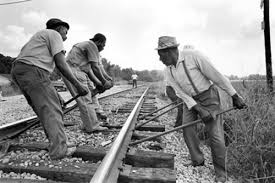 He has said that before, but what he added now is that the work on Shabbos will be performed entirely by non-Jews.
I know the laws regarding "amira la'akum", telling a non-Jew to perform work for Jews, are relatively complicated, but they definitely turn it into a less serious issue than having Jews do the work. Though by appearances, it is still the State of Israel, the Jewish State, still performing work on Shabbos in public.
It seems he took Rav Amsalem's advice. Rav Amsalem recently suggested the work could be performed via shabbos goyim. He was obviously criticized, as he gets criticized for whatever he says, ever since he separated from Rav Ovadya Yosef and Shas, at the time. Let's see if they accept the opinion in practice or if they oppose it as they did when Rav Amsalem said it.
And where are they going to suddenly get all these non-Jewish skilled workers? Won't they need training? Can anybody just be pulled in off the street and be put to work in laying new tracks and fixing old train tracks?
Radio Kol Hai is reporting that Minister Chaim Katz, the minister in charge of issuing the special permits needed to allow work on Shabbos, has said that work on the train tracks will continue on Shabbos.
I know the laws regarding "amira la'akum", telling a non-Jew to perform work for Jews, are relatively complicated, but they definitely turn it into a less serious issue than having Jews do the work. Though by appearances, it is still the State of Israel, the Jewish State, still performing work on Shabbos in public.
It seems he took Rav Amsalem's advice. Rav Amsalem recently suggested the work could be performed via shabbos goyim. He was obviously criticized, as he gets criticized for whatever he says, ever since he separated from Rav Ovadya Yosef and Shas, at the time. Let's see if they accept the opinion in practice or if they oppose it as they did when Rav Amsalem said it.
And where are they going to suddenly get all these non-Jewish skilled workers? Won't they need training? Can anybody just be pulled in off the street and be put to work in laying new tracks and fixing old train tracks?
------------------------------------------------------
Reach thousands of readers with your ad by advertising on Life in Israel
------------------------------------------------------
Sep 5, 2016
what did Aryeh Deri do about the trains?
This mess with the train lines, Shabbos and the politicians involved is still difficult to make sense of. Who did what and who knew what, and which conflicting story to believe...
Another question that has come to mind is how this compares with any work done during the days a Haredi minister was in charge of signing off on similar work permits.
Recently Aryeh Deri was the minister in charge, for a period of time, of signing off on such permits. I have not heard anybody in the news, be it Haredi news media or secular news media, ask if Deri signed off on similar work permits in those days, nor does it seem anyone has looked into it to find out whether that happened or not. Officials in Rakevet Yisrael keep saying that the same type of work has been done on Shabbos for decades, always with permits. The Haredi politicians keep saying if that si true it was kept secret and nobody ever knew about it (though I am not sure how such a thing can be kept secret).
So, where are the people who should be looking into whether or not such work permits were issued during Deri's days as minister? Maybe he refused them, maybe he approved them, or maybe they did not exist. I think this would be a good barometer to determining what was known by whom and when.
And one more thought, Minister Yaakov Litzman has done a lot of great work in the Health Ministry, to the point where the Haredi parties have seen unprecedented popularity and favorable ratings among the general public. Even to the point that Litzman himself has been called the national sweetheart. That status is seriously at risk right now with the train fight raging. It shows how fickle the public really is - do something good for them, and they love you. Do something they don't like and they forget the rest very quickly.
Another question that has come to mind is how this compares with any work done during the days a Haredi minister was in charge of signing off on similar work permits.
Recently Aryeh Deri was the minister in charge, for a period of time, of signing off on such permits. I have not heard anybody in the news, be it Haredi news media or secular news media, ask if Deri signed off on similar work permits in those days, nor does it seem anyone has looked into it to find out whether that happened or not. Officials in Rakevet Yisrael keep saying that the same type of work has been done on Shabbos for decades, always with permits. The Haredi politicians keep saying if that si true it was kept secret and nobody ever knew about it (though I am not sure how such a thing can be kept secret).
So, where are the people who should be looking into whether or not such work permits were issued during Deri's days as minister? Maybe he refused them, maybe he approved them, or maybe they did not exist. I think this would be a good barometer to determining what was known by whom and when.
And one more thought, Minister Yaakov Litzman has done a lot of great work in the Health Ministry, to the point where the Haredi parties have seen unprecedented popularity and favorable ratings among the general public. Even to the point that Litzman himself has been called the national sweetheart. That status is seriously at risk right now with the train fight raging. It shows how fickle the public really is - do something good for them, and they love you. Do something they don't like and they forget the rest very quickly.
------------------------------------------------------
Reach thousands of readers with your ad by advertising on Life in Israel
------------------------------------------------------
Sep 4, 2016
Haredi parties turn up notch in demands to stop chilul shabbos
This fight over working on the train systems on Shabbos has become a big one. There are a lot of details in this fight, including but not limited to; different places in which work has been done, how long it has been going on for, for how long it has been ignored by the religious parties, why now they are choosing to stop ignoring it and instead turn it into a serious issue, the possible abuse of the terms "pikuach nefesh" to justify getting permits to perform such work on Shabbos, what each side really wants - and this might involve the closing of makolets and supermarkets on Shabbos as the real goal, the political fights between Netanyahu and Yisrael Katz, airports on Shabbos, the fact that stopping this work also includes demands to cut train service on Friday afternoons and Saturday nights to fewer trains, and more.
It has been difficult to follow and make sense of, considering how much is involved in this.
The one point that gets me every time such demands are made by the religious parties, especially now that they are turning it into a serious issue that they won't back down from, is that we still have never seen the religious parties, rabbonim, and askanim agree or offer to delay Lag B'Omer celebrations in Meron, when the calendar schedules them for Saturday nights, despite the massive chilul shabbos it causes.
Another point is that the Haredi parties have so far made it very clear that this is not an issue over which they will leave the coalition, or even threaten to. Why is it pretty much only money issues (for yeshivas and kollels) that are serious enough to leave the coalition over but not idealistic issues like chilul shabbos?
It also makes me wonder if this is going to be, in hindsight, the straw that broke the camels back, and will end up being the cause for the eventual operation of public transportation on Shabbos. We are already seeing some protests against the Haredi demands and Netanyahu's capitulations. Will the opposing momentum grow to great enough proportions that thigns will change? I will note here that Moshe Grylack, the editor of Mishpacha Magazine, wrote in this week's editorial that it is only a matter of time until public transportation will be approved to operate on Shabbos - whether it happens next year or in a few years, it will eventually happen - connect what he sees anyway as momentum to such change with the anger and opposition to the new Haredi demands, and it seems even clearer that it is going to be forced into a major issue sooner rather than later..
It has been difficult to follow and make sense of, considering how much is involved in this.
The one point that gets me every time such demands are made by the religious parties, especially now that they are turning it into a serious issue that they won't back down from, is that we still have never seen the religious parties, rabbonim, and askanim agree or offer to delay Lag B'Omer celebrations in Meron, when the calendar schedules them for Saturday nights, despite the massive chilul shabbos it causes.
Another point is that the Haredi parties have so far made it very clear that this is not an issue over which they will leave the coalition, or even threaten to. Why is it pretty much only money issues (for yeshivas and kollels) that are serious enough to leave the coalition over but not idealistic issues like chilul shabbos?
It also makes me wonder if this is going to be, in hindsight, the straw that broke the camels back, and will end up being the cause for the eventual operation of public transportation on Shabbos. We are already seeing some protests against the Haredi demands and Netanyahu's capitulations. Will the opposing momentum grow to great enough proportions that thigns will change? I will note here that Moshe Grylack, the editor of Mishpacha Magazine, wrote in this week's editorial that it is only a matter of time until public transportation will be approved to operate on Shabbos - whether it happens next year or in a few years, it will eventually happen - connect what he sees anyway as momentum to such change with the anger and opposition to the new Haredi demands, and it seems even clearer that it is going to be forced into a major issue sooner rather than later..
------------------------------------------------------
Reach thousands of readers with your ad by advertising on Life in Israel
------------------------------------------------------
Subscribe to:
Posts (Atom)
Related Posts
