
Feb 8, 2022
Tweet of the Day
This picture is worse at portraying Chasidim than any movie I can remember! @DBashIdeas pic.twitter.com/pMLhLDkQS5
— y (@changeyss) February 8, 2022
Reach thousands of readers with your ad by advertising on Life in Israel
Nov 12, 2017
Two Rabbis, Two Worlds
The discussion is short, but I hope it continues and becomes some sort of a serial conversation. It somewhat reminds me of the book "One People, Two Worlds" that was a fabulous debate/discussion between a Reform and an Orthodox rabbi, Rabbis Amiel Hirsch and Yosef Reinman.
The Jewish Journal conversation is between Rabbis Sarah Bassin and Ari Schwarzberg. Personally I thought Rabbi Schwarzberg was on the defensive too much in this conversation and it was not really much of a conversation, but if this is just the first installment in what could be a series of many articles and topics discussed, this could really be fabulous.
I know the basic Orthodox position is to not debate, or even just share a podium, the Reform or Conservative so as not to give them any credibility or acceptance or recognition, but I do not believe in that approach. I can accept it as an approach perhaps in actual ritual - not to share a place of leading worship together or something like that, but sharing ideas and discussing ideas is always good, in my opinion.
Reach thousands of readers with your ad by advertising on Life in Israel
Sep 18, 2016
The first female Orthodox rabbi
Mazel tov to Rabbi Lila Kagedan who is the first woman bold enough to insist on taking the title "Rabbi" rather than the alternate "Rabba" that a few trailblazers before her have already taken as a "compromise" to not shake the boat too much.
The shul is the Mount Freedom Jewish Center located in Randolph, New Jersey, and self-defines as "open orthodox" - a description that is currently at the heart of an ongoing debate as to its status and its membership under the umbrella of "Orthodox".
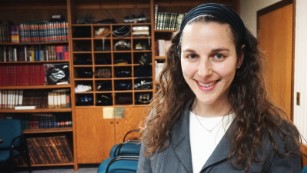
Some might say that by definition the shul must not be orthodox if it hired a female rabbi.
CNN says the Rabbi Kagedan hopes to normalize women in leadership roles. In general I think that it is praiseworthy, though I don't know about specifically in the role of rabbi... Theoretically I don't see any real problem with it, but it would definitely take some getting used to. She won't be able to get shlishi, shishi or the maftir aliyot in shul, and she won't be able to lead services. I see nothing wrong with a woman giving speeches and answering halachic questions and counsel families and individuals under her care. While perhaps the rabbi does not need to get aliyot or lead services to be an effective leader, I am not sure a leader who is curtailed like that can really be effective - just like I would not consider a male rabbi effective if he was a good speaker and had the ability to lead services but had no ability to counsel couples under his care or was not knowledgeable enough to answer halachic questions and give guidance.
Whether this becomes a focal point of a big fight or not, I do think that one day this will be considered a watershed moment in the history of Orthodox Judaism...
.
Nov 3, 2014
women aliyot broadening the definition of Orthodox Judaism
The article describes the situation as one in which for a year already women have been participating actively in the services, in the sense of serving as chazzan. Now they have taken the next step and have added women to both ends of the Torah reading in addition to the leading of the services.
Just to point out, for those of you who might say - Shoham? That's Rabbi Stav's town. See, he allows such things? It is a good thing he did not win the chief rabbinate.. of something like that, The article says Rav Stav was against this and said that this goes against halacha.
My question is why this is described, or categorized, as an Orthodox minyan? They are not the only shul in the world to call up women to the Torah, so this does not upset me, but why are they called Orthodox? At a certain point a line is crossed and the subject moves from one category to another. If calling up women to the Torah still allows them to be categorized as Orthodox, what would they have to do to be moved them into Conservative or Reform?
Sep 11, 2013
Can a drug dealer be Orthodox?
I remember reading in a book about Jewish members of the mafia about a mafiosa fellow nicknamed "The Rabbi". He was given this nickname because he tried to avoid killing on the Sabbath. And when he could not avoid it, he would first put on his tallis and pray a bit before murdering his target.
I was reminded of this when I saw this article about a ring of 5 Orthodox drug dealers who close up shop for Shabbos. It seems they would send out messages to clients letting them know not to come between sunset on Friday evening until sunset on Saturday evening. The group of men has been indicted - they have been arraigned this week, pleading not guilty, and most are out on bail.
(source: The Forward and Ladaat)
It's a funny thing, but even way back in the time of the gemara, and later in the time of the Shulchan Aruch, we find that it is common that people very religious can have a problem with one specific vice - and they would be completely trustworthy in regards to everything else except the one area in which they have a weakness. It is strange to call such a group of men "orthodox". Maybe just by being involved in pushing drugs a person has given up on being associated with Orthodox Jews. However, when that is how they act and present themselves, even if they have their one or two vices that are pretty bad, it is not wrong to still call them "orthodox".
Oct 25, 2012
Israel's Official Religion Is Orthodox Judaism
The article is about the Women of the Wall fight about davening at the Kotel, Anat Hoffman being arrested. The article surprised me, especially considering it appears in Haaretz.
In it Landau posits that Hoffman and the other Women of the Wall are being provocative. Landau compares her, and their, antics, to imagining a Protestant Christian cleric leading a group in Catholic Rome. They wouldn't be tolerated, but would be removed. A protestant cleric in a Catholic church in America would also not be tolerated. The Satmar rebbe going into a Reform temple and leading a group according to the customs of Satmar would also not be tolerated.
Landau's position and argument is based on his statement that Israel's state religion is Orthodox Judaism. Considering that point, his argument makes sense, though it seems more like Landau is being cynical in order to get to his main point, the conclusion. A very important point he makes in conclusion is that the only way to change that is by more non-Orthodox moving and living in Israel. Only in that way will they be able to have more influence, and change things like this.
Israel's state religion is not officially Orthodox Judaism, but it seems to be so by default. As many have said, for many of the secular, the shul they don't go to is an Orthodox shul. Funding and governmental support is directed unequally in favor of Orthodox institutions to the detriment of the Reform and Conservative organizations that are really very small. The only way to change that is not to provoke the system but to get more numbers on the ground. If they bring more Jews associated with the Reform and Conservative movements to live in Israel, they will bring more equality to the distribution to those groups, and they will obtain more influence on society.
And, yes, I think more Jews should come to Israel regardless of their affiliation.
------------------------------------------------------
Reach thousands of readers with your ad by advertising on Life in Israel
------------------------------------------------------
Oct 22, 2012
Jews Discriminated Against In Brooklyn
According to the expose, this popular cafe, called The River Cafe, has discovered that it is a popular spot for shidduch dates. The only problem with this is that they also realized that the Orthodox Jews on these dates spend very little money - meaning they are taking up spots in the cafe but the cafe is making almost no money off them, and they can't get paying customers in their place.
The solution they came up with, which they deny, is to charge a $25 minimum fee to anyone appearing to be Orthodox Jewish (e.g. if they came with a religious top hat and strings), and they devised an intricate set of codes for passing along the message when letting them in as to how much they should be charged.
The Orthodox Jews who go there are obviously only going to be buying drinks, as the food is not kosher, but it seems they don't even really spend much on drinks. It seems, from the article, that these Jews pretty much only get water. So, they really are taking advantage of an expensive location and preventing the patrons from making money with other customers.
Discrimination is always bad. The cafe should perhaps set a minimum that applies to everyone (they claim the minimum does, but the expose showed that it is only enforced for the religious Jews, along with when the Jews would be seated), even with the knowledge that most people won't have an issue with it knowing that if they are about to spend $70-$100 on dinner, they will definitely pass the minimum. As long as it applies equally to everyone it is legitimate - not everyone will be eating dinner or spending a lot of money.
And people going on shidduch dates should be more careful about not taking advantage of others, whether it is the River Cafe or whether it is sitting in a hotel lobby nursing one Diet Sprite for 4 or 5 hours.
The article:
It’s unortho-docks!
The iconic River Café on the Brooklyn waterfront in DUMBO — famous for its floating-barge dining room that offers sweeping views of lower Manhattan — discriminates against Jews dressed in religious garb by requiring them to pay a minimum of $25 per person to sit at the bar, according to one current and one former employee.
The reservationists — who stand at the entrance to the popular wedding venue and tourist destination — are instructed to use code words to alert the maitre d’ if anyone wearing a yarmulke, “religious hat” or “strings” asks to be seated at the scenic bar, the workers say.
“There are several notes in a book that the reservationists use,” said a current employee at the restaurant, which opened in 1977. The book is kept at the greeting stand. New notes are added periodically by management, and employees are expected to read it before every shift, staffers said.
“The book says that if two religious Jews come in, we call ahead to the maitre d’ and say, ‘Is there space for two at the water bar?’ — in which case a minimum of $25 will be enforced that is just for Jews wearing yarmulkes or any sort of religious hat,” a staffer said. “The terminology in the book is ‘special hat’ or ‘religious hat.’ At the bar, the $25 minimum is only enforced for Jews.”
Restaurant officials denied the claim.
“The $25 minimum applies to everyone,” said Teddy Dearie, assistant manager at The River Café. “If it wasn’t applied, that is just someone not doing their job. The phrase ‘water bar’ I’ve never heard before. That phrase, or any deviation from the policy that’s been in place for several years, is not condoned by the restaurant and is indicative of an individual not performing the duties for which they have been hired.”
Images of the reservation book were provided to The Post to back up the employees’ claims.
“If they look as if they will only order water (not that we stereotype or anything) mention the minimum right away,” one note says. “If they ask for the bar and there is room, tell them there is a minimum at the bar as well.”
Another note reads: We “have decided that when people come in for the bar and are A. wearing sweat pants and B. religious top hats and strings, you must say for A. gym bar and for B. water bar. Thanks.”
On Thursday evening, The Post sent a Jewish couple to the bar. The husband, wearing a yarmulke, and the wife, dressed in a simple long skirt, were told the bar was full.
They were told they could sit on the empty terrace and pay a $25-per- person minimum.
Five minutes later, two Post reporters, wearing no religious garb, were seated on the terrace and were not required to pay a minimum. The bill for a coffee and a gin-and-tonic totaled $18.51.
The River Café — a non-kosher eatery famous for its $100 three-course prix-fixe menu featuring lobster, foie gras and rack of lamb — has become a popular date spot with Orthodox Jews, who are required by their religion to choose public places for dates.
Current and former employees said these couples come for the view and non-alcoholic beverages, and are frowned upon because they take up seats and don’t spend enough money.
------------------------------------------------------
Reach thousands of readers with your ad by advertising on Life in Israel
------------------------------------------------------
May 24, 2009
A Simple Solution to the Reform Conversion Funding Problem
People are taking that to mean they are granting the Reform equal status to convert as the Orthodox.
if that is correct or not, I do not know. It seems to me the issue is simply funding and discrimination. If the country is funding private organizations to perform conversions, as a democratic country I don't see how they can legally avoid treating all such organizations equally.
My solution is to stop funding all of them. The Orthodox as well. These are private organizations, and why should the conversions of Israel be run and administered by private organizations?
Instead, have everything run through the Rabbanut. No private organizations - Orthodox, Conservative or Reform - should be allowed to deal with conversions, or at least they should not be funded by the State. Then nobody can complain. The Rabbanut will run everything, and no private organization is getting more than the other.
I know it is simplistic, and I am probably missing something in my understanding of the fight, but it seems reasonable to me.
Apr 5, 2009
Newsweek kicks us in the pants
The list is diverse and interesting. What particularly struck me is how few Orthodox rabbis are on the list.
It definitely should be looked at as a kick in the pants. I think we sometimes get ahead of ourselves and think how important and influential we are, and how we are the leaders of Judaism with everybody else trying to catch up or somehow "hang" with us.
This list can, and perhaps should, be a reminder to us of our place in Judaism. Maybe it means we have to work harder to present religious/orthodox Judaism to the people in a more positive light. Maybe it means we have to work harder to be more influential and be more involved in the leadership of Judaism. Whatever the specific message might be, this list should somehow spur orthodox leadership to do more and better.
Apr 3, 2008
changing a custom - the Paroches
For example, the bima was always placed in the center of the shul. At some point in the mid-1800s, shortly after Reform Judaism opened its doors, they moved the bima to the front of the shul. the Rabbonim were always opposed to that move and fought it tooth and nail to ensure that Orthodox shuls would not adopt that style.
Very frequently no specific reason was given. just that we cannot change a custom that has been in place for so long. I think the Chasam Sofer gave a reason for insisting on the bima being in the center of the shul, being it is compared to the mizbe'ach, altar, in the Beis Hamikdash. the Noda B'Yehuda was also famously one of the Rabbonim who lead the fight against moving the bima and he said (as far as I know) that we cannot change what has become the custom in Israel.
Ostensibly, the reason is because once we allow change, even on what might be considered something small and possibly insignificant, we do not know where it will end up and what else will be changed. Case in point is that the Reform movement changed the location of the bima and many other time honored customs fell in its wake as well, and many things that were halchic in nature and not just custom (though I have no idea if the other customs were changed as a result of their success with moving the bima or if it was not connected).
I found another such custom that I had never before been aware of.
At Friday night dinner we generally read a couple paragraphs of a book on the Halachos of Shabbos. We are using the set of books called "the 39 Melachos", and I find that even though the author is generally very machmir in his psak, the background and information he gives in his explanation is very well elucidated and very thorough.
So we are currently learning the Halachos of Mocheik (erasing). He discusses an interesting question regarding the opening of a Paroches on the aron kodesh on Shabbos. Commonly the paroches is one piece of cloth that gets pulled open to one of the sides. However, there are shuls that use a Paroches made of two pieces of cloth, split down the middle. If there are words embroidered across the two pieces of cloth, thus splitting the words in two when the cloths are opened and separated, an interesting question is raised.
He quotes the Igros Moshe who suggests, if possible, to leave the paroches slightly ajar and not closed all the way, but if that was not possible or was not left like that, then one could be lenient and close (and open) the paroches on Shabbos.
The author explains this position and then he adds,
It should be noted that it is improper for a shul to have a Paroches that is designed to part at the center, because it deviates from the customary Paroches design (i.e. to be drawn open from one side) that has been the universally accepted tradition for generations. The synagogue should correct the impropriety by sewing the separate panels as one, or by installing a new Paroches made of a single curtain.I was not aware there was a specific custom for the Paroches design. I am pretty sure I have seen shuls with one Paroches curtain, though I cannot think of any specific shul that I am aware of offhand. It could even be that the Paroches was always designed with one curtain so as not to have this problem of separating or joining letters that form words.
Sep 4, 2007
high prices for the High Holidays
The article gives a number of examples of the high price of seats, such as :
The Great Synagogue in Jerusalem is offering tourists reserved seats for the High Holidays for up to $700, while Israelis will be able to purchase the same seats for about $170 dollars, Yedioth Ahronoth reported Tuesday.
and:
At synagogues of the hassidic rabbis' courts the prices vary according to how close they are to the admor (acronym for "our master, our teacher, and our rabbi). A reserved seat near the admor at the Belz (hassidic sect) synagogue can reach a whopping $50,000.
and:
Kfar Chabad is charging NIS 60,000 ($14,500) for being the last person to be called up to the Torah and NIS 30,000 ($7,250) for being called up to the Torah for the opening prayer of the Eve of Atonement (Yom Kippur) service.
I have a couple of comments to make on this.
First of all, there is the issue of supply and demand. A more popular synagogue will charge more for its seats than will a less popular synagogue (the popularity could be determined by various factors; a charismatic Rabbi, the social crowd that goes there, the decor, the quality of the cantors, etc..). It is simply a function of supply and demand. If 1000 people want to buy seats there and there are only 400 seats, for example, they will obviously charge more for the seats.
Second of all, the buying of seats is very important. The synagogues almost never charge money during the year, after the High Holidays. During the High Holiday season they charge for seating and membership and then you will not hear from the shul again about money until the next year. It costs a lot of money to run a shul. The Rabbi has to be paid, as does the electric company and the utilities and maintenance bills, etc. The only money the shul earns is from its sale of seats by the High Holidays, along with voluntary donations given during the year.
Again, it costs a lot of money to run a shul. It is totally legitimate to charge for the seating during the High Holidays, as that is basically the shuls main source of income.
Third, regarding the prices given as examples from the Hassidic courts. They do sound pretty ridiculous. However once must take into account Hassidic culture and society. It is considered a great honor to be by the Rabbi or to get certain aliyas or other honors. These are also controlled by supply and demand. Only one person can get the last aliya, so the price is driven up very high as everybody bids for it. As well, think of it like going to a baseball game. If you went to Wrigley Field to watch the Cubs play baseball, you would pay good money for box seats. Maybe $100 per ticket. But if you went for seats way in the upper deck near the back you might only pay $8 for your ticket. As well, while Cubs fans do not really have much experience with this, if you buy tickets for a playoff game, the same seats that normally go for $10 might go for $50 (I made these numbers up, but you get the point).
The synagogues are not really any different. The "better" the seat, the higher the price tag.
And again, it costs a lot of money to run a synagogue.
And, usually, most shuls are amenable to helping out people in financial trouble who might have a hard time paying high fees. they would spread out the payments, or charge less to such a person. I know my shul has said many a time that they do not turn people away just because they cannot afford to pay the ticket. They find a solution and a way to work things out. I think most shuls are like that.
Aug 21, 2007
Do you agree?
"Been thinking of different ways to present the following or possibly not even presenting it. let's do it straight.
I was greatly upset to see the falafel stores on King George corner Agrippas open on Tisha b'Av. Including Leil Tisha b'Av! (One of the two; both were open during the day.) My challenge to them was met with "talk to the Baal HaBayit". I went a step higher - I called the hashgacha people who give them their mehadrin supervision. Thought they might not have known. They knew. They even gave their permission, with the following reason: People who eat on Tisha B'Av would probably eat in less kosher or non-kosher places if these places wouldn't be available.
My opinion: Restaurants should not be open on Tisha b'Av. Hashgachot should be removed from places that flaunt this rule. (And I think people who want falafel in that area of town should buy at MAOZ on King George, who stays closed on Tisha b'Av.) --Phil (personal)
What say you?"
I do not know if restaurants should be open or not on Tisha b'Av. I have a feeling they should not be, but there is no actual issur and at worst it is d'rabbanan to eat on tisha b'av.
What I do not understand is this - every year coime tisha b'av we hear complaints from the frum, be it the politicians or the askanim or the rabbonim or the frum media, about all the coffee shops open in Tel Aviv and the people who go out to eat and ignore the fact that it is Tisha b'Av.
And it is sad that people do not recognize the seriousness of the day, even if just on a cultural and historical level if not on a halachic level.
Yet, we hear all these complaints from the frum community. We hear from the politicians how they are going to enforce this law or that law about the restaurants being closed and we get shown pictures in the frum papers of people sitting in the coffee shops of Sheinkin Street or Dizengoff Square.
Phil's letter tells us that the frum community allows this to happen. How can we complain about what is going on when we are assisting them? I would be hesitant to call it mesayeia l'dvar aveira, but it can't be too far off from that.
How can we complain that the secular are so insensitive to Jewish history as they sit eating their steaks or drinking their espressos, while we then offer them mehadrin hechsherim for their restaurants?
Is it all just money - we complain about them but since they do it anyway we will be happy to take their money?
And what does that mean, "People who eat on Tisha B'Av would probably eat in less kosher or non-kosher places if these places wouldn't be available."? Does that really justify it? What about giving hechsherim to restaurants open on shabbos - they would be eating anyways, so maybe we should make sure they are at least eating kosher and even mehadrin!! (oh yeah, shabbos is assur d'oraisa, but we can get around that by having payment by credit and a goy cooking and all sorts of solutions to make it only d'rabbonon).
Should we really be concerned about them eating mehadrin when they are doing so on Tisha b'Av? What can possibly be mehadrin about food eaten on tisha b'av anyway?
If a restaurant wants to be open on tisha b'av, that is sad but that is part of life. Not everybody is religious and not everybody follows the rules of tisha b'av. But do we have to help them by giving them mehadrin hechsherim?
What say you?
Aug 14, 2007
the train is keeping shmitta l'chumroh
It does not refer to the various "flower gardens" in front of the train stations that need to be watered, though I hope it includes that as well.
It was reported in the Mishpacha newspaper that officials from Rakevet Yisrael (the train authority) have agreed to coordinate their work and activities with Rabbonim and Poskei Halacha. Specifically the work being done on the light rail system in Jerusalem. Some people were concerned that the construction of the light rail system includes landscaping and digging of land. The concern is that this work be done in a way that violates the rules of shmitta.
They arranged a meeting between the heads of the train authority, the mayor and a group of Rabbonim led by Rav Efrati, one of the men considered THE expert on mitzvos of the land (in which shmitta is included).
They met and came to an agreement that all landscaping and digging would be done in coordination and consultation with this group of Rabbis who will bring all problematic issues for decision to rav Elyashiv.
So the train is now keeping shmitta la'mehadrin!
Jun 10, 2007
how honest are we really?
In this week's article, Sugarman did something a little different. He gave us some of his background as to having grown up Conservative. He described the Conservative belief that there will not be a future Temple, rather the study of the subject is solely for the past, and not for any future relevance.
I was not aware of that belief among the Conservative, so that was an eye opener. He discusses how the Conservative edited the text of various prayers to indicate that belief that there will not be a future temple. He then presented a question he received by email and asked what the readers think about it.
I am reprinting the letter here:
Dear Rabbi (sic) Sugarman,
I am an ideological Conservative Jew and as you know, we do not believe that the temple will return. I download your column weekly from the OU website because the whole subject of the temple has always fascinated me, BUT ONLY AS A PART OF OUR PAST AND NOT AS A PART OF OUR FUTURE.îExcuse me for saying it but I think the Orthodox movement is, for the most part, intellectually dishonest with itself and others on a central question of belief. This is the area of your expertise, the Temple, animal sacrifices and their reinstatement. The truth? How many Orthodox Jews in the 21st century really want these things?
Let's be for real. You pray three times a day for G-d to restore them to the Jewish people, but do you really want them? Do you really want to slaughter sheep and bullocks and goats by the tens of thousands, toss their blood on the altar, and burn their bodies? Do you really want to tie a red string around the neck of a goat and push it over a cliff so the sins of Israel will be forgiven?
I will not go so far as to call you hypocritical, but I honesty can't believe you people are serious...
Naomi
This is what I sent Catriel Sugarman by email...
Dear Catriel,
I read all your articles with great interest. This week's article was especially intriguing because of it touching on whether we really want the mikdash we daven for, and the future we daven for, or whether we are simply paying lip service but do not really want such change.
I have discussed the topic a number of times with people. I have found that in Israel there are more people who really want the mikdash and the mashiach and all the changes that will ensue because of them than there are in the Diaspora. Yet, even in Israel it is still a minority of the people.
I have asked why more people do not put on the tcheilet (for example). The halachic risk is negligible, and the halachic gain is great (if it is correct than one is fulfilling the mitzva d'oraisa properly). The response I was given is that the frum community generally pushes away anything that has a taste of being messianic.
For some reason, whenever something is deemed as having a messianic flavor, people push it away and reject it. The Rav who told me that also suggested the reason to be because of our long history with false Messiahs. He suggested that any time something quasi-messianic comes along, we automatically reject it because of our bad history with false messiahs.
That being said, I think most people (again, most people is most in the Diaspora and most in Israel as well, but the percentages in Israel will be lower) do not really want that changes that will happen. I suspect a lot of it has to do with fear of the unknown. People worry they will have to give up the luxuries they are used to and their lifestyles. We do not really know what the future will be like when mashiach comes, at best we make suggestions and guesses, so we have a bit of fear of the unknown.
I recently heard a story about a class in a frum school. The teacher asked the students to raise their hand if they want mashiach to come. Everybody raised their hands. The teacher said to keep their hands up. The teacher then asked if they know they have to move to Israel when mashiach comes do they still want mashiach. A few hands went down. The teacher proceeded to mention a few things that will likely change and little by little all the hands went down.
So in general, I believe, most of us do not want mashiach to come or the mikdash to be built. We want to keep our fancy cars, our fancy lifestyles and we do not want anything that might harm them.
That being said I think in Israel there are more people who do want it. I think people who make aliyah clearly want it, at least to a certain extent. They have already shown their willingness to give things up for what they believe. There are people in the general community (settlers, general frum, etc.) who really do want it. But still, even in Israel it is a minority.
What do you think? Do we really want the Beis Hamikdash to be rebuilt? Do we await the return of the korbanos? Do we really want mashiach?
Or are we just paying lip service but don't really look forward to that day?
What do you think? The comments section is open for discussion. And tell us what you really think - do you really want Mashiach or not. Do you really want the mikdash or not. Comment anonymously, if you must.
Related Posts
