
Showing posts with label dangerous. Show all posts
Showing posts with label dangerous. Show all posts
Jun 14, 2021
glass bottles sold at beach illegal to be on beach
There is a law on the books that says that it is illegal/prohibited to bring glass bottles to a beach. Searching online I have found many complaints from people, going back several years (so it isnt anything new), on various forums about this law being enforced when the abuser gets slapped with a 750nis fine.
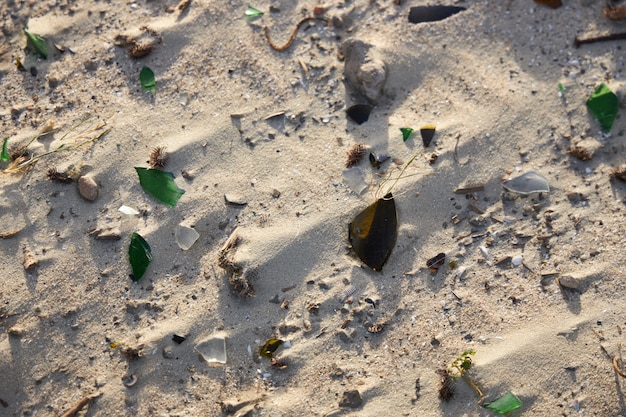
The law is understandable. If people come with glass bottles of beer or coke or whatever to the beach, soon enough there will be broken bottles and shards of glass in the sand tearing up people's barefoot feet.
Nobody wants that.
I guess the law's existence is not well known, and I have no idea if signage at the beaches is adequate or not - I do not recall seeing such a sign but maybe I just did not pay attention to it. if there isn't, there should be better signage. I would guess it is probably included in the large sign at the entrance to every beach with the rules that nobody reads.
To be fair, while it makes sense to ban glass bottles at a beach, the beach kiosk should not be allowed to sell glass bottles of beer (or other drink) either.
Hamechadesh is reporting on a situation in which several yeshiva bochurim who went to the separate beach in Tel Aviv who were slapped with these significant fines immediately upon opening the bottles that they had just bought from the beach kiosk.
While ignorance of the law is almost never a good defense for being caught breaking it, the boys complained that they had just bought the bottles from the beach kiosk.
Now that is not right.
I am not saying they should not get fined for drinking from a glass bottle, but the kiosk should not be allowed to sell drinks in glass bottles if it is illegal to drink from them on the beach. Nobody is buying beer from the beach kiosk to stock up their fridge for Shabbos or to restock their depleted pantry. They are purchasing in the beach kiosk to drink on the beach, and if it is illegal to drink this on the beach it should not be sold in the beach kiosk.
Of course if a glass bottle with a note inside washes up on the shore while you are at the beach, presumably you would be allowed to take out the ntoe to read...
------------------------------------------------------
Reach thousands of readers with your ad by advertising on Life in Israel
Reach thousands of readers with your ad by advertising on Life in Israel
------------------------------------------------------
Aug 1, 2018
Interesting Psak: no children in the mikva
A rav in Tzfat, Rav Bistrisky, issued a psak telling the community that they should not be bringing children to the mikva.
I have said many times that the hospital is not a place for sick people and the mikva is not a place for children. When I first saw the headline, I assumed it was validation of my opinion about mikvas. But then it turned out that Rabbi Bistrisky has a different reason you should be keeping your children away from the mikva, other than the one most people are probably thinking of.
According to INN, Rabbi Bistrisky said the mikva is a dangerous place for children and there is a dangerous threat of drowning, though he did add the other form of danger as an implied issue he did not want to expand on..
Rabbi Bistrisky pointed to a recent incident in which a child was drowning in the mikva and a nearby adult saved him. With other similar incidents around the country occurring recently, in mikvas pools and even in a bucket, this is a danger that we must pay more attention to.
I have said many times that the hospital is not a place for sick people and the mikva is not a place for children. When I first saw the headline, I assumed it was validation of my opinion about mikvas. But then it turned out that Rabbi Bistrisky has a different reason you should be keeping your children away from the mikva, other than the one most people are probably thinking of.
According to INN, Rabbi Bistrisky said the mikva is a dangerous place for children and there is a dangerous threat of drowning, though he did add the other form of danger as an implied issue he did not want to expand on..
Rabbi Bistrisky pointed to a recent incident in which a child was drowning in the mikva and a nearby adult saved him. With other similar incidents around the country occurring recently, in mikvas pools and even in a bucket, this is a danger that we must pay more attention to.
------------------------------------------------------
Reach thousands of readers with your ad by advertising on Life in Israel
Reach thousands of readers with your ad by advertising on Life in Israel
------------------------------------------------------
Feb 20, 2017
Interesting Psak: using a blech
What makes this "psak" particularly interesting is that it does not come from a rabbi (though maybe some rabbis are now issuing piskei halacha based on this, in one way or another). Rather, ti comes from the fire and rescue services.
This past Shabbos the fire and rescue services of Jerusalem were called into action to put out a fire in a yeshiva. The fire had originated from the sue of some sort of ad hoc "blech" - a metal sheet placed over a fire. Pots had been placed atop the blech to keep the food hot for the upcoming meals, and draped over the pots were towels, to keep the heat in.
The towels caught fire and it quickly spread. The firemen put the fire out relatively quickly, but much damage had already been done.
The fire and rescue services then issued a statement to the public saying that using an electric hotplate to heat up food for Shabbos is definitively prohibited, but using a blech is 7 times worse and 7 times more dangerous. The chance for a fire catching on the towels and spreading is extremely high and the chances are high for a fatal fire to spread. Many fires and much damage is caused regularly by using such hotplates and blechs, even proper ones, and covering the food.
source: Behadrei
I am pretty sure we hear even more frequently about fires that started from electric hotplates that shorted out or something else happened to that caused an electrical fire.
I'd say to only use hotplates made by reputable companies and to be careful to cover your food without letting towels touch the surfaces of the hot plate or blech, but the rescue services are saying that even that is not good enough and no such method should be used as they are all too dangerous. Unfortunately such a warning in basically a waste of time, as how do they expect anybody to heat up food for Shabbos, if neither a blech nor a hot plate is acceptable? If they really want people to listen and heed their warnings, they should figure out what the safe way is for keeping food hot on Shabbos and letting the public know what is acceptable, and not just what is not. As of right now, people will nto listen with every method they are familiar with being condemned and no alternative being offered.
This past Shabbos the fire and rescue services of Jerusalem were called into action to put out a fire in a yeshiva. The fire had originated from the sue of some sort of ad hoc "blech" - a metal sheet placed over a fire. Pots had been placed atop the blech to keep the food hot for the upcoming meals, and draped over the pots were towels, to keep the heat in.
The towels caught fire and it quickly spread. The firemen put the fire out relatively quickly, but much damage had already been done.
The fire and rescue services then issued a statement to the public saying that using an electric hotplate to heat up food for Shabbos is definitively prohibited, but using a blech is 7 times worse and 7 times more dangerous. The chance for a fire catching on the towels and spreading is extremely high and the chances are high for a fatal fire to spread. Many fires and much damage is caused regularly by using such hotplates and blechs, even proper ones, and covering the food.
source: Behadrei
I am pretty sure we hear even more frequently about fires that started from electric hotplates that shorted out or something else happened to that caused an electrical fire.
I'd say to only use hotplates made by reputable companies and to be careful to cover your food without letting towels touch the surfaces of the hot plate or blech, but the rescue services are saying that even that is not good enough and no such method should be used as they are all too dangerous. Unfortunately such a warning in basically a waste of time, as how do they expect anybody to heat up food for Shabbos, if neither a blech nor a hot plate is acceptable? If they really want people to listen and heed their warnings, they should figure out what the safe way is for keeping food hot on Shabbos and letting the public know what is acceptable, and not just what is not. As of right now, people will nto listen with every method they are familiar with being condemned and no alternative being offered.
------------------------------------------------------
Reach thousands of readers with your ad by advertising on Life in Israel
Reach thousands of readers with your ad by advertising on Life in Israel
------------------------------------------------------
Apr 22, 2015
not including a womans picture even when she is in danger
Wow! When this post was written and posted about the madness of not including womens pictures in publications, I don't think anybody even took into account ramifications of danger to life that can be caused by not publishing the image of a woman.
It would never have crossed my mind that in a situation of danger to life the publication/community would still not print a picture. I did not even imagine a scenario where that might happen.
Yet Bechadrei has announced a missing person's report in Bnei Braq without including her picture. A 35 year old woman went missing. Good luck identifying her.
That is something that is a sakana, and anybody who can possibly find her, see her walking down the street, being abducted God forbid, or whatever, should be able to quickly identify her and alert the authorities. I would never even think otherwise.
Yet Bechadrei printed this missing person's report without including a picture of the missing woman!
That is insane!
Can you imagine the milk carton with the face blurred out for tzniyus reasons, making the missing person practically unidentifiable?
From the description alone, 35 year old woman, thin with a head covering and sport shoes, black skirt and white blouse, 1.4 meters tall, that is practically every and any 35 year old woman in the country! How can anybody possibly identify this poor missing woman from that description with no picture?
This is insane!
By the way, Kikar included a copy of the woman's teudat zehut picture:

------------------------------------------------------
Reach thousands of readers with your ad by advertising on Life in Israel
------------------------------------------------------
Sep 29, 2013
Shark attack off Ashdod coast
If you thought the most dangerous part of swimming in the Mediterranean along the cost of Israel was getting stung by jellyfish, it is time to upgrade your scare factor.
 A young man in the waters of the Mediterranean off the coast of Ashdod was just attacked this morning by a shark probably in the Great White Shark family (of the few species of sharks found in the Mediterranean, this shark is among the more common).
Think Jaws.
The fellow was working in a fish farm, checking the traps, 11km off the coast, and when he stuck his hand in the water, he was bitten by the shark. He was bitten in the hand. and after receiving medical attention and being taken to the hospital, part of his hand was amputated.
Refuah Shleimah.
Does anybody import shark repellent yet?
I wonder if this is an Egyptian shark or a Turkish shark? Or maybe Iranian or Syrian.. It is surely a spy for one of the Islamist countries. This must be retribution for the original Zionist shark.. the Muslims are upping their game and showing that they too can recruit the animal kingdom to its sides.
Even with this new threat it still seems that swimming off the coast is not quite as dangerous as driving on the roads...
 A young man in the waters of the Mediterranean off the coast of Ashdod was just attacked this morning by a shark probably in the Great White Shark family (of the few species of sharks found in the Mediterranean, this shark is among the more common).
Think Jaws.
The fellow was working in a fish farm, checking the traps, 11km off the coast, and when he stuck his hand in the water, he was bitten by the shark. He was bitten in the hand. and after receiving medical attention and being taken to the hospital, part of his hand was amputated.
Refuah Shleimah.
Does anybody import shark repellent yet?
I wonder if this is an Egyptian shark or a Turkish shark? Or maybe Iranian or Syrian.. It is surely a spy for one of the Islamist countries. This must be retribution for the original Zionist shark.. the Muslims are upping their game and showing that they too can recruit the animal kingdom to its sides.
Even with this new threat it still seems that swimming off the coast is not quite as dangerous as driving on the roads...
------------------------------------------------------
Reach thousands of readers with your ad by advertising on Life in Israel
------------------------------------------------------
May 19, 2013
Bimba injuries
Yes, those little innocent bimbas, with little innocent children on them, can be dangerous.
They go flying down roads on Shabbos at high speeds. Until now the main form of damage caused was to the kids shoes that are used as brakes. There was possibly the occasional injury as well. The main problem until now has been complaints about the noise caused by these bimbas, disturbing people resting in their homes.
This past Shabbos in Bnei Braq an 80 year old rav was involved in a bimba crash. As he was on his way home from shul on Friday night, was hit by a speeding bimba. The rav was knocked over and broke his nose in the process.
(source: bechadrei)
Maybe the State should regulate bimba driving and require licenses and driving regulations...
------------------------------------------------------
Reach thousands of readers with your ad by advertising on Life in Israel
------------------------------------------------------
Mar 6, 2012
Purim Decorations Endanger Neighborhood
UPDATE Wednesday night:
As of this evening, yellow material that I photographed as being in dangerous p;aces was still up and had not been removed. Maybe they removed some material, and maybe they removed from some intersections, but they definitely did not remove all the dangerous materials.
-------------------------
UPDATE:
Someone just posted to the local email list on behalf of the Kupa that they apologize and are taking down the yellow bunting. The message reads:
One of the local tzedaka organizations goes all out every year in their Purim fundraising campaign. While it often might look like they are spending an awful lot of money in an area in which they already have a very high level of penetration, it takes money to make money, as they say, and it is for a mitzva (even if it is annoying).
Each year they decorate the neighborhood with a different theme. This years theme is social justice and the high cost of electricity. they plastered all over various intersections yellow bunting, hung yellow and black signs with different slogans about the high prices, the lack of social justice and other slogans, and in some traffic circles by major intersections also erected some tents akin to the tent protests this past summer.
The bunting must come down. The bunting has been placed in a very dangerous way. (the signs and tents are fine, the bunting is the problem) At many intersections it blocks the vision of both a driver and of pedestrians who might be about to cross the street.They have been up just a day and already there have been complaints of near-accidents.
I went out to see how much it actually blocks a drivers range of vision and this is what I found:
The bunting must come down before there is a major accident!
Two emails (so far) about this were sent to a local email list
1.
I emailed the organization with my thoughts on this. As of this writing I do not yet have a response from them. I suggest you email (or call) them as well, if you agree.
-----------------------------------------------------
Reach thousands of readers with your ad by advertising on Life in Israel
------------------------------------------------------
As of this evening, yellow material that I photographed as being in dangerous p;aces was still up and had not been removed. Maybe they removed some material, and maybe they removed from some intersections, but they definitely did not remove all the dangerous materials.
-------------------------
UPDATE:
Someone just posted to the local email list on behalf of the Kupa that they apologize and are taking down the yellow bunting. The message reads:
It has come to our attention that the yellow materials related to our-------------------------------
campaign are obscuring vision of oncoming traffic and pedestrians. Please
accept our apologies for this - the materials will be taken down.
With thanks for your support and patience and wishes for a Happy Purim to
all!
Kupa Shel Tzedaka
One of the local tzedaka organizations goes all out every year in their Purim fundraising campaign. While it often might look like they are spending an awful lot of money in an area in which they already have a very high level of penetration, it takes money to make money, as they say, and it is for a mitzva (even if it is annoying).
Each year they decorate the neighborhood with a different theme. This years theme is social justice and the high cost of electricity. they plastered all over various intersections yellow bunting, hung yellow and black signs with different slogans about the high prices, the lack of social justice and other slogans, and in some traffic circles by major intersections also erected some tents akin to the tent protests this past summer.
The bunting must come down. The bunting has been placed in a very dangerous way. (the signs and tents are fine, the bunting is the problem) At many intersections it blocks the vision of both a driver and of pedestrians who might be about to cross the street.They have been up just a day and already there have been complaints of near-accidents.
I went out to see how much it actually blocks a drivers range of vision and this is what I found:
 |
| a child pedestrian who might step out into the street to cross will look to his left and not be able to see an oncoming vehicle. |
 |
| A driver will not be able to see a child pedestrian as he/she steps out into the street. As well, if the driver will be turning right, his vision is seriously limited. |
 |
| overall view of the intersection |
Two emails (so far) about this were sent to a local email list
1.
I have just witnessed a potentially nasty car accident at the bottom of Ayalon and Kishon where the visibility for oncoming cars has been totally obscured by huge pieces of yellow fabric. Cars are being forced to inch out into speeding traffic because the fabric curves out 20 meters into the line of vision for motorists trying to turn right.2.
Please inform the bochrim on Dolev that jumping out in front of and literally onto moving vehicles is not just stupid, but illegal. Cars are swerving all over Dolev to avoid them.
Seriously, Purim is not going to be very happy for some families of they have to spend it in hospitals with their loved ones due to so-called Purim spirit!
Grrrr.
I am so glad you wrote this. I almost had 2 accidents this morning becauseThe bunting of this years decoration is very dangerous in the way it hampers a drivers vision as well as the pedestrians. Take down the bunting before an accident happens!
of the stupidity of charity organizations that think it is ok to decorate
traffic circles reminding people the importance of giving tzedaka on purim.
HELLO PEOPLE - you are going to be collecting money for injured people after
purim. I don't know these organizations but perhaps someone in rbs can tell
them to remove all the yellow material that they have hang on fences leading
up to circles and around the circles. The 2 that I saw that were dangerous
was the traffic circle on kishon by the mercaz mischari and the traffic
circle just after beit tefilla on refaim. It makes driving very dangerous
and you can't see on coming cars or people waiting to cross at the crossing
as the material makes it into a blind spot.
I emailed the organization with my thoughts on this. As of this writing I do not yet have a response from them. I suggest you email (or call) them as well, if you agree.
-----------------------------------------------------
Reach thousands of readers with your ad by advertising on Life in Israel
------------------------------------------------------
Jun 12, 2011
Breaking The Glass Can Be Dangerous
I am always amused at stories like these. I am actually always amused when I go to weddings, and I was at three very recently where the same exact thing happened at each wedding, and we cannot seem to figure out a better system, and everyone stumbles in exactly the same spot.
The most glaring example of this that comes to mind, and the one I noticed recently at all 3 weddings I was at in the past couple of weeks, is the clumsiness of the mothers breaking the plate. The two women get there and are handed a plate wrapped in a napkin, that if they would even be successful they would probably slice through their hands, so it is probably better that it rarely works.
So the two mothers are given this plate to break, and of course they are not coordinated enough with each other to be smashing it against the top of the chair with even strength, so they rarely break it on the first try. Then, perhaps the plate is too thick, perhaps it is slippery because of the way it is usually wrapped, perhaps for other reasons, they start smashing it a few times against the chair. Sometimes it breaks after a few tries, usually they then, or often just one of them, just throw it to the ground and it shatters.
After so long of doing the same thing, I am surprised nobody has come up with a better o way of breakign the plate, and then standardizing the method.
 Another example is the breaking of the glass under the chuppa. This is not quite as bad, as sometimes it is done very efficiently, on the first try. Sometimes they are smart enough to wrap the glass well, to use a thin glass, and to ensure it has all the chances of breaking on the first try. Other times it is a hard and thick glass, and it might take a few tries by the chosson before he can break it, with the glass even possibly sliding out from under his foot. Other times the glass is not wrapped well, and shards of the glass come out fo the wrapping, endangering people with thin soles. And there are some times that someone actually gets hurt with a shard of glass going through the sole of his or her shoe and right into the foot.
And this is what happened at a recent wedding in Ashdod.
The Story
An older couple, in their 50s, came to the offices of the Rabbanut in Ashdod to get married. They had everything ready for the couple, and at the end of the chuppa, the chosson said "Im Eshkachaich.." and then smashed his foot on the glass.
To his dismay, some shards shot out at the leg of the kallah, and caused a deep gash in her leg. With no paramedic on site, she was taken in an ambulance to the hospital, straight from her chuppa, to have the shard of glass removed. (source: Ashdodnet)
Mazel tov, and refuah shleima. And it is about time we found some sort of new system for the breaking of the plate and the glass.
The most glaring example of this that comes to mind, and the one I noticed recently at all 3 weddings I was at in the past couple of weeks, is the clumsiness of the mothers breaking the plate. The two women get there and are handed a plate wrapped in a napkin, that if they would even be successful they would probably slice through their hands, so it is probably better that it rarely works.
So the two mothers are given this plate to break, and of course they are not coordinated enough with each other to be smashing it against the top of the chair with even strength, so they rarely break it on the first try. Then, perhaps the plate is too thick, perhaps it is slippery because of the way it is usually wrapped, perhaps for other reasons, they start smashing it a few times against the chair. Sometimes it breaks after a few tries, usually they then, or often just one of them, just throw it to the ground and it shatters.
After so long of doing the same thing, I am surprised nobody has come up with a better o way of breakign the plate, and then standardizing the method.
Another example is the breaking of the glass under the chuppa. This is not quite as bad, as sometimes it is done very efficiently, on the first try. Sometimes they are smart enough to wrap the glass well, to use a thin glass, and to ensure it has all the chances of breaking on the first try. Other times it is a hard and thick glass, and it might take a few tries by the chosson before he can break it, with the glass even possibly sliding out from under his foot. Other times the glass is not wrapped well, and shards of the glass come out fo the wrapping, endangering people with thin soles. And there are some times that someone actually gets hurt with a shard of glass going through the sole of his or her shoe and right into the foot.And this is what happened at a recent wedding in Ashdod.
The Story
An older couple, in their 50s, came to the offices of the Rabbanut in Ashdod to get married. They had everything ready for the couple, and at the end of the chuppa, the chosson said "Im Eshkachaich.." and then smashed his foot on the glass.
To his dismay, some shards shot out at the leg of the kallah, and caused a deep gash in her leg. With no paramedic on site, she was taken in an ambulance to the hospital, straight from her chuppa, to have the shard of glass removed. (source: Ashdodnet)
Mazel tov, and refuah shleima. And it is about time we found some sort of new system for the breaking of the plate and the glass.
Mar 14, 2010
Toyota drivers and speeding tickets
Another Toyota Prius was in trouble today when the car began to speed up unintentionally and the driver could not get it under control in New York, after it just happened in California the other day.
While this time the driver was lucky and he had only just pulled out of his driveway, sending the car speeding across the street into his neighbors wall, suffering only some injuries, this disaster by the Japanese auto maker is a serious problem with more and more life-threatening situations happening at more regular intervals. Get all those Toyotas off the road!
While I should not joke about it and take this lightly, I do wonder if this is a good "out" when a cop tries to stop and ticket for speeding someone driving a Toyota. When the cop pulls up behind him and call for him to pull over to the side of the road, the driver should speed up even more increasingly and call out that his car is out of control. I wonder if that would get him out of a speeding ticket..
While this time the driver was lucky and he had only just pulled out of his driveway, sending the car speeding across the street into his neighbors wall, suffering only some injuries, this disaster by the Japanese auto maker is a serious problem with more and more life-threatening situations happening at more regular intervals. Get all those Toyotas off the road!
While I should not joke about it and take this lightly, I do wonder if this is a good "out" when a cop tries to stop and ticket for speeding someone driving a Toyota. When the cop pulls up behind him and call for him to pull over to the side of the road, the driver should speed up even more increasingly and call out that his car is out of control. I wonder if that would get him out of a speeding ticket..
Aug 6, 2009
Avoiding Disaster
During the summer season, and any other vacation period but especially the summer because it is "chofesh hagadol" - the long vacation, we hear far too often about mishaps on family or group trips in which people had to be evacuated from hikes they got lost on or dehdrtaed, and in the worst case scenarios we sometimes hear of serious injuries and deaths from dehydration or falling from cliffs, etc.
Tonight I saw a good example of how this happens.
We went out to prepare for our crazy 40km run. My part of the preparation included dropping off water bottles at the 19km and 25km points of the run, and leaving my car at the 25km point in case of emergency.
At the 25km point, there is a family with about 10 kids. I couldn't really see as it was dark, so 10 is a guess, but there were a bunch of them. I also did not see a father, but the mother was there. It is already dark, as the area we were is not lit up at all, and it is only getting darker.
This family had no idea how they were getting out of there. They had finished their tiyul, and had no way home. They were asking us where they could get buses from, and they were almost willing to come back with us to Bet Shemesh so they could take buses to Jerusalem from there.
When you go out to a tiyul, and you make no plans how you are going to get home, and you then let the tiyul continue until nightfall when it is dark (still with no ride out), that is a recipe for disaster. Considering the amount of accidents we unfortunately hear about, people need to plan better and not just say "b'ezras hashem" as they were saying.
Tonight I saw a good example of how this happens.
We went out to prepare for our crazy 40km run. My part of the preparation included dropping off water bottles at the 19km and 25km points of the run, and leaving my car at the 25km point in case of emergency.
At the 25km point, there is a family with about 10 kids. I couldn't really see as it was dark, so 10 is a guess, but there were a bunch of them. I also did not see a father, but the mother was there. It is already dark, as the area we were is not lit up at all, and it is only getting darker.
This family had no idea how they were getting out of there. They had finished their tiyul, and had no way home. They were asking us where they could get buses from, and they were almost willing to come back with us to Bet Shemesh so they could take buses to Jerusalem from there.
When you go out to a tiyul, and you make no plans how you are going to get home, and you then let the tiyul continue until nightfall when it is dark (still with no ride out), that is a recipe for disaster. Considering the amount of accidents we unfortunately hear about, people need to plan better and not just say "b'ezras hashem" as they were saying.
Jogging is dangerous
I didn't realize jogging was such a dangerous sport. Maybe it is time to find a safer sport for exercise....
Chief Inspector Scott Small says a 30-foot-long branch fell on the woman from 50 feet above. He says she was killed instantly.
Police say it's possible the unidentified woman didn't hear the branch breaking because she was wearing a portable music player, which was still playing when they arrived.
Last week, a Manhattan computer engineer walking to work through Central Park was hit on the head by a 100-pound rotted tree branch. His mother said over the weekend he was getting better.
Feb 14, 2008
guest post on Adar and firecrackers
The following is a guest post by an anonymous reader. He asked me to post it and because the topic is important and it is well written, I am putting it up.
Any reader who wants to post here, is welcome to send me an email with an article for review. If I like it (not that I have to agree with it, just like it - important topic, well written, etc), I am open to posting it for you.. israeli.jew at gmail dot com
With all the excitement of two Adars and according to some marbin be'simchah already (so signed the Chatam Sofer in a teshuvah), unfortunately we seem to be headed for two months of marbin be'firecrackers.
The parents who are makfir their kids and let them go outside and set them off should know clearly that they endanger their own kids and others as well. Firecrackers cause a sudden loud noise and is a maaseh hezek like being tokea be'oznai chaveiro. They give people a fright and alarm kids making them sometime hysterical, and have been known to cause pregnant women to miscarry.
Who are these parents going to ask mechilah from when their child set off a firecracker and woke up a sleeping child who can not get back to sleep as he is so pertified from the noise, thus causing havoc for the family who may suffer the next day as a result. Or someone who is carrying an expensive breakable object and because of the shock drops it and it breaks. Or if one causes a fire like happened in Bnei Brak last year destroying a warehouse with invaluable irreplacable Chassidic manuscripts inside.
Parents who abandon their kids to the street with firecrackers will be chayav me'dina d'shamayim as being indirectly culpable for all the results of their children's actions - meaning that although beis din can not punish them (although it may force them to do something if it knows their identity), there is a teviah on them min ha'shamayim, and since the chait is bein odom le'chaveiro which can only be fully atoned for by asking mechilah from the affected party, and the latter's identity is unknown, they will live with their aveirah ad me'ah ve'esrim and afterwards ad olam.
Hoping that all parents will be masgiach on their kids and warn them of the extreme danger to themselves and others when setting off these cursed firecrackers
(Rafi: he does not even mention the danger of kids losing fingers or an eye, which we hear about pretty much every year by the end of Purim)
Any reader who wants to post here, is welcome to send me an email with an article for review. If I like it (not that I have to agree with it, just like it - important topic, well written, etc), I am open to posting it for you.. israeli.jew at gmail dot com
With all the excitement of two Adars and according to some marbin be'simchah already (so signed the Chatam Sofer in a teshuvah), unfortunately we seem to be headed for two months of marbin be'firecrackers.
The parents who are makfir their kids and let them go outside and set them off should know clearly that they endanger their own kids and others as well. Firecrackers cause a sudden loud noise and is a maaseh hezek like being tokea be'oznai chaveiro. They give people a fright and alarm kids making them sometime hysterical, and have been known to cause pregnant women to miscarry.
Who are these parents going to ask mechilah from when their child set off a firecracker and woke up a sleeping child who can not get back to sleep as he is so pertified from the noise, thus causing havoc for the family who may suffer the next day as a result. Or someone who is carrying an expensive breakable object and because of the shock drops it and it breaks. Or if one causes a fire like happened in Bnei Brak last year destroying a warehouse with invaluable irreplacable Chassidic manuscripts inside.
Parents who abandon their kids to the street with firecrackers will be chayav me'dina d'shamayim as being indirectly culpable for all the results of their children's actions - meaning that although beis din can not punish them (although it may force them to do something if it knows their identity), there is a teviah on them min ha'shamayim, and since the chait is bein odom le'chaveiro which can only be fully atoned for by asking mechilah from the affected party, and the latter's identity is unknown, they will live with their aveirah ad me'ah ve'esrim and afterwards ad olam.
Hoping that all parents will be masgiach on their kids and warn them of the extreme danger to themselves and others when setting off these cursed firecrackers
(Rafi: he does not even mention the danger of kids losing fingers or an eye, which we hear about pretty much every year by the end of Purim)
Dec 11, 2007
a user manual for cholent

The above news item was clipped from the Maariv newspaper. It reports about a user manual for cholent being distributed by the Municipality of Afula.
It says that because many people who make cholent, a.k.a. "hamin" among the sfardim, use an electric hotplate and then cover the pot with blankets and towels as a way of retaining the heat and allowing the pot of cholent to cook better, many a fire has broken out in houses causing damage and danger to many. Sounds like potent cholent to me.
Avi Elkobetz, the mayor of Afula, in coordination with the FireStation of the Jezreel Region, are publishing a manual for successful cholent making. I do not know if the manual includes the best recipes for cholent, but it includes such wisdoms as not using the electric hotplate but to use a slowcooker (crock pot) instead. For someone who insists on using the electric hotplate, they should be careful to not use blankets to cover the pot, to distance the hotplate from the curtains, distance the hotplate from the electricity cables, and to distance it from any plastic materials.
NOTE: This could raise some halachic questions (the first suggestion at least) because some people refuse to use crock pots due to a halachic question that arose as to whether the crock pot creates a situation of "hatmanah". Some people solve the question by placing a couple of small rocks beneath the ceramic pot insert which raises it above the element level, some line it with foil, some say there is no problem at all, and some will not use crock pots. I protest the City of Afula mixing into religious questions and trying to influence religious practice by telling people how to make cholent and what type of pot to use. :-) Whatever happened to separation of Shul and State??
Feb 6, 2007
great post
Jameel wrote a great post in response to a commenter who questioned why he lives in such a "dangerous" place... worth checking out..
Subscribe to:
Posts (Atom)
Related Posts
