
Showing posts with label Israeli drivers. Show all posts
Showing posts with label Israeli drivers. Show all posts
Jan 10, 2021
your driver's license is yours!
Minister of Transportation Miri Regev announced today that she is changing policy and from now on, actually from October 1, 2021, all new driver's licenses to be given out will no longer need to be renewed every 10 years but will be valid until the age of 70. From 70to 80 the license will need to be renewed every 5 years and from 80 every two years.
source: Kipa
The cost of the license until 70 will be 510nis, which will save drivers a lot of money, as much as 1500nis when compared to the cost today of renewing your license every ten years.
Obviously the older you are when this goes into effect the less you will save, and if you have to renew your license at age 63 or 67 and have to pay 510nis for a license good for just a few years that seems unreasonable, but for most people it will be big savings.
Maybe they will, or should, prorate it depending on your age at the time of the last renewal when this goes into effect.
It never made sense to me to have to renew your license every ten years. Seems like a money-making scheme. If you get too many tickets or violations, they can revoke the license anyway, send you to refresher courses, charge fines, etc. Once you get the license, it should be yours to lose. If somewhere along the way any major rules of the road undergo massive changes, they can require everyone relevant to take a refresher course, if necessary.
------------------------------------------------------
Reach thousands of readers with your ad by advertising on Life in Israel
Reach thousands of readers with your ad by advertising on Life in Israel
------------------------------------------------------
Dec 24, 2019
PSA: the segulah for not getting into traffic accidents
I never before noticed Rav Yuval Cherlo get involved much in segulas, though it is possible that I just did not notice as I am not an avid follower or student of his.
Rav Cherlo has announced an important new segulah. A segulah that is surely one of the most needed and necessary segulahs in Israel. One that might save many a home and family from distress and misfortune. Rav Cherlo announced a segulah to be saved form being involved in traffic accidents.
Rav Cherlo says that the best and most proper segulah for avoiding traffic accidents, what some call the plague of the country, is to drive safely, to stay focused when driving. Not to do anything else, at all, while driving. To pay attention on the road, to consider what other drivers might do and to be prepared for eventualities, to pull over to rest when tired. We should at least minimize the incidents that are caused by human error.
A person should also daven to be safe on the roads, and say tefillas haderech and do chessed and give people rides and drive them to their destinations when possible, but most important is to drive safely.
source: Kipa
It is hard. It is difficult. We are all so easily distracted nowadays, and we have so many distractions. Do what you can, figure out a way, to minimize the distractions.
Drive safe.
Rav Cherlo has announced an important new segulah. A segulah that is surely one of the most needed and necessary segulahs in Israel. One that might save many a home and family from distress and misfortune. Rav Cherlo announced a segulah to be saved form being involved in traffic accidents.
Rav Cherlo says that the best and most proper segulah for avoiding traffic accidents, what some call the plague of the country, is to drive safely, to stay focused when driving. Not to do anything else, at all, while driving. To pay attention on the road, to consider what other drivers might do and to be prepared for eventualities, to pull over to rest when tired. We should at least minimize the incidents that are caused by human error.
A person should also daven to be safe on the roads, and say tefillas haderech and do chessed and give people rides and drive them to their destinations when possible, but most important is to drive safely.
source: Kipa
It is hard. It is difficult. We are all so easily distracted nowadays, and we have so many distractions. Do what you can, figure out a way, to minimize the distractions.
Drive safe.
------------------------------------------------------
Reach thousands of readers with your ad by advertising on Life in Israel
Reach thousands of readers with your ad by advertising on Life in Israel
------------------------------------------------------
Jan 29, 2019
driving instructors to keep an eye out for traffic violations
With driving teachers being on the road more than anybody else, it seems they could be made good use of in keeping the roads safe. The City of Rishon Letzion has drafted 120 drivers to assist in keeping the roads safe by appointing them to the status of "traffic observers". While they are out on the roads these driving instructors will keep an eye on other drivers and report any dangerous driving to a Whatsapp group that will then be sent to a city hotline and will be dealt with.
source: Israel Hayom
 Obviously this sounds like a pretty good idea. And, if you are driving crazily because you do not see any police around, be aware that now any driving instructor, or maybe even other people if this gets expanded, can turn you in. And if it works, presumably other cities will adopt this program as well.
The only thing is, I would say in part that it is the driving instructors that are at least somewhat at fault for the situation on the roads - they have taught all these kids, and eventually adults, to drive, yet the drivers are horrible, speeding, passing dangerously, crossing bold lines, parking illegally, etc. Add that to some other factors regarding the way the lessons and testing works (not relevant here), and I would say the entire driving lessons system in Israel needs to be overhauled.
Besides for that, shouldn't these instructors be paying attention to their students and be teaching them, rather than paying attention to other drivers? Obviously they might notice something egregious that another driver does, but to be paying attention to other drivers and taking details while giving a lesson seems like it might create more problems.
source: Israel Hayom
Obviously this sounds like a pretty good idea. And, if you are driving crazily because you do not see any police around, be aware that now any driving instructor, or maybe even other people if this gets expanded, can turn you in. And if it works, presumably other cities will adopt this program as well.The only thing is, I would say in part that it is the driving instructors that are at least somewhat at fault for the situation on the roads - they have taught all these kids, and eventually adults, to drive, yet the drivers are horrible, speeding, passing dangerously, crossing bold lines, parking illegally, etc. Add that to some other factors regarding the way the lessons and testing works (not relevant here), and I would say the entire driving lessons system in Israel needs to be overhauled.
Besides for that, shouldn't these instructors be paying attention to their students and be teaching them, rather than paying attention to other drivers? Obviously they might notice something egregious that another driver does, but to be paying attention to other drivers and taking details while giving a lesson seems like it might create more problems.
------------------------------------------------------
Reach thousands of readers with your ad by advertising on Life in Israel
Reach thousands of readers with your ad by advertising on Life in Israel
------------------------------------------------------
Jun 13, 2018
no more drivers license
This issue has been under consideration for a while, and according to Ynet yesterday it was finally approved by the Knesset Finance Committee.
You no longer need to have your drivers license with you while driving. The same goes for the car registration license. The only thing that must be in the car now is the mandatory insurance slip.
Until now if you were caught driving without your license on you or without the car registration you could have been slapped with a 100nis fine. Now all you will need to carry is regular identification - any one of the following items; drivers license, teudat zehut, or Israeli passport. The police will check that you have a valid license via their computer system.
According to Minister Yisrael Katz this will minimize the level of bureaucracy by not requiring drivers to get a duplicate license after misplacing or losing theirs or after misplacing the car registration license, and it will, somehow, make it easier for the police to check drivers. I am not quite sure how but maybe they wont need to ask for the license and check it but will go straight to their online systems, saving them a step or two.
way to go! I am happy about any changes that make the life of the average person a little easier and less stressful. I recently misplaced my drivers license and was fretting looking for it. I was resigned to going and paying for a duplicate license when thankfully I found it. With such a directive in place, no more stress because there is no need for it!
I wonder if they will just stop handing it out, except by special request, when people qualify or renew. After all, there is no need to carry it anyway.
You no longer need to have your drivers license with you while driving. The same goes for the car registration license. The only thing that must be in the car now is the mandatory insurance slip.
Until now if you were caught driving without your license on you or without the car registration you could have been slapped with a 100nis fine. Now all you will need to carry is regular identification - any one of the following items; drivers license, teudat zehut, or Israeli passport. The police will check that you have a valid license via their computer system.
According to Minister Yisrael Katz this will minimize the level of bureaucracy by not requiring drivers to get a duplicate license after misplacing or losing theirs or after misplacing the car registration license, and it will, somehow, make it easier for the police to check drivers. I am not quite sure how but maybe they wont need to ask for the license and check it but will go straight to their online systems, saving them a step or two.
way to go! I am happy about any changes that make the life of the average person a little easier and less stressful. I recently misplaced my drivers license and was fretting looking for it. I was resigned to going and paying for a duplicate license when thankfully I found it. With such a directive in place, no more stress because there is no need for it!
I wonder if they will just stop handing it out, except by special request, when people qualify or renew. After all, there is no need to carry it anyway.
------------------------------------------------------
Reach thousands of readers with your ad by advertising on Life in Israel
Reach thousands of readers with your ad by advertising on Life in Israel
------------------------------------------------------
Dec 3, 2017
PSA: keep your eyes on the road
The issue of driving while using a cellphone is no longer just ensuring hands-free usage. New directives by the police allow them to issue tickets for using a cellphone even when it is not being held by the driver but now even if the police just notice the driver looking down and at places inside the car and not at the road will be enough for a ticket - no need to actually see a cellphone.
source: Walla News and Ynet
The websites all refer to Waze as the problem and say that even if you keep the phone in your lap and look down at it to see the Waze directions, you'll get the ticket. The problem is not just Waze but Whatsapp, email, Facebook, texts and every other app on the cellphone. Not only that, but even looking back at your fighting kids could be a reason to ticket you under this new directive.
Personally I feel the law should now require all cars to have a phone dash-mount installed with Bluetooth speakers. And I think all new cars should come with a universal mount and charging port, so the driver will not have to worry about these things. Pretty much all new cars already come with Bluetooth, and they should also come with phone mounts and charging ports.
Anyways, drivers beware... keep your hands off your phone and your eyes on the road...
source: Walla News and Ynet
The websites all refer to Waze as the problem and say that even if you keep the phone in your lap and look down at it to see the Waze directions, you'll get the ticket. The problem is not just Waze but Whatsapp, email, Facebook, texts and every other app on the cellphone. Not only that, but even looking back at your fighting kids could be a reason to ticket you under this new directive.
Personally I feel the law should now require all cars to have a phone dash-mount installed with Bluetooth speakers. And I think all new cars should come with a universal mount and charging port, so the driver will not have to worry about these things. Pretty much all new cars already come with Bluetooth, and they should also come with phone mounts and charging ports.
Anyways, drivers beware... keep your hands off your phone and your eyes on the road...
------------------------------------------------------
Reach thousands of readers with your ad by advertising on Life in Israel
Reach thousands of readers with your ad by advertising on Life in Israel
------------------------------------------------------
Aug 14, 2017
easy conversion of foreign license in effect
Big news for new immigrants in Israel. The reform for converting foreign drivers licenses has gone into effect and now new immigrants will have an easier, and cheaper, experience converting to an Israeli license.
To qualify for this, the new immigrant must have been in Israel less than 3 years, and must have had a valid foreign license for a minimum of 5 years (and it must still be valid). More information is available at *5678
I suspect that there will be glitches at the beginning. Some clerks might not know all the details of the required procedures and when this works and when it does not, but I would guess that soon enough it will proceed smoothly.
good luck and drive safely!
To qualify for this, the new immigrant must have been in Israel less than 3 years, and must have had a valid foreign license for a minimum of 5 years (and it must still be valid). More information is available at *5678
I suspect that there will be glitches at the beginning. Some clerks might not know all the details of the required procedures and when this works and when it does not, but I would guess that soon enough it will proceed smoothly.
good luck and drive safely!
------------------------------------------------------
Reach thousands of readers with your ad by advertising on Life in Israel
Reach thousands of readers with your ad by advertising on Life in Israel
------------------------------------------------------
Mar 27, 2017
Day of Good Deeds will get you new tickets on the roads
Tomorrow, Tuesday, is the "Day of Good Deeds" and people are encouraged to focus more tomorrow on being kind and doing good things for others than they might be on normal days.
The Israel Police are going to be participating in the day by giving out traffic tickets. No, not the normal tickets that make people mutter and sometimes curse the police for having to pay hundreds or thousands of shekels on fines. These tickets will be for being magnanimous on the roads and being considerate to other drivers. The ticket will look like a regular ticket but will say it is a positive ticket given with love from the police for the Day of Good Deeds.
They expect, or hope, that this will encourage drivers to follow the law and rules of the road through positive reinforcement, the carrot rather than the stick.
source: Radio Kol Hai News
This is very nice but is not much of a carrot. When someone breaks the law on the roads and runs a red light, crosses a bold line, holds his cellphone while driving, he gets a ticket that does not just say "this is a negative ticket given with disappointment by the Police". They give you a fine, often a large one, along with "points" on your driving record that eventually lead to more punishments such as having your license revoked or having to take additional driving lessons or whatnot.
If they really want to encourage the good deeds on the road and make a carrot that will do something positive, maybe they should give out money with the positive tickets. For letting someone merge in front of you you get a positive ticket worth 150nis. For not honking ten times at the guy who slightly slowed down ahead of you you'll get a positive ticket worth 75nis. For pulling over to the side to allow an ambulance t pass you'll get a positive ticket worth 250nis. and the like. That is something drivers will really appreciate and be encouraged by.
.
The Israel Police are going to be participating in the day by giving out traffic tickets. No, not the normal tickets that make people mutter and sometimes curse the police for having to pay hundreds or thousands of shekels on fines. These tickets will be for being magnanimous on the roads and being considerate to other drivers. The ticket will look like a regular ticket but will say it is a positive ticket given with love from the police for the Day of Good Deeds.
They expect, or hope, that this will encourage drivers to follow the law and rules of the road through positive reinforcement, the carrot rather than the stick.
source: Radio Kol Hai News
This is very nice but is not much of a carrot. When someone breaks the law on the roads and runs a red light, crosses a bold line, holds his cellphone while driving, he gets a ticket that does not just say "this is a negative ticket given with disappointment by the Police". They give you a fine, often a large one, along with "points" on your driving record that eventually lead to more punishments such as having your license revoked or having to take additional driving lessons or whatnot.
If they really want to encourage the good deeds on the road and make a carrot that will do something positive, maybe they should give out money with the positive tickets. For letting someone merge in front of you you get a positive ticket worth 150nis. For not honking ten times at the guy who slightly slowed down ahead of you you'll get a positive ticket worth 75nis. For pulling over to the side to allow an ambulance t pass you'll get a positive ticket worth 250nis. and the like. That is something drivers will really appreciate and be encouraged by.
.
------------------------------------------------------
Reach thousands of readers with your ad by advertising on Life in Israel
Reach thousands of readers with your ad by advertising on Life in Israel
------------------------------------------------------
Feb 13, 2017
your day in court might cost you double
I think this is unreasonable.
In an attempt to lighten the loads from the traffic courts, and in general to make the traffic laws bear harsher punishments, a proposal has been out forward by which a driver who appeals a fine to the courts and loses that appeal would have his fine doubled automatically.
About 30% of cases in the traffic courts are of people appealing their fines. Of those, the vast majority end up admitting guilt. This unnecessary tie-up of the courts would be relieved by the doubling of the fines - drivers will consider the situation carefully before appealing.
source: TheMarker
Everybody is entitled to their day in court. Threatening with the doubling of the fine to prevent people from going to court is taking away that basic right.
In an attempt to lighten the loads from the traffic courts, and in general to make the traffic laws bear harsher punishments, a proposal has been out forward by which a driver who appeals a fine to the courts and loses that appeal would have his fine doubled automatically.
About 30% of cases in the traffic courts are of people appealing their fines. Of those, the vast majority end up admitting guilt. This unnecessary tie-up of the courts would be relieved by the doubling of the fines - drivers will consider the situation carefully before appealing.
source: TheMarker
Everybody is entitled to their day in court. Threatening with the doubling of the fine to prevent people from going to court is taking away that basic right.
------------------------------------------------------
Reach thousands of readers with your ad by advertising on Life in Israel
Reach thousands of readers with your ad by advertising on Life in Israel
------------------------------------------------------
Jan 24, 2017
Interesting Psak: Women Drivers
According to Kikar, Rav Yitzchak Zilbershtein, rav of Ramat Elchonon neighborhood of Bnei Braq, was recently asked a detailed question about a woman driving. An avreich asked specifically about his wife being able to drive. Knowing that it is a tzniyus problem, can she drive because the alternatives are worse, or at least no better?
The avreich detailed that his wife needs to travel a half an hour each way to get to work and back home. In addition, she has errands to run and other things to do that she needs to go places for. So, on the one hand she can drive and get there quickly and do what she needs to do, despite the tzniyus problem of her driving. On the other hand, there are alternatives, none of which are very good with tzniyus problems that are worse than when she drives her own car:
1. she could take a bus. This too has tzniyus problems as there is no mechitza and men and women are mixed and the bus is sometimes crowded, and the drivers are often not Torah-observant people.
2. She could take a taxi. This too is problematic, as most of the drivers are not Torah-observant. And, even with a frum drivers, it is a situation of a private car ride with a man and a woman secluded together. It is at least quasi-yichud.
3. she could walk. This [resents a problem with long distances and both the ability to walk them and the amount of time it would take, but it is also a tzniyus problem as she is exposed for other strange men to look at her while in the street.
The avreich concluded hsi question by saying that the option of her driving a car seems to be the best (or, least bad) of them all.
So, can she drive a car?
Rav Zilbershtein responded saying that her driving is actually the worst of all the options. bus, taxi and walking present problems, but she could be careful to not cause men to stumble. There is, however, no intrinsic problem with tzniyus with any of these options. Driving a car, however, is completely against the rules of tzniyus for a woman.
Besides for the various problems it causes and for her need to be in contact with men, it is actually prohibited for her to drive. Rav Zilbershtein explained a verse in "tefillas haderech" in which we pray for a safe trip that says "says me from dangerous animals on the way". He explained that this also refers to drivers who do not follow the rules of the road, and they turn the situation on the road to one of war, and war is not for women.
Honestly, to me, that seems to be a real stretch. Like shooting an arrow and then drawing the target around the arrow after it hit.
But, to go on.. Rav Zilbershtein relates a story of a woman who was driving, a very important woman very involved in chessed, and she drove into a tree and became handicapped for the rest of her life. Rav Yechezkal aAbramsky had said about that case that it was because she was driving, and a woman should not.
He was not just saying that women are bad drivers, but he says there is a spiritual problem caused by it that results in such accidents. It causes terrible pritzus, is opposed to the concept of "kol kvoda bat melech pnima"...
Rav Zilbershtein went on to blame (at least as one of the factors) the high rate of traffic accidents on Israeli roads, in which many good people have been killed, on women driving cars - again, from a spiritual perspective. In addition to the spiritual problems, he adds that women cannot deal with the high pressure situations and sometimes cause these accidents.
The only way a woman could drive, according to Rav Zilbershtein, is in a situation of great need, such as a woman who must take her handicapped child for treatments, and other similarly unique and extreme situations and then a specific question must be asked to a rav. Rav Zilbershtein also adds that driving abroad might be a different situation and rabbonim there should be asked when relevant.
I dont know when Rav Abramsky said what he said, but he died over 40 years ago, so it was definitely not so recently. Being that it is so common nowadays for women to drive, I wonder how it could really still be considered such a serious tzniyus and spiritual problem - not including certain extreme elements that still consider it so - elements I was not aware Rav Zilbershtein is associated with. Far be it from me to argue with Rav Zilbershtein, but I do wonder about that.
Pointing to one case of a woman driving and getting into a bad accident is nothing but anecdotal. Many men and women, unfortunately, get into bad accidents. Crazy drivers can be found among both men and women, as can their victims.
In the original question asked, I am not sure what the relevance is in pointing out the lack of Torah-observance of the bus drivers. The taxi driver's observance is understandably more relevant, as the driver would be alone in the car with the wife. A bus driver is driving a bus filled with many people, so I wonder what relevance his level of observance has.
The avreich detailed that his wife needs to travel a half an hour each way to get to work and back home. In addition, she has errands to run and other things to do that she needs to go places for. So, on the one hand she can drive and get there quickly and do what she needs to do, despite the tzniyus problem of her driving. On the other hand, there are alternatives, none of which are very good with tzniyus problems that are worse than when she drives her own car:
1. she could take a bus. This too has tzniyus problems as there is no mechitza and men and women are mixed and the bus is sometimes crowded, and the drivers are often not Torah-observant people.
2. She could take a taxi. This too is problematic, as most of the drivers are not Torah-observant. And, even with a frum drivers, it is a situation of a private car ride with a man and a woman secluded together. It is at least quasi-yichud.
3. she could walk. This [resents a problem with long distances and both the ability to walk them and the amount of time it would take, but it is also a tzniyus problem as she is exposed for other strange men to look at her while in the street.
The avreich concluded hsi question by saying that the option of her driving a car seems to be the best (or, least bad) of them all.
So, can she drive a car?
Rav Zilbershtein responded saying that her driving is actually the worst of all the options. bus, taxi and walking present problems, but she could be careful to not cause men to stumble. There is, however, no intrinsic problem with tzniyus with any of these options. Driving a car, however, is completely against the rules of tzniyus for a woman.
Besides for the various problems it causes and for her need to be in contact with men, it is actually prohibited for her to drive. Rav Zilbershtein explained a verse in "tefillas haderech" in which we pray for a safe trip that says "says me from dangerous animals on the way". He explained that this also refers to drivers who do not follow the rules of the road, and they turn the situation on the road to one of war, and war is not for women.
Honestly, to me, that seems to be a real stretch. Like shooting an arrow and then drawing the target around the arrow after it hit.
But, to go on.. Rav Zilbershtein relates a story of a woman who was driving, a very important woman very involved in chessed, and she drove into a tree and became handicapped for the rest of her life. Rav Yechezkal aAbramsky had said about that case that it was because she was driving, and a woman should not.
He was not just saying that women are bad drivers, but he says there is a spiritual problem caused by it that results in such accidents. It causes terrible pritzus, is opposed to the concept of "kol kvoda bat melech pnima"...
Rav Zilbershtein went on to blame (at least as one of the factors) the high rate of traffic accidents on Israeli roads, in which many good people have been killed, on women driving cars - again, from a spiritual perspective. In addition to the spiritual problems, he adds that women cannot deal with the high pressure situations and sometimes cause these accidents.
The only way a woman could drive, according to Rav Zilbershtein, is in a situation of great need, such as a woman who must take her handicapped child for treatments, and other similarly unique and extreme situations and then a specific question must be asked to a rav. Rav Zilbershtein also adds that driving abroad might be a different situation and rabbonim there should be asked when relevant.
I dont know when Rav Abramsky said what he said, but he died over 40 years ago, so it was definitely not so recently. Being that it is so common nowadays for women to drive, I wonder how it could really still be considered such a serious tzniyus and spiritual problem - not including certain extreme elements that still consider it so - elements I was not aware Rav Zilbershtein is associated with. Far be it from me to argue with Rav Zilbershtein, but I do wonder about that.
Pointing to one case of a woman driving and getting into a bad accident is nothing but anecdotal. Many men and women, unfortunately, get into bad accidents. Crazy drivers can be found among both men and women, as can their victims.
In the original question asked, I am not sure what the relevance is in pointing out the lack of Torah-observance of the bus drivers. The taxi driver's observance is understandably more relevant, as the driver would be alone in the car with the wife. A bus driver is driving a bus filled with many people, so I wonder what relevance his level of observance has.
------------------------------------------------------
Reach thousands of readers with your ad by advertising on Life in Israel
Reach thousands of readers with your ad by advertising on Life in Israel
------------------------------------------------------
Aug 10, 2016
drunk driving an electric bike
This is a bit strange. Srugim is reporting on a case in which a drunk driver had his driver's license suspended for 30 days. What is strange about that is that he was not driving a car but an electric bike.
The police explained that riding an electric bike is like driving any other motorized vehicle and all the relevant laws apply equally.
Does one need a license to drive an electric bike, like one needs a license to drive a car, bus or truck? If someone without a driver's license drives an electric bike while inebriated what does he lose? what does his driver's license have to do with an electric bike - maybe the bike should be confiscated, maybe he should be fined, maybe arrested.. but I do not see any connection between his driver's license and his riding an electric bike.
I commend the police for cracking down on unsafe peddling of electric bikes, but I don't see the connection between that and suspending his driver's license.
The police explained that riding an electric bike is like driving any other motorized vehicle and all the relevant laws apply equally.
Does one need a license to drive an electric bike, like one needs a license to drive a car, bus or truck? If someone without a driver's license drives an electric bike while inebriated what does he lose? what does his driver's license have to do with an electric bike - maybe the bike should be confiscated, maybe he should be fined, maybe arrested.. but I do not see any connection between his driver's license and his riding an electric bike.
I commend the police for cracking down on unsafe peddling of electric bikes, but I don't see the connection between that and suspending his driver's license.
------------------------------------------------------
Reach thousands of readers with your ad by advertising on Life in Israel
------------------------------------------------------
Aug 2, 2016
Headline of the Day
Israeli driver on track to make NASCAR history Israeli driver on track to make NASCAR history
- INN
for the first time ever an Israeli, Alon Day from Ashdod, will be driving in NASCAR. It might also be the first time a Jew is driving, but the officials don't know that for sure. Some might say this is a natural transition from driving on Israeli roads...
------------------------------------------------------
Reach thousands of readers with your ad by advertising on Life in Israel
------------------------------------------------------
Dec 2, 2015
Israel's Autobahn... sort of
Kvish 6, Highway 6, should be renamed Israel's Autobahn..
Minister of Transportation Yisrael Katz has decided to once more raise the speed limit on Highway 6. This time he is raising it to 120kmph, with an actual 130kmph limit (because police don't ticket until 10 over the limit).
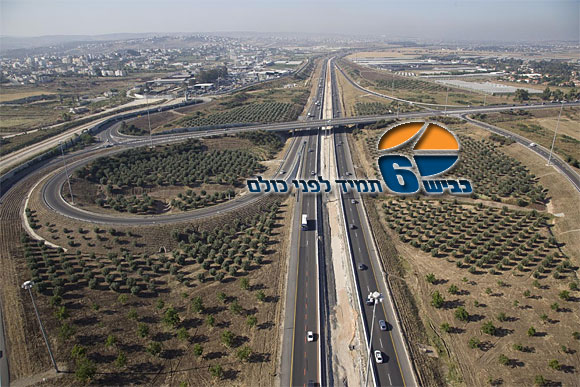
The new limit will first go into effect (today) from Iron in the north until Hadid in the south, with the speed limit on the more southern sections to be increased later. Kvish Chotzeh Yisrael's administration has worked to make the road safer and has put in many more safety measures and improvements in the road making this possible.
From their statistics, roads that have increased speed limits to 110 have not increased in accidents and road safety has not deteriorated. A decrease (an improvement in road safety) has actually been noted.
source: NRG
This puts me at ease. Kvish 6 is a great highway and at certain long stretches the natural speed is higher than the limit was...
Minister of Transportation Yisrael Katz has decided to once more raise the speed limit on Highway 6. This time he is raising it to 120kmph, with an actual 130kmph limit (because police don't ticket until 10 over the limit).
The new limit will first go into effect (today) from Iron in the north until Hadid in the south, with the speed limit on the more southern sections to be increased later. Kvish Chotzeh Yisrael's administration has worked to make the road safer and has put in many more safety measures and improvements in the road making this possible.
From their statistics, roads that have increased speed limits to 110 have not increased in accidents and road safety has not deteriorated. A decrease (an improvement in road safety) has actually been noted.
source: NRG
This puts me at ease. Kvish 6 is a great highway and at certain long stretches the natural speed is higher than the limit was...
------------------------------------------------------
Reach thousands of readers with your ad by advertising on Life in Israel
------------------------------------------------------
Jun 16, 2015
possible new punishment for texting while driving
There have been way too many accidents caused by people using their phones while driving. Not necessarily to talk, but to send text messages, email, Facebook, Whatsapp and whatever else..
Fines, campaigns, images and knowledge of accidents and tragedies.. so far nothing seems to have helped curb the phenomenon.
The police are looking at new approaches that they hope will work better.
According to The Marker, the police are of the opinion that the punishment must be more serious, thereby creating a more serious level of deterrence. They are looking at the possibility of confiscating the phones of offenders.
I don't know if they are allowed to decide such a thing on their own, or if such a decision needs to pass through the Knesset, the Attorney General or some other process..
What do you think? Would knowledge of the possibility of your phone getting confiscated stop you from taking the risk?
Fines, campaigns, images and knowledge of accidents and tragedies.. so far nothing seems to have helped curb the phenomenon.
The police are looking at new approaches that they hope will work better.
According to The Marker, the police are of the opinion that the punishment must be more serious, thereby creating a more serious level of deterrence. They are looking at the possibility of confiscating the phones of offenders.
I don't know if they are allowed to decide such a thing on their own, or if such a decision needs to pass through the Knesset, the Attorney General or some other process..
What do you think? Would knowledge of the possibility of your phone getting confiscated stop you from taking the risk?
------------------------------------------------------
Reach thousands of readers with your ad by advertising on Life in Israel
------------------------------------------------------
Mar 29, 2015
pedestrians have the right of way at crosswalks
There is a significant new road rule in effect as of today.... though I do not see how it is reasonably enforceable..
The new rule, which was approved last November, basically obligates drivers to stop at crosswalks if there is a pedestrian that looks like he might want to cross the street.
Until now the driver had to give right of way to the crossing pedestrian if the pedestrian made his move to begin crossing the street. As soon as the pedestrian sticks his foot into the street n the crosswalk, he has the right of way and the driver must stop.
Now, the driver has to stop even before the pedestrian heads into the street. The driver has to stop if the pedestrian is even thinking about crossing.
The new rule states that the driver must slow down as he approaches the crosswalk if a pedestrian is on the sidewalk near the crosswalk, and if it appears to be that the pedestrian intends to cross the street, he must be given the right of way.
source: Ynet
Anything that improves safety of pedestrians and/or drivers is good. However, I don't see how this enforceable, without clear guidelines of when the right of way must be given and when not.
Let's say someone gets a ticket for not giving the right of way to a pedestrian on the sidewalk. He goes to court and fights it - all he has to say is he evaluated the pedestrian and it did not seem to him as though the pedestrian intended to cross the street. Without clear guidelines, it is up to the driver to assess the intention of someone he see for a few seconds standing on a sidewalk, and how can anyone else say whether he made an honest assessment or not?
The new rule, which was approved last November, basically obligates drivers to stop at crosswalks if there is a pedestrian that looks like he might want to cross the street.
Until now the driver had to give right of way to the crossing pedestrian if the pedestrian made his move to begin crossing the street. As soon as the pedestrian sticks his foot into the street n the crosswalk, he has the right of way and the driver must stop.
Now, the driver has to stop even before the pedestrian heads into the street. The driver has to stop if the pedestrian is even thinking about crossing.
The new rule states that the driver must slow down as he approaches the crosswalk if a pedestrian is on the sidewalk near the crosswalk, and if it appears to be that the pedestrian intends to cross the street, he must be given the right of way.
source: Ynet
Anything that improves safety of pedestrians and/or drivers is good. However, I don't see how this enforceable, without clear guidelines of when the right of way must be given and when not.
Let's say someone gets a ticket for not giving the right of way to a pedestrian on the sidewalk. He goes to court and fights it - all he has to say is he evaluated the pedestrian and it did not seem to him as though the pedestrian intended to cross the street. Without clear guidelines, it is up to the driver to assess the intention of someone he see for a few seconds standing on a sidewalk, and how can anyone else say whether he made an honest assessment or not?
------------------------------------------------------
Reach thousands of readers with your ad by advertising on Life in Israel
------------------------------------------------------
Mar 8, 2015
D.U.T. - driving under the influence of Tefillin
When learning hilchos tefillin a while back I remember discussing the issue of "hesech hadaas" while wearing tefillin - a distraction, something that takes away the person's focus and attention from the tefillin he is wearing.
From my recollection it seemed to me that driving while wearing tefillin. or driving under the influence of Tefillin (DUT) should be a halachic problem of hesech hadaas.
That being said, it is possible that a very short drive to shul while wearing tefillin might be ok, even if not recommended.
It does raise a question in my mind as to how they used to live. We know people used to generally wear tefillin all day long. Why was their work or non-prayer activities not considered a problem of hesech hadaas back then? The basic answer I have received is that now things are different because we limit our tefillin-time so much to only prayer-time, so hesech hadaas because a problem, whereas back then it was not a problem as it was part of the tefillin-system.
Maybe, maybe not. I don't know.
Either way, traffic court in Israel just supported the halachic position on this matter, from my perspective, sort of, I think.
A fellow who received a 1000nis ticker for DUT - driving under the influence of Tefillin - appealed his fine to the courts. The ticket was for endangering himself and other drivers.
The court upheld the fine.
Actually, this situation was a bit worse than simply hesech hadaas. According to the description of what happened, this driver was putting on his tefillin while driving, he was holding a siddur, and he had his tallis draped over his head, obstructing his field of vision.
my comments on what he did:
1. how could he possibly do all this at the same time?
2. how many hands did he have - putting on his tefillin, driving, holding his siddur?
3. all while not having a good view of the road?
4. is holding a siddur any different than holding a cellphone? cellphones require hands-free, does that apply to everything? Is it illegal to hold anything while driving?
5. From a spiritual perspective perhaps the siddur might be better than the phone, but not from a safety perspective, and possibly not from a legal perspective..
Back to the case... the judge ruled it was reckless and endangering. The judge added that it is doubtful if the drivers prayers would have even helped in this situation. They definitely didn't help save him from his fine.
source: Kikar
In addition to the fine, his license was suspended for four months, with an additional three months pending.
It does seem that the main part of the decision was based on the drivers holding of the siddur and not that he was wearing tefillin. Also, the decision was automatic because the driver did not appear in court to argue on his own behalf and provide any explanation. It is possible he could have argued and explained his way out of the ticket.
So, does it support the original premise made by me - not really, but sort of, in theory.
Anyways, don't pray and drive. At least not while holding your siddur.
Foolishly, in my opinion, Chaim Walder, Haredi author and askan, is upset about this and wants to a protest to put the judge in his place. According to Kikar, Walder is calling for a day of protest during which all Haredim will drive wearing tallis and tefillin, to show the judges that it is not they who decide what is allowed and what is not, but the rabbonim do.
I say "foolishly" because at least according to the original article and what has been reported in the news, the judge was not making a decision based on religious, or anti-religious, sentiments. The decision was automatic because the driver failed to appear before the court to argue on his own behalf. As well, the judge said specifically that it is not illegal to drive while wearing tefillin, but this specific driver was driving dangerously - holding his siddur, while putting on tefillin, with his vision blocked.
Walder is calling for a protest in a situation where there is nothing to protest. The only he should perhaps protest is the stupidity of this specific driver.
**************
UPDATE: the fined driver has spoken to Kikar about the situation. He is against a protest, as suggested by Chaim Walder, at this time. He says he did not appear in court because of confusion regarding the dates, as he does not use the Gregorian calendar and only the Jewish calendar. His preoccupation with the Purim holiday caused him to not realize the date on the Gregorian calendar. He says he will be filing an appeal, and he hopes his explanation will satisfy the judge. All he said about the story itself is that he will give his explanation to the judge, but the policeman exaggerated the report.
From my recollection it seemed to me that driving while wearing tefillin. or driving under the influence of Tefillin (DUT) should be a halachic problem of hesech hadaas.
That being said, it is possible that a very short drive to shul while wearing tefillin might be ok, even if not recommended.
It does raise a question in my mind as to how they used to live. We know people used to generally wear tefillin all day long. Why was their work or non-prayer activities not considered a problem of hesech hadaas back then? The basic answer I have received is that now things are different because we limit our tefillin-time so much to only prayer-time, so hesech hadaas because a problem, whereas back then it was not a problem as it was part of the tefillin-system.
Maybe, maybe not. I don't know.
Either way, traffic court in Israel just supported the halachic position on this matter, from my perspective, sort of, I think.
A fellow who received a 1000nis ticker for DUT - driving under the influence of Tefillin - appealed his fine to the courts. The ticket was for endangering himself and other drivers.
The court upheld the fine.
Actually, this situation was a bit worse than simply hesech hadaas. According to the description of what happened, this driver was putting on his tefillin while driving, he was holding a siddur, and he had his tallis draped over his head, obstructing his field of vision.
my comments on what he did:
1. how could he possibly do all this at the same time?
2. how many hands did he have - putting on his tefillin, driving, holding his siddur?
3. all while not having a good view of the road?
4. is holding a siddur any different than holding a cellphone? cellphones require hands-free, does that apply to everything? Is it illegal to hold anything while driving?
5. From a spiritual perspective perhaps the siddur might be better than the phone, but not from a safety perspective, and possibly not from a legal perspective..
Back to the case... the judge ruled it was reckless and endangering. The judge added that it is doubtful if the drivers prayers would have even helped in this situation. They definitely didn't help save him from his fine.
source: Kikar
In addition to the fine, his license was suspended for four months, with an additional three months pending.
It does seem that the main part of the decision was based on the drivers holding of the siddur and not that he was wearing tefillin. Also, the decision was automatic because the driver did not appear in court to argue on his own behalf and provide any explanation. It is possible he could have argued and explained his way out of the ticket.
So, does it support the original premise made by me - not really, but sort of, in theory.
Anyways, don't pray and drive. At least not while holding your siddur.
Foolishly, in my opinion, Chaim Walder, Haredi author and askan, is upset about this and wants to a protest to put the judge in his place. According to Kikar, Walder is calling for a day of protest during which all Haredim will drive wearing tallis and tefillin, to show the judges that it is not they who decide what is allowed and what is not, but the rabbonim do.
I say "foolishly" because at least according to the original article and what has been reported in the news, the judge was not making a decision based on religious, or anti-religious, sentiments. The decision was automatic because the driver failed to appear before the court to argue on his own behalf. As well, the judge said specifically that it is not illegal to drive while wearing tefillin, but this specific driver was driving dangerously - holding his siddur, while putting on tefillin, with his vision blocked.
Walder is calling for a protest in a situation where there is nothing to protest. The only he should perhaps protest is the stupidity of this specific driver.
**************
UPDATE: the fined driver has spoken to Kikar about the situation. He is against a protest, as suggested by Chaim Walder, at this time. He says he did not appear in court because of confusion regarding the dates, as he does not use the Gregorian calendar and only the Jewish calendar. His preoccupation with the Purim holiday caused him to not realize the date on the Gregorian calendar. He says he will be filing an appeal, and he hopes his explanation will satisfy the judge. All he said about the story itself is that he will give his explanation to the judge, but the policeman exaggerated the report.
------------------------------------------------------
Reach thousands of readers with your ad by advertising on Life in Israel
------------------------------------------------------
Sep 14, 2014
SMS for speeding
Those cameras all over the roads of Israel that Waze calls "Speed trap ahead", that are catching people speeding and running red lights, will now also send SMS messages to offending drivers.
The message will tell the driver where he was caught on camera, when he was caught, and this will give him the opportunity to go photograph the area, if relevant, note down any thoughts or issues, and whatever else might be relevant in case the driver wants to appeal a ticket.
Sometimes you get a ticket in the mail, and you have no recollection of what it is for, taking away your ability to appeal the ticket. This will give the driver a better opportunity to prepare for his eventual possible appeal, as he will be able to prepare practically right when it happens and record whatever he feels necessary for his future appeal.
In addition to installing more cameras around Israel's network of roads, and the new system of sending SMS messages to drivers, they also announced that they are considering lowering the speed gap - it is known that the police allow up to 15km above the limit before ticketing a driver. They may now lower that to ticketing at close to the posted speed. This will also make it more difficult to appeal tickets for speeding, as that gap will be officially closed. This will also create some added deterrence, and will cause drivers to slow down to avoid the tickets.
source: Maariv
Sounds cool.
1. when I receive an SMS from some police camera telling me I sped and should stop to take a picture or record my evidence and arguments, will I get a ticket for reading the SMS? will I be able to sue the police for causing an accident, if God forbid one should happen because of the SMS? (obviously not)
2. how will they know who the driver is and what his phone number is to send the SMS?
3. what if the driver has a kosher phone and cannot receive SMS? will the "kosher phone community" complain they are being discriminated against?
The message will tell the driver where he was caught on camera, when he was caught, and this will give him the opportunity to go photograph the area, if relevant, note down any thoughts or issues, and whatever else might be relevant in case the driver wants to appeal a ticket.
Sometimes you get a ticket in the mail, and you have no recollection of what it is for, taking away your ability to appeal the ticket. This will give the driver a better opportunity to prepare for his eventual possible appeal, as he will be able to prepare practically right when it happens and record whatever he feels necessary for his future appeal.
In addition to installing more cameras around Israel's network of roads, and the new system of sending SMS messages to drivers, they also announced that they are considering lowering the speed gap - it is known that the police allow up to 15km above the limit before ticketing a driver. They may now lower that to ticketing at close to the posted speed. This will also make it more difficult to appeal tickets for speeding, as that gap will be officially closed. This will also create some added deterrence, and will cause drivers to slow down to avoid the tickets.
source: Maariv
Sounds cool.
1. when I receive an SMS from some police camera telling me I sped and should stop to take a picture or record my evidence and arguments, will I get a ticket for reading the SMS? will I be able to sue the police for causing an accident, if God forbid one should happen because of the SMS? (obviously not)
2. how will they know who the driver is and what his phone number is to send the SMS?
3. what if the driver has a kosher phone and cannot receive SMS? will the "kosher phone community" complain they are being discriminated against?
------------------------------------------------------
Reach thousands of readers with your ad by advertising on Life in Israel
------------------------------------------------------
Aug 28, 2014
Proposed Law: keep your distance from bikers
good news for bike riders!
In a law proposal that is supported by MKs from across the political spectrum, automobile drivers would legally have to be more careful when passing a bicycle in the road.
According to this law proposal, on an intercity road, a driver would have to stay at least 1.5 meters away from a bicycle when passing. On local roads the distance drops to 1 meter away.
The authors of the proposal explain that there has been a sharp upswing of cyclists getting injured from cars.
source: NRG
bike riders should love this news. I regularly hear from cyclist friends how dangerous road biking is and how frequently they nearly get hit...
In a law proposal that is supported by MKs from across the political spectrum, automobile drivers would legally have to be more careful when passing a bicycle in the road.
According to this law proposal, on an intercity road, a driver would have to stay at least 1.5 meters away from a bicycle when passing. On local roads the distance drops to 1 meter away.
The authors of the proposal explain that there has been a sharp upswing of cyclists getting injured from cars.
source: NRG
bike riders should love this news. I regularly hear from cyclist friends how dangerous road biking is and how frequently they nearly get hit...
------------------------------------------------------
Reach thousands of readers with your ad by advertising on Life in Israel
------------------------------------------------------
May 13, 2014
Easing the conversion of foreign drivers licenses for new immigrants
Good news for new immigrants, from MK Rabbi Dov Lipman (Yesh Atid).
Lipman was behind a movement to change the policy of the Ministry of Transportation regarding the conversion of foreign drivers licenses by new immigrants.
From the JPost:
Lipman was behind a movement to change the policy of the Ministry of Transportation regarding the conversion of foreign drivers licenses by new immigrants.
From the JPost:
New immigrants to Israel have up to three years to take a “control test” – an abbreviated road test to demonstrate control over the vehicle, according to a Transportation Ministry description of the test. The immigrants are permitted, however, to drive in Israel on their foreign drivers’ licenses alone for their first year in the country.
Previously, if immigrants failed the control test twice, they were required to take full theory and practical driving exams.
According to the new regulations, if an immigrant fails two control tests, he or she will only be required to take the full practical driving exam, without the theory exam.
Meanwhile, immigrants who enlisted in the IDF will have more than the allotted three years to complete the conversion process, providing they display a certificate of service to the Licensing Authority, the regulations say.
The Knesset received confirmation that the Transportation Ministry had officially approved the new regulations in the first week of May.
[...]
First and foremost, Lipman said he felt that the rule allowing olim to drive in Israel for a year without exchanging their licenses is no less than “ridiculous.”
If they are allowed to drive for that year without an Israeli license, then they clearly do not present a danger to the roads, he argued.
In addition, he told ministry officials that the demand to take a theory test upon failing two control tests was unfair, and presented an obstacle that many olim were unable to overcome.
Upon receiving word that the Transportation Ministry had canceled the necessity for the theory test and allowed for soldiers to convert their licenses beyond the three-year window, Lipman said that he is “proud of these two achievements.”
“It will make a difference in the life of olim who have been struggling with senseless bureaucracy,” he said.
Razbozov thanked Lipman for raising the issue, as well as the Transportation Ministry for following through with the committee’s recommendations.
“We need to remember that even though some of the olim might be new, they are very experienced drivers that have a hard time navigating the bureaucracy,” Razbozov said.
“This decision will benefit these olim, and allow them to be more successful and independent.”
------------------------------------------------------
Reach thousands of readers with your ad by advertising on Life in Israel
------------------------------------------------------
Mar 24, 2014
The Auto-Bhan of Israel
It seems like we are practically on our way to getting our own autobahn here in Israel.
The autobahn is a street in Europe famous for not having a speed limit.
Minister of Transportation Yisrael Katz yesterday signed an order that will allow the speed limit on "fast highways" to be raised to 120kmph. He intends to approve the limit on Highway 6 to be raised to 120kmph after it finishes some prep work on the road in the coming weeks.
source: NRG
I was on Highway 6 last night. When it is empty - 120 feels slow. What a great road!
------------------------------------------------------
Reach thousands of readers with your ad by advertising on Life in Israel
------------------------------------------------------
Jun 13, 2013
Tefillat HaDerech on Kvish 6
Technically it is illegal to stop one's car on the shoulder of a highway to daven. It is considered very dangerous, and the shoulder of the highway is only there for emergency use - when one's car breaks down, for example. That generally does not stop people from pulling over as sunset approaches so that they can daven mincha, though perhaps that is considered enough of an emergency to warrant using the shoulder...
Rav Grossman of Migdal Ha'Emek had asked the operators of Highway 6 to find a solution and station a mobile structure that could be used as a makeshift shul for drivers to be able to pull over and daven. It was set up by a rest stop between the Baka and Iron junctions.

The operators of Road 6 worked to get the necessary approvals and to set it up, and this week it was put into place. And very soon after the structure was put up it was used for its first minyan. Kvish 6 operators promise that soon they will fill it with sifrei kodesh for use by travelers, and then it will be open and available 24 hours a day.
I am pretty sure that shortly after that a kollel will be opened and use the structure, for the safety of the drivers..
 Udi Savyon, the director of Derech Eretz - the operator of Kvish 6, said that he will soon be setting up another such structure in the southbound direction, for the benefit of travelers on that side of the road. As well, they will soon be installing signs and directions to the shul, so drivers will know how far they are from the shul...
Rav Grossman thanked Derech Eretz for the shul and blessed the installation of the shul saying that travelers need the prayers to arrive at their destinations safely, and there is no doubt that this shul will provide protection for the road and for those traveling on it.
(source: Kikar)
A good name for the shul would probably be "Tefillat HaDerech"...
Rav Grossman of Migdal Ha'Emek had asked the operators of Highway 6 to find a solution and station a mobile structure that could be used as a makeshift shul for drivers to be able to pull over and daven. It was set up by a rest stop between the Baka and Iron junctions.
The operators of Road 6 worked to get the necessary approvals and to set it up, and this week it was put into place. And very soon after the structure was put up it was used for its first minyan. Kvish 6 operators promise that soon they will fill it with sifrei kodesh for use by travelers, and then it will be open and available 24 hours a day.
I am pretty sure that shortly after that a kollel will be opened and use the structure, for the safety of the drivers..
Rav Grossman thanked Derech Eretz for the shul and blessed the installation of the shul saying that travelers need the prayers to arrive at their destinations safely, and there is no doubt that this shul will provide protection for the road and for those traveling on it.
(source: Kikar)
A good name for the shul would probably be "Tefillat HaDerech"...
------------------------------------------------------
Reach thousands of readers with your ad by advertising on Life in Israel
------------------------------------------------------
Subscribe to:
Posts (Atom)
Related Posts
