
Showing posts with label Machon Tzomet. Show all posts
Showing posts with label Machon Tzomet. Show all posts
Jan 16, 2012
Giving A Hetter To Smoke On Shabbos
Rav Yisrael Rosen, head of the Tzomet Institute, recently wrote an article about the issues of gender-segregation, when it is, in his opinion, acceptable to segregate, and when it is not. It was an interesting read, and if you can make out the Hebrew, you should read it.
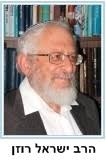 In Rabbi Rosen's article he explains that not every time there is gender-segregation is there ncessarily the exclusion of women. He explains that many of the examples discussed in the media as excluding women are simply gender-segregation. Separate hours in a fitness center in the Technion (which made the news recently) is not excluding women, but simply separating the hours of usage, and Rav Rosen says he supports that. Separate sidewalks in mea Shearim, on the other hand, he does not support even though it is not the exclusion of women but just segregation because the street is a public place meant to be used even by people who oppose the segregation.
Rav Rosen goes on to say he opposes the segregation on the bus lines with men in front and women in back, for the same reason. On the other hand, if a certain community wanted to form separate lines at the supermarket, he would be fine with that (even though he thinks it is a sick craze of hype-modesty).
Rav Rosen goes on to say he supports "mixed seating" at weddings, for social reasons (that he has spoken abut on other occasions), and also supports mixed gender classrooms for young children when there are not enough kids to justify splitting the class and forming two separate classes.
These, he says, are issues unrelated to the exclusion of women, but involve the issue of gender segregation.
 This morning Rav Shmuel Eliyahu, the Chief Rabbi of Tzfat, responded to Rav Rosen's comments. He compared it to a story, a true story, in which a fellow reeking of cigarette smoke came to him once on Shabbos and asked for wine to make kiddush. He asked the fellow why he wants to make kiddush if he so obviously does not keep Shabbos as he had just been smoking. The fellow responded that he had been given a hetter to smoke on Shabbos from Rav Abuhatzeira.
Rav Eliyahu tried to understand what the hetter could possibly be, and the fellow explained. He was smoking 40 cigarettes a day, including on Shabbos, and explained that e could not just stop. Rav Abuhatzeira suggested that instead of just not smoking on Shabbos, which would be too difficult, he should cut it down slowly. First drop it to 20 cigarettes, then to 10, etc. until eventually he would stop completely.
Rav Eliyahu explained that this fellow only remembered the first half of what he had been told, but forgot the second half. it was not a hetter to smoke, but it was a method to cut it down until he would not smoke at all. but this fellow only heard, or only remembered that Rav Abuhatzeira told him he could smoke 20 cigarettes instead of 40.
Rav Eliyahu compares that story to rav Rosen's situation - the fact that we have a bdieved situation that rabbonim must conduct weddings to mixed audiences, that some weddings are arranged with mixed seating, does not turn that fact into a lechatchila that now all weddings should be mixed.
Rav Eliyahu goes on and says that saying such things publicly is a big mistake and very dangerous, as some people are out looking for these allowances and will use them to try to bring the community down a notch or two.
 He asks if such a method, of turning bdieveds into lechatchilas is also applied equally in the Tzomet Institute. And because he knows that it is not, he asks why is tzniyut different than Shabbos? Why by issues of tzniyut must we set up our children to falter with bdieved allowances for no reason?
It is an interesting debate at what point is segregation needed lechatchila, what makes it bdieved, and at what point is it totally unnecessary. There are obviously two very different opinions being displayed in this debate. I would add that Rav Eliyahu's comment comparing it to the products developed by the Tzomet Institute is out of place. Everything they develop is for a bdieved situation. nobody says healthy people should go buy their telephones and pens and other inventions to use on Shabbos. They are developed for the purpose of people who are in certain situations where Shabbos would otherwise be desecrated by necessity, and these inventions mitigate that. As well, even if such a comparison were to be made, Shabbos is far more severe - being a d'oraisa, along with being the main issue looked at in halacha that determines if someone is a fine Jew or a rasha. Tzniyus is not on a similar standing with Shabbos, no matter how important it is.
Rav Rosen goes on to say he opposes the segregation on the bus lines with men in front and women in back, for the same reason. On the other hand, if a certain community wanted to form separate lines at the supermarket, he would be fine with that (even though he thinks it is a sick craze of hype-modesty).
Rav Rosen goes on to say he supports "mixed seating" at weddings, for social reasons (that he has spoken abut on other occasions), and also supports mixed gender classrooms for young children when there are not enough kids to justify splitting the class and forming two separate classes.
These, he says, are issues unrelated to the exclusion of women, but involve the issue of gender segregation.
Rav Eliyahu tried to understand what the hetter could possibly be, and the fellow explained. He was smoking 40 cigarettes a day, including on Shabbos, and explained that e could not just stop. Rav Abuhatzeira suggested that instead of just not smoking on Shabbos, which would be too difficult, he should cut it down slowly. First drop it to 20 cigarettes, then to 10, etc. until eventually he would stop completely.
Rav Eliyahu explained that this fellow only remembered the first half of what he had been told, but forgot the second half. it was not a hetter to smoke, but it was a method to cut it down until he would not smoke at all. but this fellow only heard, or only remembered that Rav Abuhatzeira told him he could smoke 20 cigarettes instead of 40.
Rav Eliyahu compares that story to rav Rosen's situation - the fact that we have a bdieved situation that rabbonim must conduct weddings to mixed audiences, that some weddings are arranged with mixed seating, does not turn that fact into a lechatchila that now all weddings should be mixed.
Rav Eliyahu goes on and says that saying such things publicly is a big mistake and very dangerous, as some people are out looking for these allowances and will use them to try to bring the community down a notch or two.
It is an interesting debate at what point is segregation needed lechatchila, what makes it bdieved, and at what point is it totally unnecessary. There are obviously two very different opinions being displayed in this debate. I would add that Rav Eliyahu's comment comparing it to the products developed by the Tzomet Institute is out of place. Everything they develop is for a bdieved situation. nobody says healthy people should go buy their telephones and pens and other inventions to use on Shabbos. They are developed for the purpose of people who are in certain situations where Shabbos would otherwise be desecrated by necessity, and these inventions mitigate that. As well, even if such a comparison were to be made, Shabbos is far more severe - being a d'oraisa, along with being the main issue looked at in halacha that determines if someone is a fine Jew or a rasha. Tzniyus is not on a similar standing with Shabbos, no matter how important it is.
Jul 11, 2011
Halacha Motivating Development
The free market is probably the greatest stimulus of developing technology. Someone has a great idea, and knows that if he can develop it he will make it into a success selling it because there is a market for that product or service, it pushes him to do so, to develop his idea and concept.
In Israel that is not necessarily how things work.
It was just announced in the past few days that Machon Tzomet, the inventors of many technological devices that assist people who require the technology in a way that will not violate the Shabbos such as Shabbos elevators, phones, powered vehicles (golf cart type vehicles), writing utensils, etc. has just created a new device.
The new device, a telephone that works in a way that using it will not violate the Shabbos, was just purchased by the Prime Minister Benjamin Netanyahu. He actually bought 12 of these telephones - for himself and for his various religious aides and advisers.
Because they might very well need to speak on Shabbos about important situations and developments, this was created to allow them to talk under such situations, while not violating Shabbos. if it was a matter of life or death, they could use the phone without concern. However, I imagine there are many situations that might be considered urgent for a prime minister while only questionably, if at all, qualifying as a life or death situation. using this phone solves the problem the religious advisers would have had and will allow them to communicate and deal with the situation.
This is a device, an invention, that will not have much use in most of the world. The market for such a product is severely limited. In most situations, the upside limitation of having almost nowhere to sell the product would stifle the development of the technology. After all, who is going to spend so much money developing and manufacturing a product that will not sell, no matter how great of an idea it is? But in Jerusalem it is not just a matter of how big of a market does this or that product have. Solving halachic issues and concerns is enough of a motivation to encourage development!
In Israel that is not necessarily how things work.
It was just announced in the past few days that Machon Tzomet, the inventors of many technological devices that assist people who require the technology in a way that will not violate the Shabbos such as Shabbos elevators, phones, powered vehicles (golf cart type vehicles), writing utensils, etc. has just created a new device.
The new device, a telephone that works in a way that using it will not violate the Shabbos, was just purchased by the Prime Minister Benjamin Netanyahu. He actually bought 12 of these telephones - for himself and for his various religious aides and advisers.
Because they might very well need to speak on Shabbos about important situations and developments, this was created to allow them to talk under such situations, while not violating Shabbos. if it was a matter of life or death, they could use the phone without concern. However, I imagine there are many situations that might be considered urgent for a prime minister while only questionably, if at all, qualifying as a life or death situation. using this phone solves the problem the religious advisers would have had and will allow them to communicate and deal with the situation.
This is a device, an invention, that will not have much use in most of the world. The market for such a product is severely limited. In most situations, the upside limitation of having almost nowhere to sell the product would stifle the development of the technology. After all, who is going to spend so much money developing and manufacturing a product that will not sell, no matter how great of an idea it is? But in Jerusalem it is not just a matter of how big of a market does this or that product have. Solving halachic issues and concerns is enough of a motivation to encourage development!
Sep 30, 2009
Shabbos Elevators or Elevators on Shabbos
A lot of bloggers and columnists have been writing about the recent psak of a number of rabbonim against using Shabbos elevators. Because so many have written about it, I saw no point in writing as well, just to say the same thing. But I now have a couple of points to make. I will keep it brief.
A couple of points:
A couple of points:
- The psak forbidding shabbos elevators talks about new technological implements that are problematic. Assuming the psak is real and is to be followed (not a good assumption, but let's just make it anyway) people who are installing new elevators will be the ones having the problem, not people who already have the elevators installed from before the inclusion of the new "technological advancements". Everyone worried about people who already have and use elevators need not worry - just because elevator q is prohibited because of how it works, does not mean elevator n is also suddenly assur. if it was considered ok because of how it works, that "certification" remains in place.
- I saw in one article, I think it was in Yisrael Hayom, discussing the elevator issue a point I did not see made anywhere else, and I want to mention it. It was discussing the suggestion that Rav Elyashiv did not want to sign the psak, but was pressured to do so. I think the article was quoting Rav Rozen from Machon Tzomet, who said that Rav Elyashiv did not really want to sign on it, but was pressured to. That is why he very carefully included his own text in which he said "Elevators on shabbos" are prohibited, rather than saying "Shabbos elevators" are prohibited. A nuance, but for a rav who is careful with every word (as most are) and the wording of his psakim, it makes all the difference.
Apr 30, 2009
Interesting Psak: Returning Calls
Rav Yisrael Rosen, the head of the Tzomet Insititute - a wonderful organization of Rabbis doing great work - has said that someone who does not return a phone call is deservant of death from Heaven.
The background is that during the days of Sefirat Ha'Omer, when we mourn the students of Rabbi Akiva who died because they did not treat each other with proper respect, this is a lesson we need to elarn. If someone leaves a message on your answering machine and you do not return the call, especially when you said "Leave a message after the beep!", you are treating them with a lack of respect, and we see from the story of Rabbi Akiva that the punishment for this is death from Heaven.
Rabbi Rosen also equates this with responding to sms and to emails, and even says anonymous emails (and I guess comments on blogs) should be responded too as well.
Rabbi Rosen points out the absurdity of the situation that nowadays, when forms of communication have become so abundant and easy, is when we have growing estrangement between people.
It looks like I have to figure out how to disable the voicemail on my phone!
(source: Ynet and Machon Tzomet)
The background is that during the days of Sefirat Ha'Omer, when we mourn the students of Rabbi Akiva who died because they did not treat each other with proper respect, this is a lesson we need to elarn. If someone leaves a message on your answering machine and you do not return the call, especially when you said "Leave a message after the beep!", you are treating them with a lack of respect, and we see from the story of Rabbi Akiva that the punishment for this is death from Heaven.
Rabbi Rosen also equates this with responding to sms and to emails, and even says anonymous emails (and I guess comments on blogs) should be responded too as well.
Rabbi Rosen points out the absurdity of the situation that nowadays, when forms of communication have become so abundant and easy, is when we have growing estrangement between people.
It looks like I have to figure out how to disable the voicemail on my phone!
(source: Ynet and Machon Tzomet)
Subscribe to:
Posts (Atom)
Related Posts
